
ACS study finds cultivated beef shows different allergy profile to conventional steak

Cultivated beef has shown a different allergy-related hazard profile compared to conventional steak, according to a new peer-reviewed study published in the American Chemical Society’s Journal of Agricultural and Food Chemistry.
• Researchers reported that cultivated beef cells contained relatively fewer traditional protein allergens than conventional steak.
• Blood samples from alpha-gal-sensitive individuals showed stronger IgE reactivity to cultivated beef cells than to regular steak.
• The study concluded that food safety assessments for cultivated meat should evaluate allergy-related proteins directly rather than assuming equivalence with conventional meat.
As cultivated meat moves closer to commercialization, questions around its health implications have intensified. In the new study, researchers conducted an initial food safety assessment to identify potential allergens in cultivated beef cells and compare them with those present in conventional beef.
“This study demonstrates that meat grown from cells can change in ways that matter for food allergies,” said Renwick Dobson, a corresponding author of the research. “Our results show why food safety assessments for cultivated meat need to look carefully at allergy-related proteins, rather than assuming they behave the same as those in conventional meat.”
Cultivated meat, sometimes referred to as lab-grown meat, is produced by growing animal muscle cells in controlled conditions. As these cells proliferate, they can produce different amounts of various proteins compared to muscle tissue that develops in live animals.
While previous research has examined allergen profiles in cultivated fish cells, reporting fewer proteins linked to severe allergies than conventional seafood, comparable data for cultivated beef have been limited. In particular, little research has addressed traditional beef protein allergens or sensitivity to alpha-gal, a sugar found in red meat that can trigger an acquired allergy following a lone star tick bite.
To address this gap, a research team led by Laura Domigan and Dobson compared the protein composition and allergenic potential of cultivated beef cells with that of conventional steak. The researchers used male cow muscle cells, cultured them under established protocols for varying lengths of time, and then analyzed their protein profiles alongside samples of regular beef steak.
The cultivated muscle cells showed similar protein compositions to one another, regardless of how long they had been grown. However, their overall protein profile differed significantly from that of conventional steak.
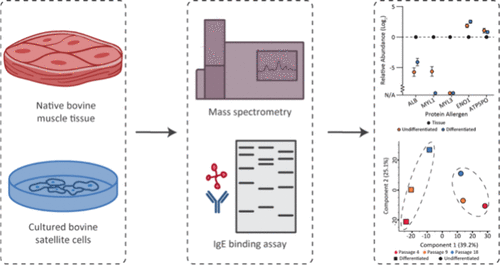
Most identified allergenic proteins were present at similar or lower levels in the cultivated cells compared to regular beef. Three proteins were detected at higher levels in the cultivated samples. Although these proteins are not classified as meat allergens by the World Health Organization, they are known to react with immunoglobulin E, or IgE, and could potentially produce immune responses or allergic reactions in some individuals.
The team also conducted experiments using blood samples from a small number of individuals with meat allergies. These tests indicated lower IgE binding to both undigested and digested cultivated cells compared to regular steak. The findings were consistent with the observed differences in allergen-related protein levels.
However, results diverged in samples from two individuals with alpha-gal sensitivity. In those cases, the cultivated beef cells triggered strong reactivity to human IgE. The researchers suggested that this response could be linked to a higher presence of alpha-gal-modified proteins in the cultivated cells.
Overall, the findings point to a mixed allergy-related hazard profile. Cultivated beef cells showed a lower allergy-related hazard relative to classic beef allergens, but a higher allergy-related hazard in relation to alpha-gal-associated responses.
The authors emphasized that these results represent an early-stage assessment and that further research is required. The next step for the team is to expand testing to include final cultivated meat products rather than just cultivated cells.
“The development of cultivated meats will require coordinated efforts between scientific, regulatory, and clinical teams to deliver products that are not only safe and sustainable but also accepted and trusted by the public,” Dobson concluded. “Only through this ongoing collaboration can cultivated meat achieve its promise as a viable, responsible, and widely accepted alternative to conventional meat.”
The study was funded by the Riddet Institute, Food Transitions 2050, the Biomolecular Interaction Centre, and the Dutch Ministry of Agriculture, Fisheries, Food Security, and Nature. The researchers disclosed that some authors are co-founders, employees, and shareholders in Opo Bio Aotearoa, which supplied the cell cultures used in the study.

Join Us At One Of Our Upcoming Events

If you have any questions or would like to get in touch with us, please email info@futureofproteinproduction.com