

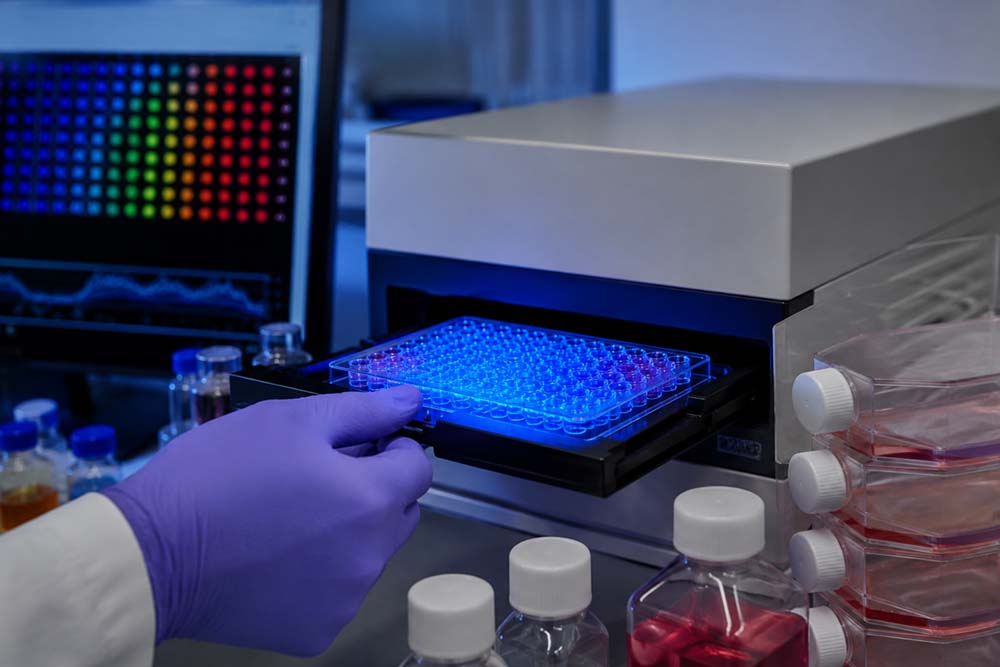
AIST develops fluorescence-based technique to improve quality control for cell culture media

The National Institute of Advanced Industrial Science and Technology (AIST) has developed a new analytical technique that can identify differences in the composition and condition of cell culture media and culture supplements without relying on traditional cell culture assays. The researchers say the approach could help improve quality control across biomanufacturing applications ranging from pharmaceuticals and regenerative medicine to cultivated meat.
• AIST developed a fluorescence-based analytical method to evaluate culture media and supplements without analyzing individual components or performing cell culture assays.
• The technique detected differences in serum origin, lot-to-lot variation and changes across stem cell and microbial culture supplements with high precision.
• Researchers said the approach could streamline quality control and help prevent culture-related manufacturing issues before production begins.
Culture media and supplements are among the most important inputs in cell-based manufacturing, influencing cell growth, productivity and final product quality. However, because they contain complex mixtures of proteins, amino acids, sugars, vitamins and many other compounds, assessing their quality remains challenging.
Conventional quality control often relies on growing cells in the media and measuring how well they proliferate or differentiate. While widely used, those assays are time-consuming and can produce variable results depending on the condition of the starting cells and the experience of the researcher carrying out the work.
The new AIST method takes a different approach by assessing the overall chemical characteristics of a sample rather than attempting to measure every individual component.
The system uses synthetic polymer probes containing aggregation-induced emission dyes to generate fluorescence patterns that reflect the overall composition of culture media and supplements. Those patterns are then analyzed using data analysis techniques, including machine learning, to distinguish between different samples and identify changes in quality.
According to the researchers, the technique successfully detected quality differences in fetal bovine serum, including variations linked to geographic origin and production batches. It also identified differences in supplements used for stem cell culture and microbial culture.
The researchers said this demonstrates that the technology can evaluate a broad range of culture media and supplements without requiring detailed compositional analysis or biological testing.
Quality control has become an increasingly important issue as biomanufacturing expands into new sectors. Alongside pharmaceutical production and regenerative medicine, cell culture technologies are now being used to manufacture functional materials, industrial bioproducts and cultivated meat.
Variations in culture media can affect cell proliferation, production efficiency and product consistency. Differences may arise from raw materials, manufacturing processes or storage conditions, particularly in naturally derived products such as fetal bovine serum.
Because the precise composition of these complex materials is often unknown, determining which individual components are responsible for performance differences can be extremely difficult. As a result, manufacturers frequently rely on biological performance testing rather than analytical characterization.
AIST believes its new method could provide a faster and more reproducible alternative by identifying quality differences before cell culture begins.
The researchers say the approach could simplify pre-culture quality checks, reduce dependence on operator expertise and help manufacturers detect potential problems before they affect production.
The work was published in the journal Chemical Science on May 13, 2026 (DOI: 10.1039/d6sc00383d).

Join Us At One Of Our Upcoming Events

If you have any questions or would like to get in touch with us, please email info@futureofproteinproduction.com


.jpg)
.jpg)
