

Cambridge’s Chris Macdonald links UK protein strategy to national security in The Conversation essay

A new article published in The Conversation has argued that the UK’s approach to protein production is not only inefficient but increasingly relevant to national security, as reliance on imports and global supply chains continues to expose vulnerabilities.
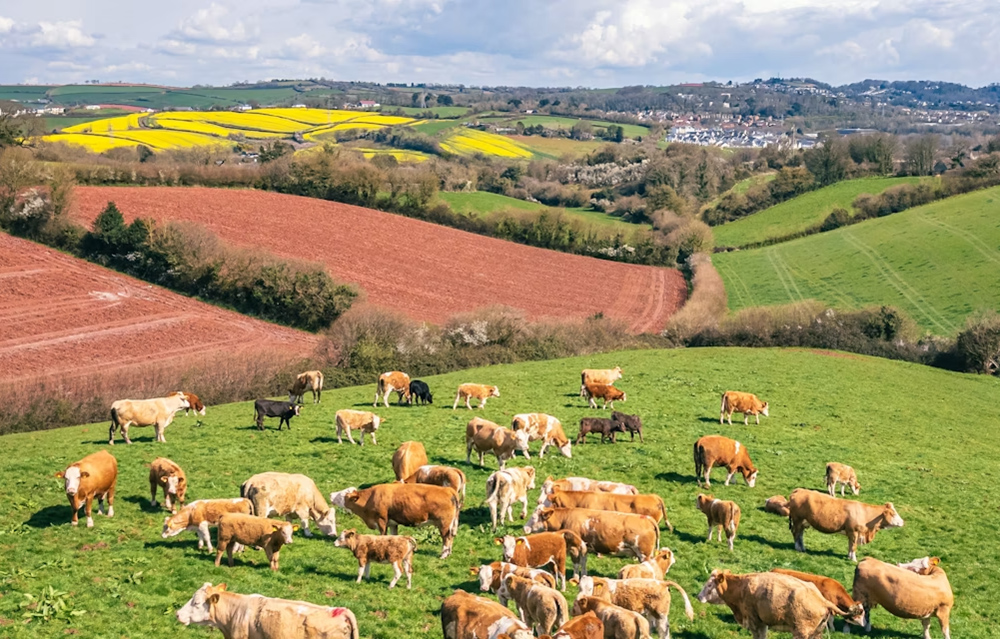
• Chris Macdonald has argued in The Conversation that around 50% of UK land is used for livestock, despite the country producing only about 60% of its food.
• He has highlighted cell cultivation and precision fermentation as alternatives capable of producing protein using significantly less land.
• The article has linked protein production, energy systems and food security, calling for a more resilient and domestically anchored model.
Chris Macdonald, Lab Director & Fellow at the University of Cambridge, wrote that the UK dedicates roughly half of its land to livestock, compared to 20% for arable crops and smaller shares for infrastructure and woodland. He argued that producing protein through animals can require up to ten times more land than extracting protein directly from crops.
Despite this extensive land use, the UK produces only around 60% of the food it consumes, leaving it dependent on imports and exposed to climate shocks and disruptions to global supply chains. Macdonald also pointed to continued reliance on imported animal feed, often sourced from regions affected by deforestation or ecosystem degradation.
He described animal agriculture as a major contributor to greenhouse gas emissions, water pollution and biodiversity loss, while also highlighting tensions between land efficiency and animal welfare in intensive farming systems.
The article identified emerging technologies such as cell cultivation and precision fermentation as potential alternatives. These systems, which produce protein from animal cells or engineered microorganisms, could deliver similar nutritional outcomes with significantly lower land requirements.
Macdonald also linked the issue to changing consumer behavior, citing research showing that higher protein intake is increasingly influencing food choices in the UK, particularly in relation to health outcomes such as preventing age-related muscle loss.
The article noted that other markets are progressing more quickly. In the USA, companies including Upside Foods, Good Meat and Wildtype have advanced cultivated meat, while firms such as Perfect Day, The Every Company and Triton Algae Innovations have used precision fermentation to produce proteins such as whey and egg white.
In contrast, the UK remains in the regulatory development phase, with no cultivated meat products yet approved for human consumption.
Macdonald also pointed to the role of controlled-environment agriculture, including vertical farming, in reducing exposure to weather volatility and supply chain disruption. These systems, he wrote, can deliver more predictable yields by operating independently of external environmental conditions.
He argued that a shift toward new protein systems would require a parallel transformation in energy infrastructure. Expanding renewable energy alongside nuclear capacity would be necessary to support energy-intensive production methods, as well as indoor farming, heating and transport.
According to Macdonald, such a transition could free up large areas of land for biodiversity, reforestation and recreation, while improving air and water quality.
He acknowledged that the transition would require significant investment and long-term policy support, but argued that the potential benefits include greater national resilience and reduced dependence on external food systems.
The article concluded that the UK faces a strategic choice in how it produces protein, with implications for food security, environmental impact and economic stability.
(This article was originally published in The Conversation and is republished under a Creative Commons license)

Join Us At One Of Our Upcoming Events

If you have any questions or would like to get in touch with us, please email info@futureofproteinproduction.com

.jpg)
.jpg)
