Cauldron lands US$13.25 million as hyper-fermentation push gathers pace

Cauldron has raised US$13.25 million in a Series A2 funding round and secured a place on Fast Company’s 2026 list of the World’s Most Innovative Companies, as the Australian biomanufacturing company stepped up efforts to scale its continuous fermentation platform for industrial production.
• Cauldron raised US$13.25 million in a Series A2 round led by Main Sequence Ventures, taking its total funding to US$26 million.
• The company said the capital would support expansion of its continuous hyper-fermentation platform and help accelerate commercial deployment with partners.
• Cauldron also said it had demonstrated industrial-scale continuous fermentation for synthetic biology strains at 10,000-liter scale.
The round was led by Main Sequence Ventures, with participation from Horizons Ventures, SOSV, and NGS Super. The funding came as Cauldron sought to build momentum behind what it called its proprietary hyper-fermentation platform, a continuous bioprocessing system designed to improve output and economics at scale.
The company, which was founded in 2022 and is headquartered in Orange, New South Wales, said the technology addressed one of the sector’s central bottlenecks: how to make biomanufacturing productive and cost-competitive enough to serve industrial markets rather than only niche or premium applications.
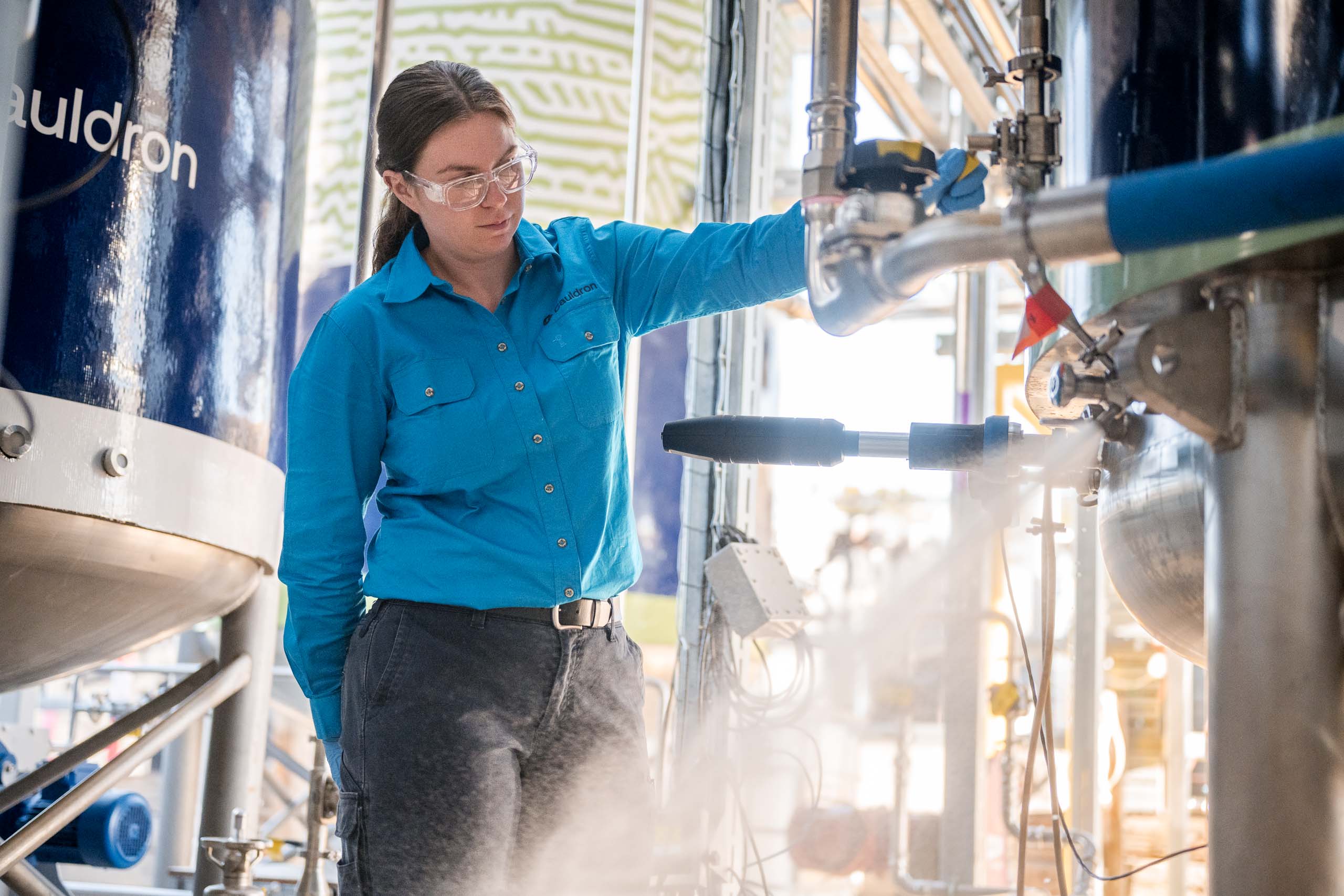
Biomanufacturing relies on living cells as production systems, using engineered microbes to turn inputs such as sugars into ingredients, chemicals, and other materials. Cauldron’s model centered on keeping those microbes in a productive steady state over extended periods while running the process continuously, rather than in conventional batch cycles. The company said that approach increased output and lowered costs, helping bio-based products compete more effectively with incumbent industrial alternatives.
“For biomanufacturing to compete in industrial sectors, bioproducts have to deliver on costs, scale, and quality. Bioprocess innovation is how we get there,” said Michele Stansfield, Co-founder & CEO of Cauldron. “We’re honoured to be backed by a dedicated group of experienced investors and proud to be recognised as one of the World’s Most Innovative Companies. This milestone reflects the impact of our platform at a time when governments and corporations are urgently seeking competitive bio-based solutions to address supply chain pressure.”
That message sat at the center of Cauldron’s pitch to investors and partners. The company tied its growth story not only to bioprocess efficiency, but also to broader concerns around supply chain resilience and industrial security. According to the company, 80% of organizations reported supply chain disruptions in 2024, while estimates suggested that as much as 60% of the physical inputs to the global economy could ultimately be produced biologically.
Cauldron argued that continuous production could help make that shift commercially realistic by enabling critical inputs to be made at the scale and cost required for mainstream use. It said the platform had already been demonstrated with customers commercializing bio-based food ingredients, chemicals, and nutraceuticals.
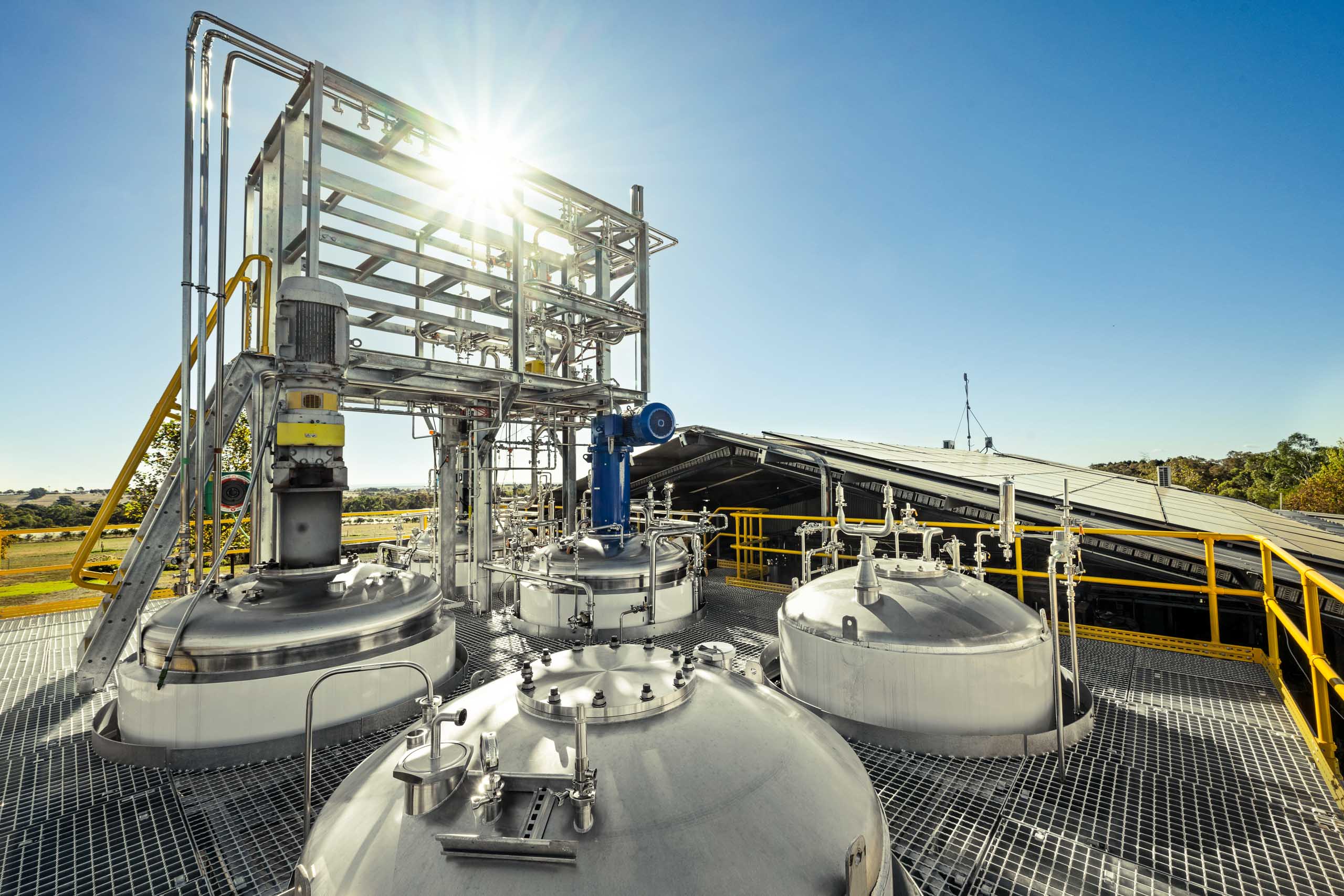
One of the company’s headline technical claims was that it had become the first to demonstrate true industrial-scale continuous fermentation for synthetic biology strains at 10,000 liters. That milestone mattered because many fermentation technologies have shown promise in pilot settings but struggled to maintain productivity and economic performance when scaled up.
Investors pointed to that scale-up progress as a key reason for backing the business.
“NGS Super backed Cauldron because we see advanced biomanufacturing as a powerful secular trend reshaping how critical inputs are produced, driven by supply chain resilience, decarbonisation, and the need for cost competitive alternatives to traditional industrial processes,” said Ben Squires, Chief Investment Officer at NGS Super. “Cauldron’s continuous hyper-fermentation platform is focused on the key constraint in the sector: improving productivity and unit economics at industrial scale. That combination of technology differentiation and real-world commercial validation is why we decided to invest.”
Cauldron said the new capital would be used to help meet growing demand from both governments and corporations investing in biomanufacturing capacity. Part of that work involved assessing whether existing production facilities could be retrofitted to deploy the company’s platform at partner sites, rather than relying solely on new-build infrastructure.
The company also said it had secured non-dilutive government grants in both Australia and the USA. Those funds were intended to support expansion of its demo-scale operations in Orange and planning for industrial-scale production.
For Main Sequence Ventures, the case for investment rested on the idea that continuous biology could form the backbone of a more dependable manufacturing base. “Cauldron is proving that biology can run continuously, predictably, and at the volumes global supply chains demand. Hyper-fermentation closes the gap between breakthrough strains and reliable, cost-competitive production. As long-term deep tech investors – and Asia Pacific's largest dedicated deep tech venture firm – we see this as a systemic industrial transformation,” said Phil Morle, Partner at Main Sequence Ventures. “In a market distracted by AI hype cycles, we’re backing the hard, physical work of scaling biology. That’s what builds enduring companies, and it’s why we believe Cauldron is at the forefront of making bioindustrial manufacturing commercially inevitable.”
The latest funding followed a period of rapid recognition for the company. In 2025, the World Economic Forum named Cauldron a Technology Pioneer, and the new Fast Company listing added another high-profile endorsement as the business worked to expand beyond early validation into broader commercial deployment.
Cauldron currently operated a 30,000-liter demonstration facility in Orange and said it was working with partners in four countries to optimize and scale fermentation processes across multiple sectors. With the Series A2 round completed, the company appeared focused on translating technical credibility into industrial rollout.

Join Us At One Of Our Upcoming Events

If you have any questions or would like to get in touch with us, please email info@futureofproteinproduction.com