
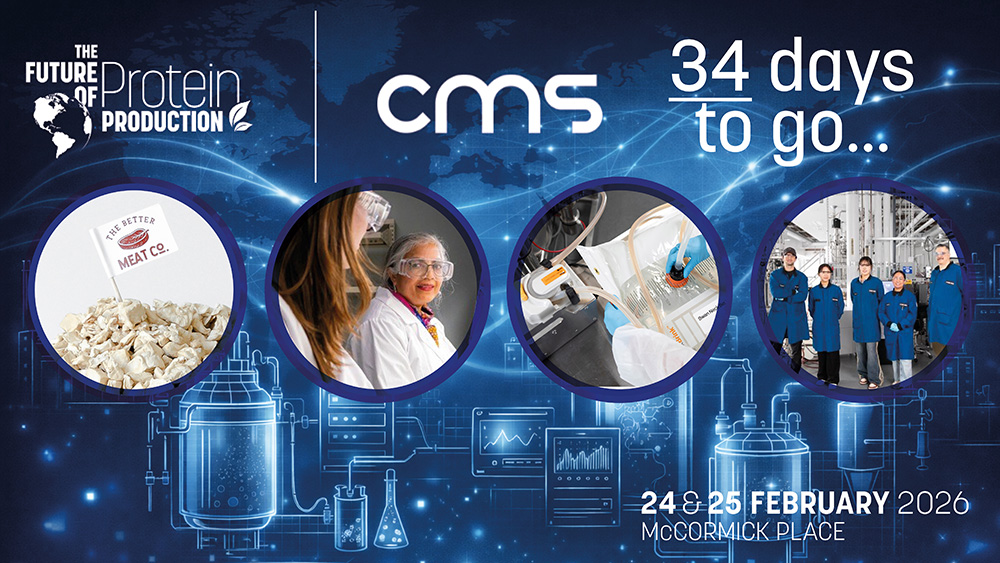
Counting down to FPP/CMS Chicago, 24-25 February 2026: Scale is no longer theoretical

Across cultivated meat, fermentation, and ingredients, 2025 showed that protein production is moving from promise to execution
For much of 2024, the alternative protein conversation felt subdued. Fewer blockbuster headlines. Fewer eye-catching valuations. Less noise overall. But taken together, the past 12 months of reporting tell a different story – one that is less about hype cycles and more about execution.
Across cultivated meat, precision fermentation, biomass fermentation, and enabling technologies, companies are moving into territory that looks unmistakably industrial. Pilot plants are getting bigger. Production systems are becoming continuous. Capital is flowing toward infrastructure, software, and ingredients that can operate inside real food supply chains.

That shift – from promise to proof – is precisely the backdrop against which The Future of Protein Production Chicago, co-located with the Cultured Meat Symposium, takes place on 24-25 February 2026.
This is not an industry standing still. It is an industry recalibrating – and then building again.
Scale is no longer theoretical
One of the clearest signals of renewed momentum is scale. Not pilot-scale in name only, but systems designed to stress-test processes under industrial conditions.
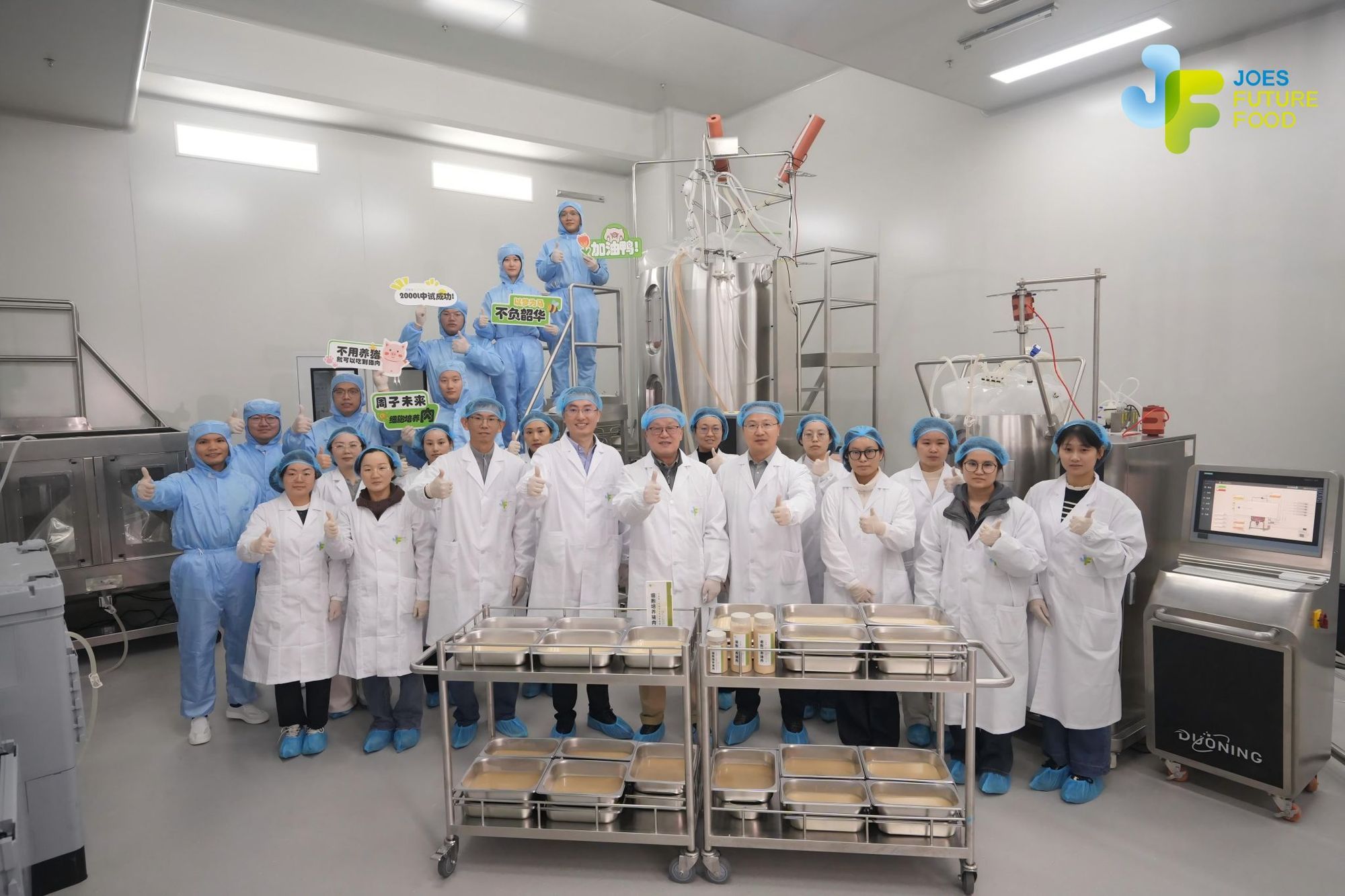
Recently in China, for instance, Joes Future Food commissioned a 2,000-liter cultivated pork production run, a volume that moves well beyond laboratory validation and into engineering-led manufacturing. In Finland, Solar Foods selected a site for Factory 02, a planned 6,400-ton Solein facility designed to operate independent of land use or climate. In Switzerland, Yeastup switched on its first industrial facility to upcycle spent brewer’s yeast into egg and functional protein ingredients.
None of these announcements promise overnight transformation. What they demonstrate instead is something more important: companies are designing production systems with commercial continuity in mind.
That same theme runs through plant-based manufacturing, where Rebellyous Foods brought its fully continuous Mock 3 system into commercial operation, and through mycelium, where Typcal opened Latin America’s first large-scale mycelium fermentation plant and Maia Farms secured fresh capital to scale its ingredient platform.
This is what progress looks like in a post-hype phase – fewer press releases, more steel, concrete, and data.
Fermentation is becoming infrastructure
If there is a common thread running through 2025’s most consequential developments, it is fermentation – not as a novelty, but as infrastructure.
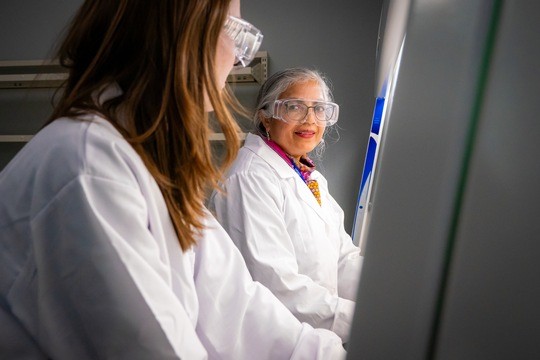
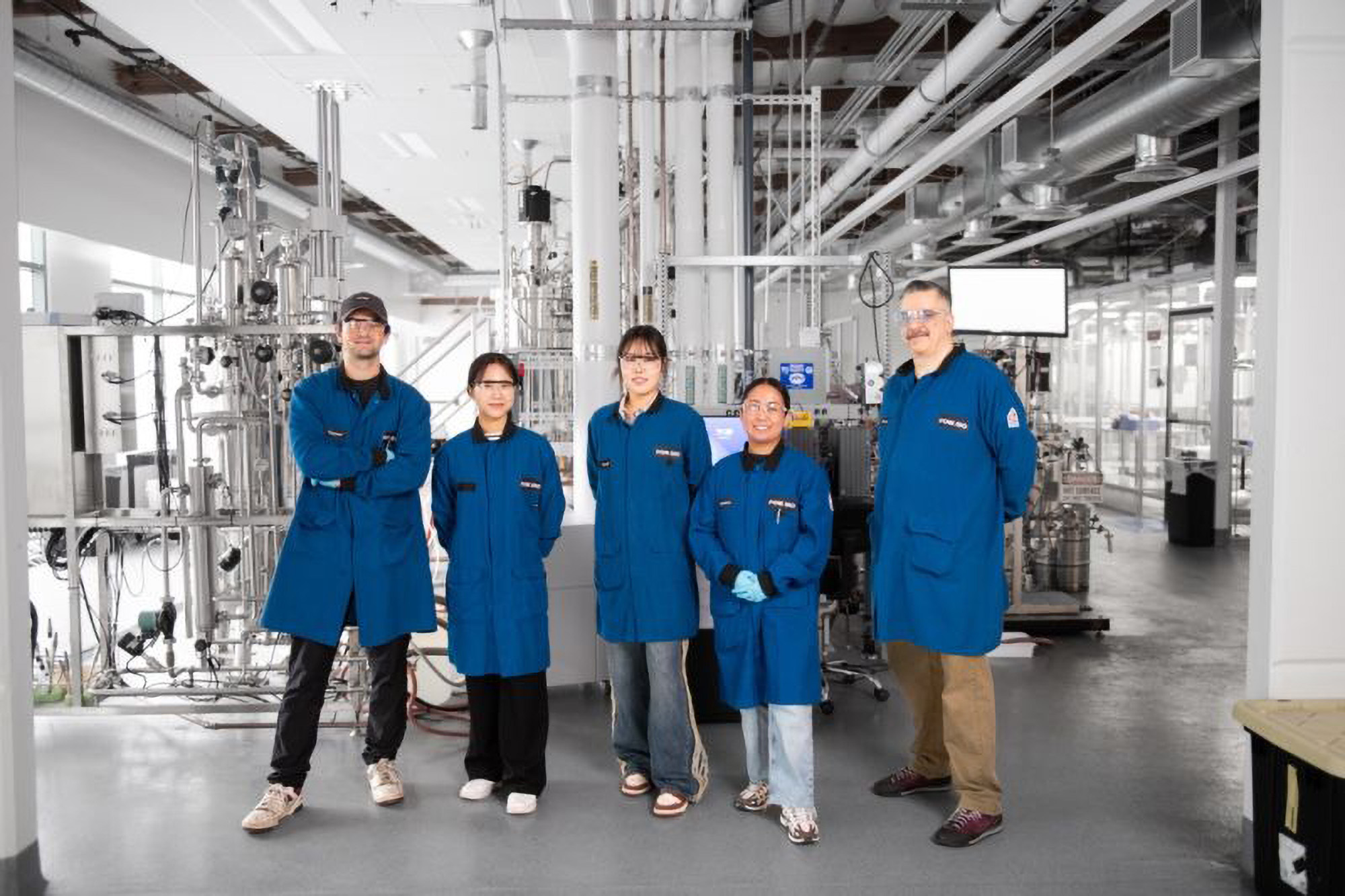
Universities, OEMs, and ingredient companies are converging on the same conclusion: fermentation needs shared facilities, predictable inputs, and systems that work across multiple products and categories.
Queensland University of Technology’s AU$18 million BioPilot upgrade reflects that thinking, as does Tufts University’s open-access cell bank initiative, which aims to prevent years of cultivated meat R&D from being lost when startups fail. In the private sector, GEA’s US$20 million Janesville technology center and Tetra Pak’s expanded product development capabilities signal that large equipment suppliers are committing real capital to novel foods – not waiting on sidelines.
These are not speculative bets. They are long-term infrastructure decisions.
That matters for Chicago, where the exhibition floor and technical program are explicitly designed around how fermentation systems are specified, integrated, financed, and run – not just what they might enable in theory.
Intelligence layers are catching up with biology
Another defining shift is the growing role of software, machine learning, and digital twins in biomanufacturing.
Companies such as Pow.Bio, Algocell, and Pythag Tech are tackling a shared problem: biology does not scale linearly, and trial-and-error is too slow and expensive at commercial volumes. Their platforms aim to compress years of iteration into weeks by making bioprocess behavior more predictable.
That same logic is showing up in cultivated meat, where Magic Valley is integrating AI to optimize media, reduce costs, and support regulatory readiness. It is also influencing investment decisions, as capital increasingly favors tools that improve throughput and reliability rather than chasing end products alone.
Chicago’s program reflects this shift. Panels on continuous fermentation, digital bioprocessing, and scale-up economics sit alongside sessions on ingredients and products – acknowledging that intelligence layers are now as important as bioreactors.
Capital hasn’t disappeared – it’s become selective
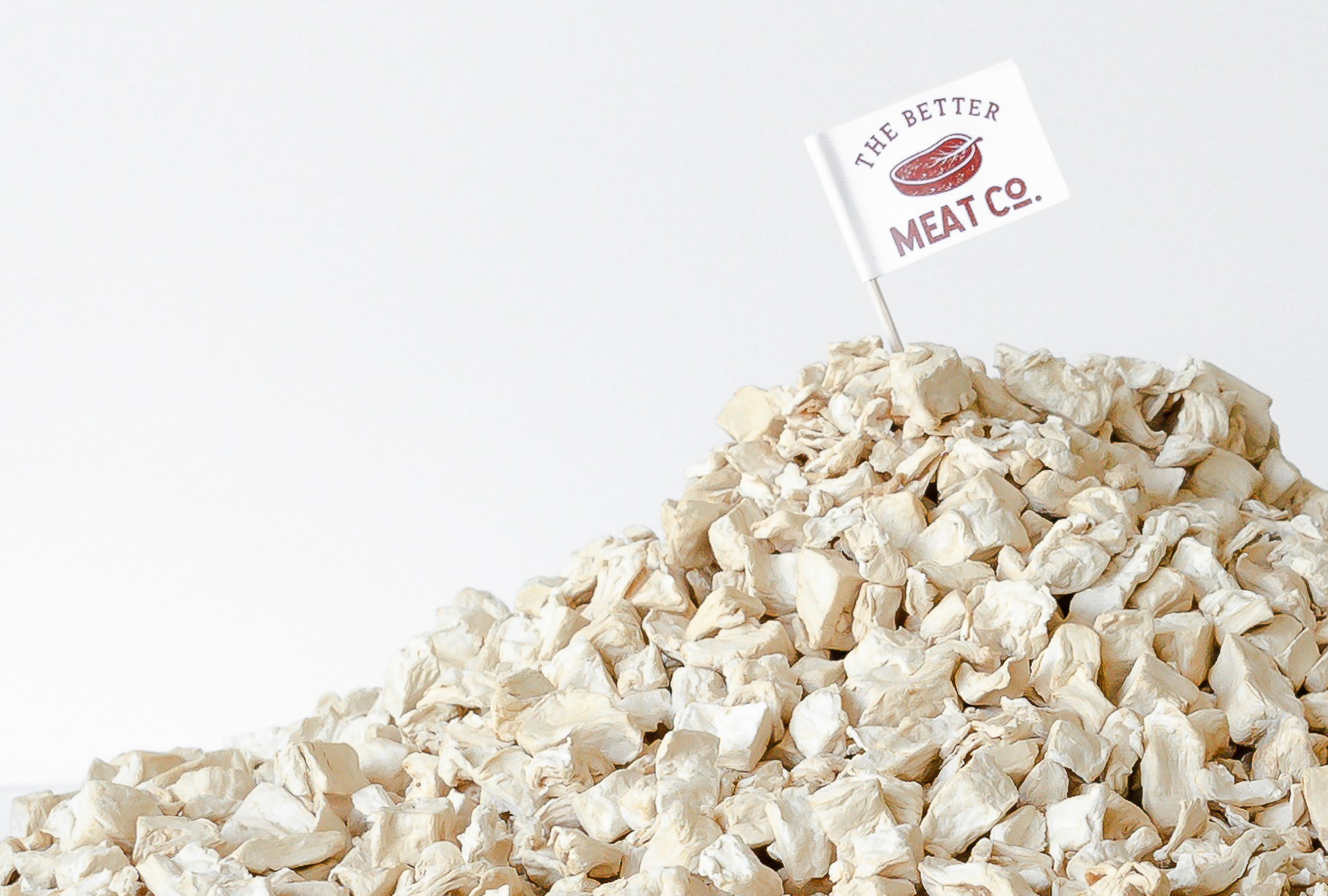
Funding headlines are quieter, but money is still moving. EVERY’s US$55 million Series D, Melt&Marble’s Series A, The Better Meat Co’s US$31 million raise, and Maia Farms’ oversubscribed seed round all point to the same pattern: investors are backing platforms with clear routes to manufacturing, customers, and unit economics.
What’s changed is the bar. Capital is flowing toward companies that can demonstrate relevance inside today’s food system – not just alignment with future narratives.
That shift explains why Chicago matters. With more than 400 attendees expected and 25 exhibitors spanning processing, fermentation, analytics, and scale-up services, the event is structured around practical decision-making. It is a place for suppliers, founders, engineers, and investors to compare notes on what actually works.
Four zones, one conversation
The 2026 edition of The Future of Protein Production Chicago is deliberately expansive. Alongside two dedicated conference tracks – one for protein production broadly, one for cultivated meat – the event includes a startup innovation showcase and a free-to-attend exhibition floor.
Even visitors coming only for the exhibition can network across the full delegate base, reflecting a reality the industry is increasingly accepting: progress depends on interaction between technologies, not silos.
With exhibitors including Alfa Laval, Angel Yeast, Flottweg, GEA Group, Hosokawa Micron Powder Systems, Hydrosol, Krohne Food & Beverage, Merrick & Company, IKA, Solaris, SPX GFlow, and more, the floor itself tells a story about where effort is being applied – and where solutions are being built.
Why Chicago, why now
Taken individually, none of the developments from the past year signals a breakthrough moment. Taken together, they suggest something more durable: an industry settling into the work of scale.
That is why Chicago matters. Not because it promises answers to every challenge, but because it brings the right conversations into one room at the right time – across fermentation, cultivated meat, ingredients, equipment, software, and capital.
The quieter phase of alternative protein is proving to be its most constructive yet. And for those building, supplying, or investing in what comes next, standing still may now be the bigger risk.
More than 100 speakers will be taking to the stage at The Future of Protein Production/Cultured Meat Symposium on 24/25 February 2026. To join them and more than 400 other attendees, book your conference ticket today and use the code, 'PPTI10', for an extra 10% discount on the current rate. Click here

Join Us At One Of Our Upcoming Events

If you have any questions or would like to get in touch with us, please email info@futureofproteinproduction.com


