Craft BioSolutions targets biomanufacturing bottleneck with modular bioreactor model

Craft BioSolutions has set out to tackle one of industrial biotechnology’s most stubborn commercialization problems with modular, lower-cost bioreactors designed to give companies an alternative to committing early to large, capital-intensive fermentation facilities.
• Craft BioSolutions was developing modular bioreactors aimed at reducing the cost, complexity and infrastructure requirements associated with scaling biological production.
• Founder and CEO Mitchell Craft argued that conventional large-scale facilities could leave emerging biomanufacturers exposed to high capital costs, long construction schedules and uncertain utilization.
• BCG estimated that biomanufactured ingredients could become a US$200 billion market by 2040, requiring around 2.4 billion liters of global fermentation capacity.
Founder and CEO Mitchell Craft outlined the thinking behind the company in an article published on August 17, arguing that advances in biological design were creating products faster than existing manufacturing infrastructure could economically accommodate them.
“The bottleneck is no longer whether biology can make the product,” Craft wrote. “It is whether we can build the hardware that lets it leave the lab.”
The argument comes as industrial biotechnology companies face a difficult question over how much manufacturing capacity to build, when to build it and how much capital to commit before commercial demand has been firmly established.
Craft pointed to estimates from Boston Consulting Group suggesting that biomanufactured ingredients spanning specialty chemicals, food and chemical precursors could represent a US$200 billion market by 2040.
Reaching that scale, however, would require a dramatic expansion of manufacturing infrastructure. BCG estimated that around 6,000 new fermenters across approximately 1,000 biofoundries would be needed, providing some 2.4 billion liters of total fermentation capacity - around 20 times current capacity.
For Craft, the scale of that requirement exposed a problem with relying predominantly on conventional large-scale plants.
“A factory is a fixed bet on the future,” he wrote. “It assumes you know what product you will make, how much you will sell, what it will cost to produce, and how consistently demand will arrive. But biological product development does not move that way.”
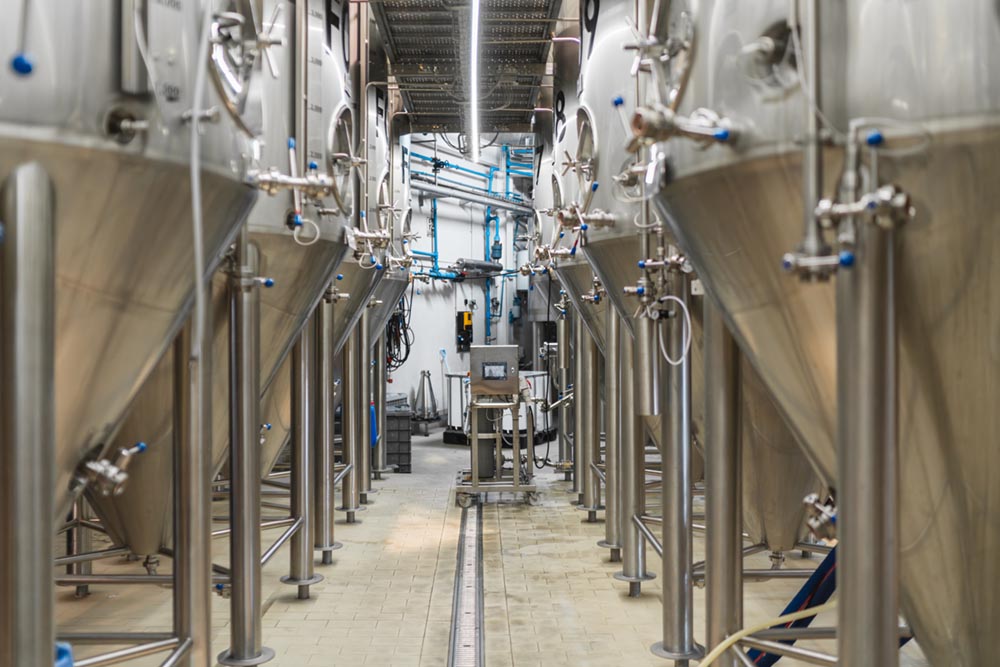
Traditional large-scale fermentation facilities can require hundreds of millions of dollars in capital and several years to design, construct and commission. BCG estimated that optimized facilities could ultimately reduce production costs by around 50%, but financing the infrastructure needed to reach those economics has proved difficult for some emerging biomanufacturers.
Craft cited Liberation Bioindustries’ 600,000-liter precision fermentation facility in Richmond, Indiana, where construction was paused while the company sought additional financing. The facility was reported to have been around 75% complete.
He also pointed to developments in cultivated meat manufacturing.

Believer Meats invested more than US$150 million in its facility in Wilson, North Carolina, before ceasing operations in late 2025. The site subsequently entered a court-supervised sale process, with UPSIDE Foods submitting a US$50 million stalking-horse bid.
UPSIDE had itself previously paused plans for a US$141 million commercial-scale cultivated meat facility in Glenview, Illinois, choosing instead to focus on its existing operations in Emeryville, California.
“These are not simply stories of companies that miscalculated,” Craft wrote. “They are not proof that large-scale fermentation doesn’t work. They are a warning about the model we are relying on to get there.”
Craft BioSolutions is pursuing a different manufacturing model built around modular equipment that could allow producers to add capacity incrementally rather than scaling predominantly through larger individual vessels.
The approach is intended to address a commercial reality that Craft argued was poorly suited to fixed, high-utilization manufacturing infrastructure. Early-stage biological products can have uneven production requirements as companies move between customer trials, regulatory processes, reformulation and commercial orders.
“A company may need twenty 50-liter runs this quarter, two 500-liter runs next quarter, and then nothing for six weeks while it reformulates, waits on a field trial, or moves through regulatory approval,” he wrote. “No business only goes up.”
That variability can leave companies choosing between contract manufacturing and building dedicated facilities. Contract manufacturers can provide access to infrastructure without the upfront capital requirement, but availability, process compatibility and cost can become constraints.
Dedicated plants give producers greater control, but their economics typically depend on maintaining sufficient utilization once substantial capital has been committed.
Craft argued that public pilot plants, university facilities and contract manufacturers remained important parts of the ecosystem, but would not alone provide the manufacturing capacity required if biological product development expands at the rate anticipated.
The company is also targeting operational constraints around labor, cleaning and sterilization, and oxygen delivery.
Craft described bioprocessing as unusually reliant on experienced operators whose knowledge can be difficult to capture in standardized procedures. BioMADE has estimated that the US bioeconomy supported almost 650,000 jobs in 2023 and could require at least one million workers by the end of the decade.
“We will not close that gap by assuming there are hundreds of thousands of experienced bioprocess engineers waiting to be hired,” Craft wrote.
Product changeovers represent another challenge, particularly in multiproduct facilities. Conventional systems can require extensive clean-in-place and sterilize-in-place processes involving steam, chemicals, water and downtime before another organism can be introduced.
Certain microorganisms can present additional concerns for contract manufacturers. Craft recalled speaking with a founder working with a spore-forming microorganism who had contacted more than 100 contract manufacturers before finding one prepared to handle early production because of concerns over contamination of subsequent batches.
Oxygen transfer is another area Craft BioSolutions wants to address.
Conventional aerobic fermentation commonly relies on mechanical agitation and aeration to provide microorganisms with sufficient oxygen. As vessel size increases, maintaining suitable mixing and mass transfer while controlling shear, energy consumption and other process parameters can become increasingly difficult.
Craft argued that these changing physical conditions were one reason moving from laboratory to commercial production could prove challenging.
“That makes scale-up less like copying a recipe and more like relearning how the recipe behaves in a different universe,” he wrote.
Craft did not argue that modular systems would replace conventional large fermentation facilities entirely. High-volume products and commodities could continue to require large-scale stainless-steel plants operating at consistently high utilization.
Instead, Craft BioSolutions is targeting applications where manufacturers need greater flexibility between products, production volumes and locations.
“But the next generation of biological products needs another option: modular, lower-energy, data-rich systems that can operate with fewer specialized engineers, switch products without week-long cleaning cycles, and scale out rather than forcing every process into a larger tank,” Craft wrote.
The underlying bet is that manufacturing infrastructure will have to become more flexible as biological discovery accelerates. AI, laboratory automation and increasingly sophisticated biological design tools are shortening parts of the development process, potentially increasing the number and variety of products seeking a route from laboratory production to commercial manufacturing.
For Craft BioSolutions, meeting that demand will require equipment that can expand alongside the market rather than asking emerging companies to predict years of future demand before construction begins.
“Biology is becoming increasingly programmable,” Craft wrote. “Product portfolios will become more diverse. Production will need to move faster than a five-year construction cycle.”
“We do not need a slightly better version of the old factory,” he added. “We need to reimagine the infrastructure being built and what we are asking it to do for us.”
If you liked this, check these out...
• FluxBio targets fermentation bottleneck with Harvard-developed gas transfer technology
• Invest-NL brings Dutch agrifood leaders together to break bottlenecks in the protein transition
• New Wave Biotech joins forces with CPI to break through lipid extraction bottleneck

Join Us At One Of Our Upcoming Events

If you have any questions or would like to get in touch with us, please email info@futureofproteinproduction.com