


Deco Labs launches plant-based albumin alternative cAlbumin for cell culture applications

Deco Labs has announced that it has launched cAlbumin, a plant-derived protein formulation designed to replace one of the most widely used and costly components in animal cell culture media, targeting a key barrier to scale in biomanufacturing and cell-cultivated meat production.
• Deco Labs introduced cAlbumin, a rapeseed-derived protein designed to replace recombinant and bovine serum albumin in cell culture media.
• The product was animal-origin-free and aimed to reduce costs while maintaining or improving cell growth performance across multiple cell types.
• Validation work showed comparable or improved growth performance, with early data suggesting potential cost reductions at both research and industrial scale.
The product marked the company’s first commercial launch and reflects a broader focus on developing plant-origin inputs for animal cell culture systems.
Natalie Rubio, Co-founder & CEO of Deco Labs, said, “We focused on solving albumin because it was the leading cost driver in our own animal cell cultivation processes.”
Albumin plays a central role in supporting cell viability, stability, and proliferation, and is widely used across biopharmaceutical production, cell therapy, and cell-cultivated meat. Typically sourced from animals or produced through recombinant processes, it remains one of the most complex and expensive ingredients in media formulations, particularly at scale.
“Across cell types, cAlbumin consistently matches or exceeds the performance of rAlbumin/BSA, as quantified by growth rate over multiple passages,” Rubio said. “It works as a complete albumin replacement and is often optimally effective at relatively lower inclusion rates.”
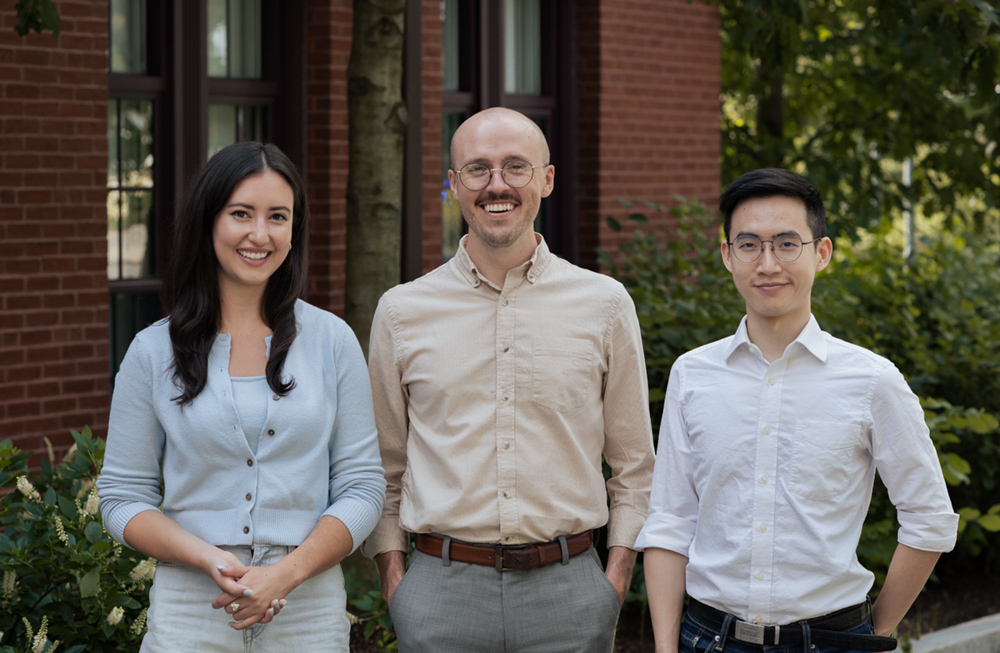
cAlbumin is produced from Brassica napus, commonly known as rapeseed, and has been developed as a functional replacement for albumin. The company reported that the ingredient has been validated across a wide range of cell types, including human induced pluripotent stem cells, bovine cells, porcine cells, and fish cells.
“cAlbumin has been validated extensively in adherent, 2D culture and select 3D bench-scale systems, and we’re working toward collecting validation data in pilot-scale bioreactor environments,” Rubio said.
Cost reduction remains a central focus for developers working with animal cell culture systems.
“Compared to recombinant human serum albumin, our R&D volumes are ~70% less costly,” Rubio said. “We’ve completed a third-party techno-economic assessment of our process demonstrating that the cost savings will significantly increase at industrial scale.”
That cost differential becomes more significant in applications such as cell-cultivated meat, where media costs are widely cited as a barrier to commercialization.
“For many of our prospective customers, albumin is their leading cost driver and is their number one priority target for cost reduction,” Rubio said. “For example, in Beefy9 media, recombinant albumin contributes 53% of media costs (US$24.56 per liter of complete media). Switching to cAlbumin reduces this cost to US$1.00 per liter at pilot scale (i.e., kgs) and US$0.035 per liter at commercial scale (i.e., metric tons).”
Deco Labs indicated that cAlbumin has already been used as a core component in its own bovine fat cell line, supporting stable growth for over 200 days. This suggests potential applicability in cell-cultivated meat systems, where reducing media costs is widely seen as a critical barrier to commercialization.
“Generally, cells thrive at relatively lower concentrations of cAlbumin (further accentuating cost savings!),” Rubio said.
Deco Labs has positioned cAlbumin as a drop-in replacement, designed to integrate into existing media formulations without requiring major reformulation.
“It’s easy for users to switch from rAlbumin or BSA to cAlbumin; we just recommend running an initial concentration screen (0.05–0.8 mg/mL) to determine the optimal inclusion rate for the specific application at hand,” Rubio said. “In a couple of instances, a gradual adaptation process has been helpful in acclimating cells to cAlbumin formulations, but direct adaptation works most of the time.”
Consistency and supply reliability remain key concerns for developers evaluating new media components.
“The number one question we get from prospective customers is concern over batch variation,” Rubio said. “We’re currently running comprehensive experiments to assess lot variability risks and designing QC processes to ensure consistent performance across lots, scales, and production facilities.”
“We also currently validate the performance of every single batch in cell culture (using our in-house bovine dedifferentiated fat cell line and our automated HT multi-passage cell culture platform) prior to shipping externally,” she said.
“Our manufacturing process is based on unit operations with demonstrated scale,” Rubio said. “We are working with industry experts with decades of experience in cell culture media ingredient formulation to design our raw material sourcing and QC processes around consistency.”
“One great advantage is that our ingredient has a long shelf life (1+ year), so customers will be able to buy large volume batches, ensure efficacy for their use case, and use the same batch for multiple production runs to assuage this concern,” she said.
The ingredient is 100% xeno-free and produced without genetically modified crops, aligning with efforts to reduce reliance on animal-derived inputs in cell culture systems.
“We have had dozens of groups (companies, academics, research institutes) across the globe (13+ countries!) validate cAlbumin across numerous species and cell types,” Rubio said. “Specific results differ by cell line, but in general cAlbumin performs on par or superior to rAlbumin/BSA controls, as quantified by growth rate over multiple passages.”
Looking ahead, the company is developing additional products targeting other high-cost components in cell culture media.
“We have two additional products in our development pipeline: an amino acid supplement and a growth factor replacement,” Rubio said. “We see a huge opportunity for ingredient innovation in growth factor alternatives and have very exciting preliminary cell proliferation results for our FGF2 replacement product.”
As companies across biotechnology and alternative proteins continue to seek lower-cost, animal-free inputs, albumin alternatives such as cAlbumin are emerging as a key area of innovation. By targeting one of the most widely used and cost-sensitive components in cell culture, Deco Labs’ launch highlights ongoing efforts to improve both the economics and scalability of cell-based production systems.
The product is currently available for pre-order, with initial shipments expected as the company continues to expand validation and scale production.

Join Us At One Of Our Upcoming Events

If you have any questions or would like to get in touch with us, please email info@futureofproteinproduction.com

.jpg)
.jpg)
