
Does scaling still mean building a factory? Arjen van der Wijk says the model is changing

As food-tech companies rethink the assumption that growth requires a factory of their own, Cibus Nexum’s Arjen van der Wijk sees a more flexible manufacturing model emerging, built around existing assets, stronger partnerships and a clearer understanding of what should, and should not, be outsourced
For much of the alternative protein industry's first growth cycle, manufacturing ambition was often measured in stainless steel. Raise enough capital, prove the technology, build a facility and start filling it.
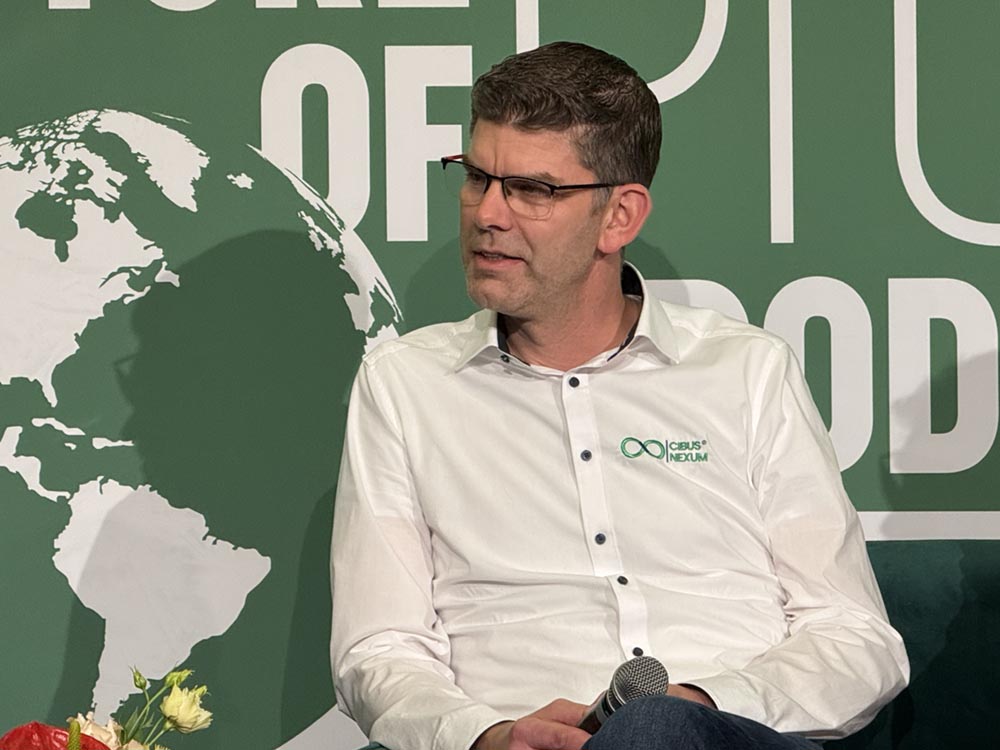
Five years after co-founding Cibus Nexum, Arjen van der Wijk has watched that thinking evolve. So, does he see a more mature industry today?
“Yeah, definitely. From the start, which was five years ago, it feels more mature. I think we're not there yet,” he says. “We've obviously seen a bit of a shift in investment willingness and interest, but I think we have reached a turning point now where there is clearly more focus and investors are picking up again.”
One of the clearest changes has been in the way companies think about manufacturing. Van der Wijk, whose background spans mechanical engineering, procurement and supply chains, has watched the preferred route to industrial scale evolve alongside the fortunes of the sector itself.
The awareness is much greater, with companies trying from the beginning to de-risk the potential challenges and hurdles that can happen later during industrial scaling, trials, and so on
“We've also seen the journey of CPG startups with great, promising journeys,” he says. “Then that focus shifted more to B2B solutions and ingredient suppliers – startups, for instance, aiming to launch and develop their own ingredients as suppliers. Now we also see a shift towards a more leverageable and flexible model of licensed manufacturing, and that relates more to an asset-light approach than a couple of years ago, which, of course, we see happening in daily practice as well.”
Building a food factory is expensive. Outsourcing production can reduce capital requirements and allow a young company to reach the market sooner. But deciding not to build a factory does not make manufacturing somebody else's problem.
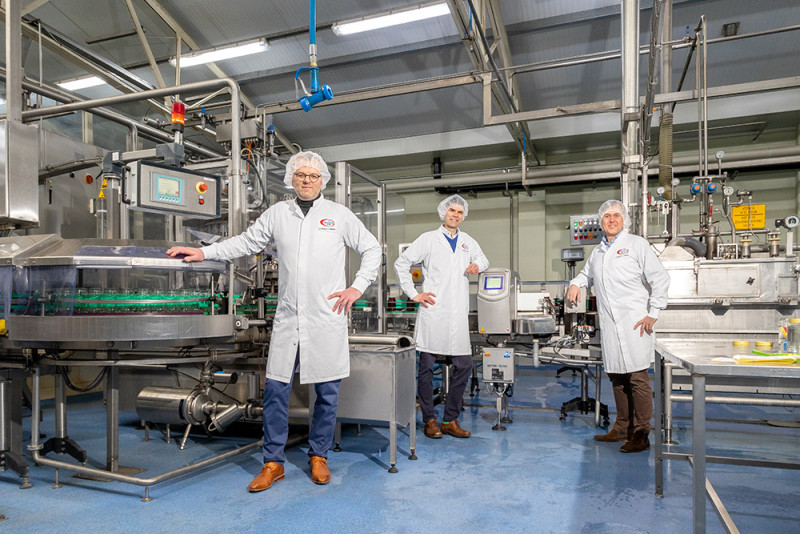
The asset-light reality
For Van der Wijk, the change is not simply financial. Companies are becoming more conscious of manufacturing much earlier in their development.
“So I think that's combined with a bit more awareness in general about what is the best fit,” he says. “From my perspective, looking at the manufacturing and supply chain side of things, the awareness is much greater, with companies trying from the beginning to de-risk the potential challenges and hurdles that can happen later during industrial scaling, trials, and so on.”
That means working backward from where a company ultimately intends to go rather than developing a process and only later asking how it might be industrialized.
“In general, yes, the developments and innovations are more focused from the beginning on how it looks in the end, but also calculating back ultimately from the final goal,” Van der Wijk says. “So, if a startup has an exit strategy or they want to team up with a big group, what does that roadmap look like, and what does the scaling look like? Also in terms of reaching TRL 9 with consistent, repeatable quality of production, but also in terms of the batch sizes, the total quantities, and the ambitions there.”
It is a significant reversal of the old sequence. Manufacturing strategy becomes part of the business model rather than an engineering exercise that follows it.
Van der Wijk has made the same argument when discussing make-or-buy decisions.
“Think first about where you want to end up,” he says. “Do you want to position yourself as a technology provider licensing your IP, or do you plan to sell the ingredient yourself using your own or co-manufacturing facilities? It’s really important to have clarity on that early, because it shapes how you structure your partnerships.”
For investors, the implications are equally important. Van der Wijk says the appetite for financing heavy infrastructure is very different from the willingness to back a business capable of scaling through existing assets.
Think first about where you want to end up. Do you want to position yourself as a technology provider licensing your IP, or do you plan to sell the ingredient yourself using your own or co-manufacturing facilities?
“Investors generally aren’t too eager to put their money directly into stainless steel – into factories and heavy infrastructure,” he says. “Instead, they tend to prefer scalable, agile, and leveraged investment models, where the return on investment is more attractive. That’s why an asset-light approach and collaborating with contract manufacturers, or combining your own setup with contract manufacturing, can make a lot of sense – it gives that flexibility and leverage investors like to see.”
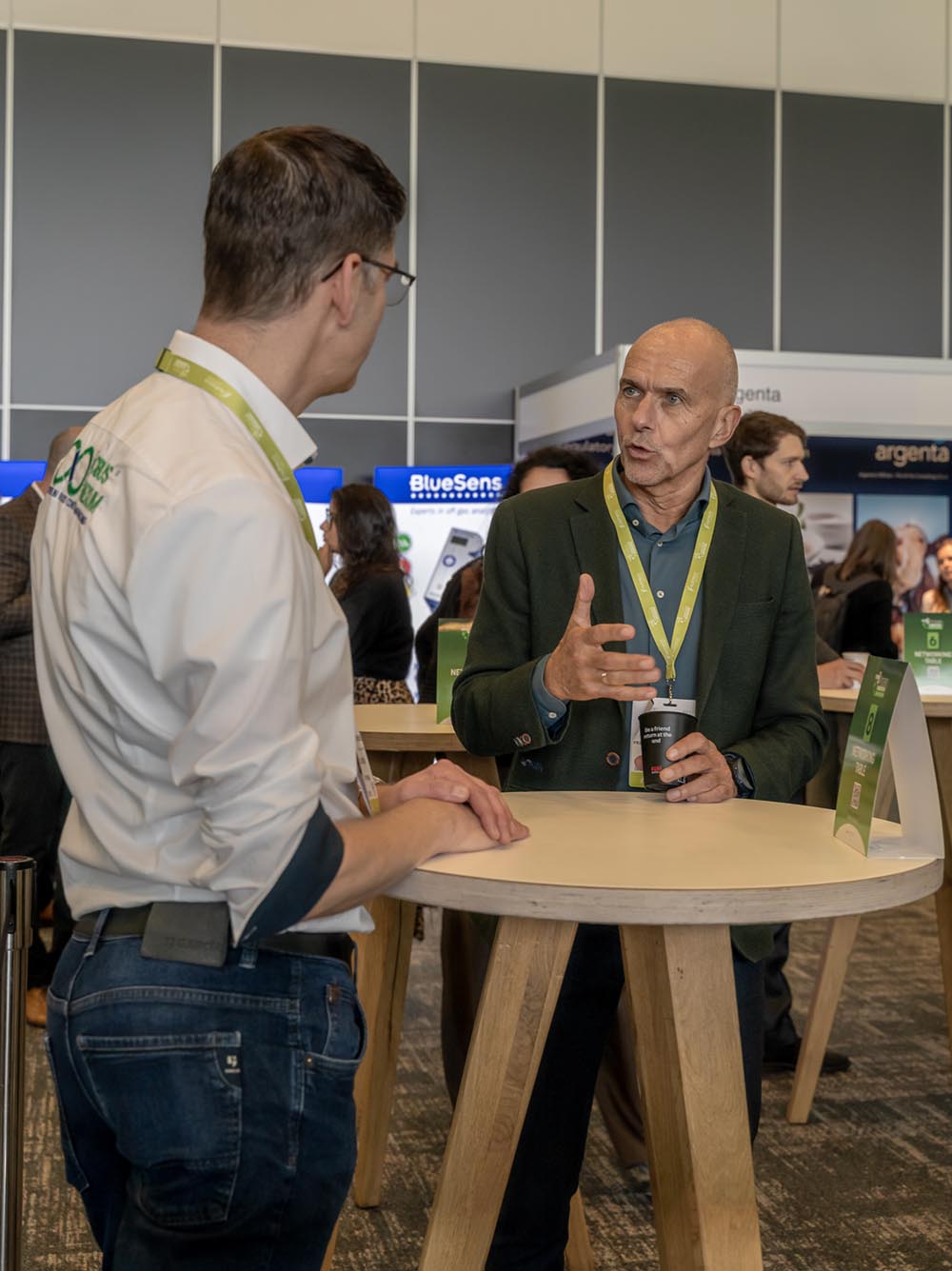
More than finding a factory
Asset-light can sound straightforward on a pitch deck. In practice, outsourcing creates another set of decisions.
Finding a co-manufacturer with available capacity is only the beginning. Equipment has to suit the process. Production needs to transfer successfully. Quality must remain consistent as volumes increase. Commercial terms need to work for both parties. And if a startup's process represents much of its value, sensitive knowledge has to remain protected.
Cibus Nexum structures that process through its FoodFlow Method, which covers production setup and briefing, identifying and screening manufacturing partners, trials, quality and economics, and ultimately sourcing and launch.
But Van der Wijk argues that the relationship cannot simply be transactional.
“It truly needs to be a partnership, not just a one-year arrangement,” he says. “Co-manufacturers also invest a lot – in R&D, in process optimization, and in dedicating their time and expertise to your product. It’s important to recognize and value that commitment.”
That expertise can become particularly valuable when a process developed at laboratory or pilot scale meets industrial reality. The company providing the equipment and capacity may also bring years, sometimes decades, of experience operating the process.
Van der Wijk sees particular potential in Contract Development and Manufacturing Organizations, where development expertise sits alongside manufacturing capacity.
“That extra ‘D’ makes a big difference,” he says. “With a traditional CMO, you might just send your product for co-packing under a one-year contract – they do their job, but there’s little collaboration on innovation or process improvement. In contrast, a CDMO brings that development expertise – they’ve often spent decades mastering specific processes, like spray drying, and know exactly which parameters to adjust to achieve the best results for your particular product.”
For a startup, there can be another economic advantage. A manufacturing partner buying ingredients and commodities at significantly greater volumes may be able to access prices that an early-stage company simply cannot.
Protecting what makes the product valuable
IP remains one of the most obvious tensions in outsourced manufacturing. If the process itself represents a substantial part of a company's competitive advantage, handing production to somebody else can appear to create precisely the exposure the business wants to avoid.
Cibus Nexum's work with Paris-based plant-based meat company La Vie offers a practical example.
La Vie had gained traction with its plant-based bacon and subsequently expanded into sausages, but increasing production brought challenges, particularly in downstream processing. The company needed additional capacity and greater production resilience while retaining control over its IP.
The answer was not simply to find a factory and transfer the complete process.
It truly needs to be a partnership, not just a one-year arrangement. Co-manufacturers also invest a lot - in R&D, in process optimization, and in dedicating their time and expertise to your product
Cibus Nexum worked with La Vie to develop a supply-chain strategy that identified which stages needed to remain under tighter control and which could be scaled with external partners. It then supported partner identification, trials and implementation.
The resulting model allowed La Vie to protect IP in the early stages of production while establishing multiple production hubs across Europe. Rather than becoming dependent on a single manufacturing route, the supply chain was designed to provide greater flexibility as demand changed.
There was also a less obvious lesson. The original plan did not survive intact.
Feedback from experienced manufacturers challenged assumptions and led to changes in requirements as the project progressed. For Van der Wijk, that willingness to listen is part of successful scale-up. A manufacturing partner should not necessarily be expected simply to reproduce whatever arrives from the development team.
“Yes, there is always some level of risk,” he says. “But there are effective ways to manage it – through collaboration agreements, non-disclosure agreements, and well-structured partnerships. And in many cases, that collaboration can actually strengthen the business rather than threaten it.”
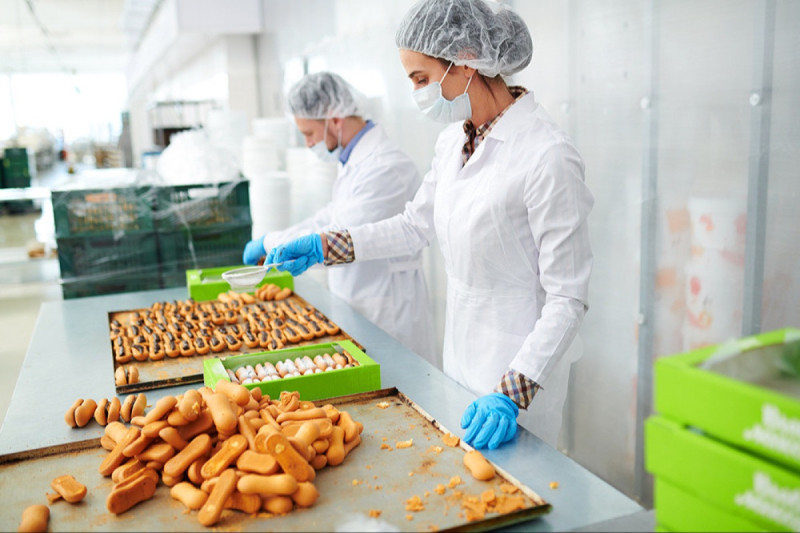
Using what already exists
The argument for making better use of existing manufacturing infrastructure becomes particularly interesting as the products themselves evolve.
Hybrid foods are one area Van der Wijk expects to grow. Cibus Nexum is seeing projects that combine conventional ingredients with pulses, beans, vegetables, mycelium, fungi and fermentation-derived components.
From a manufacturing perspective, their advantage may be that they do not necessarily demand an entirely new industrial system.
“And the nice thing here is to see that, from a manufacturing point of view, these solutions aren't aiming for totally or completely new processes,” he says. “They can already be embedded in existing processes or use existing equipment types.”
The products themselves are also becoming more sophisticated.
“So it's not just about creating patties with some kind of jackfruit or other pulse powders in there. It's more sophisticated,” Van der Wijk says. “You can't see it everywhere on shelves or in launched products yet, but we see it coming right now in new productions. It can take a year or two until it fully emerges and is launched, but it's happening, absolutely, yeah.”
That could have important consequences for the economics of the next generation of protein products. An industry that has spent years wrestling with the cost of dedicated production infrastructure may increasingly be able to introduce new ingredients and technologies through equipment already operating at food scale.
Van der Wijk says companies are finding ways to work with businesses that already have the necessary assets, bringing different capabilities together rather than recreating infrastructure from scratch.
“So yeah, I can say it's picking up,” he says. “Once you're in the valley, the only way is up, and I think we're heading in that direction right now.”

From contract manufacturing to licensed manufacturing
Perhaps the clearest indication of how far attitudes have moved came toward the end of PPTI's recent Road to Amsterdam webinar.
Van der Wijk summarized several years of changing manufacturing strategies in a few sentences. “Maybe just a really short one, and that's also reflecting on the previous years. We saw solutions move from CPG products to B2B ingredient solutions. Then companies were saying, 'I want to have my own plant'. Then they said, 'No, I don't want to have my own factory. I want contract manufacturing solutions'.”
Now, he believes another model is emerging.
“The next logical thing is the licensed manufacturing model that we see happening right now, which is a combination of both manufacturing and sales and distribution.
“So I think, from my point of view, it makes a logical next step.”
It is a long way from the assumption that every successful food-tech company eventually needs a large factory bearing its own name.
The next logical thing is the licensed manufacturing model that we see happening right now, which is a combination of both manufacturing and sales and distribution
The more useful question may now be what a company genuinely needs to own.
For some, that will still include production assets. For others, the valuable core may be the technology, IP, process knowledge and customer relationships, while industrial partners contribute manufacturing capacity, development expertise and potentially even access to markets.
It also explains why make-or-buy is becoming less of a binary decision. A company might own the part of the process where its critical IP resides, outsource downstream operations, use different manufacturers in different markets or ultimately license the technology to established industrial players.
Van der Wijk expects the same thinking to extend into more resilient supply chains, greater use of side streams and products that can make better use of existing food infrastructure.
“And maybe also in line with what Pia is saying, we will hopefully shift away from hyper-processed substitutes and towards less complex configurations using existing infrastructure,” he says.
“So yeah, I think there is lots to happen. And as I mentioned already, I think mycelium, fungi, and blended hybrids will be important.”
The alternative protein sector may still need plenty of stainless steel. The difference is that its innovators are becoming much more selective about who needs to own it.
Cibus Nexum is one of more than 65 companies exhibiting at The Future of Protein Production Amsterdam, taking place at the RAI Amsterdam on November 4-5. The expo is free to attend, giving visitors the opportunity to meet Arjen van der Wijk and the Cibus Nexum team and discuss scale-up, co-manufacturing, supply-chain strategy and asset-light production. Visitors can register for a free expo pass or book a conference delegate ticket.

Join Us At One Of Our Upcoming Events

If you have any questions or would like to get in touch with us, please email info@futureofproteinproduction.com


