

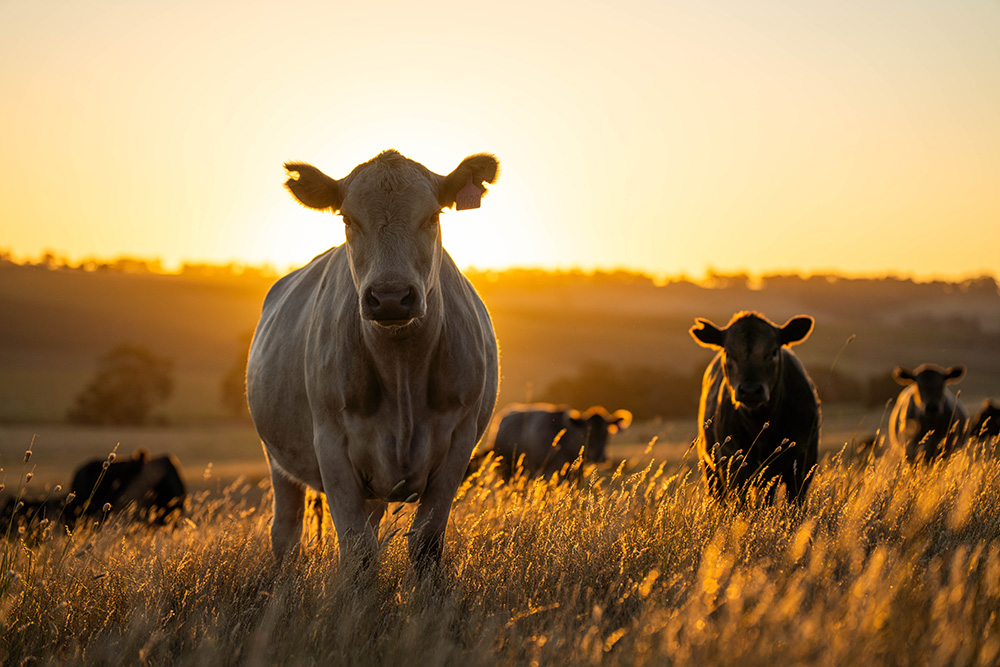
Eating less meat put billions in farm assets at risk, researchers warned

Eating less meat and dairy to meet climate, environmental, and health goals could place hundreds of billions of dollars in farm assets at risk across Europe and the UK, unless governments acted early to manage the transition, according to new academic research.
• Researchers found 78% of fixed agricultural investments in Europe and the UK were tied to livestock and animal feed production.
• Up to US$277 billion in farm assets could be stranded under the most extreme dietary shift scenario.
• Scientists said targeted policies could reduce losses by allowing gradual depreciation and asset reuse.
Scientists widely agreed that reducing consumption of animal products was essential to protect the climate, biodiversity, and human health. However, the shift toward more plant-based diets also implied fundamental changes to agricultural systems that had been built around livestock production for decades.
The new study, carried out by researchers from Leiden University, the University of Oxford, and Vienna University of Economics and Business, examined how these dietary changes could affect the economic value of existing farm infrastructure. The findings were published in the peer-reviewed journal Nature Food.
The researchers focused on the concept of stranded assets, investments that became economically obsolete before the end of their technical lifespan. In agriculture, these included barns, milking systems, machinery, and breeding animals that were designed specifically for livestock farming and could lose value if demand for meat and dairy declined faster than expected.
Their analysis showed that the majority of capital tied up in European and UK agriculture was concentrated in animal-based production. Across the region, 78% of fixed agricultural investments were linked to livestock and animal feed. Around €158 billion, equivalent to about US$172 billion, was directly associated with livestock farming, with a further €100 billion, or roughly US$109 billion, tied up in feed production.
The scale of potential losses varied depending on how rapidly diets changed and whether farmers were able to adapt existing investments. Under a moderate dietary shift, the researchers estimated that around €61 billion, or about US$66 billion, in assets could be at risk. With a stronger move away from animal products, this figure rose to €168 billion, or roughly US$183 billion. In the most extreme scenario, stranded assets could total as much as €255 billion, equivalent to around US$277 billion.
Lead author Anniek Kortleve from Leiden University’s Institute of Environmental Sciences said the risks were already tangible for farmers. “Stranded assets are not just a theory,” Kortleve said. “Most agricultural investments are focused on animal-based production, especially dairy and animal feed. This can discourage farmers from switching to plant-based production.”
The financial exposure extended beyond individual farms. According to the study, feed suppliers, food processors, logistics providers, banks, and rural communities could also be affected if large parts of the livestock sector lost value. Reduced profitability could ripple through supply chains, affecting employment and regional economies that depended heavily on animal agriculture.
Climate change added another layer of risk. Extreme weather events, droughts, and declining crop yields could further undermine the value of existing agricultural investments, particularly those designed for intensive livestock systems. Researcher José Mogollón said climate impacts were already accelerating the problem. “Climate change is already contributing to this problem,” Mogollón said. “Climate adaptation alone is not enough to remove these risks.”
Despite the scale of the challenge, the researchers said there were ways to limit economic damage if action was taken early. Many agricultural assets depreciated gradually, rather than losing all value at once. This created opportunities for policymakers and farmers to manage the transition over time instead of facing sudden write-downs.
Paul Behrens from the University of Oxford said the pace of change was critical. “This creates room to manage the transition properly,” Behrens said. “In the long term, food production could even become cheaper, but only if policies and investments change now.”
The study also pointed to practical options for repurposing existing infrastructure. Barns and other livestock facilities could potentially be converted for alternative uses such as mushroom cultivation, microgreens, or other forms of plant-based protein production, reducing the need for entirely new buildings.
According to the researchers, targeted policy measures would ultimately determine whether stranded assets became a barrier to dietary change or a manageable part of the transition. Support for writing down investments, restructuring debt, and converting facilities could help farmers adapt without bearing disproportionate financial losses.
Without such measures, the researchers warned that farmers might resist change, slowing progress toward more sustainable food systems. Their findings suggested that any serious effort to shift diets would need to account not only for consumer behavior, but also for the physical and financial realities already embedded in Europe’s farms.

Join Us At One Of Our Upcoming Events

If you have any questions or would like to get in touch with us, please email info@futureofproteinproduction.com


.jpg)
.jpg)
