ECOFERM consortium targets lower-cost precision fermentation with continuous production

A new public-private research consortium has been launched in the Netherlands to develop continuous fermentation technology designed to improve the economics and resource efficiency of precision-fermented protein production.
• NIZO Food Research, BFF, DAB.bio, Vivici, dsm-firmenich and Van Hall Larenstein University of Applied Sciences have launched the ECOFERM consortium
• The project will combine continuous fermentation with controlled cell agglomeration to retain microbial biomass inside the bioreactor
• Precision-fermented proteins, including beta-lactoglobulin, will be used to demonstrate the technology and explore its potential for industrial scale-up
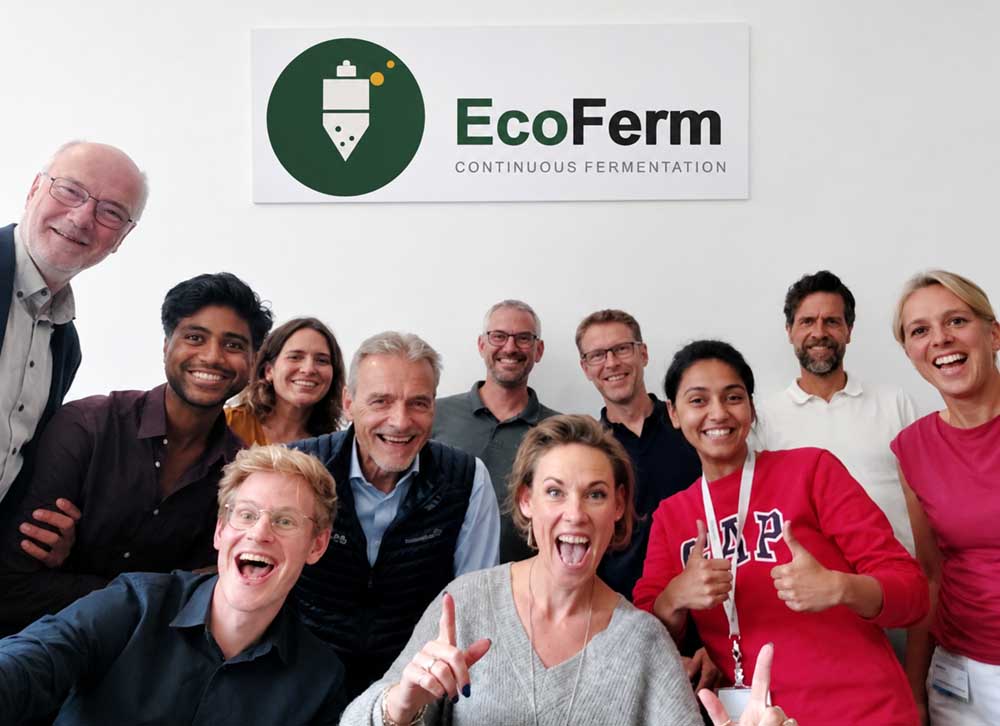
ECOFERM, short for Efficient Continuous Fermentation for Alternative Proteins, brings together NIZO Food Research, BFF, DAB.bio, Vivici, dsm-firmenich and Van Hall Larenstein University of Applied Sciences.
The consortium plans to develop and demonstrate a continuous fermentation process combining in-situ biomass retention with controlled cell agglomeration. The aim is to create a scalable production platform for high-value alternative proteins while tackling some of the cost and efficiency constraints associated with conventional fed-batch fermentation.
Precision fermentation has attracted growing interest as a means of producing proteins without conventional animal agriculture, but bringing those proteins to market at competitive prices remains difficult. Production costs, energy requirements and resource consumption associated with current manufacturing processes are among the barriers to larger-scale commercialization.
ECOFERM will investigate whether continuous production can help address some of those constraints by keeping microorganisms inside the reactor while allowing the fermentation product to be harvested continuously.
Compared with fed-batch manufacturing, continuous fermentation can make greater use of installed reactor capacity while reducing downtime associated with emptying, cleaning, filling, sterilizing and restarting vessels between production runs. Maintaining a stable microbial population for longer periods could also improve carbon yield and reduce downstream processing costs.
However, conventional continuous systems such as chemostats bring their own problems. Microorganisms leave the reactor with the outgoing process stream, while extended production campaigns can increase the importance of contamination control, genetic stability and consistent process performance.
ECOFERM intends to address the biomass-loss problem through controlled cell agglomeration. By encouraging microbial cells to form aggregates that remain within the bioreactor, the consortium hopes to retain biomass without relying on separation technologies such as membranes or centrifuges, which can add energy consumption, equipment and operating costs.
Precision-fermented proteins, including beta-lactoglobulin, will be used as demonstration cases. The partners intend to use these systems to validate the approach while generating knowledge that could be applied to a wider range of fermentation-derived ingredients.
Research will examine the biological, engineering and operational conditions needed to maintain continuous production over extended periods. Areas of investigation will include controlling stable cell agglomeration, optimizing the performance of DAB.bio's FAST reactor technology, assessing process robustness and developing strategies for industrial scale-up.
"Precision fermentation has enormous potential to contribute to a more sustainable food system, but further process innovation is needed to improve production economics," said project manager Robyn Eijlander of NIZO Food Research and BFF. "ECOFERM focuses on one of the most promising opportunities in the sector: combining continuous fermentation with efficient biomass retention to achieve higher productivity while reducing resource consumption and environmental impact."
The consortium's mix of research organizations, technology developers and protein producers is intended to allow the work to cover the process from biological behavior through reactor engineering and eventual manufacturing requirements.
For DAB.bio, the project also provides an opportunity to test continuous production technology in protein applications and build evidence around its performance at increasing scale.
"Continuous fermentation is widely viewed as a critical next step for the maturation of precision fermentation," said Eric van der Meer, CEO of DAB.bio. "Through this collaborative effort, we aim to generate the knowledge and demonstrate technological solutions needed to make continuous production a practical reality for the alternative protein industry."
The longer-term objective is to establish a platform that could be applied across different precision fermentation products rather than develop a process solely for a single protein.
ECOFERM is receiving financial support from TKI Agri & Food under project LWV26909. The Dutch public-private partnership brings businesses, knowledge institutions and government together to support research and innovation across the food and agriculture sectors.
If you liked this, check these out...
• VIVICI lifts precision fermentation output 30% with Enduro Genetics platform integration
• GEA steps in to scale BFF, building Europe’s missing middle for food-grade fermentation
• Vivici secures €12.5 million EIC Accelerator award to scale precision-fermented dairy proteins

Join Us At One Of Our Upcoming Events

If you have any questions or would like to get in touch with us, please email info@futureofproteinproduction.com