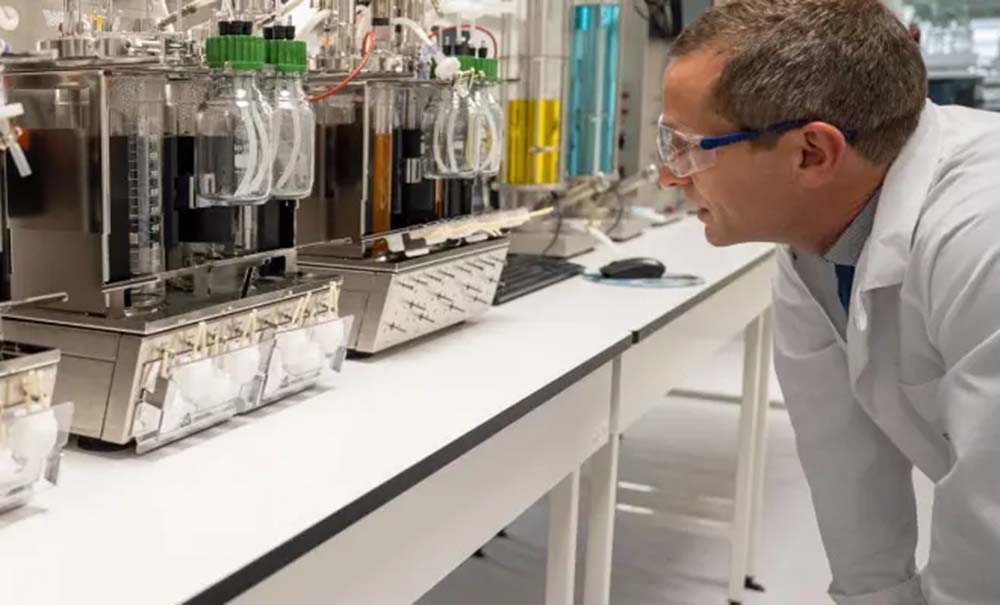
Ferments du Futur secures fresh France 2030 funding to expand fermentation research

Ferments du Futur has secured a new round of funding under France 2030, providing the public-private fermentation partnership with an additional €20 million (US$22.8 million) to accelerate research and innovation over the next three years.
• Ferments du Futur secured €19.1 million (US$21.8 million) from France’s National Research Agency to support the partnership’s second phase between 2026 and 2028.
• Around €5 million (US$5.7 million) will fund equipment for automation, digitalization, solid-state fermentation and post-fermentation processing across the CI2F and partner laboratories.
• The program added seven members in 2026 and is advancing research into sensory improvement, gut microbiome interactions and predictive fermentation modeling through its Siduri database.
The renewed support from France's National Research Agency (ANR) follows the completion of the program's first phase between 2023 and 2025, during which €10 million (US$11.4 million) was invested in research infrastructure across its Innovation Centre for Food Fermentation (CI2F) and partner laboratories. The partnership said the initial phase produced encouraging results, with full findings due to be published in early 2027.
The second phase, covering 2026 to 2028, will focus on expanding research capabilities and developing technologies that support more efficient and sustainable food fermentation.
Around €5 million (US$5.7 million) of the new funding will be used to purchase additional equipment for the CI2F and associated laboratories. Investment will be concentrated in three areas: automation and digitalization of food processing, solid-state fermentation, and optimization of post-fermentation processing required to purify or preserve finished products.
Ferments du Futur said automation and digitalization are becoming increasingly important for optimizing fermentation processes, while solid-state fermentation remains relatively underdeveloped in Europe despite its potential sustainability and innovation benefits. The program also plans to improve downstream processing technologies that help recover and stabilize fermentation-derived ingredients.
Launched in 2022, Ferments du Futur brings together nine research and higher education organizations, including INRAE, alongside 25 private companies and seven professional organizations. The partnership aims to advance scientific understanding of fermentation and associated technologies to support healthier diets and more sustainable food production.
According to the consortium, fermented foods may provide health benefits through interactions with the gut microbiome while also offering strong nutritional and sensory characteristics with relatively low levels of processing. Fermentation is also an important production platform for high-value ingredients including proteins, natural preservatives, natural colors and vitamins.
The ecosystem continues to expand, with seven new members joining the partnership during 2026.
Among the research areas highlighted by the consortium is the improvement of sensory characteristics in plant-based foods. Researchers have evaluated different fermentation cultures capable of modifying the aroma of pea-based products, producing a wide range of sensory profiles including brioche-like, fruity and even fish-like notes.
"If we can control the aromas of plant-based products through fermentation, we will be able to incorporate them more easily into our diet," said Damien Paineau, director of Ferments du Futur.
The work combines gas chromatography-mass spectrometry (GC-MS) with sensory evaluation panels to identify the compounds responsible for different aromas. Building on those studies, the partnership plans to acquire a tribometer that will allow researchers to better characterize food texture during consumption.
Another research priority focuses on understanding how microorganisms from fermented foods interact with the human gut microbiome. Scientists have been using BioLector XT microfermentation technology, which enables up to 48 simultaneous fermentations in 2 mL microplates, replacing more labor-intensive fermenters ranging from 100 mL to 250 mL.
Using the system, researchers reported that combinations of microbial strains isolated from fermented plant products produced favorable effects on certain gut microbial communities. Future work will be supported by the addition of a 3D printer designed to help researchers study the spatial organization of microorganisms and how they interact over time.
Ferments du Futur is also developing a data platform called Siduri, which is intended to support predictive modeling of fermentation processes.
The database is being designed to integrate information ranging from microbial genomes and fermentation behavior to their effects on food products and potentially the intestinal microbiome. Researchers are currently populating the platform with data generated through Ferments du Futur projects, with plans to incorporate public and industrial datasets in the future.
"We have developed analysis tools to predict the ability of ferments to produce vitamins from plant juices," Paineau said. "Siduri perfectly embodies Ferments du Futur's ambition to push boundaries by making modeling tools available alongside traditional experimental approaches."
The partnership believes the platform will eventually enable researchers to model and optimize fermentation processes before validating them experimentally, reducing the time and complexity involved in evaluating large numbers of microbial combinations.
With its renewed funding and expanded research infrastructure, Ferments du Futur will continue investing in technologies intended to strengthen France's fermentation research capabilities while supporting the development of next-generation food ingredients and fermented products.
If you liked this, check these out...
• Tetra Pak expands into industrial fermentation with new bioreactor platform
• The Protein Brewery: Why biomass fermentation’s next challenge is commercial execution
• Mondelēz selects Alpine Bio, Nourish Ingredients and fermentation innovators for CoLab Tech 2026

Join Us At One Of Our Upcoming Events

If you have any questions or would like to get in touch with us, please email info@futureofproteinproduction.com