
FUDI Protein wants to turn America’s alfalfa fields into the next great protein infrastructure network

Protein has become the defining nutrient of the modern food economy. It is being added to chips, sodas, candy bars, breakfast cereals, yogurts, and bottled water. GLP-1 users are reshaping nutritional priorities around satiety and muscle preservation. Food manufacturers are racing to fortify products without compromising texture or taste. Meanwhile, one of the industry’s foundational ingredients – whey protein isolate and concentrate – has entered a period of tightening supply and soaring prices.
Against that backdrop, Madison, Wisconsin-based FUDI Protein believed the answer was not hidden inside a biotech reactor or a new genetically engineered crop, but already growing across millions of acres of American farmland.
On 19 May 2026, the company opened a global equity crowdfunding campaign on WeFunder alongside its institutional fundraising round, inviting the public to invest in its effort to commercialize RuBisCO protein extracted from alfalfa leaves. Backed by Green Boy Group and more than two dozen additional investors, FUDI said the funding would support the transition from optimized lab-scale extraction to pilot production, customer sampling, regulatory work, and intellectual property development.
• FUDI Protein opened a global public investment round on WeFunder alongside an institutional raise to scale RuBisCO protein extracted from alfalfa leaves.
• The company said its white, neutral-tasting protein could function as a 1:1 replacement for egg white in foaming, gelling, and binding applications.
• Founder and CEO Udi Lazimy said the company was building regional protein-processing infrastructure integrated directly into existing agricultural systems.
RuBisCO – short for ribulose-1,5-bisphosphate carboxylase/oxygenase – is the most abundant protein on Earth. It drives photosynthesis in plants and has been discussed in scientific and alternative protein circles for years because of its amino acid profile and functional performance. Yet despite repeated interest, few companies have managed to commercialize it successfully at meaningful scale.
FUDI believed the industry had been approaching the problem from the wrong direction.
“Honestly, it crept up on me,” Founder & CEO Udi Lazimy said when asked when he realized the company might represent something larger than another ingredient startup. “I started out thinking we were solving a protein extraction problem: get Rubisco out of a leaf, do it economically, sell it to food manufacturers. But the more I sat with the numbers, the more I realized the leaf was the smaller story.”

That realization led him toward a much broader conclusion about agricultural infrastructure itself. “Alfalfa is already one of the largest crops in the USA by acreage, and it's a globally significant forage crop,” he said. “It's grown on tens of millions of acres, it fixes its own nitrogen, it doesn't need replanting every year, and almost all of it goes to feed cattle. The protein in those leaves, some of the highest-quality protein on the planet, is essentially being routed through a cow before it reaches a human plate, and most of it never does.”
Once he saw the scale of the existing agricultural system surrounding the crop, the company’s ambitions expanded beyond ingredient development.
“We're not inventing a new crop or asking farmers to change what they do,” Lazimy said. “We're unlocking a protein stream that's already growing in the ground, on land that's already in production, inside a supply chain that already exists. That's not an ingredient startup. That's infrastructure.”
The timing may have worked in FUDI’s favor. Protein demand has accelerated rapidly as manufacturers reformulate products around higher protein claims and consumers increasingly associate protein with satiety, fitness, and metabolic health. USDA market data cited by the company showed whey protein prices had risen more than 50% since January, with some suppliers reportedly sold out through the end of 2026.
Lazimy argued that the implications of the current shift extended far beyond short-term ingredient shortages.
“GLP-1 users are eating meaningfully less total food but proportionally much more protein per calorie,” he said. “Multiply that across tens of millions of users globally, layer in the general protein-fortification trend in mainstream packaged goods, and you have a demand curve that doesn't look like anything the industry was modeling five years ago.”
More importantly, he believed the coming bottleneck would not simply involve protein quantity, but protein functionality.
“The piece that gets under-discussed is functional protein demand,” he said. “It's not just more grams of protein, it's more grams of protein that have to gel, foam, bind, or emulsify inside a real product.”
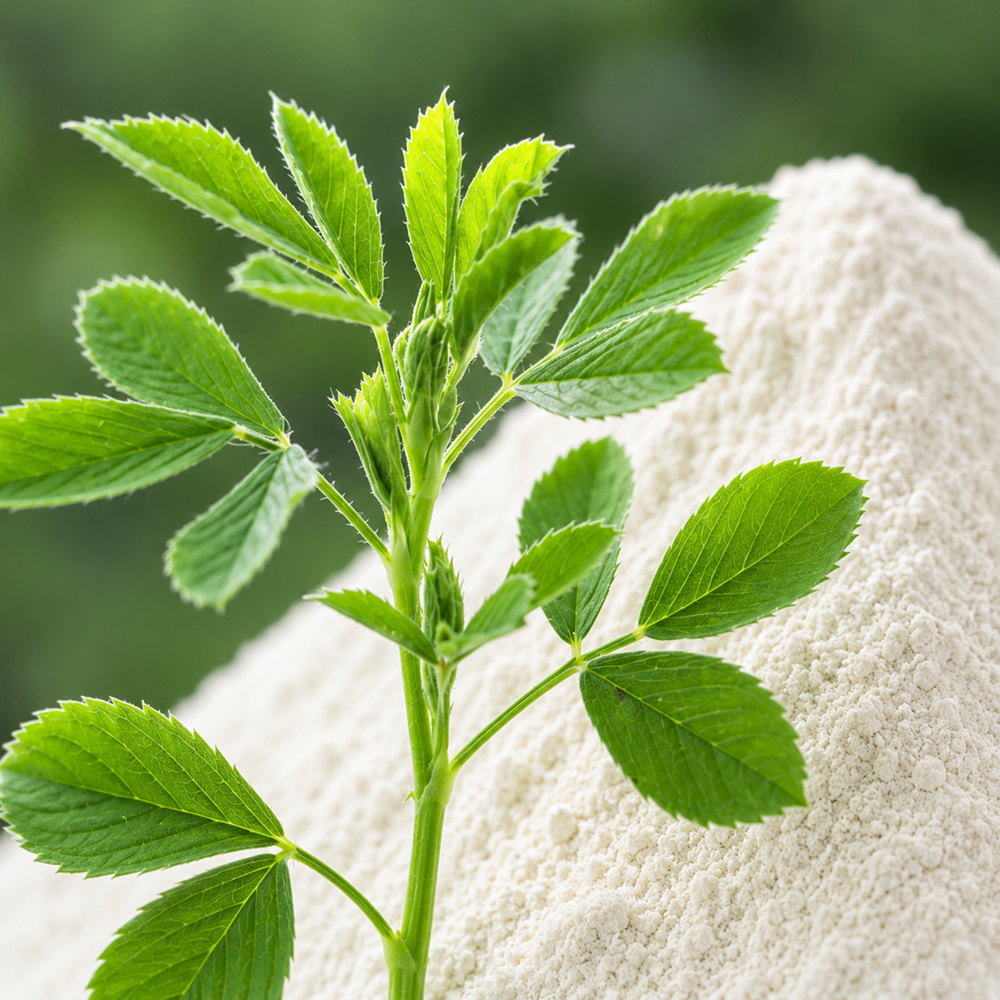
That distinction sits at the center of FUDI’s commercial thesis. The company described its RuBisCO ingredient as white, neutral-tasting, highly digestible, and capable of functioning as a direct replacement for egg white in applications requiring foaming, gelling, and binding.
“Every one of those formats has functional performance requirements, not just nutritional ones,” Lazimy said, referring to categories such as ready-to-drink beverages, protein snacks, dairy alternatives, and fortified baked goods. “Most of the protein the world produces is commodity-grade and functionally limited. The squeeze, when it comes, won't be on protein in general. It'll be on functional protein.”
That functionality, he argued, is what separates commercially viable next-generation proteins from commodity powders competing solely on nutrition claims.
“A protein that only delivers grams of protein is a commodity,” he said. “A protein that can replace egg white in a meringue, bind a plant-based patty, or stabilize a foam at low inclusion rates is something a formulator actually needs.”
The company claimed its RuBisCO ingredient delivered a complete amino acid profile with a PDCAAS score of up to 1.0, alongside strong thermostability and gelling behavior at lower inclusion rates than incumbent plant proteins.
“That's not a marketing claim,” Lazimy said. “That's a functional behavior food scientists immediately recognize as valuable.”
The challenge, however, was never simply extracting protein from leaves. RuBisCO has remained commercially elusive partly because leaf proteins present difficult processing challenges, particularly around taste, color, and scalability.
“The default outcome when you extract protein from a green leaf is a green, grassy-tasting, pigment-bound product,” Lazimy said. “Getting to white and neutral requires precise control of the extraction conditions and a careful separation of the pigment-bound fraction from the soluble protein fraction. That's where the proprietary work lives.”
That neutrality dramatically expanded the ingredient’s commercial potential.
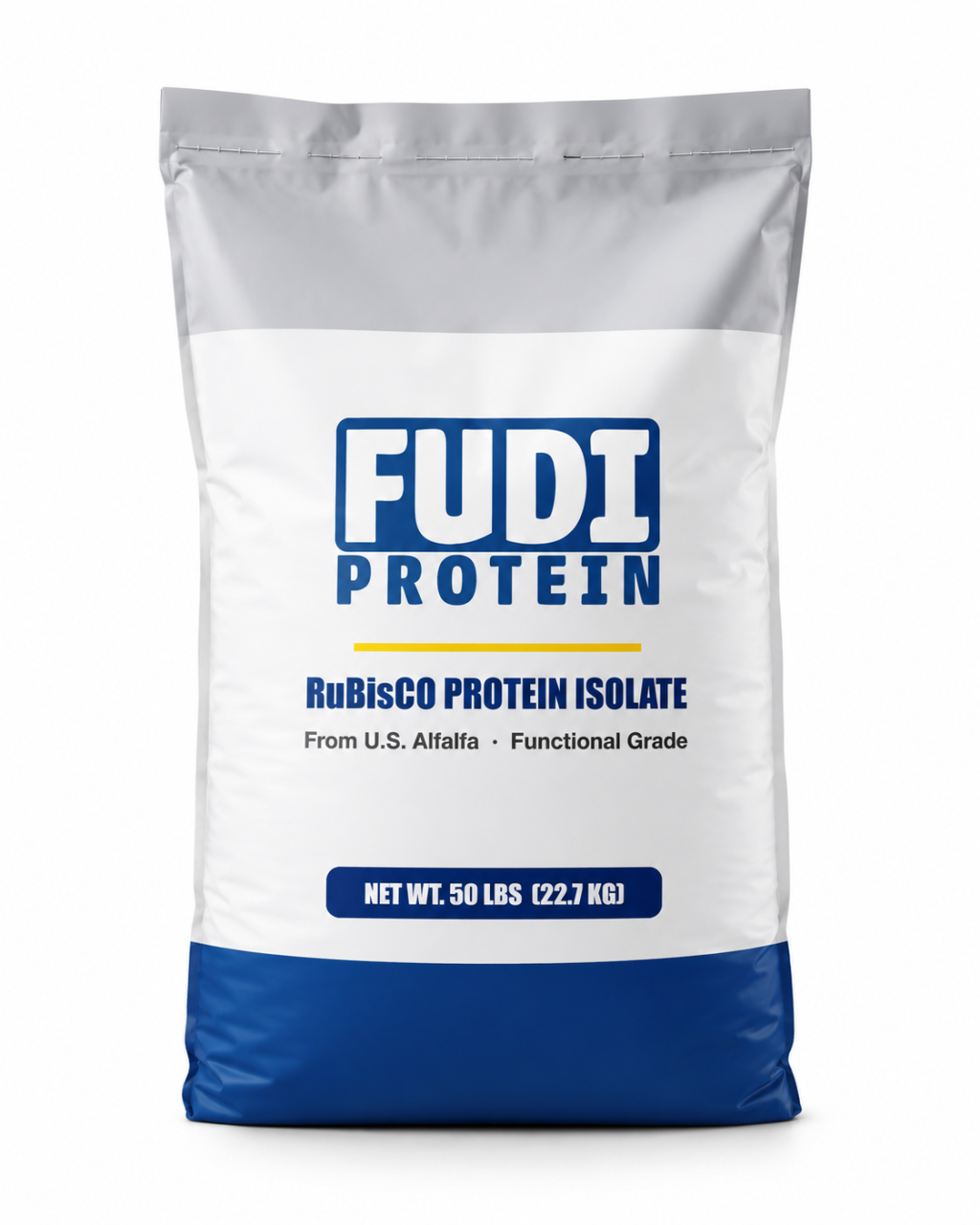
“A green, beany protein has maybe a dozen viable applications,” he said. “A white, neutral, thermostable protein with egg-white-like functionality opens up bakery, beverages where clarity matters, aerated confectionery and meringues, dairy and dairy-alternative formats, clean-label meat analogs, and on and on.”
The deeper complexity, though, sat outside the lab.
According to Lazimy, earlier RuBisCO efforts underestimated how much economics depended on feedstock logistics, regional processing infrastructure, and ownership of manufacturing systems rather than extraction chemistry alone.
“A lot of earlier work treated Rubisco as a science problem to be solved in a lab and then handed off to a contract manufacturer,” he said. “The economics of that path are brutal.”
Outsourced purification costs, he argued, could exceed the eventual sell price of the ingredient itself.
“You can have the world's best extraction chemistry and still not have a business,” he said. “You have to control the processing equipment, or the unit economics never work.”
That realization shaped FUDI’s operating model. Rather than relying on greenhouse-grown feedstocks or dedicated farming acreage, the company integrated directly into existing alfalfa-growing regions. Leaves are processed near the field, protein is extracted for human food, and the remaining biomass is returned to farmers as premium feed ingredient.
“Leaf protein doesn't travel well as wet biomass, so you have to process near the field,” Lazimy said. “Once you accept that, you're not building a protein company, you're building a regional processing platform.”
The approach also avoided one of the most common friction points in agricultural innovation: asking growers to fundamentally change their operations.
“It was essential, and it was a deliberate choice,” he said. “The history of agricultural innovation is full of beautiful ideas that asked farmers to change their rotation, their equipment, their buyers, their risk profile, and then wondered why adoption was slow.”
Instead, FUDI built its model around existing agricultural rhythms.
“Alfalfa growers are already growing alfalfa,” Lazimy said. “We're not asking them to plant something new or take on agronomic risk. We're offering an additional revenue stream from a crop they already harvest, on a schedule that fits how they already operate.”
That alignment appeared to resonate strongly with growers themselves.
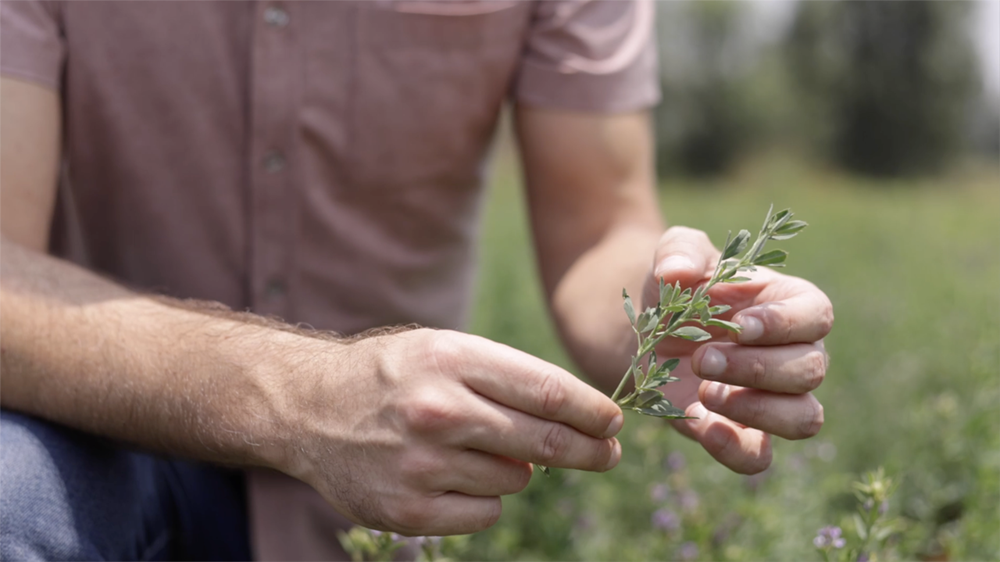
“We've had growers offer us years of free alfalfa and even a free on-farm facility to host our first commercial leased-equipment build-out,” he said. “That's not a transaction, that's a partnership.”
Beyond economics, Lazimy described an emotional dimension to those conversations that surprised him.
“What I find moving is when an older grower realizes the protein from their field could end up in a school lunch or a hospital meal,” he said. “There's a generational pride in that. Feeding people directly, not just feeding the animal that feeds people.”
The company’s model also touched on a larger geopolitical conversation beginning to emerge around food-system resilience and protein security.
“We've had energy sovereignty conversations, semiconductor sovereignty conversations, rare-earth sovereignty conversations, and food, somehow, has stayed in the background,” Lazimy said.
Despite its vast agricultural footprint, the USA still imports significant volumes of functional protein ingredients and relies heavily on overseas processing capacity.
“The US grows extraordinary volumes of commodity crops but imports a striking share of its functional protein ingredients,” he said. “The same fragility exists in Europe, in parts of Asia, across much of the world.”
For Lazimy, regional protein processing infrastructure represented less a nationalist project than a resilience strategy.
“If countries with enormous agricultural footprints still have to import the functional proteins that go into their own food systems, something in the value chain is being captured elsewhere that doesn't need to be,” he said.
He believed the same playbook could eventually apply well beyond American alfalfa regions.
“We're building it in the USA first because that's where we are and where our farmer partners are,” he said. “But the same playbook applies to alfalfa-growing regions in Europe, South America, Australia, and beyond.”
Still, the company remained in one of the most difficult phases of any ingredient scale-up: the transition from laboratory success to industrial production.
“The honest answer is the unglamorous middle,” Lazimy said when asked about the hardest part of commercialization.
“Lab scale is well understood. Full commercial scale is well understood. It's the pilot-to-first-commercial-line phase, where you're running real volumes for the first time, learning how your equipment actually behaves at scale, building the operational muscle to run continuously, and doing it all while burning capital, that breaks most ingredient companies.”
FUDI planned to move through that phase incrementally. First, by working with existing industrial partners at pilot scale. Then through leased equipment installed on donated farm property. Only after validating the economics and operational model would the company move toward full ownership.
“Each stage de-risks the next,” Lazimy said.
The public investment round formed part of that strategy. While institutional capital remained important, Lazimy said opening the company to broader participation reflected the decentralized philosophy behind the business itself.
“Capital we can raise from a handful of institutions,” he said. “What we can't raise from institutions is a base of people who feel some ownership of what we're building: farmers, food scientists, sustainability advocates, regional investors who care about American agriculture staying central to the future of food.”
“If we're going to argue that protein infrastructure should be distributed rather than concentrated, the cap table should reflect that too.”
For now, the immediate focus remained proving the ingredient in commercial products and scaling production economics. But Lazimy already viewed that as only the first phase of a much larger transition.
“In the near term we're an ingredient company because that's how you generate revenue and prove the thesis,” he said. “Within a few years we become a processing platform, because once you've built one near-field protein facility that works, the playbook replicates.”
Longer term, he believed leaf-based proteins could emerge as an entirely new ingredient category.
“Ten years out, if we've done our job, leaf-based protein is its own category, the way whey emerged from being a cheese byproduct into a multi-billion-dollar global ingredient,” Lazimy said.
“The thing I'd want a reader to take away, whether they're in Iowa or Ireland or India, is that this isn't about replacing anything. It's about unlocking a protein source that's already growing, on land that's already in production, inside an agricultural system that already works, and routing it toward humans instead of leaving it on the table.”

Join Us At One Of Our Upcoming Events

If you have any questions or would like to get in touch with us, please email info@futureofproteinproduction.com


%20-%20Photo%20Credit%20Matt%20Qu%C3%A9r%C3%A9e.jpg)

