Future of Protein Production Amsterdam sells out Startup Innovation Zone with 16 companies

A company preparing a 15,000-ton microbial protein plant. Another that has just produced 10 tons of fermentation-derived fat. A startup using AI to speed up food formulation. Another trying to remove the beany taste from pea protein altogether.
.png)
All four will be in the same corner of RAI Amsterdam next month, alongside another 12 startup companies. And meeting them won't cost anything.
• All 16 spaces in the Startup Innovation Zone at The Future of Protein Production Amsterdam have sold out
• More than 50 startups are expected across the two co-located events, spanning food, ingredients, fermentation, cultivated products and enabling technologies
• The Zone, Innovation Stage, NIZO, Bühler and RespectFarms workshops, event app and wider exhibition are all free to access
The Startup Innovation Zone at The Future of Protein Production Amsterdam has now sold out, filling all 16 spaces available for the November 4-5 event. For anybody trying to keep track of where protein innovation is actually heading, it has produced an unusually varied lineup.
MicroHarvest is among those arriving with considerably more than a laboratory concept. The Hamburg company is already supplying microbial protein for pet-food products across Europe and the UK and is preparing a 15,000-ton annual capacity facility in Leuna, Germany, backed by up to €5.46 million (US$5.9 million) in federal funding.
Its protein is produced in 24 hours using fermentation. "Our hardest challenge has been navigating the dual complexities of scaling a biotech process quickly while maintaining commercial viability in a capital- and regulation-intensive sector," Co-founder & CEO Katelijne Bekers told PPTI earlier this year.
Nourish Ingredients has recently answered one of those scale questions for itself. The Australian company completed a 10-ton production run of Creamilux with SD Guthrie International Speciality Ingredients in the Netherlands, giving it material for customer trials across dairy, plant-based, confectionery and other applications.
"We saw building and running our own large-scale fermentation and processing infrastructure as a slow, capital-intensive path that the investment market just isn't in the right headspace for," CEO & Co-founder James Petrie told PPTI. "Partnering with an established manufacturer gives us a faster, lower-risk route to market, and lets us focus our resources on the technology and commercial side rather than plant construction."
Happy Plant Protein has taken another route to industrialization. Its one-step dry extrusion technology is now in commercial-scale production at Crespel & Deiters' Helmond facility in the Netherlands, using European-grown crops including pea and faba bean. A separate €6 million (US$6.5 million) project in Latvia is targeting around 5,000 tons of annual production.
Plant protein will also feature at SentiaNova's stand, although the Zurich startup is concentrating on one of the category's stubbornest problems: taste. Its technology tackles the molecular precursors responsible for beany, bitter and green notes before fractionation rather than trying to mask them later.
"I have spent 26 years building plant protein facilities, and I have watched a lot of interesting technologies fail because the unit economics did not work," Co-founder & CTO Roi Wurgaft told PPTI when the company launched. "Clean taste at an affordable price is what the industry has been asking for. Everything else is secondary."
Those four alone would make for some fairly different conversations. But walk a few meters and the technology changes again.
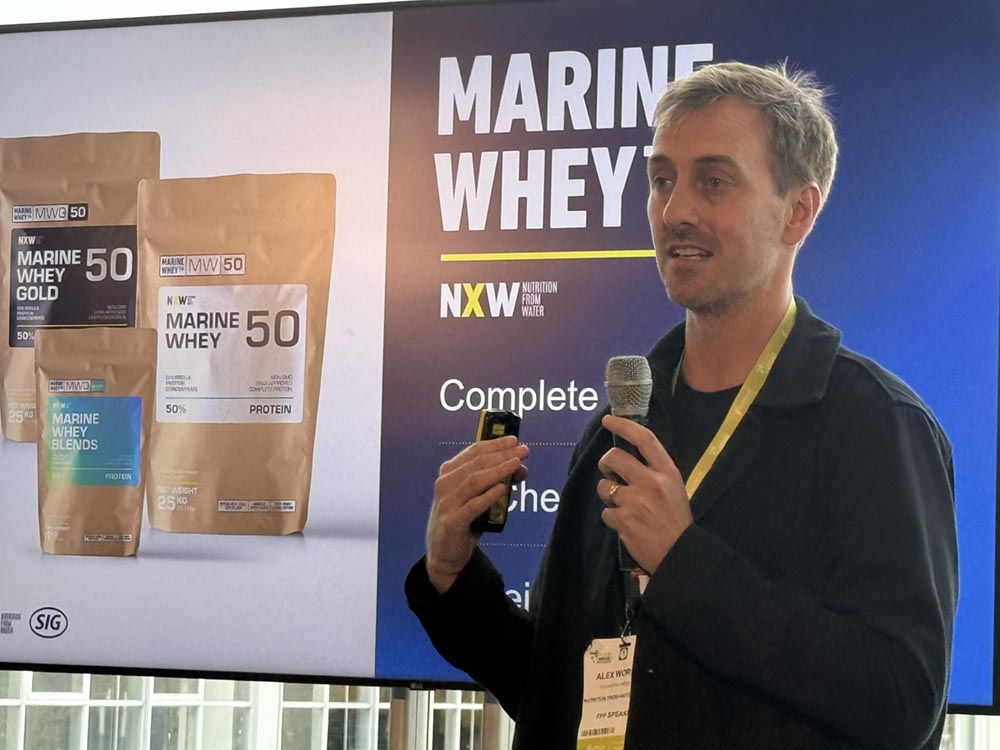
Nutrition from Water (NXW) is developing microalgae-derived protein ingredients and has partnered with JSPC to move its Marine Whey platform toward production measured in thousands of tons. Proxy Foods AI, fresh from joining MISTA as a preferred technology partner, is applying AI to food and beverage formulation. myBIOS is working on methanol-free recombinant protein production using Komagataella phaffii, while NOIET Foods is using multi-microbial fermentation to develop ingredients from food-industry side streams.
Ivy Farm Technologies brings cultivated meat into the Zone, while WildBio Co is developing cell lines for applications spanning food production and wildlife conservation. MONKEYS BY THE SEA is working on seafood alternatives, and Fabas is developing functional pulse-based ingredients.
There is room for some less obvious approaches, too. Croquito, developed with links to Portugal's Polytechnic Institute of Bragança, combines legumes with Tenebrio molitor insect flour. Mirai International and The Ingredients Experts complete the company lineup.
Not every stand is producing protein. C-Label, F-Label and V-Label are tackling what happens when some of these technologies reach consumers, with dedicated certification systems covering cultivated products, fermentation-enabled foods and vegan and vegetarian products.
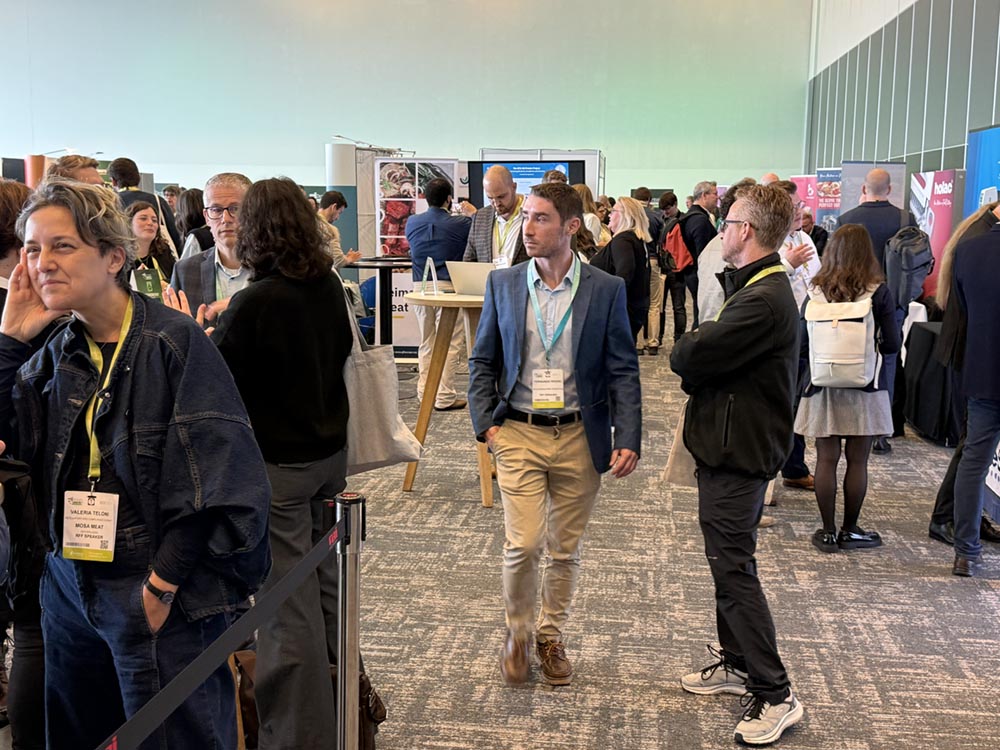
And the 16 companies in the Startup Innovation Zone are only part of the startup presence at RAI Amsterdam. More than 50 startups are expected across The Future of Protein Production Amsterdam and the co-located Cultured Meat Symposium. Beyond the Zone, the attendee list includes companies such as Solar Foods, The Protein Brewery, Vivici, Verley, Enifer, Pacifico Biolabs, Plantible, BlueNalu, Aleph Farms, Meala, Cauldron Ferm, planetary and The EVERY Company, extending the startup mix across fermentation, cultivated food, functional ingredients and new protein production technologies.
Startup founders and teams will also appear on the Innovation Stage, while three workshops arranged by NIZO, Bühler and RespectFarms will run during the event.
Perhaps most importantly, none of that requires a paid conference pass. Anyone registering for the free exhibition can enter the Startup Innovation Zone, attend the Innovation Stage and workshops, explore the wider exhibition and use the event app to find and arrange meetings with participating startups, investors, manufacturers, ingredient companies and other attendees across both events.
The Future of Protein Production Amsterdam takes place at RAI Amsterdam on November 4-5, alongside the Cultured Meat Symposium. More than 140 speakers, 65-plus exhibitors and over 1,000 attendees are expected across the two days. The main conference program requires a delegate ticket, but the exhibition, Innovation Stage, workshops and event networking are free to attend.
Click here to book your conference pass or to register for the free-to-attend exhibition ticket
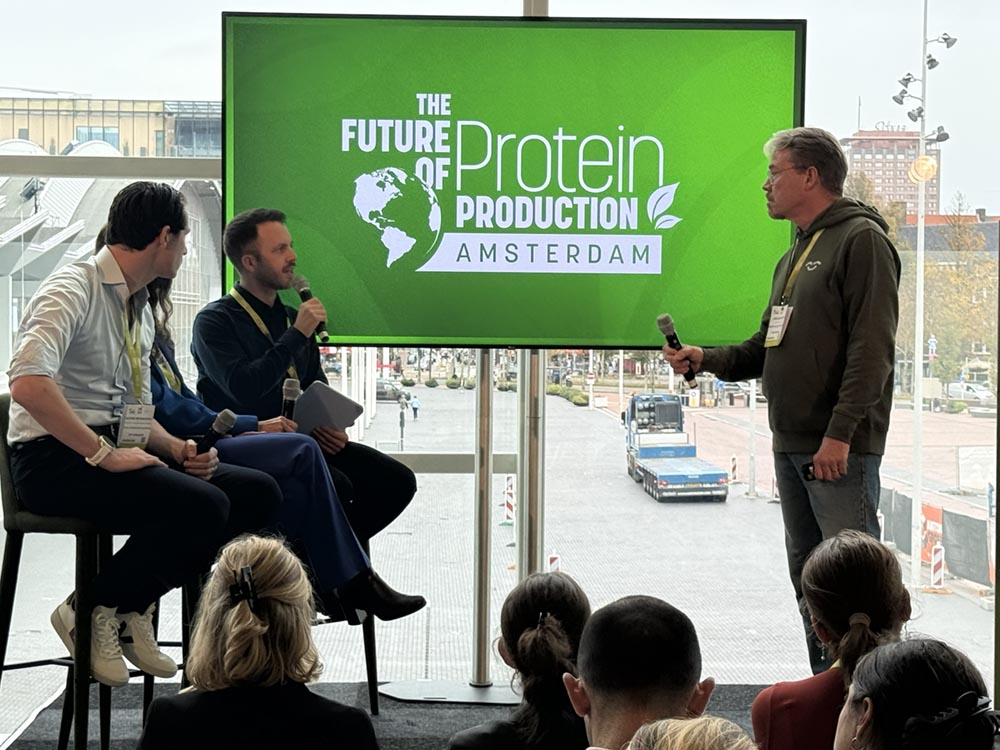
(Main photo shows Jari Karlsson of Happy Plant Protein taking to the stage at The Future of Protein Production Amsterdam 2025)

Join Us At One Of Our Upcoming Events

If you have any questions or would like to get in touch with us, please email info@futureofproteinproduction.com