

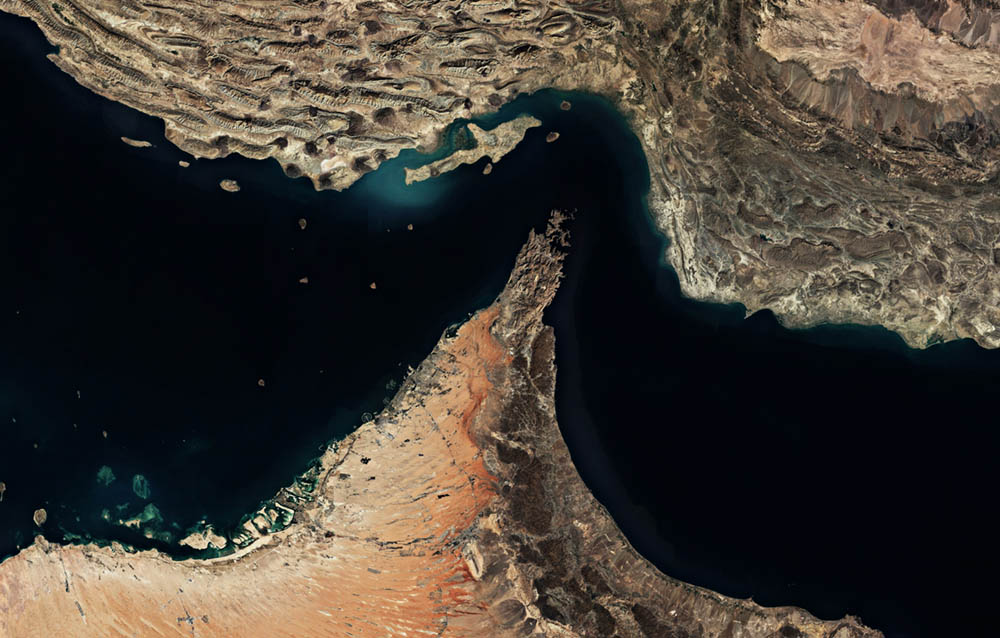
Global leaders urged to safeguard fertilizer flows as Strait of Hormuz disruption threatens food supply

A group of global political and diplomatic figures has called for urgent action to protect fertilizer shipments through the Strait of Hormuz, warning that escalating conflict in the region risks disrupting a critical artery of global food production and pushing vulnerable farming systems into deeper crisis.
• Attacks on vessels in the Strait of Hormuz have curtailed traffic, disrupting energy supplies and around one third of global fertilizer trade.
• Smallholder farmers in lower-income countries have been identified as particularly exposed due to high dependence on fertilizer inputs and limited financial resilience.
• Global leaders have backed a targeted transit initiative, modeled on the Black Sea Grain Initiative, to maintain fertilizer and food flows despite ongoing conflict.
The warning followed a series of attacks by Iran on vessels off its southern coast in response to a US-Israeli military campaign that began on 28 February. The disruption has sharply reduced maritime traffic through the Strait, a chokepoint that handles not only oil shipments but also a significant share of the world’s fertilizer trade.
The consequences are expected to ripple far beyond the region. Fertilizer availability plays a central role in agricultural productivity, particularly in countries where farmers rely on imported inputs to sustain yields. In many lower-income regions, fertilizer accounts for a substantial portion of production costs, leaving growers highly exposed to price shocks and supply interruptions.
The group warned that reduced access to fertilizer would likely lead farmers to scale back planting, tightening food supply and exacerbating existing shortages in fragile regions. Countries already facing acute food insecurity, including conflict-affected areas such as Sudan, were highlighted as particularly vulnerable to further disruption.
Rather than focusing solely on efforts to end the conflict, the signatories argued that immediate, practical steps were needed to mitigate its humanitarian consequences. They pointed to the Black Sea Grain Initiative, brokered in 2022 by the United Nations and Türkiye, as a model for how targeted agreements can deliver results even in the absence of a broader political settlement.
That initiative enabled the export of millions of tonnes of Ukrainian grain and fertilizer through the Black Sea during active conflict, contributing to a drop in global food prices. The benefits were felt most strongly in the Global South, where food costs account for a large share of household spending.
Drawing on that precedent, the group urged world leaders to support a similar mechanism for the Strait of Hormuz. The United Nations has already announced a task force to address maritime trade disruption in the region and has outlined a potential operational framework to allow the transit of fertilizer shipments, humanitarian aid, and selected commercial imports.
The proposed initiative would focus on ensuring the uninterrupted movement of fertilizer, related intermediate materials such as sulfur and ammonia, and food products through the Strait, regardless of the broader trajectory of the conflict. The effort would be separate from any military strategy to reopen the waterway by force.
The group suggested that such an approach could align with the interests of both Iran and the USA. For Iran, maintaining controlled but functional transit could support domestic food security and reinforce claims that restrictions on the waterway are targeted rather than indiscriminate. For the United States and its partners, preserving fertilizer flows would help stabilize global food systems and limit the wider economic impact of the conflict.
The initiative would be coordinated by the UN task force in collaboration with the Secretary-General’s envoy for the Middle East conflict, bringing together expertise from diplomatic, maritime, and humanitarian sectors. The focus, the group emphasized, should remain tightly defined to maximize the chances of implementation.
While the signatories reiterated the need for an end to the conflict, they cautioned that relying on a ceasefire alone was not a viable strategy for addressing immediate risks to food security. Instead, they called for parallel efforts that could deliver near-term relief by protecting critical supply chains.
The statement was backed by a wide range of former heads of state, senior diplomats, and international policy leaders, including Helen Clark, Carl Bildt, Mary Robinson, Juan Manuel Santos, and Pascal Lamy, among others.
Their intervention underscored growing concern that disruptions to fertilizer trade could trigger a secondary crisis in global agriculture, compounding the effects of conflict and economic instability. By advocating for a focused transit mechanism, the group sought to shift attention toward practical measures that could help sustain food production during a period of heightened geopolitical tension.

Join Us At One Of Our Upcoming Events

If you have any questions or would like to get in touch with us, please email info@futureofproteinproduction.com


.jpg)
.jpg)
