
Michroma wins Kraft Heinz-backed iFAB challenge with fermentation-based natural dyes breakthrough

A precision fermentation startup focused on natural food colorants has taken top honors in a major industry-backed innovation challenge, signaling growing momentum behind alternatives to synthetic dyes.
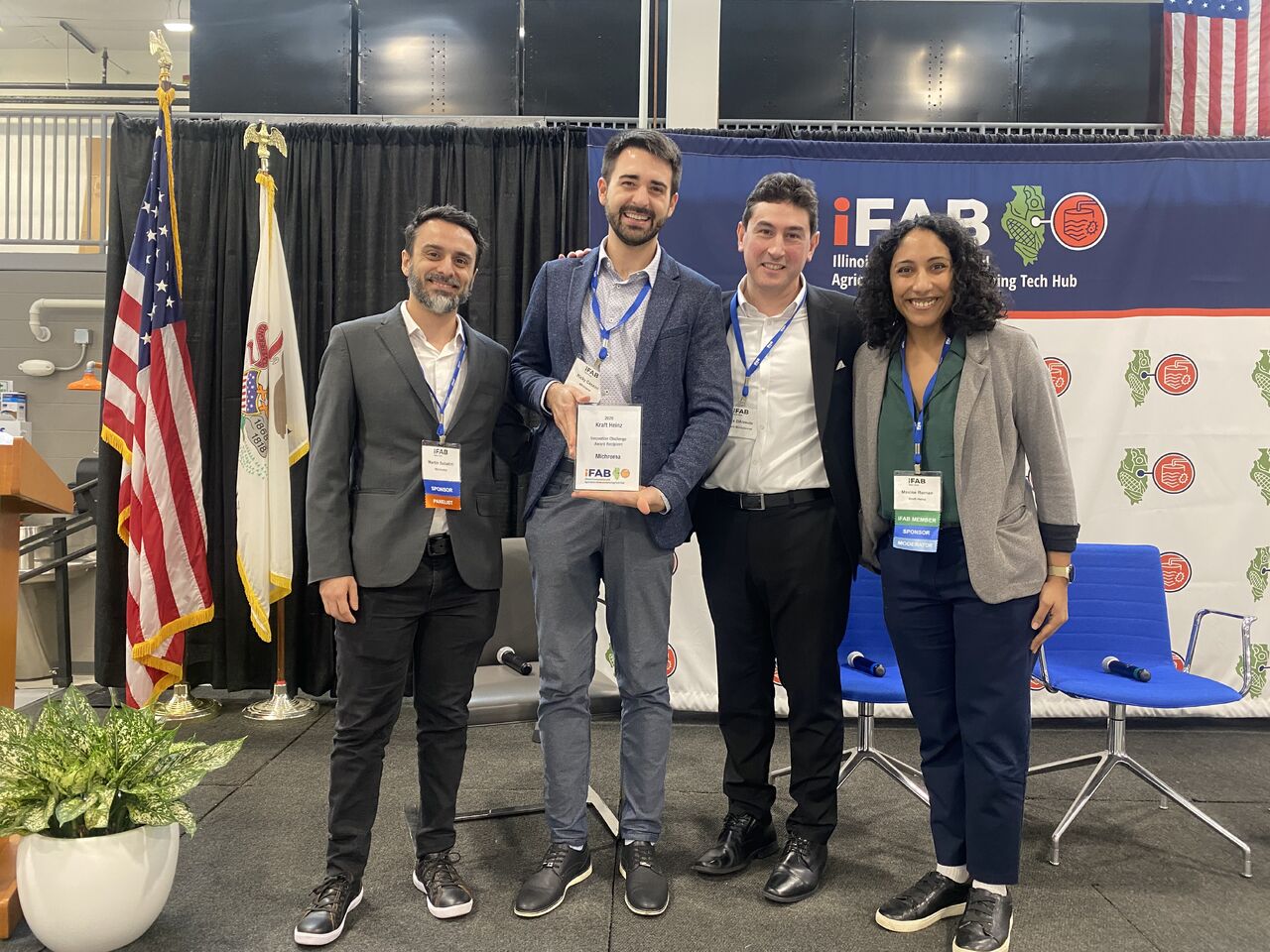
At the iFAB Biomanufacturing Summit last week (11 March), the Integrated Bioprocessing Research Laboratory and Kraft Heinz confirmed that Michroma had been selected as the winner of their joint innovation challenge, hosted on the Halo platform. The recognition highlighted the company’s work developing fermentation-derived food dyes with the potential to scale commercially and replace widely used synthetic additives.
• Michroma was named winner of the iFAB and Kraft Heinz innovation challenge, announced at the iFAB Biomanufacturing Summit.
• The company develops natural food colorants using precision fermentation with filamentous fungi, targeting replacements for synthetic dyes such as Red 40 and Yellow 5.
• The recognition provides access to the iFAB Tech Hub ecosystem in Illinois, supporting scale-up, partnerships, and industrial development.
The challenge was designed to identify technologies capable of translating scientific advances into industrial food solutions. Organizers noted that the outcome reflected their broader mission to connect early-stage innovation with the infrastructure and expertise needed for commercialization.
For Michroma, the announcement marked both validation and a practical step forward. The company’s approach centers on engineering filamentous fungi to produce high-performance pigments through precision fermentation, offering an alternative to petrochemical-derived dyes and certain plant- or animal-based colorants.
“At Michroma. we are making food dyes to replace the artificial dyes we have in the food supply, such as Red 40 and Yellow 5, with natural colorants that are more stable and produced by mushrooms through precision fermentation,” said Ricky Cassini, Co-founder & CEO of Michroma. “We are very excited to now be part of this community within the iFAB Tech Hub in Illinois. It’s great to have access to companies – including fermentation companies – that can provide help with any challenges we may have throughout this process.”
Color remains a critical but often overlooked component of food formulation, influencing consumer perception and purchasing decisions. However, manufacturers have historically faced a trade-off between the performance of synthetic dyes and the perceived benefits of natural alternatives. Michroma’s proposition has focused on removing that compromise.
The company has reported that its platform is designed to deliver natural, vegan colorants with stability across challenging applications, including acidic confectionery and ultra-high-temperature dairy alternatives. By combining engineered fungal strains with bioprocesses suited to standard fermentation infrastructure, it has aimed to simplify downstream processing while improving cost efficiency at scale.
That emphasis on industrial compatibility has shaped the company’s development strategy. Rather than optimizing strains solely for laboratory conditions, Michroma has prioritized performance in large-scale fermenters, where consistency and yield determine commercial viability.
The company described scaling as one of the most significant hurdles in food-tech innovation. Ensuring that a biological system behaves reliably outside controlled environments has required aligning strain engineering with process design from the outset. In parallel, it has worked to synchronize regulatory approvals, customer adoption, and manufacturing capacity, advancing each area simultaneously to reduce delays.
Recent milestones have reflected that approach. Michroma has completed multi-thousand-liter demonstration runs with a contract manufacturing partner, validating process transfer and reproducibility. It has also qualified its lead red colorant in multiple pilot projects with global consumer packaged goods companies and progressed regulatory pathways in key markets.
Those efforts have been supported by a network of industry partnerships, including collaborations with major food companies and ingredient distributors. On the manufacturing side, the company has relied on experienced contract manufacturers to mitigate scale-up risks, while its investor base has included a mix of food-tech funds and strategic backers.
Looking ahead, Michroma has outlined priorities centered on converting pilot projects into supply agreements, securing multi-site manufacturing capacity, and expanding its product portfolio. The company has also indicated plans to develop additional hues, including oranges, yellows, and heat-stable browns, alongside application-specific blends.
More broadly, the recognition at iFAB has underscored a shift in how fermentation technologies are being integrated into food systems. Advances in microbial engineering and process optimization have begun to challenge long-held assumptions about the cost and performance of fermentation-derived ingredients.
Michroma has pointed to persistent misconceptions that natural ingredients are inherently less stable, or that fermentation-based production remains prohibitively expensive. In practice, it has argued that modern microbial platforms can compete on both metrics when designed for industrial conditions from the outset.
The company has also emphasized the environmental and supply chain implications of its approach. Preliminary lifecycle analysis has indicated reductions in land and water use compared with plant-derived colorants, while fermentation has offered a route to decouple supply from agricultural variability. The process is also fully animal-free, providing an alternative to ingredients such as carmine.
For iFAB and its partners, the challenge outcome has reinforced the role of collaborative ecosystems in advancing such technologies. By connecting startups with established infrastructure and expertise, the initiative has aimed to accelerate the transition from laboratory innovation to market-ready solutions.
Michroma’s inclusion in the iFAB Tech Hub has provided access to that network, including fermentation specialists and industrial partners capable of supporting further scale-up. As Cassini noted, the opportunity to work alongside companies facing similar challenges could prove as valuable as the recognition itself.
With regulatory progress, manufacturing expansion, and commercial agreements all in motion, the company has continued to move toward its stated goal of establishing fermentation-derived colorants as a mainstream alternative.

Join Us At One Of Our Upcoming Events

If you have any questions or would like to get in touch with us, please email info@futureofproteinproduction.com


%20-%20Photo%20Credit%20Matt%20Qu%C3%A9r%C3%A9e.jpg)
