


NXW and JSPC join forces to fast-track Marine Whey scale-up and global rollout

Nutrition from Water (NXW) has partnered with Jiangsu Jiangshan Pharmaceutical (JSPC) to scale production of its Marine Whey protein, accelerating its path to market and anchoring its ambitions in one of the world’s largest industrial fermentation ecosystems.
• NXW has partnered with JSPC to scale Marine Whey using large-scale fermentation infrastructure, targeting thousands of tonnes of output within three years
• The collaboration has brought forward NXW’s projected path to profitable scale from late 2028 to early 2027 by unlocking cost of goods at industrial volumes
• JSPC’s ecosystem, including IVC and Jland Biotech, has provided downstream manufacturing and distribution capabilities to support global commercialization
The agreement, announced today (18 March 2026), marks a significant step for NXW, which has sought to move beyond pilot-scale validation and into industrial production of its microalgae-derived protein platform. By tapping into JSPC’s existing infrastructure and manufacturing expertise, the company aims to compress timelines that would otherwise have stretched into the latter part of the decade.

Federico Duarte, CEO of NXW, said the shift was not incremental but structural. “In our scale-up plan we originally had forecast reaching profitable scale economics in the latter half of 2028 and we can now do this by beginning of 2027 going well thanks to this partnership and unlocking COGs at scale.”
That acceleration has been tied directly to access. Rather than building capacity from scratch, NXW has aligned itself with a partner that already operates at global scale, producing nutraceutical and pharmaceutical ingredients with established processes and supply chains.
JSPC, formerly owned by DSM, has built its reputation on industrial biotechnology, including large-scale fermentation. It works closely with sister companies such as the International Vitamin Corporation (IVC), one of the world’s largest nutraceutical manufacturing networks, and Jland Biotech, which focuses on recombinant extracellular protein production. Together, these companies form a network that spans upstream production through to finished product manufacturing.
For NXW, that ecosystem has addressed a recurring challenge in alternative proteins: moving from ingredient development to real-world application. “It’s incredibly important,” Duarte said. “JSPC supplies some of the world’s largest nutrition and nutraceutical brands and channels, and we are relying on their bench strength and world-class food safety standards to scale Marine Whey globally. The site we are working with was formerly and recently owned by DSM.”
The partnership has also reinforced NXW’s confidence that Marine Whey can compete on cost, a claim that has become increasingly scrutinized across the fermentation space.
“The capabilities of JSPC, one of the world’s largest producers of Vitamin C, amongst other world-class nutraceutical and pharma products, means we have a global partner who is an expert today in scale fermentation and knows the need for stringent global nutrition and nutraceutical requirements,” Duarte said.

That experience, he suggested, reduced the execution risk that has hitherto undermined many ‘cost-competitive at scale’ projections.
Marine Whey itself has been developed as a complete, non-GMO protein produced via fermentation from microalgae. NXW has emphasized its functional similarity to dairy proteins, while pointing to advantages in sustainability and long-term production costs.
Rather than positioning it as a direct replacement, Duarte described a more pragmatic role. “We see Marine Whey and Fibers as a complement to dairy and non-dairy ingredient formulations. It has a great complete nutrition profile, excellent digestibility, offers balanced protein and fiber and micronutrients, and performs as a functional ingredient in a variety of everyday food applications from sports bars to biscuits to drinking yogurts to processed cheeses to mayo and even coffee creamers.”
Alongside the protein, NXW has introduced a Marine Fibre range, including beta glucans designed for health and wellness applications, including medical nutrition.
The technical pathway to this point has not been straightforward. While microbes readily metabolize sugars derived from crops, scaling microalgae in fermentation systems has traditionally presented both biological and process challenges. Duarte acknowledged that integrating NXW’s platform into JSPC’s existing systems required compromise as well as collaboration.
“Absolutely, it’s a shared learning process for our global teams and partnership. We are very grateful for their decades of experience fermenting with bacteria and yeast. We always knew the right combination for scaling microalgae was a partner that had existing capacity and experience in fermenting yeast and bacteria.”
The decision to work within existing infrastructure, rather than designing bespoke systems, has imposed certain constraints but also introduced discipline. It has required NXW to adapt its biology to fit proven industrial processes, rather than the other way around.
That trade-off has reflected a broader shift across the sector, where companies have begun prioritizing manufacturability over theoretical performance.
Microalgae itself has long been explored as a food ingredient, but has struggled to achieve mainstream adoption outside of niche categories such as omega-3 production. Duarte argued that the context has now changed.
“Microalgae today is already commercially successful at scale for Omega 3 supply. Our advisor Jonathan Wolfson, founder of Solazyme, got close to validating a nutrition at scale from microalgae thesis almost two decades ago. NXW is aiming to be the first company to scale Marine Whey and Marine Fibres from microalgae to build a global category focused on delivering non-GMO, natural and complete nutrition at scale.”

He pointed to shifts in both supply and demand.
“The global market is ready, we have validated this with our early customer partners, especially as the protein plus fiber category develops.”
Rather than pursuing a single end-use, NXW has focused on blending applications, positioning Marine Whey as part of a broader formulation toolkit.
“We are working on a complementary blending applications toolkit based on our prioritized JDA customer requirements. This is the fastest way to solve the 30 million metric dairy nutrition gap projected by 2030. Just like how dairy optimizes with plant-based oils to supply fat-filled milk powders, we see Marine Whey and Fibers helping unlock a balanced nutrition portfolio, and ultimately help solve nutrition gaps across parts of the world.”
The emphasis on blending has reflected both technical and commercial realities. It has allowed NXW to enter existing product categories incrementally, rather than requiring full substitution from the outset.
At scale, the partnership has aimed to deliver thousands of tons of Marine Whey and related ingredients within three years. Duarte has framed that milestone not as an endpoint, but as a prerequisite.
“There are plenty of challenges. Our key focus is to scale 10,000 tons of Marine Whey at a price point that makes sense for our global customers and partners. If we can do this, and deliver in full on time, there’s so much more we can do to create new product applications and functional value propositions for nutrition from water.”
The priority, he suggested, remained execution.
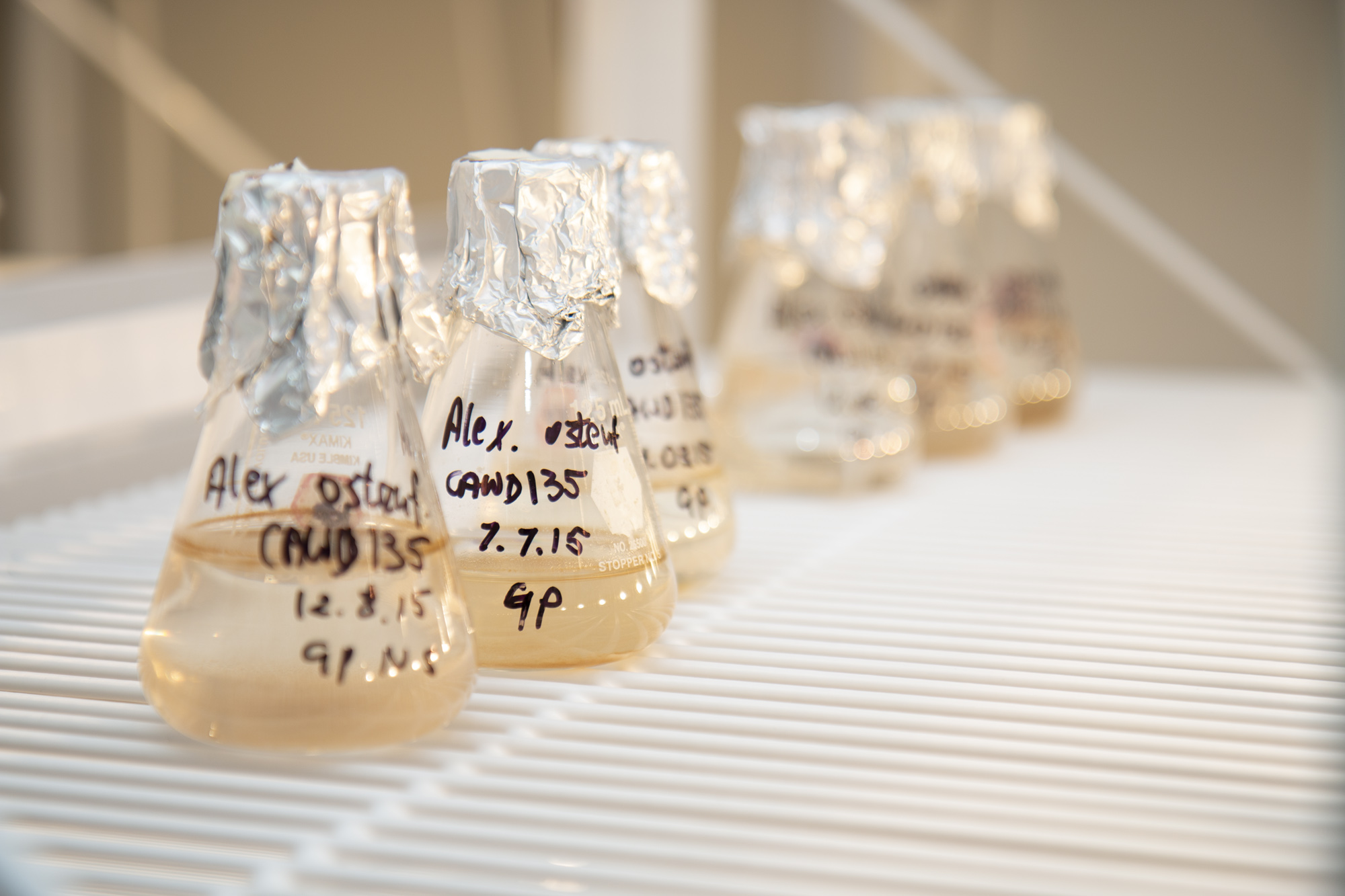
“First things first, we need to scale supply and deliver on product and cost for our early customers. Everything else matters once this is achieved, there are so many more nutrition opportunities to commercialize from microalgae. The issue is more a matter of pacing.”
Liang Chang, Executive Chairman of JSPC, placed the partnership in a broader context, linking it to global demand for nutrition and the role of industrial biotechnology. “As the world moves toward a population of 10 billion by 2050, JSPC is continually thinking about how to leverage our industrial fermentation bench strength and global reach to bring nutritional innovations to more consumers. Heterotrophically scaling a product like Marine Whey, originating from the pristine waters of New Zealand and Portugal, is just one example of how we hope to translate that vision into reality. We look forward to many more nutritional innovations to come in partnership with NXW.”
Founded in New Zealand in 2020, NXW has built its platform around unicellular organisms from aquatic environments, aiming to produce proteins, fibers, and functional ingredients that are non-GMO and non-extractive. The company has positioned itself as a B2B ingredient supplier, working with global food companies to diversify supply chains and reduce reliance on traditional agricultural inputs.
The partnership with JSPC has marked a shift from early-stage development to industrial execution. It has also illustrated a broader pattern across the sector, where access to infrastructure, rather than discovery alone, has begun to determine which technologies reach the market.
The JSPC partnership builds on a series of recent moves by NXW to expand the commercial reach of its microalgae platform across both ingredients and finished products.
In October 2025, the company partnered with packaging specialist SIG to develop algae-based protein beverages in aseptic formats, targeting regions where access to affordable, shelf-stable nutrition remains limited. The collaboration focused on combining NXW’s Marine Whey ingredients with SIG’s global filling and distribution capabilities to enable wider access to protein-rich products without reliance on cold chains.
Earlier in 2025, NXW also introduced Marine Whey Golden 35, a clean-label protein ingredient designed for bakery and dairy applications. The product was developed to offer a neutral taste, high digestibility, and stable pricing, with functionality suited to a range of formulations from baked goods to dairy alternatives.
Together, these developments reflect a broader strategy centered on building both upstream ingredient supply and downstream application pathways, with the JSPC partnership marking a shift toward industrial-scale execution.
For NXW, the immediate task is clear: translate potential into volume, and volume into cost.
Everything else, Duarte suggested, would follow.

Join Us At One Of Our Upcoming Events

If you have any questions or would like to get in touch with us, please email info@futureofproteinproduction.com


