PARIMA and Vow's 22,000L breakthrough signals cultivated meat's next commercial chapter

Cultivated meat may have reached one of its most significant inflection points yet. A successful multi-ton production run at 22,000 liters by PARIMA and Australia's Vow, combined with a new industry analysis from Arthur D. Little, suggests the sector's biggest technical questions are increasingly giving way to commercial ones. Rather than asking whether cultivated meat can be produced at industrial scale, the debate is rapidly shifting toward how quickly it can reach consumers and expand production volumes.
• PARIMA has completed a multi-ton cultivated duck production run using Vow's 22,000-liter food-grade bioreactor in Sydney.
• Arthur D. Little says production costs below €10/kg (US$11.80/kg) are now "a matter of timing rather than feasibility."
• The consultancy argues biology, manufacturing infrastructure, and growth media costs have all advanced enough for the industry's focus to turn toward regulation, consumer demand, and commercialization.
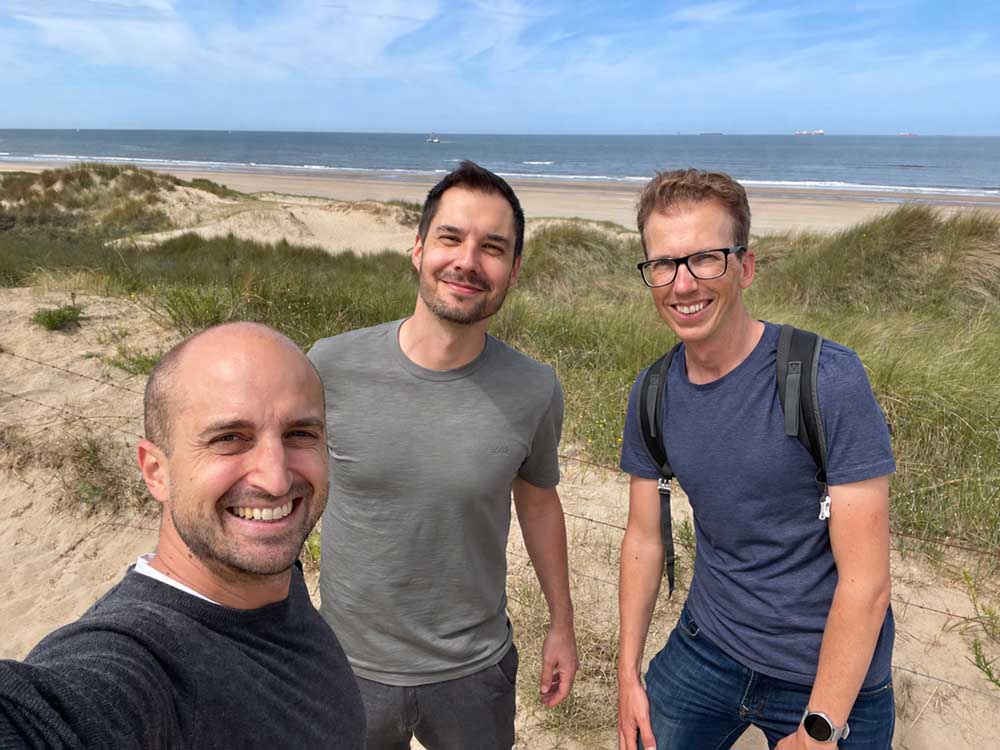
The announcement came from Nicolas Morin-Forest, CEO & Co-founder of PARIMA, the technology company behind cultivated foie gras producer Gourmey, which partnered with Australian cultivated meat company Vow to demonstrate its production process at industrial scale.
"A vision we've chased for seven years. Multi-ton-scale cultivated meat at viable cost," Morin-Forest wrote on LinkedIn as he announced the milestone.
According to the company, PARIMA successfully produced cultivated duck in a single 22,000-liter production run using its proprietary cell line and manufacturing process on Vow's production line in Sydney.
"Proud to share that PARIMA (creators of Gourmey) has reached multi-ton-scale production of our cultivated duck, in a single 22,000-liter run," Morin-Forest said. "Together with our friends at Vow, we used our cell line and process on their 22,000-liter line in Sydney, the largest in the world, where it performed exceptionally on the very first run."
On its own, the achievement represents one of the largest publicly disclosed cultivated meat production campaigns to date. But released alongside Arthur D. Little's latest assessment of the sector, it also serves as evidence for a broader argument: that the industry's economics are beginning to align with its technical ambitions.
The consultancy's report, Cultivated meat: One year on - Revisiting the path to cost parity with conventional meat, concludes that while funding conditions remain challenging, three developments have materially changed the outlook for commercial production.
First, food-grade, protein-free growth media have continued falling in cost, approaching the €0.2/L (US$0.24/L) threshold widely viewed as necessary for competitive production economics. Second, cell densities of approximately 55-100g/L are now being achieved, bringing cultivated meat processes much closer to the performance levels expected in mature fermentation industries. Third, production has now been demonstrated at and beyond the 22,000-liter scale, with multi-ton output achieved.
Taken together, Arthur D. Little argues these advances mean that the industry's long-discussed target of producing cultivated meat for less than €10/kg (US$11.80/kg) has moved from aspiration to expectation.

"A year ago, sub-€10/kg was an aspiration," the report states. "Today, it is a matter of timing rather than feasibility."
Morin-Forest reached a similar conclusion from an operator's perspective.
"For years, the question was whether cultivated meat could be made at large scale and at a cost that's economically viable," he said. "It's now largely answered, and the winning technologies are becoming clear."
He attributed the progress to years of incremental engineering rather than a single technological breakthrough.
"Our team built the pieces one by one: top-performing cell lines, low-cost protein-free cell feed, and a process that holds up at 22,000 liters with no performance loss."
The emphasis on process rather than individual inventions reflects one of the report's central themes. Arthur D. Little argues that the biggest change over the past year has not been a single scientific advance but the emergence of a more specialized value chain, mirroring the evolution of established biomanufacturing industries.
In the sector's early years, most cultivated meat companies attempted to develop cell lines, formulate growth media, build production facilities, navigate regulation, manufacture products, and establish consumer brands themselves.
That model is now changing.
Instead, specialist suppliers are emerging to provide growth media, while contract manufacturing organizations and open-access production facilities are reducing the need for every company to finance and operate its own production plants. Existing food manufacturers can also provide downstream formulation and processing capabilities, allowing cultivated meat companies to concentrate on their core technologies and commercial relationships.
Morin-Forest believes cultivated meat is following the same industrialization pathway as fermentation and other biotechnology sectors.
"This is a story that most new industries go through," he said. "Early players build everything themselves, because the supply chain doesn't exist yet. As they mature, companies focus on what they do best and partner for the rest."
"The cultivated food industry is experiencing that shift now, the same as fermentation and other biomanufacturing industries went through as they matured."
The partnership between PARIMA and Vow illustrates that model in practice. Rather than building its own large-scale production facility, PARIMA demonstrated its process using Vow's existing infrastructure, allowing both companies to leverage their respective strengths.
The report argues that this increasingly capital-light approach has become particularly important as investment into cultivated meat has slowed.
According to figures cited from the Good Food Institute, cultivated meat and seafood companies raised US$73.9 million in 2025, down from US$139 million the previous year. Rather than signalling industry decline, however, Arthur D. Little suggests the tougher funding environment has accelerated consolidation and encouraged more disciplined capital allocation.
Instead of asking how startups can fund construction of dedicated manufacturing plants, the discussion has shifted toward accessing shared production infrastructure and converting fixed capital expenditure into variable operating costs.
The consultancy argues this is similar to the evolution seen across precision fermentation, where contract manufacturing, toll production and specialist suppliers have become established parts of the commercial ecosystem.
Even so, significant challenges remain before cultivated meat reaches mainstream markets.
Regulatory approvals continue to be granted on a product-by-product basis, requiring individual safety assessments for every new product entering each jurisdiction. Consumer demand must also grow sufficiently to justify higher production volumes, which in turn will drive further reductions in manufacturing costs through economies of scale.
For Morin-Forest, those are now the defining challenges. "So the technology for production costs below €10/kg (US$11.80/kg) is here, and the path is clear," he said. "The next phase is less about new science. It's about consumers and great food.
"That demand is what builds the value chain, and higher volumes bring costs down further, as in any industry. It's also about securing regulatory approvals and working with agencies to ensure the safety of cultivated foods, while achieving faster and more predictable pathways to market."
Arthur D. Little reaches much the same conclusion. While technological barriers have steadily fallen over the past 12 months, the consultancy argues the industry's future will depend increasingly on converting consumer interest into contracted production volumes, expanding regulatory approvals market by market, and continuing to mature the downstream supply chain.
For an industry that has spent much of the past decade defending the possibility of cultivated meat, that represents a notable change. The conversation is becoming less about whether industrial-scale production is achievable and more about how quickly companies can turn proven manufacturing capability into commercially successful food products.

Join Us At One Of Our Upcoming Events

If you have any questions or would like to get in touch with us, please email info@futureofproteinproduction.com