
Pasqal and True Nexus put protein gelation onto quantum hardware in first collaboration milestone

Pasqal and True Nexus have reached the first milestone in a collaboration exploring whether quantum computing could help researchers better understand and eventually predict protein functionality, successfully encoding selected protein structures associated with gelation on neutral-atom quantum hardware.
• Pasqal and True Nexus have used neutral-atom quantum technology to encode selected protein structures associated with the molecular mechanisms involved in protein gelation.
• The collaboration combines True Nexus' AI-driven protein intelligence with Pasqal's quantum computing technology to investigate relationships between protein structure and functional behavior.
• The work is being delivered through Saudi Arabia's Ministry of Communications and Information Technology as the country explores industrial applications for quantum computing.
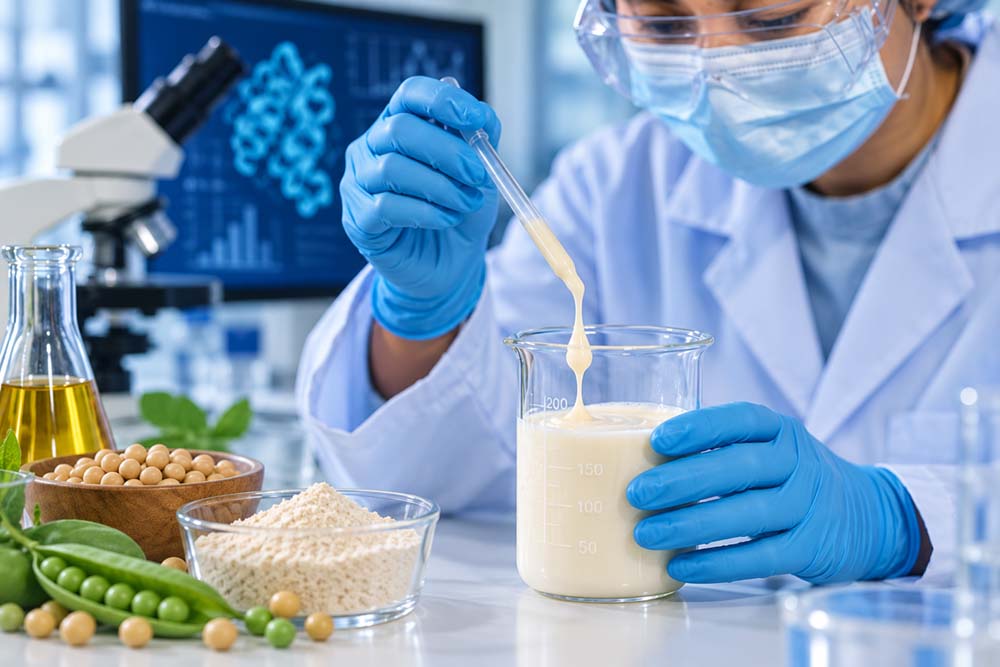
Protein gelation, the process through which proteins form networks that turn liquids into gels, is particularly important to food manufacturers because it influences the structure and texture of products.
Yet predicting how a protein will behave in a food system remains difficult. Protein sequence alone does not determine commercial usefulness, with properties including gelation, binding and foaming affected by complex molecular interactions and processing conditions.
True Nexus, a computational intelligence company focused on protein functionality for food applications, is working with French quantum computing company Pasqal to investigate whether quantum technology could provide another way of tackling that complexity.
The companies said they had now successfully encoded selected protein structures relevant to molecular mechanisms involved in gelation using Pasqal's neutral-atom quantum technology.
The milestone represents an early step rather than the demonstration of a complete protein design system. The longer-term objective is to establish links between protein structure and function that could help researchers understand, predict and ultimately influence how proteins perform.
"Encoding real protein structures on our neutral-atom processors shows how quantum can move from the lab toward the problems that matter to industry and to nations," said Mark Armstrong, CCO EMEA of Pasqal. "Protein functionality is exactly the kind of high-value, classically hard challenge neutral-atom technology is built for."
Pasqal's systems use neutral atoms as quantum bits, or qubits. The collaboration is examining how that computing architecture could be applied alongside AI-based protein intelligence to molecular problems that are difficult to model using conventional computational approaches.
For the protein sector, the attraction is the possibility of reducing some of the reliance on experimental screening when developing ingredients with specific functional characteristics.
Plant proteins, for example, can provide attractive nutritional and sustainability credentials but do not always reproduce the functionality delivered by animal-derived proteins in applications such as dairy, egg, meat and gelatin alternatives. Understanding the molecular mechanisms behind those differences could help ingredient developers select or design proteins more effectively.
"This is the moment protein functionality stops being a mystery and starts becoming designable. Together with Pasqal, we are bringing the chemistry that governs how proteins behave onto neutral-atom quantum hardware, opening a new path to understand, predict and ultimately design protein functionality." said Dominik Grabinski, Chief Executive Officer of True Nexus. "This can change what is possible for the future protein economy."
The companies are initially concentrating on gelation, but their stated objective is broader: developing computational approaches capable of connecting protein structures with the functional properties required in real-world applications.
The project also has a Saudi Arabian dimension. The work is being delivered through the country's Ministry of Communications and Information Technology as part of efforts to develop practical applications for quantum technology and support Saudi Arabia's Vision 2030 strategy.
Pasqal and True Nexus said the protein work could provide a demonstration of how quantum computing might move beyond research applications and into areas including food security, biotechnology and life sciences.
The companies have also proposed a Ministry-led Saudi Quantum DeepTech Foundry that could explore applications of the underlying computational approach in other fields, including drug discovery, energy, environmental technologies, materials science and finance.
For food and protein development, however, the immediate work remains focused on a much more specific technical challenge: determining whether quantum hardware can contribute to understanding the molecular behavior that gives proteins their functional properties.
If you liked this, check these out...
• Pasqal and True Nexus partner to use quantum computing for protein functionality modeling in food
• Axiom Foods teams with NNB Nutrition to target growing 'Protein+' functional foods market
• 2nd Nature and Kanematsu launch AI-driven discovery program to turn food waste into functional ingredients

Join Us At One Of Our Upcoming Events

If you have any questions or would like to get in touch with us, please email info@futureofproteinproduction.com