Precision fermentation grows up: Six predictions shaping food tech in 2026

If 2024 was still about possibility, 2025 was about proof. Across precision fermentation and the wider food-tech landscape, the past year delivered something the sector had long been working toward: evidence that the technology could move through regulators, into factories, and onto shelves without special pleading or exceptional treatment.
Regulatory milestones arrived from multiple directions. In the USA, a steady stream of FDA 'No Questions' letters confirmed that precision-fermented dairy and bioactive proteins could clear existing safety frameworks. In Australia and New Zealand, FSANZ formally accepted its first application for a precision-fermented milk protein, signaling that established gene technology pathways were fit for purpose. At the global level, the Food and Agriculture Organization of the United Nations published two detailed reports concluding that precision fermentation introduced no fundamentally new food safety hazards and could be regulated using existing tools.
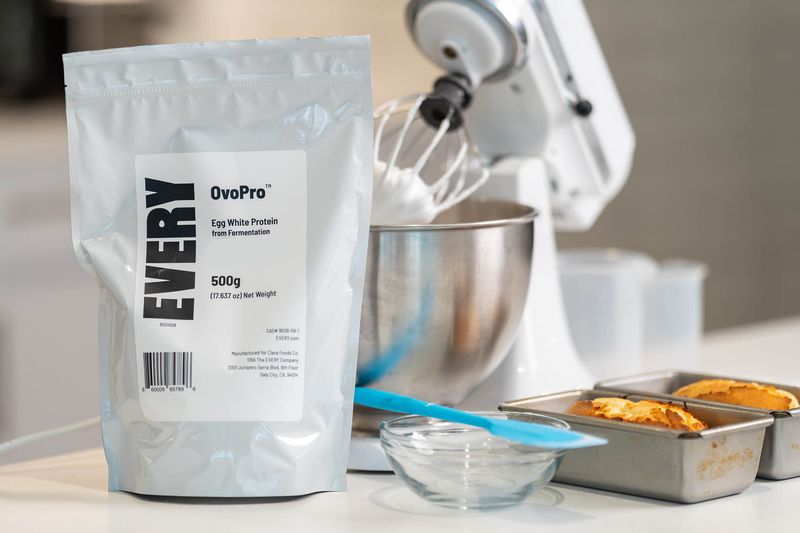
At the same time, scale stopped being theoretical. Companies such as EVERY demonstrated that fermentation-derived proteins could be produced and sold in metric-ton volumes, addressing real supply chain fragility rather than hypothetical sustainability gains. In Europe, Standing Ovation validated industrial production of precision-fermented casein using cheese whey as a feedstock, embedding fermentation directly into incumbent dairy infrastructure. These were not pilot successes. They were reproducible, industrial outcomes.
Equally important was who showed up. Global food groups and ingredient leaders moved from observers to operators. Bel integrated fermentation into its circular dairy strategy. Strauss Group launched animal-free dairy products into mainstream retail. Fonterra and dsm-firmenich backed ingredient platforms designed to slot directly into existing formulation and procurement systems. Precision fermentation increasingly looked less like an alternative to the food system and more like an extension of it.
Functionality also came into sharper focus. Beyond basic equivalence, companies began emphasizing what fermentation could do better, whether that meant improved stability, solubility, or access to scarce bioactives such as lactoferrin. The narrative shifted from replacement to performance, particularly in nutrition, beverages, and health-oriented categories.
Taken together, these developments changed the nature of the conversation. By the end of 2025, precision fermentation no longer needed to argue for its legitimacy. The question as we embark on 2026 is no longer whether it belonged, but how it will scale, compete, and integrate. Based on the patterns that emerged last year, six predictions stand out.

1. Regulation will shift from landmark approvals to throughput
In 2026, regulatory conversation will move away from celebrating first approvals and toward the pace and consistency of review. With multiple precedents now established across major jurisdictions, regulators will be judged less on willingness and more on capacity. Companies with well-prepared dossiers will expect predictability, and delays will increasingly be seen as procedural rather than scientific.
2. Precision fermentation will embed inside incumbent infrastructure
The most successful projects in 2026 will not sit outside existing food systems. Instead, fermentation will increasingly be integrated into incumbent manufacturing, sourcing, and waste valorization models. Co-location, shared assets, and long-term offtake agreements will replace exploratory partnerships, especially in dairy and ingredients.
3. Dairy proteins will remain the sector’s spearhead
Caseins, whey proteins, beta-lactoglobulin, and lactoferrin will continue to lead regulatory and commercial progress. Their functional importance, well-characterized biology, and high value make them ideal candidates for fermentation-based production. Other protein categories will follow, but dairy will keep setting the pace.
4. Functional differentiation will matter more than equivalence
In 2026, simply matching animal proteins will no longer be enough. Companies that succeed will be those offering clear functional advantages, whether in stability, formulation flexibility, or nutritional performance. Precision fermentation’s next phase will be defined by what proteins can do, not just what they resemble.
5. Scale and reliability will decide winners
The gap between pilot-scale capabilities and industrial supply will widen. Customers and investors will increasingly favor suppliers that can deliver consistent volumes, predictable pricing, and robust logistics. In 2026, reliability will matter more than ambition, and throughput will outweigh novelty.
6. Precision fermentation will become boring, and that will be its strength
As fermentation-derived ingredients blend into ingredient catalogs, regulatory frameworks, and supermarket shelves, the technology itself will fade into the background. That normalization will be a sign of success. In 2026, precision fermentation’s biggest achievement may be that it no longer needs explaining.

Join Us At One Of Our Upcoming Events

If you have any questions or would like to get in touch with us, please email info@futureofproteinproduction.com