Pureture advances functional protein platform with US GRAS clearance and commercial momentum

Pureture has secured self-affirmed GRAS status in the USA for its yeast-derived protein ingredient, marking a significant step as the company expands from its early work in alternative casein into a broader functional protein platform.
• Pureture has achieved self-affirmed GRAS status in the US for its yeast-derived protein, enabling commercial use across food and beverage applications.
• The ingredient builds on earlier alternative casein work and has entered early commercialization, with initial production and partner collaborations underway.
• CEO Rudy Yoo described the technology as a functional protein platform designed to deliver emulsification and structure while simplifying ingredient systems.
The GRAS determination, supported by an independent panel of experts, establishes the safety basis required for the ingredient’s use in a wide range of applications, including dairy alternatives, beverages, creamers, sauces, and other formulated products.
The milestone builds on progress made in 2025, when the New York-based company launched commercial production of its alternative casein protein. That product, designed to emulsify naturally without gums or stabilizers, was developed using a non-GMO yeast strain and custom fermentation media, with early production capacity reaching 240 tons annually.
That earlier work focused on solving emulsification at the protein level, reducing reliance on additional ingredients. “We didn’t just clean up the label – we re-engineered the protein itself,” said Rudy Yoo, Founder & CEO of Pureture at the time. “By solving emulsification at the structural level, we’re helping brands eliminate additives entirely – and consumers will taste the difference soon.”
The company’s latest ingredient reflects a continuation and expansion of that approach. “This work builds on the broader research we previously did around casein,” Yoo said. “The difference is that the current ingredient represents a more advanced stage of that effort and is positioned more broadly as a functional protein platform rather than a single-protein replacement.”
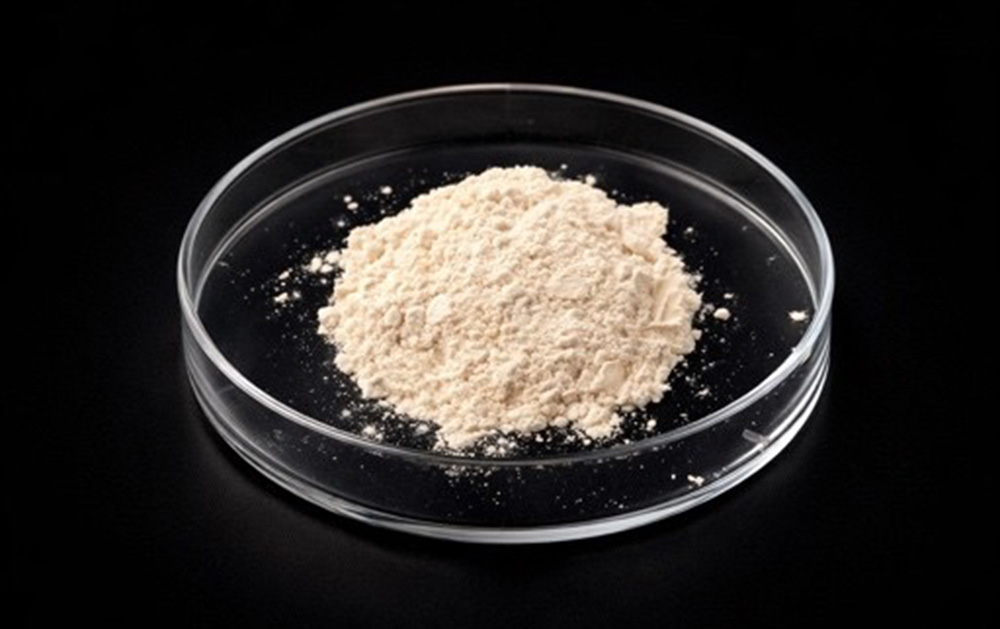
Produced via fermentation using a proprietary strain of Saccharomyces cerevisiae, the ingredient is designed to deliver emulsification, structure, and stability within food systems without relying on synthetic additives.
Yoo said the company had taken a deliberate approach to regulatory readiness as part of its commercialization strategy. “We chose the self-affirmed GRAS pathway because it provides a clear, science-based route to commercialization under the current framework,” he said. “From early on, we approached development with both safety and functionality in mind, so building the safety dossier was part of the process rather than something done afterward.”
He added that regulatory planning would continue to evolve alongside the business. “At the same time, we’re continuing to build out a broader regulatory strategy as we scale, preparing for additional pathways as part of that progression.”
Rather than focusing on replacing a single ingredient, Pureture is developing proteins that function as core components within formulations. “When we describe this as a functional protein platform, what we mean is that we’re redesigning how food systems are built at the ingredient level,” Yoo said. “In practice, that starts with proteins that function as enabling ingredients within formulations. Instead of relying on multiple additives, we’re able to consolidate functionality such as emulsification, structure, and texture into the protein itself, reducing reliance on additive systems and simplifying formulation.”
This approach reflects a broader shift in the alternative protein sector, where the focus is moving from ingredient substitution toward performance-driven design. “We don’t view this as a replacement, but as an enabling ingredient that improves overall formulation performance,” Yoo said. “The differentiation is in how functionality is delivered. We’re focused on designing performance at the ingredient level, not just producing protein.”
The ingredient has now entered early commercialization, with initial production underway and supply beginning to reach partners. As an early application, the protein is being used in Armored Fresh’s Piilk product line, which has already generated early consumer interest ahead of launch.

“Using the ingredient within Armored Fresh allows us to validate performance in real-world products, which is important at this stage,” Yoo said. “It provides direct feedback beyond controlled environments.”
At the same time, Pureture is structured as a B2B ingredient platform, with partnerships forming a central part of its scaling strategy. “We’re particularly focused on working with companies looking to improve functionality while simplifying ingredient systems,” he said.
Ensuring consistent functionality across applications has been a key technical challenge. “Beyond regulatory clearance, one of the more challenging aspects was ensuring consistent performance across real-world food systems,” Yoo said. “It’s one thing to demonstrate safety and functionality in isolation, but another to deliver reliable results across different applications and processing conditions.”
In targeted use cases, particularly those requiring emulsification and structural integrity, the company has reported performance comparable to conventional solutions. “In targeted applications particularly where emulsification and structural integrity are critical we’ve seen performance that is competitive with conventional solutions,” Yoo said. “At the same time, we’re continuing to expand into more complex systems.”
He added that the ingredient’s versatility has been a notable outcome. “One of the more interesting observations has been how broadly the functionality translates across categories, from beverages to more structured food systems. That’s where the platform aspect becomes meaningful.”
The company is taking a measured approach to scaling production, reflecting the capital intensity of fermentation infrastructure. “On production, fermentation is capital-intensive, so we’ve taken a disciplined approach,” Yoo said. “We’re scaling alongside validated demand while building infrastructure for broader adoption. From the beginning, the process has been designed with industrial scalability in mind.”
Market dynamics are also shaping the company’s trajectory, particularly growing demand for both protein and clean-label products. “Several trends are converging, but the most important for us is the shift toward functionality combined with clean-label expectations,” Yoo said. “The strong focus on protein in the USA creates opportunity, but it also raises the bar in terms of performance.”
As the category evolves, he expects performance to become a defining factor. “As the market evolves, we expect the conversation to shift from quantity to quality – not just how much protein is present, but how it functions within the system,” Yoo said.
Looking ahead, Pureture’s strategy centers on expanding its platform across multiple applications and partners. “Over the next three to five years, success for us means establishing Pureture as a foundational ingredient platform used across multiple categories and by a range of industry partners,” Yoo said.
He added that the company’s long-term focus goes beyond individual ingredients. “If you zoom out, one of the biggest gaps today is the lack of ingredients that deliver both functionality and nutritional value without requiring complex additive systems,” he said. “That’s the problem we’re focused on solving.”

Join Us At One Of Our Upcoming Events

If you have any questions or would like to get in touch with us, please email info@futureofproteinproduction.com

.jpg)
.jpg)