React Foods takes CO₂-to-protein technology from university research to pilot scale

A new Danish university spin-out is preparing to scale a two-stage fermentation process that converts carbon dioxide and renewable hydrogen into protein-rich yeast biomass for food ingredients.
• React Foods is developing a two-stage fermentation process that converts CO₂ and renewable hydrogen into acetate, which is then used to grow protein-rich yeast biomass.
• The Copenhagen-based Aarhus University spin-out will use pilot facilities at AU Viborg to integrate the processes and generate data needed for further industrial scale-up.
• Backed by DKK 4.2 million (US$660,000) from BioInnovation Institute, React Foods is targeting ingredients for applications including protein bars and egg or dairy protein alternatives.
React Foods has emerged from research involving Aarhus University, Stanford University and the University of Tübingen, working with the Novo Nordisk Foundation CO₂ Research Center (CORC). The Copenhagen-based company will now use pilot facilities at AU Viborg to bring the individual stages of the process together and assess their performance as an integrated system.
The startup is backed by DKK 4.2 million (US$660,000) from BioInnovation Institute (BII).
The technology begins with microorganisms fed CO₂ and hydrogen produced using renewable electricity. These microorganisms convert the gases into acetate, which is then used as a feedstock for yeast in a separate fermentation process. As the yeast grows, it produces protein-rich biomass.
React Foods ultimately wants to turn that biomass into ingredients suitable for applications including protein bars and products where egg or dairy proteins are currently used.
“We are aiming to supplement existing protein value chains by creating a sustainable, vegan alternative – one that does not depend on arable land and is less exposed to extreme weather and geopolitical uncertainties,” said Michael Martin, CEO of React Foods.
The company is not yet producing a finished food ingredient. Once the yeast biomass has been produced, further processing is required to deliver the taste and functional properties needed for food applications.
The immediate technical challenge is therefore less about proving each individual stage than demonstrating that the entire production chain can operate effectively together.
At AU Viborg, React Foods plans to connect the CO₂ conversion and yeast production stages at pilot scale. The work is intended to generate data on how the processes interact and provide a basis for decisions around further scale-up, investment and potential industrial partnerships.
“The CO₂-to-food concept offers an opportunity to produce protein without using additional arable land. But making the individual processes work is not enough. We need to connect them into an efficient system that can ultimately operate at industrial scale,” said Professor Lars Ottosen, Head of Department at Aarhus University’s Department of Biological and Chemical Engineering and a member of React Foods’ scientific advisory board.
“That is exactly what the pilot facilities at AU Viborg allow us to work on: bringing the different processes together and studying how they perform as one integrated system.”
The approach separates gas fermentation from protein production rather than asking a single organism to perform the entire conversion. In the first stage, microorganisms use CO₂ and hydrogen to make acetate. The acetate can subsequently be fed to yeast using a separate fermentation step focused on biomass production.
That architecture gives React Foods a route for converting carbon into a feedstock that conventional fermentation organisms can consume, while allowing the company to work with yeast as the eventual source of protein-rich biomass.
For the team, the next step is finding out how that translates from research into a connected pilot operation. Among the questions the AU Viborg work should help address are how the individual stages perform when linked, and what will be required if the system is subsequently taken to industrial scale.
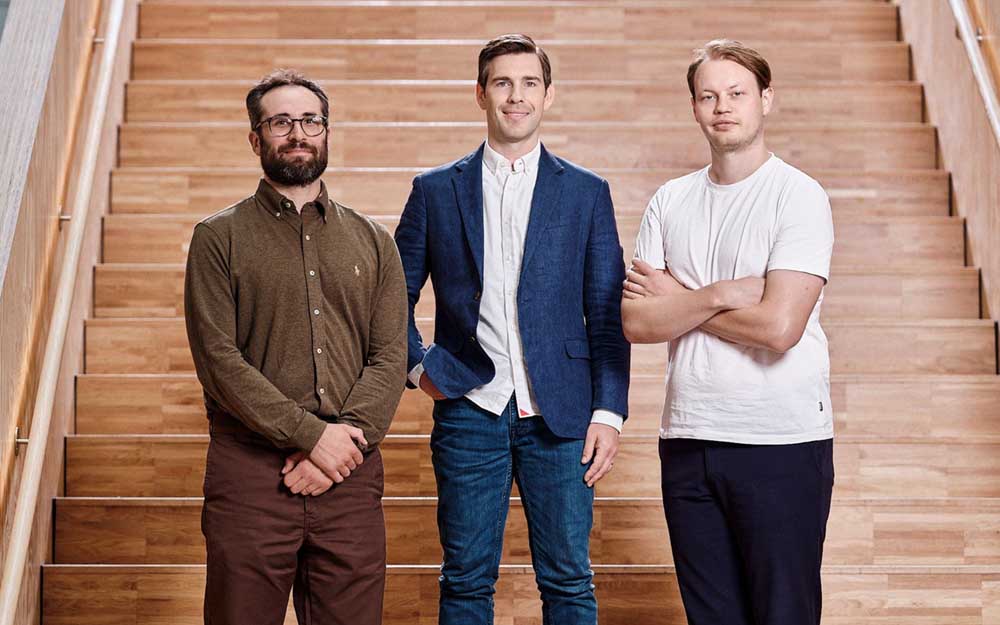
React Foods’ operating team brings together CEO Michael Martin, CTO Nils Rohbohm and CSO Alberto Robazza. Rohbohm and Robazza are both postdoctoral researchers from Aarhus University and have been involved with CORC.
The wider founding group reflects the international research behind the technology. It includes Lars Angenent, Professor at the University of Tübingen; Alfred Spormann, Professor at Aarhus University and Stanford University; and Ottosen. All three are principal investigators at CORC.
Jozef M. E. Pennings, Professor at Maastricht University, is also among the founders. Angenent, Spormann, Ottosen and Pennings serve on the company’s scientific advisory board.
React Foods is entering a growing field of companies exploring ways of producing food ingredients with less dependence on conventional agricultural feedstocks. Its particular route combines renewable hydrogen, captured CO₂ and microbial fermentation before handing the carbon on to yeast for protein production.
For now, its focus is on the engineering. The pilot work at AU Viborg will test whether a process demonstrated through research can be joined up into the kind of integrated production system needed before larger-scale deployment can be considered.
If you liked this, check these out...
• Novonesis and DTU’s BRIGHT join forces to turn captured CO₂ into sustainable protein
• Global consortium advances food prototypes made from CO₂-derived acetate
• Arborea leads charge on turning CO₂ into protein at 'Beyond the Farm' webinar

Join Us At One Of Our Upcoming Events

If you have any questions or would like to get in touch with us, please email info@futureofproteinproduction.com