.jpg)
Sun Bear Biofuture consumer trials put microbial cocoa butter alternative to the test

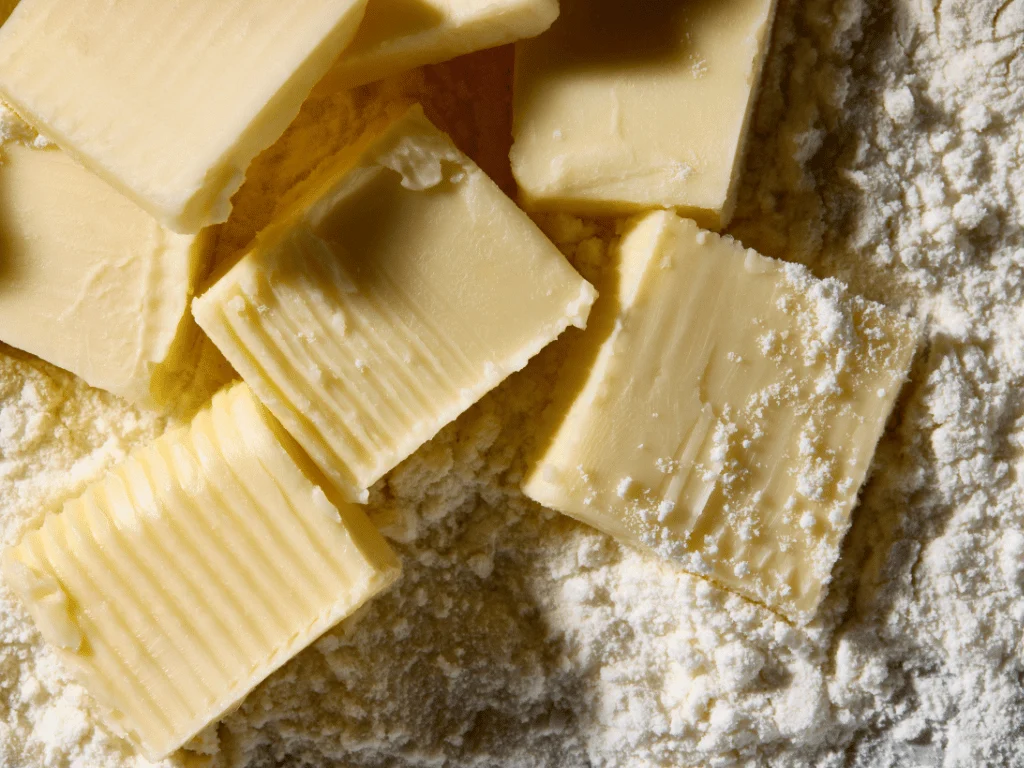
New independent consumer research suggests consumers are receptive to foods and cosmetics made with microbial alternatives to conventional cocoa butter and other oils.
• Sun Bear Biofuture’s microbial fats were equal to or preferred for purchase in four of five food and cosmetics products tested in an independent consumer study.
• Separate testing found its cocoa butter alternative could replace conventional cocoa butter in an existing commercial hand balm formulation without requiring reformulation.
• The company plans a 5,000-liter demonstration plant in 2027 and expects to reach price parity with conventional cocoa butter by 2028.
According to results released today by UK biotech startup Sun Bear Biofuture, its fermentation-derived fats were equal to or preferred for purchase in four of five products tested at the Oxford Brookes Centre for Nutrition and Health. Participants were also asked to identify which samples were different, with the results indicating that in several applications they struggled to distinguish products containing the microbial ingredients from their conventional counterparts.
For Ben Wilding, CEO of Sun Bear Biofuture, that was exactly what he wanted to see. “For us it was most rewarding to see how similar our cocoa butter was to and that people couldn't tell the difference.”
The study involved 22 participants and covered three foods and two cosmetics: chips, chocolate spread, cookies, hand balm and body butter. A separate independent study at the University of the Arts London (UAL), supported by Innovate UK, tested Sun Bear Biofuture’s cocoa butter alternative in an existing hand balm formulation from a major high street cosmetics brand.
Consumer response has been one of the questions raised by prospective customers, Wilding says. “It was extremely important for us to be able to robustly answer the questions we faced from many of the biggest players in food and cosmetics regarding this new, exciting but largely unknown world of microbial lipids and their customers’ potential responses.
“These two independent trials now give us great confidence. New ingredient options are needed and we’re so pleased to be able to say that our range of fats and oils meets consumer demands.”
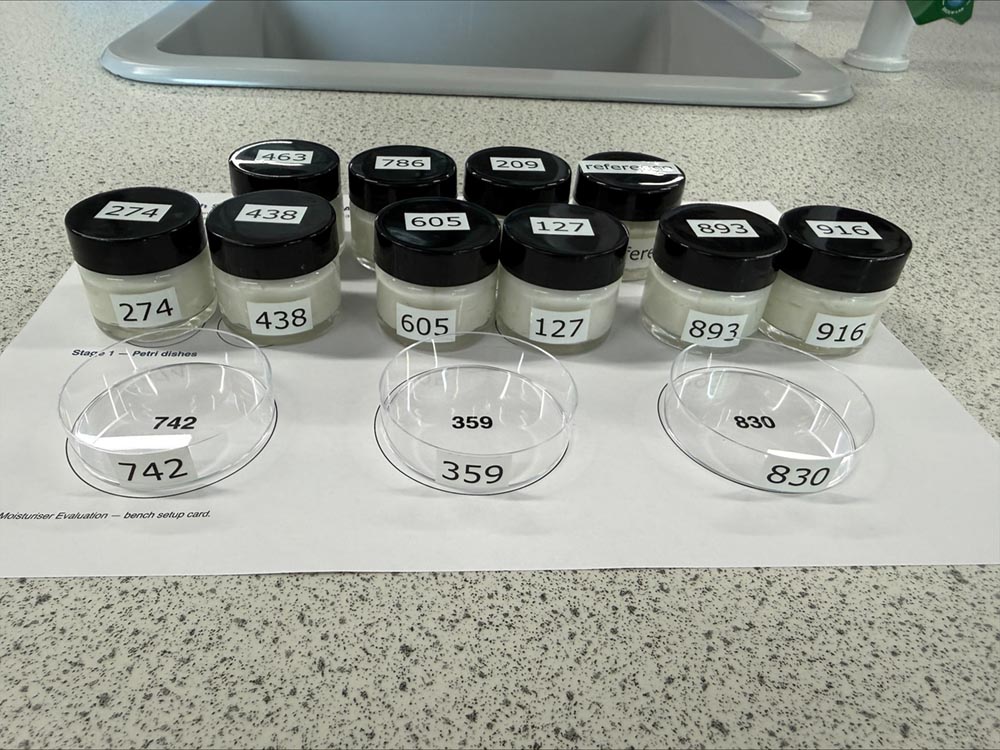
The Oxford Brookes study was conducted in person at the Centre for Nutrition and Health’s sensory testing facility. Each participant was given three samples of every product and completed the study independently in an individual booth, following instructions and questions presented on a tablet.
For the food tests, researchers compared chips fried in olive oil with chips prepared using Sun Bear Biofuture’s Melior oil; a chocolate spread containing cocoa butter and vegetable oil with a version containing Melior oil and the company’s cocoa butter alternative; and conventional cocoa butter cookies with cookies made using the microbial alternative.
The cosmetics tests used two versions each of a hand balm and body butter bar, comparing cocoa butter with Sun Bear Biofuture’s alternative.
Participants answered sensory questions covering taste, texture and smell. They were also asked which product they would prefer to purchase, which of the three samples they believed was different and whether knowing that one product was more environmentally friendly would alter their purchasing preference. Demographic and food neophobia questions were also included.
For now, Sun Bear Biofuture is trying to reproduce tropical fats and oils rather than give consumers something noticeably different. “Our focus today is replicating tropical fats and oils that have negative impacts on the planet, whilst longer term our full capability to design lipids for specific needs that have never existed before using the microbial engineering skills and platform we have in house now. What this means is success looks like not standing out and simply doing what the existing tropical lipid does.”
Wilding says recent work with food recipes and cosmetics formulations has also raised questions about whether the microbial ingredients could offer health or manufacturing advantages. The company is not yet disclosing details and expects to have more to report in early 2027.
UAL researchers also tested the cocoa butter alternative in an existing commercial formulation, substituting it for conventional cocoa butter in a hand balm from a major high street cosmetics brand. “This study set out to ask whether Sun Bear Biofutures cocoa butter alternative behaves as a direct, like-for-like swap for cocoa butter in this formulation. On the evidence gathered here it does, in manufacture and in function alike,” said Joana Maia, research scientist and report author.
The formulation did not require further iterations after the substitution. “What the UAL study found was that they could use the formulation of the high street cosmetics brand and drop our CBA in without any need for iterations and reformulations, which is a major win. There were differences detected by participants but all within the acceptable batch variant parameters of the brand so the difference was only really noted because the products were being reviewed side by side.”
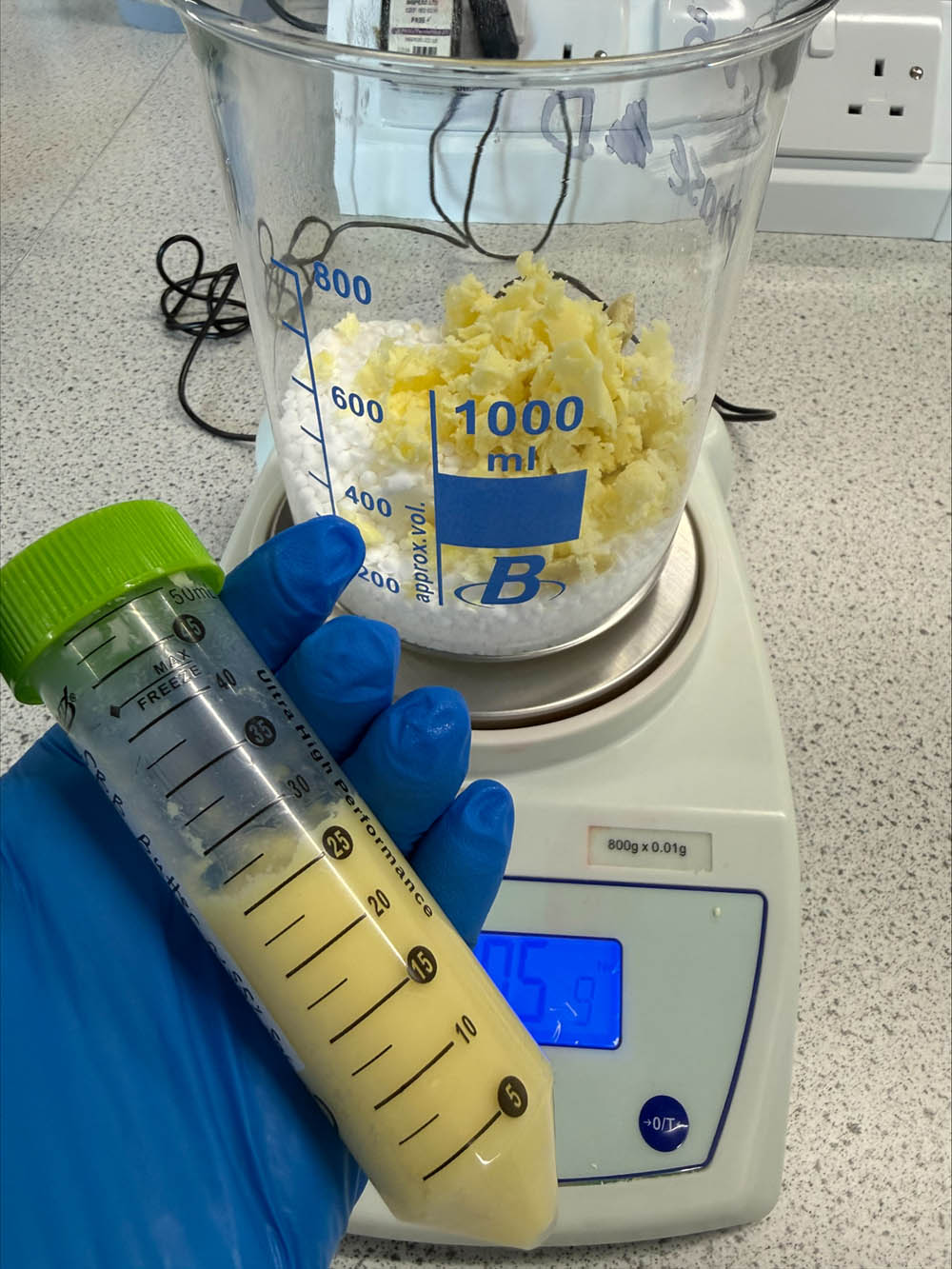
The UAL study recorded a melting range of 28-40°C for conventional cocoa butter and 26-35°C for Sun Bear Biofuture’s alternative.
The two samples differed in composition. The microbial ingredient used for the study contained 53% saturated fat, compared with 61% for the cocoa butter. Sun Bear Biofuture has since produced a version that Wilding says consistently reaches 61% saturated fat and expects its melting behavior to move closer to that of conventional cocoa butter.
Its cocoa butter alternative has what Wilding describes as a “sweet and mildly yeasty aroma”. According to the company, that aroma was not noticeable once the ingredient was incorporated into the products assessed in the Oxford Brookes and UAL sensory studies.
Chocolate remains largely untested outside Sun Bear Biofuture’s own development work. “We are keen to collaborate with chocolate producers to really understand how it performs in such a technical food. We have done inhouse testing but with the complexity of professional chocolate manufacturing we need the right partner.”
Sun Bear Biofuture participated in the first Pladis Accelerator last year and hopes to work further with the manufacturer. It is also in discussions with major fats and oils companies with test kitchens and advanced analytical capabilities. “What we can honestly say is that we know it works well in the test products but further work needs to be carried out with other products to fully understand how like for like our CBA is to cocoa butter.”
The conversations with prospective food and cosmetics customers are already extending into supply, regulatory approval and commercial volumes. “Price, volume and evidence of capability to supply are critical in the conversations we have. Within food discussions regulatory approval is also a major topic.”
Following the Innovate UK-funded project with UAL and the high street cosmetics brand, Sun Bear Biofuture has secured a preliminary order for two tons of its cocoa butter alternative. The order depends on the company’s planned demonstration plant becoming operational.
Sun Bear Biofuture currently operates a 300-liter pilot fermenter and has completed seven pilot-scale fermentations. Performance at pilot scale is around 60% of the level routinely achieved in the laboratory, with further optimization of the yeast strains and fermentation conditions still required.
Current batches produce single-digit kilograms of cocoa butter alternative. Sun Bear Biofuture expects to increase that to 10-15kg per fermentation by the end of 2026.
Its next step is a 5,000-liter demonstration plant planned for 2027, taking production from hundreds of kilograms into tons. At that scale, the company estimates its cost of goods will be approximately £15/kg.
Conventional cocoa butter has historically been considerably cheaper. “Cocoa butter has traditionally traded around £5 to £7/kg so there is still work to be done. Our techno economic assessments at industrial scale show our cost of goods well below the cocoa butter price so at scale we'll be offering stable price parity, supply and reduced regulatory risks. We expect to be able to meet and then exede price parity by 2028.”
.jpg)
The economics of cocoa butter have become considerably less predictable following sharp increases in cocoa prices and disruption to supply. For microbial lipid producers, that volatility potentially changes the price against which their processes ultimately need to compete.
Sun Bear Biofuture has also tested its yeast strains on bread waste and potato peels, demonstrating that lipid production is possible using different carbon sources. Wilding says the company has deliberately chosen not to introduce side streams into its immediate scale-up program. “We have worked with a number of different side streams and validated that our strains can grow and produce lipids using things like bread waste and potato peels. In order to move fast this is not our focus.”
Instead, it has identified a feedstock costing below £400 per ton, the target assumed in its techno-economic assessment for competitive production. “This is a feedstock we can scale with to 10s of tons of production so we have the feedstock cost solved for the foreseeable future.”
Sun Bear Biofuture is also in discussions with potential partners that could provide access to industrial-scale facilities more quickly and economically than building the capacity itself or moving directly to a conventional contract manufacturing model. Wilding says that could take production runs into tens of tons by the end of 2027.
The company then intends to establish its first industrial-scale facility in the UK, most likely alongside one or more strategic partners. “Once we have validated the full production capability, processes, customer demand and profits we will franchise the offering globally to partners. This means we can remove ourselves from managing the capex requirements of each individual site, whilst growing revenue and profits significantly and our ability to have a positive impact on the planet much faster.”
Sun Bear Biofuture estimates the combined cocoa butter and cocoa butter alternatives market at around £11.5 billion, while Wilding puts the wider high-value lipids market at approximately £30 billion.
Cocoa butter is only the company's starting point. “The cocoa butter and cocoa butter alternatives market is collectively worth about £11.5 billion. However, the overall lipids market globally is worth circa £260 billion. We're starting with cocoa butter and then expanding into the broader high value lipids market, worth about £30 billion.”
The company also intends to develop what Wilding calls designer lipids, using microbial engineering to produce fats for specific applications rather than reproducing the composition of an existing agricultural fat.

There are limits to what the new consumer data can show. The Oxford Brookes study involved 22 participants and five products, while successful substitution in a hand balm does not establish equivalent performance across foods with much more demanding processing requirements. Sun Bear Biofuture also has substantial scale-up work ahead: pilot performance remains below laboratory levels, its projected 2027 cost of goods is still above cocoa butter’s historical range and food applications will require regulatory approval.
Those are now the practical tests facing a technology that has begun to produce promising results in sensory booths and formulation trials.
For Wilding, however, reproducing cocoa butter is only one use for a microbial platform capable of changing the fats it produces.
“We talk about a cocoa butter alternative because it means something to people and it's a known problem but as stated, there is a very real chance our lipids are healthier and easier to manufacture with – that could be worth a lot more. The lipids we can design and produce from microbes hold a huge amount of untapped opportunity.”
If you liked this, check these out...
• Novel fats face a new challenge: making enough of them at the right price
• New Wave Biotech joins forces with CPI to break through lipid extraction bottleneck
• Botaneco targets next-generation plant-based fats with expanded oilseed oleosome platform

Join Us At One Of Our Upcoming Events

If you have any questions or would like to get in touch with us, please email info@futureofproteinproduction.com

.jpg)