

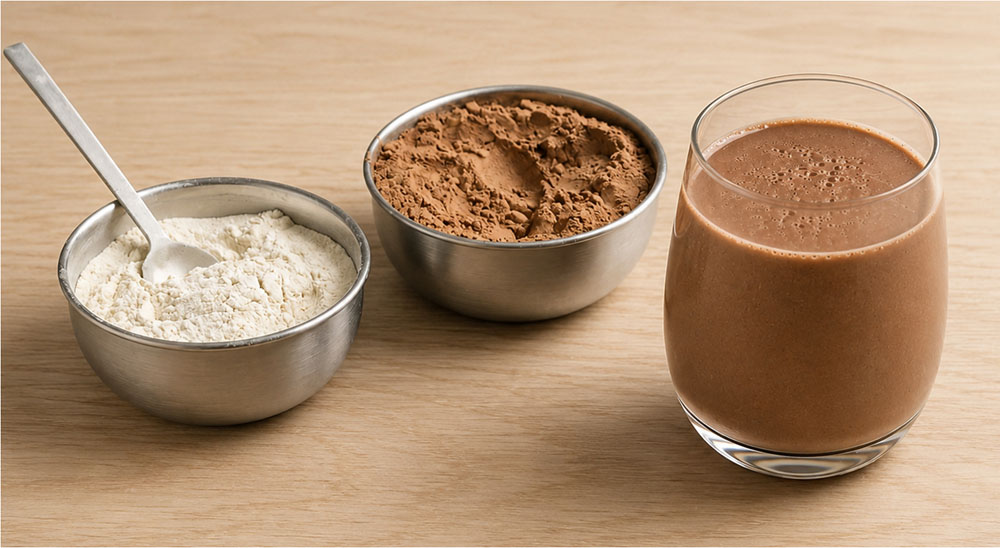
Superbrewed Food clinical study finds postbiotic protein matched whey in muscle-building response

Superbrewed Food has unveiled new clinical data showing that its fermentation-derived Postbiotic Cultured Protein delivered a muscle-building response comparable to whey protein isolate and matched or outperformed pea protein isolate in a controlled human study presented at NUTRITION 2026.
• Texas A&M researchers found Superbrewed Food's Postbiotic Cultured Protein produced an anabolic response comparable to whey protein isolate in a randomized clinical study.
• The study also reported similar amino acid bioavailability across postbiotic, whey, and pea proteins, with lysine identified as the limiting amino acid for all three.
• Findings were presented during an oral session at the American Society for Nutrition's NUTRITION 2026 conference after testing 10 healthy adult participants.
The findings were presented during an oral session at the American Society for Nutrition's annual meeting, held July 25-28 in the Washington, D.C. area.
According to Superbrewed Food, the randomized, single-blind, placebo-controlled crossover study is the first to directly compare a postbiotic protein with both whey protein isolate and pea protein isolate using a stable isotope pulse technique that measures amino acid bioavailability alongside the intracellular anabolic response following a meal.
The research was conducted in the laboratory of Nicolaas E.P. Deutz, MD, PhD, FASN, director of the Center for Translational Research in Aging & Longevity at Texas A&M University.
Researchers reported that net intracellular protein synthesis was not statistically different between the three protein sources. Whey protein isolate achieved a measured response of 65% (95% confidence interval: 30-100%), compared with 53% (22-83%) for Postbiotic Cultured Protein and 47% (22-72%) for pea protein isolate. The researchers said substantial individual variability prevented statistical separation between the proteins.
The study also found amino acid bioavailability was approximately 75% for all three proteins, indicating comparable delivery of amino acids into circulation.
Another finding was that lysine, rather than protein source, was the limiting amino acid across all three proteins, including whey. Researchers also identified methionine as another amino acid that fell short of intracellular demand, meaning the body drew on its own amino acid reserves to compensate.
The utilization data suggested that fewer essential amino acids would need to be added to Postbiotic Cultured Protein than to pea protein to optimize protein quality.
"This stable isotope pulse method lets us measure not just how much protein-derived amino acids appear in the blood after a meal, but how efficiently the body actually uses those amino acids inside the cell to build new protein," said Dr Deutz, the study's principal investigator.
"What stood out is that Postbiotic Cultured Protein performed on par with whey protein, and that lysine emerged as the limiting amino acid across all three sources - even whey. That tells us protein quality can't be assumed from a label; it has to be measured directly, and postbiotic protein measured up."
Bryan Tracy, PhD, CEO and co-founder of Superbrewed Food, said the results added independent evidence supporting fermentation-derived proteins.
"For years, the alternative protein industry has asked consumers to trade nutrition for sustainability. This independent study, conducted by one of the most rigorous protein metabolism research labs in the world, shows that trade-off doesn't have to exist," Tracy said.
"Postbiotic Cultured Protein delivered an anabolic response and bioavailability on par with whey and a stronger amino acid foundation than pea protein - all from a non-GMO, zero-lactose, allergen-free ingredient made through fermentation, the same natural process used to brew beer and culture yogurt. This is the kind of independent, peer-reviewed evidence our industry needs to move fermentation-derived protein from promising to proven."
The study enrolled 10 healthy adults, comprising five women and five men with a mean age of 31.4 years. Each participant completed four study days separated by at least 48 hours, receiving Postbiotic Cultured Protein, whey protein isolate, pea protein isolate, or a water placebo in randomized order.
Participants consumed 45g of protein over a five-hour period before receiving an intravenous pulse containing 10 labeled essential amino acids to track post-meal amino acid metabolism. Blood samples were analyzed using liquid chromatography-tandem mass spectrometry (LC-MS/MS).
The tracer method used in the study was developed by Dr. Deutz and colleagues and published in Clinical Nutrition in 2025. The research was supported by BioMADE through its Warfighter Nutrition initiative, with funding awarded to Superbrewed Food.
Superbrewed Food said its Postbiotic Cultured Protein is produced through proprietary anaerobic fermentation using a microbe native to the human gut microbiome. The company said the ingredient has received FDA Generally Recognized as Safe (GRAS) status, is non-GMO, allergen-free, animal-free and contains no lactose.
If you liked this, check these out...
• Nichols and Myprotein target functional drinks boom with clear whey protein water launch
• Nestlé patent application proposes precision-fermented donkey whey protein for infant formula and nutrition products
• Angel Yeast promotes Angeopro-whey protein blends as route to higher amino acid scores

Join Us At One Of Our Upcoming Events

If you have any questions or would like to get in touch with us, please email info@futureofproteinproduction.com


.jpg)
.jpg)
