The Better Meat Co becomes BMC Ingredients in strategic shift beyond meat alternatives

The Better Meat Co has unveiled a significant strategic repositioning, announcing it will operate under the new trade name BMC Ingredients as it broadens the commercial ambitions for its Rhiza mycelium beyond meat applications and into mainstream food categories ranging from baked goods and pasta to smoothies, nutrition bars and beverages.
• The Better Meat Co. will operate commercially as BMC Ingredients while retaining its existing legal entity.
• Rhiza mycelium is being positioned as a whole-food alternative to conventional protein isolates across multiple food categories.
• Commercial-scale production is expected to begin in the second quarter of 2027 with planned output of approximately 100 dry metric tons of mycelium ingredients per month.
On the surface, the announcement appears to be a straightforward corporate rebrand. In reality, it is something much broader: a company once known primarily for helping manufacturers formulate better meat products is repositioning itself as a supplier of functional protein ingredients for the wider food industry.
For much of the past decade, The Better Meat Co built its reputation developing mycelium ingredients for conventional and plant-based meat products. Today, however, it sees a considerably larger opportunity.

Rather than defining itself by the products it replaces, the company wants to be known for the ingredients it supplies. "Our mission remains the same: to help food companies reduce cost while making more nutritious, sustainable, delicious foods," commented Paul Shapiro, CEO & Co-founder. "The BMC Ingredients name better reflects the breadth of what Rhiza mycelium can do. As food companies look for scalable, all-natural alternatives to increasingly expensive protein isolates, we're excited to offer a whole-food mycelium ingredient that delivers nutrition, functionality, and versatility across categories."
Asked whether the company had fundamentally changed direction, Shapiro said the technology had evolved beyond its original market rather than the business abandoning its roots. "It's both a rebrand and a clarification," he added. "We haven't fundamentally changed; what's changed is that Rhiza has shown it can do much more than help make better meat, and the market is now looking for the kind of clean, functional protein ingredient we've been building all along."
He compares the shift to discovering new uses for an agricultural crop. "Imagine you were the first person to start growing wheat and you think you've got a bread company, but then you realize that wheat can also make pasta and pancakes and so many more foods. That's what happened with Rhiza mycelium."
The Better Meat Co name reflected the company's original focus on meat applications, but customers increasingly began exploring Rhiza in categories far removed from burgers and sausages.
"The Better Meat Co name made perfect sense when our primary focus was animal and plant-based meat applications, and meat remains very important to us," Shapiro said. "But as customers started exploring Rhiza Pro for smoothies, bars, baked goods, noodles, and more, it became clear that BMC Ingredients better reflects the full opportunity."
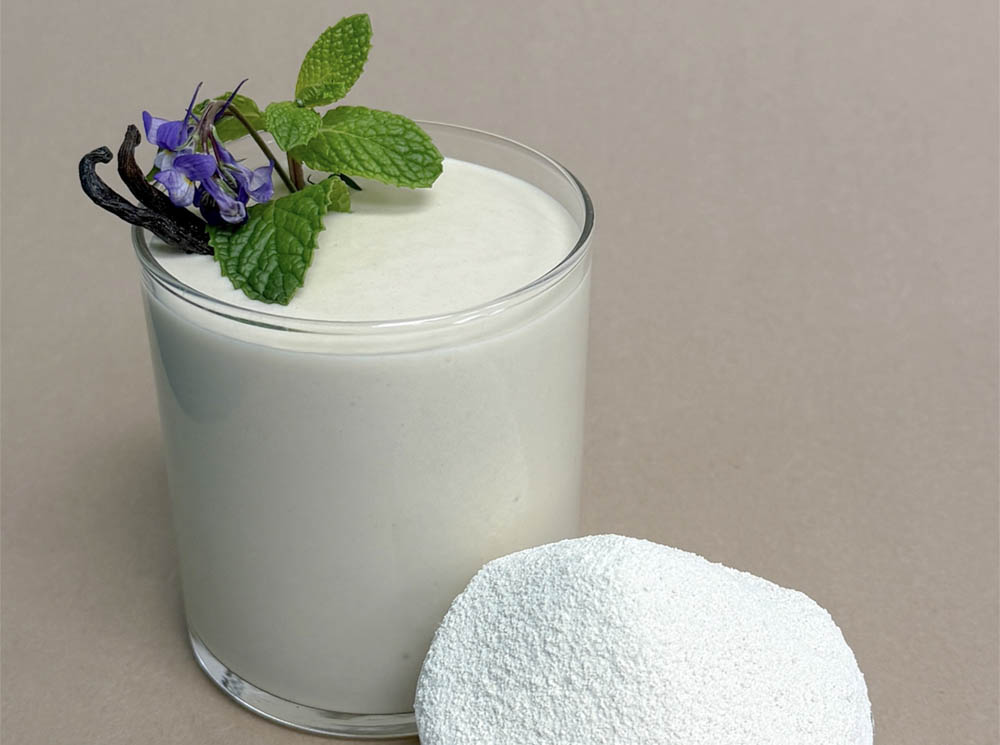
The company will now market Rhiza in two principal formats. Rhiza Tex has been developed for applications where texture is critical, including conventional and plant-based meat products, while Rhiza Pro is designed for products requiring solubility, emulsification and gelation, including beverages, nutrition products, pasta, baked goods and snack applications.
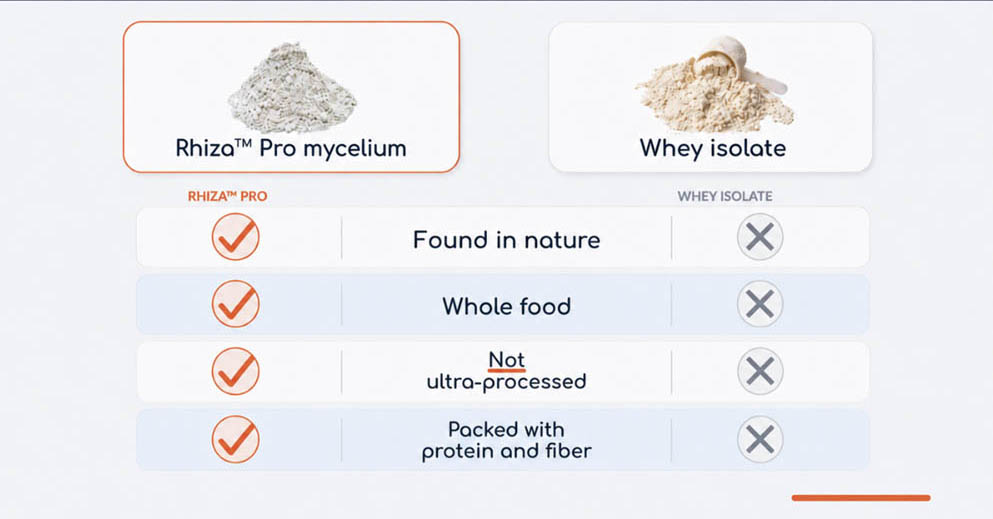
Perhaps the most significant aspect of the announcement is not the new name but the competitive landscape BMC Ingredients now believes it occupies. Instead of positioning Rhiza primarily as a replacement for animal protein, the company increasingly sees conventional protein ingredients such as whey and protein isolates as its competition.
"It is deliberate," Shapiro continued. "We're not only asking how to replace animal meat; we're asking how Rhiza can outperform processed protein isolates by offering protein, fiber, and functionality in a whole-food ingredient."
That change reflects what he believes is happening across food manufacturing more broadly. Alternative protein, he argued, is becoming less useful as a way of describing ingredients. "Food companies ultimately care about taste, cost, nutrition, functionality, supply, and label appeal, not whether an ingredient fits neatly into an 'alternative protein' box."
It's a view that mirrors a wider trend emerging across food technology, with an increasing number of companies broadening their ambitions beyond replacing individual products and instead positioning themselves as suppliers of versatile functional ingredients.
For BMC Ingredients, that dramatically expands the addressable market. "It makes the opportunity dramatically bigger," Shapiro said. "Meat is an enormous market, but protein ingredients are used across nearly every aisle of the grocery store, so becoming a broad ingredient supplier opens doors far beyond any one category."
The shift also reflects changing priorities among food manufacturers. For years, much of the industry's conversation centred on protein percentage. Today, formulators increasingly need ingredients that perform multiple roles simultaneously while helping simplify formulations and ingredient declarations.
"Protein percentage matters, but formulators also need ingredients that actually work in real products, taste good, simplify labels, and deliver nutritional value beyond just grams of protein," Shapiro said. "Rhiza is packed with protein (51% by dry weight), but is also a fiber powerhouse."
Protein, he suggested, is only part of the value proposition. "Protein gets the headline, but formulators are often just as interested in Rhiza's texture, emulsification, gelation, water-holding, and nutritional profile. The fact that it also brings fiber is a major advantage."
Those characteristics have become increasingly important as manufacturers seek to reduce formulation complexity. "If one ingredient can help deliver nutrition, texture, and functionality, that can mean fewer inputs, cleaner labels, and more efficient formulation."
The company says Rhiza naturally provides protein and fiber while also containing compounds including ergothioneine and spermidine.
The repositioning also arrives at a time when manufacturers are reassessing ingredient selection amid growing scrutiny of ultra-processed foods.
Rather than producing isolated proteins, BMC Ingredients is positioning Rhiza as a whole-food mycelium ingredient that delivers functionality without extensive fractionation. "I think it's becoming increasingly important," Shapiro said. "Consumers and food companies alike are asking questions about how ingredients are made, and Rhiza gives them a way to add protein and functionality without relying on the kind of isolation and processing common in many protein ingredients."
He also points to the long history of mycelium consumption. "It's a whole food that has a centuries-long history of consumption by traditional cultures."
That history is becoming an increasingly important part of the company's messaging. While Neurospora crassa has only recently entered commercial food production through modern fermentation, the fungus has been consumed for centuries in traditional fermented foods across parts of Asia and Africa, including Indonesian oncom and fermented soybean products in China. Recent scientific reviews have highlighted this long history of safe consumption alongside its modern development as a commercial food ingredient.
The announcement also comes ahead of one of the company's biggest milestones. BMC Ingredients expects to commission its commercial production facility during the second quarter of 2027. Once fully operational, the site is expected to produce around 100 dry metric tons of Rhiza ingredients each month.
For Shapiro, reaching commercial manufacturing represents the transition from technology development to industry adoption. "If we can't scale, what we're doing is pointless," he said. "We've spent years inventing, refining, optimizing, patenting, and more. It's now time to unleash the Rhiza River into the world."
He sees commercial success in two distinct ways. "Commercial success means Rhiza replacing ingredients where it can do the job better, while also enabling new products that would be harder to make with conventional protein isolates like whey and others."
Manufacturing capacity has become one of the defining issues across fermentation-derived ingredients, with companies increasingly judged not only on technical performance but on their ability to manufacture at commercial volumes.
For BMC Ingredients, the planned facility is intended to demonstrate that Rhiza is moving beyond pilot-scale production and into broader commercial supply.
Looking beyond his own company, Shapiro believes food technology businesses are increasingly redefining themselves. "The strongest food-tech companies won't define themselves only by what they replace, but by the value their ingredients bring to food manufacturers," he said. "Reducing humanity's reliance on animal farming is a part of our mission, and that can be done in a variety of ways."
He also believes consumers will become increasingly familiar with mycelium itself rather than viewing it as a novel ingredient. "It will become increasingly normal as a category of food."
Ultimately, Shapiro sees Rhiza as something broader than another protein ingredient entering an increasingly crowded market. "We're introducing a new crop to humanity by taking a food traditional cultures have enjoyed for centuries and finding new ways to farm it for the modern world. Rhiza isn't just another protein or fiber ingredient; it's a way to help billions of people enjoy mycelium-based foods while addressing some of our most pressing challenges, from building a more resilient food supply to reducing our reliance on animals for food."

Join Us At One Of Our Upcoming Events

If you have any questions or would like to get in touch with us, please email info@futureofproteinproduction.com

More News