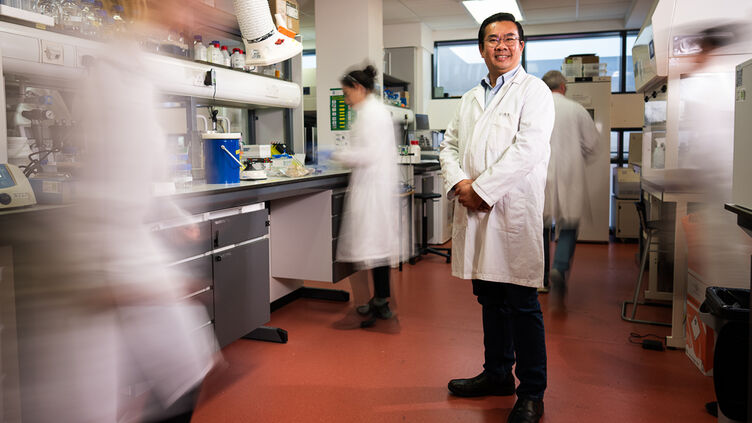

University of Leicester launches £1.95 million trial to study health effects of vegetarian and vegan diets

Researchers at the University of Leicester have launched a major 12-month study to investigate how switching from a meat-containing diet to vegetarian or vegan diets affects cardiovascular and metabolic health, psychological wellbeing and dietary carbon footprints.
• The University of Leicester has sought 450 adults with overweight or obesity for a 12-month randomized controlled trial of vegetarian and vegan diets.
• The £1.95 million Plant Your Health study has received funding from the Chellaram Foundation and will compare vegetarian, vegan and participants' usual diets.
• Researchers will measure LDL cholesterol, blood pressure, blood glucose, body composition, psychological wellbeing and the carbon footprint associated with participants' diets.
The Plant Your Health study, led by Professors Tom Yates and Kamlesh Khunti at the University of Leicester, will recruit people aged between 18 and 50 who are living with overweight or obesity and currently eat meat at least five days a week.
Participants will be assigned to one of three groups. One will adopt a vegetarian diet excluding meat and fish but including dairy products and eggs, another will follow a strict vegan diet, and a third will continue eating its usual diet.
The researchers will follow participants for 12 months, examining a range of health measures including LDL cholesterol, blood pressure, blood glucose and body composition. The study will also assess psychological wellbeing and calculate participants' dietary carbon footprints.
The £1.95 million (US$2.6 million) project has been funded by the Chellaram Foundation and is intended to address a shortage of larger, longer-term randomized studies examining the health effects of plant-based diets.
Professor Tom Yates, Professor of Physical Activity, Sedentary Behaviour and Health at the University of Leicester, said the trial was aimed at people prepared to make a substantial dietary change for a full year.
“This study would suit anyone who has been wondering whether ditching meat could be beneficial to their health, and is happy to commit to changing their diet for 12 months,” he said.
“Not only will participants receive supermarket vouchers over the course of the study to help support food costs, they will also receive regular guidance from trained dietitians, cooking classes and in-depth health checks at study visits.”
The researchers are specifically focusing on younger adults with overweight or obesity, with recruitment taking place through both self-referral and invitations from primary care.
Professor Kamlesh Khunti, Professor of Primary Care Diabetes and Vascular Medicine at the University of Leicester, said the scale and range of measurements could allow the research to contribute to future dietary guidance.
“We are all incredibly excited to be embarking on this landmark study, investigating a large number of important health measures and whether they are affected by vegan or vegetarian diets,” he said.
“We are thankful to the Chellaram Foundation for their contribution to this work, and look forward to welcoming people onto the study. Recruitment will allow for both self-referral and invitation from primary care.”
Khunti added that a further strand of the work would seek to translate the findings into evidence relevant beyond the trial population.
“Through a further strand of this work, we aim to produce globally relevant evidence that informs public health policy, dietary guidelines, and supports healthier, more sustainable nutrition at the population level,” he said.
The study comes amid continued interest in the relationship between diets containing more plant-derived foods and long-term health outcomes. However, the Leicester team noted that much of the existing evidence has not come from long-duration controlled trials involving sufficiently large groups of participants.
Professor Louise Goff, lead dietitian on the project, said the size and design of Plant Your Health were intended to help close that evidence gap.
“Although we know plant-based nutrition provides health benefits over the short term, there are a lack of well conducted research studies over the longer-term in sufficient numbers,” she said.
“This study is the largest trial on plant-based nutrition to date and will provide the gold standard evidence needed to inform public health.”
The randomized controlled design will allow researchers to compare changes among participants who switch diets with those who continue eating as usual, rather than relying solely on observational comparisons between people who already follow different dietary patterns.
Alongside clinical measures, including cholesterol and glucose, the inclusion of psychological wellbeing and dietary carbon footprints will give the researchers data on both personal health and the environmental implications of changing dietary patterns.
The Chellaram Foundation described the project as an opportunity to generate more rigorous clinical evidence around vegetarian diets and cardiovascular health in people with overweight and obesity.
“We at the Chellaram Foundation are very happy to be a partner for this upcoming randomised controlled trial on vegetarianism and cardiovascular health in obese and overweight people,” the foundation stated.
“This study will use a rigorous clinical design to provide clear evidence on a vegetarian diet from a healthcare perspective. This research represents an essential step in understanding how compassionate food choices can create a more sustainable world.”
Participants will receive support throughout the 12-month intervention, including guidance from trained dietitians, cooking classes and supermarket vouchers designed to contribute toward food costs.
Researchers are now recruiting for the study. Eligible volunteers must be aged 18 to 50, live with overweight or obesity and currently consume meat on at least five days each week.
The project is being conducted through the Leicester Diabetes Centre, with the wider research environment involving the NIHR Leicester Biomedical Research Centre, hosted by University Hospitals of Leicester NHS Trust in partnership with the University of Leicester, Loughborough University and University Hospitals of Northamptonshire NHS Group.
If you liked this, check these out...
• Physicians Committee poll finds most US men view meat as ‘masculine’, despite health concerns
• Healthy Eating Research report urges nuanced approach to ultra-processed foods, distinguishing plant-based products from processed meat
• IFF secures first soy protein heart health claim in Australia and New Zealand

Join Us At One Of Our Upcoming Events

If you have any questions or would like to get in touch with us, please email info@futureofproteinproduction.com