University of Nottingham launches BioSee AI to bring real-time visibility inside bioreactors

A new University of Nottingham commercialization venture, BioSee AI, has launched with the aim of tackling one of industrial biotechnology’s most persistent operational challenges: the lack of real-time visibility inside bioreactors.
• The University of Nottingham has launched BioSee AI, a new commercialization venture developing an AI-enabled multi-sensor platform to provide real-time insight into biological processes inside bioreactors.
• The system integrates ultrasonic and optical sensing with machine learning to predict biological parameters and detect issues such as contamination or process drift earlier in production cycles.
• Development of the platform has been supported by EPSRC Impact Acceleration Account funding and the National Alternative Protein Innovation Centre, with validation underway through industry collaborations.
The new platform has been developed to help biotechnology companies detect process failures earlier and reduce waste during biological production runs. According to the team behind the project, many industrial fermentation processes still rely heavily on manual sampling and offline laboratory assays, meaning problems can remain undetected until large batches are already compromised.
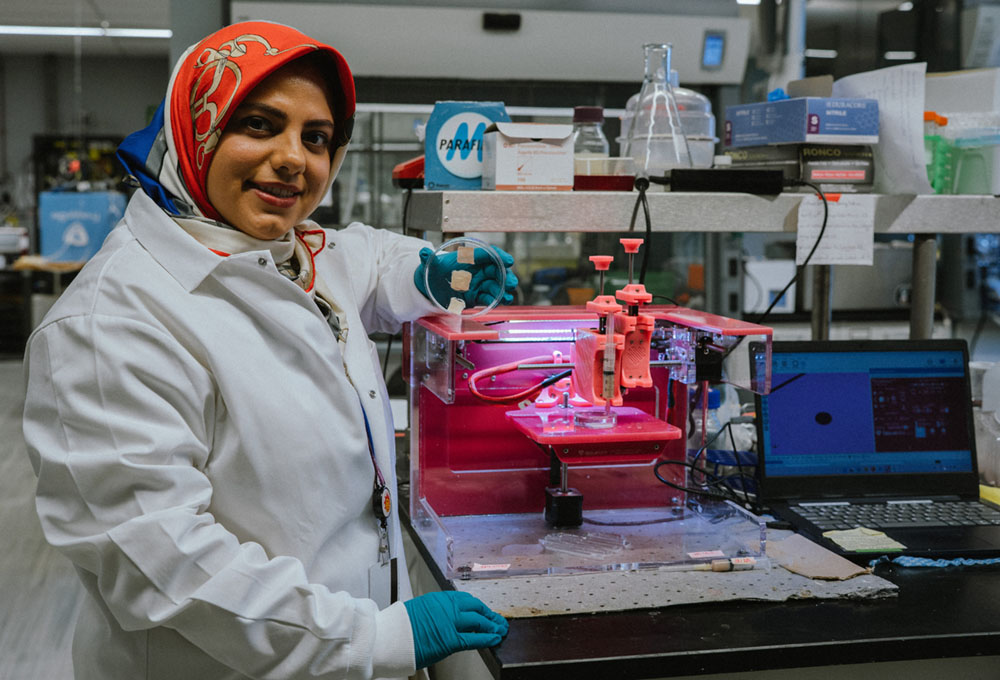
BioSee AI has been developed by Dr Oliver Fisher and Associate Professor Asma Ahmed from the University of Nottingham’s Department of Chemical and Environmental Engineering. Their system combines ultrasonic and optical sensing with multimodal machine learning models to generate continuous insights into biological processes during fermentation and other forms of bioproduction.
The technology has been designed as a low-cost, non-invasive monitoring solution aimed particularly at small and medium-sized biotechnology companies. Potential applications include alternative protein production, brewing, waste valorization, bio-nutrition, biofuels and other industrial bioprocessing sectors.
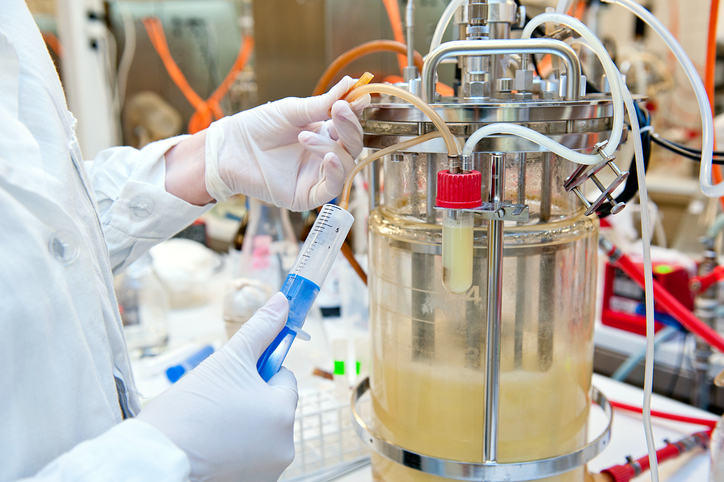
In many of these systems, operators currently rely on periodic sampling or indirect probe data to infer what is happening inside the reactor. This approach can delay the detection of contamination, cell clumping or changes in product quality until batches worth hundreds of thousands, or even millions, of pounds are already at risk.
By contrast, the BioSee AI platform has been developed to provide continuous monitoring of biological and structural parameters during the production process. According to the development team, this capability could enable earlier detection of process deviations, optimize harvest timing and improve yield consistency.
Dr Oliver Fisher, Assistant Professor in Chemical and Environmental Engineering at the University of Nottingham, said the goal was to provide manufacturers with real-time biological insight without requiring invasive monitoring equipment.
“Despite advances in automation, most industrial bioprocesses still rely on manual sampling and indirect probe data to interpret biological state. BioSee AI is about making the invisible visible by delivering affordable, real-time biological insight without invasive probes, and helping manufacturers prevent costly batch failures before they happen,” Fisher said.
One of the distinguishing features of the platform is its ability to improve performance across different deployment sites without requiring companies to share proprietary process data. The system has been designed as a modular and retrofit-compatible solution, allowing it to be installed on existing equipment without extensive modifications.
According to the development team, this approach aims to bridge the gap between expensive spectroscopic monitoring systems and simpler probe-based tools that provide limited biological information.
Development of the platform has received support from the Engineering and Physical Sciences Research Council Impact Acceleration Account and the National Alternative Protein Innovation Centre, which is supported by the Biotechnology and Biological Sciences Research Council.
The project is also being developed in collaboration with industry partners BioPowers Technology and AlgaeCytes. These partnerships are being used to validate the system in real-world applications including fungal single-cell protein fermentation and algal bioprocesses.
The BioSee AI team is now moving from proof-of-concept demonstrations toward industrial pilot trials, which are expected to take place over the next 24 to 36 months.
As part of this next phase, the team is undertaking structured market discovery through the UK’s national ICURe program. The initiative involves engaging with bioprocess operators, equipment manufacturers, sensor developers and R&D teams to better understand commercial demand and integration pathways.
Through these discussions, the developers aim to ensure the technology is aligned with industry requirements and capable of scaling across a wide range of fermentation and circular bioeconomy applications.

Join Us At One Of Our Upcoming Events

If you have any questions or would like to get in touch with us, please email info@futureofproteinproduction.com