

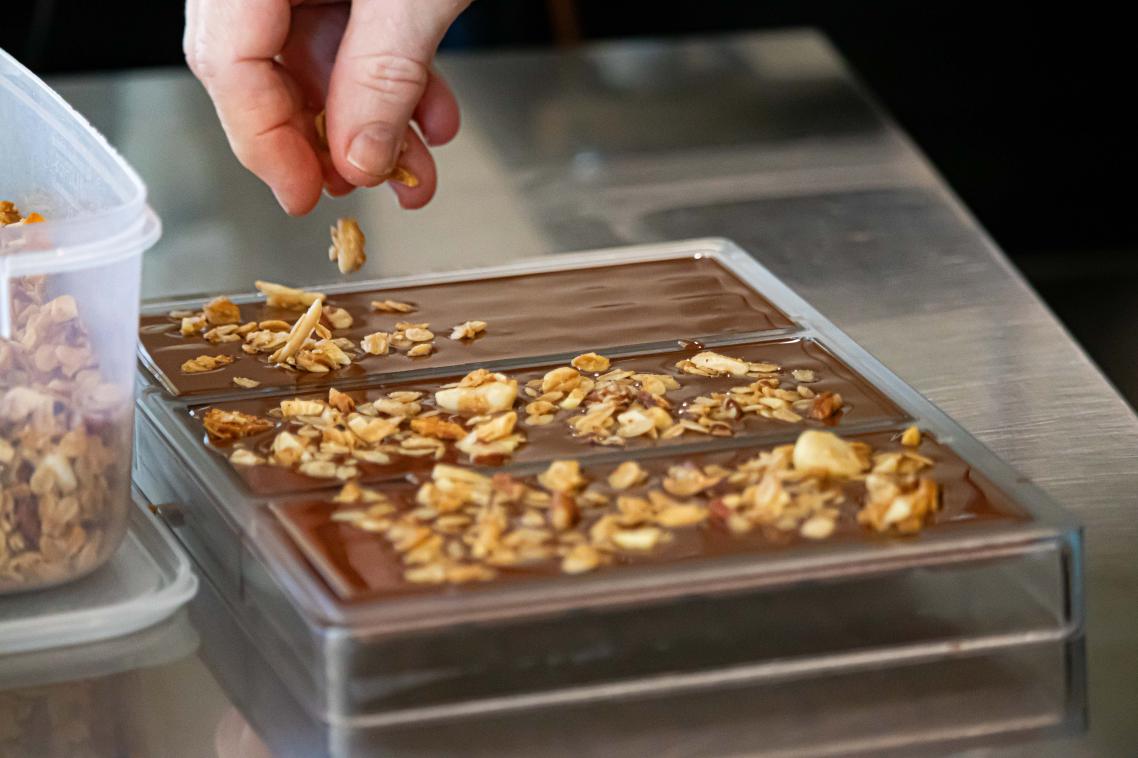
University of Queensland study found fermentation environment shaped cocoa flavor more than genetics

For generations, chocolate makers have looked to cocoa genetics to explain why one batch of beans produces different flavors from another. New research from the University of Queensland has suggested the microbes responsible for fermentation may have a greater influence on flavor development than the cocoa tree itself, offering fresh insight into how fermentation can be controlled to produce more consistent, premium chocolate.
• Researchers found cocoa nibs grouped by fermentation site rather than cocoa genotype, suggesting fermentation environment had a greater influence on flavor chemistry.
• The study identified significant differences in organic acids, phenolic compounds and volatile aroma compounds between Australian cocoa producers using advanced chemical analysis.
• The researchers concluded the findings could support provenance-based differentiation and provide a foundation for future studies into microbial communities and controlled fermentation.
Published in Food Chemistry X, the study provided one of the first comprehensive chemical analyses of Australian-grown cocoa, examining roasted cocoa nibs from three commercial producers in Far North Queensland. Rather than relying on sensory panels alone, the researchers combined analyses of phenolic compounds, organic acids, antioxidant capacity and volatile aroma compounds with multivariate statistical analysis to understand what drove differences between samples.
The most striking finding emerged when the team compared cocoa from different farms and fermentation sites.
Beans from Fishery Falls and Mount Etna, which were fermented at the same facility despite coming from different cocoa genotypes, showed greater similarity in their volatile chemical profiles than beans from Mount Etna and Shannonvale, which shared the same PNG hybrid genotype but underwent fermentation at different locations.
The researchers said this suggested the fermentation environment played a more significant role in shaping flavor-related chemistry than genetics under the conditions studied, although they emphasized that genotype, drying location and naturally occurring microbial communities could not be completely separated within the scope of the research.
Fermentation remains one of the least standardized stages of cocoa processing. Freshly harvested beans are typically fermented using naturally occurring microorganisms rather than added starter cultures, with yeasts, lactic acid bacteria and acetic acid bacteria succeeding one another over several days. Their metabolic activity generates flavor precursors that later develop into chocolate's characteristic aromas during roasting.
In this study, fermentation followed an identical commercial protocol across all producers, lasting five days in wooden fermentation boxes before sun drying and roasting. Even so, measurable differences emerged in the finished cocoa nibs, suggesting that local fermentation conditions and resident microbial communities influenced the chemical composition.
One of the clearest indicators appeared in the organic acid profiles.
Shannonvale samples contained significantly higher acetic acid and lower lactic acid than the other two producers, indicating a different balance between microbial activity during fermentation. Fishery Falls and Mount Etna, by comparison, displayed similar acid profiles after being fermented at the same facility.
Those differences were reflected in volatile aroma compounds linked to cocoa flavor.
The researchers found significant variation in fermentation-derived compounds including ethyl acetate, 2-phenylethanol and 2,3-butanedione, alongside roasting-derived pyrazines and furfural. Together, these compounds contribute aromas ranging from fruity and floral notes to roasted, nutty and caramel-like characteristics.
Advanced headspace solid-phase microextraction gas chromatography-mass spectrometry (HS-SPME-GC-MS) revealed distinct volatile fingerprints for each producer, while principal component analysis and hierarchical clustering consistently grouped samples according to fermentation location rather than cocoa variety.
Food chemist Dr Marlize Bekker said the team had expected genetics to play a much larger role.
"We had different types of cocoa trees and we thought that would have a big impact on the flavor but the tree's genotype had a much smaller role to play than the fermentation process itself," she said.
"Whatever is in the environment drives the natural fermentation - nothing is introduced - and we know it is critically important for flavor and quality."
The study also found Australian cocoa compared well with beans from established cocoa-producing regions.
Measurements of phenolic compounds, antioxidant capacity, methylxanthines and volatile compounds all fell within internationally reported ranges, suggesting Australian-grown cocoa exhibited comparable chemical characteristics while retaining producer-specific signatures.
The researchers said these differences could ultimately support provenance-based differentiation as Australia's cocoa sector continues to develop.
Dr Bekker said understanding the chemistry behind fermentation would allow producers to influence flavor development more deliberately.
"Cocoa can display a remarkable diversity of flavor characteristics, ranging from classic chocolate and roasted notes to buttery and even tropical aromas," she said.
"By understanding Australia's unique fermentation environment, we can intervene during the process and start to direct those flavor profiles."
The study also highlighted opportunities for more sophisticated analytical approaches in future cocoa production.
Although microbial populations were not directly characterized during fermentation, the authors suggested metagenomic analysis could identify the specific microorganisms responsible for different flavor outcomes. Such information could eventually support more controlled fermentation strategies or help producers consistently reproduce desirable flavor profiles.
The researchers also acknowledged several limitations. The study analyzed commercial production batches rather than multiple independent fermentation batches, while sensory evaluation was not performed. As a result, although chemical differences between producers were clearly demonstrated, the extent to which consumers would perceive those differences remains to be established.
Charley's Chocolate Factory CEO and CACAO President Chris Jahnke said the findings confirmed what many Australian producers had long suspected.
"In Australia we have high labour costs compared to where most cocoa is grown in West Africa - $30 an hour compared to $30 a month - so we are focused on an absolute premium product," he said.
"In order to have a premium product you must control the processes very tightly and understand the likely outcomes."
He added that collaborating with the University of Queensland had provided scientific evidence supporting the importance of fermentation.
"It's a small industry so researchers are able to pick up products from different growers, test them and determine what affect distinct locations have on the flavor profile," he said.
"The study confirmed the mix of microflora present at a location influences the fermentation which is a key part of flavor development."
If you liked this, check these out...
• Ohly explains how dark yeast extracts can help plant-based ready meals deliver authentic meaty flavor
• T. Hasegawa launches HASEMILK flavor technology for dairy-free products
• Fermenstation files patent to turn spent coffee grounds into flavor enhancer for plant-based meat

Join Us At One Of Our Upcoming Events

If you have any questions or would like to get in touch with us, please email info@futureofproteinproduction.com


.jpg)
.jpg)
