World Economic Forum calls for cellular agriculture and bioreactors to become part of integrated space food systems

The World Economic Forum has called for cellular agriculture, alternative protein production and bioreactors to become part of integrated food systems for long-duration space missions, arguing that the challenge is increasingly moving from proving individual technologies to making them work together reliably.
• The World Economic Forum identified cellular agriculture, alternative proteins, bioreactors and controlled-environment agriculture among technologies with potential roles in future space food systems.
• The authors called for closer involvement from agriculture, food processing, biotechnology and regulatory experts to turn fragmented research into operational food-production systems.
• Long-duration lunar and Mars missions could require locally produced food alongside supplies from Earth as resupply becomes increasingly costly and logistically difficult.
Writing for the World Economic Forum on August 11, Mishaal N. Ashemimry, Managing Director of the Centre for Space Futures, and Deep Space Food Consortium co-founders Tor Blomqvist and Annie Shelton argued that food remained one of the critical constraints on sustained human activity beyond Earth.
Their intervention came as space agencies increasingly planned for repeated and longer-duration lunar operations rather than isolated missions. NASA outlined a phased approach to lunar surface operations at its March 2026 Ignition event, while China and Russia have continued work toward the International Lunar Research Station.
Those ambitions create a considerably different food-production problem from supplying crews on relatively short missions.
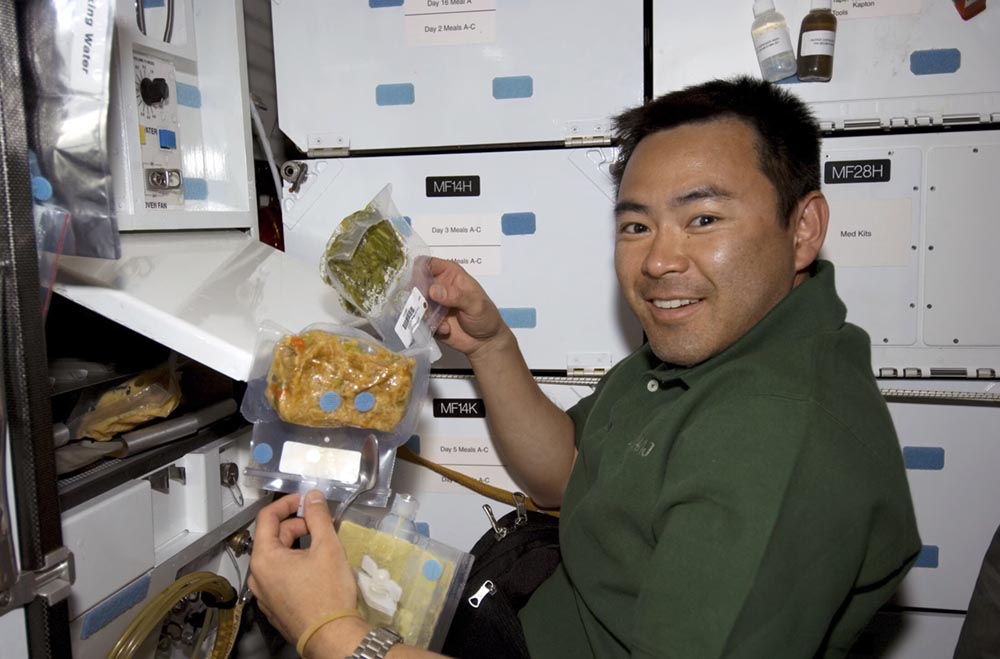
Pre-packaged food transported from Earth becomes increasingly restrictive as missions become longer and travel farther from the planet, according to the authors. Resupply carries substantial costs and logistical risks, while shelf-stable foods can lose nutritional quality, variety and sensory appeal over time.
For crews spending extended periods in isolated environments, food also has implications beyond calories, affecting health, cognitive performance, psychological wellbeing and social cohesion.
The authors argued that locally produced food, supplemented by selective resupply from Earth, was therefore becoming a necessary part of thinking about future lunar settlements and Mars missions.
Among the technologies that could contribute are controlled-environment agriculture, closed-loop life-support systems, cellular agriculture and alternative protein production, as well as advanced preservation technologies and on-demand manufacturing using equipment including bioreactors and 3D food printers.
Yet the WEF article suggested the individual technologies were only part of the problem.
“Terrestrial actors across agriculture, food processing, biotechnology and regulatory systems must be engaged as core partners in shaping research agendas, defining use cases and building implementation pathways,” the authors wrote.
That could open a potentially important new application area for technologies already being developed by the alternative protein industry.
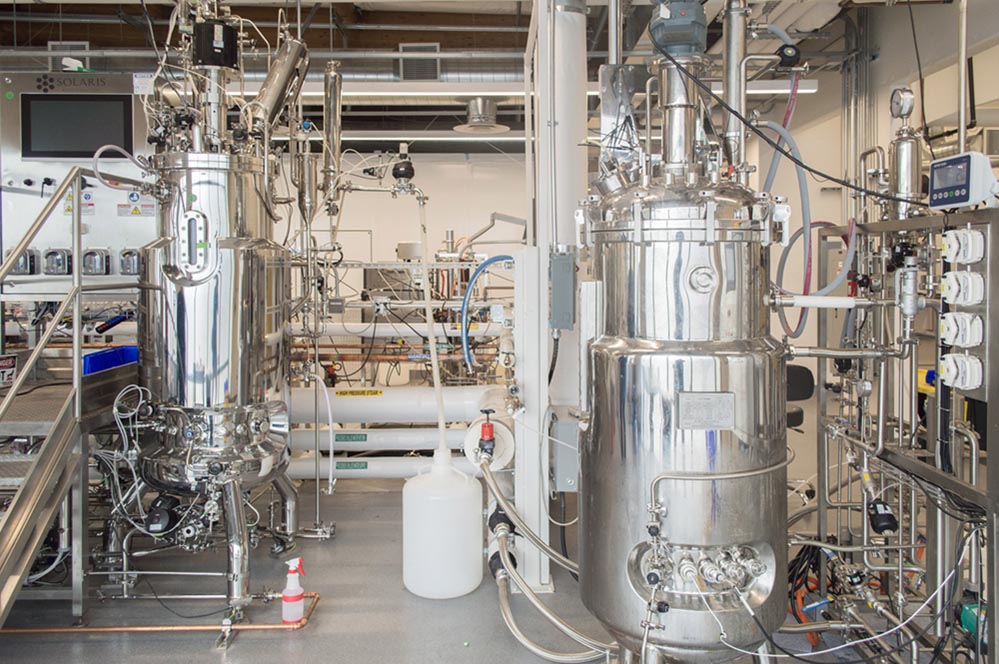
Bioreactor-based food production, for example, offers the possibility of producing nutrients within tightly controlled environments without conventional livestock agriculture. Cellular agriculture and fermentation could similarly form part of food systems designed around severe constraints on space, water, energy, raw materials and waste.
The requirements would, however, be unusually demanding. Food-production technologies intended for space would need to operate reliably under constrained conditions and potentially microgravity or partial gravity, while integrating with systems responsible for water recycling, waste processing and life support.
The WEF authors identified this integration challenge as one of the principal obstacles facing the field. Although several enabling technologies have progressed independently, they have not yet been combined into viable operational systems at the level required for sustained human spaceflight.
They called for a framework capable of distinguishing where requirements on Earth and in space overlap, where existing technologies would require significant adaptation, and where transferring terrestrial solutions into space would be impractical.
The relationship could also work in the opposite direction.
Research conducted under the extreme constraints of space could generate technologies with applications in resource-limited food production on Earth. The authors pointed to experiments involving plant growth in microgravity, including work with grapevine samples exposed to conditions aboard the International Space Station that subsequently demonstrated altered responses to disease.
Similar thinking could apply to highly efficient food-production technologies.
Systems developed to recycle resources, minimize waste and generate food from limited inputs could have relevance for regions facing water scarcity, degraded soils or other agricultural constraints. Space could consequently become an unusually demanding proving ground for technologies whose economics and efficiency are also being tested by food producers on Earth.
Moving from experiments to commercial or operational systems would require regulatory development alongside engineering.
The authors highlighted uncertainty around early regulatory engagement, validation of data generated in space, manufacturing and comparability standards, and the interfaces between food, health and space regulators.
Some of that infrastructure is beginning to emerge in adjacent areas. In the UK, the Medicines and Healthcare products Regulatory Agency and UK Space Agency have been working with other stakeholders on regulatory pathways for biologics manufactured in space.
The WEF article argued that similar coordination would be needed if space food technologies were to progress beyond individual research projects.
Rather than treating agriculture, biotechnology and food processing as downstream participants, the authors called for these industries to help shape research priorities and practical use cases from an earlier stage.
For the alternative protein sector, that presents an unusual extension of a familiar engineering problem. Technologies developed to produce more food from fewer conventional agricultural resources could ultimately face their most demanding test in an environment where every kilogram of equipment, liter of water and unit of energy matters.
“The opportunity is not only to support human life beyond Earth but also to strengthen food systems on Earth,” the authors wrote.
If you liked this, check these out...
• MIT team finds Miso fermented in space packs a nutty punch, hinting at tastier astronaut meals
• Imperial scientists launch microbe lab to test food production in space
• NASA extends BioNutrients research on space-fermented food for astronaut health

Join Us At One Of Our Upcoming Events

If you have any questions or would like to get in touch with us, please email info@futureofproteinproduction.com