


Ones to Watch: Fat chance
From microbial biodiversity and low-cost fermentation to crop biology and commercialization, Benjamin Reygate explores how a new generation of innovators is challenging long-held assumptions about where the future of fats and oils will come from – and how they will reach the market
Every industry accumulates assumptions. Some are written into regulations and engineering standards. Others become accepted wisdom through repetition. This is how things are done. This is what scale costs. This is where innovation happens. This is the technology that matters.
Many of those assumptions have shaped how the food and biotechnology sectors think about fats and oils. New ingredients were expected to emerge through genetic engineering. Fermentation was assumed to demand enormous capital investment. Commercial success often appeared to be little more than a consequence of technical success. Crop improvement focused on enhancing individual traits rather than understanding the biological systems that create them. Even fats themselves were frequently viewed as commodities to source rather than ingredients that could be intentionally designed.
Today, a growing number of researchers and entrepreneurs are questioning those ideas. Some are searching nature rather than redesigning it. Others are rethinking the economics of fermentation from the ground up. Some have discovered that the hardest challenges emerge not in the laboratory but during commercial scale-up. Others are looking upstream, asking how the composition of future ingredients might be influenced before a crop is even harvested. Companies are also beginning to treat fats not simply as replacements for conventional ingredients but as functional materials that can be engineered around specific nutritional, sensory, and manufacturing outcomes.
What connects these efforts is not a shared technology platform or a common market. It is a willingness to revisit assumptions that have long been taken for granted.
Fats and oils influence nutrition, functionality, texture, flavor release, shelf life, and consumer experience, while also connecting manufacturers to increasingly complex global supply chains.
The search for alternatives is no longer simply about replacing one source of fat with another. It is becoming an exercise in rethinking how lipids are discovered, produced, engineered, scaled, and brought to market.
The following 12 innovators are approaching that challenge from very different directions. Yet each, in its own way, is asking the same question: what happens when the industry’s most accepted assumptions are no longer accepted?
GIVE NATURE A CHANCE
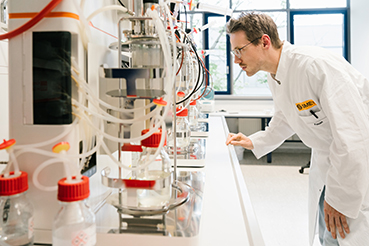
Industrial biotechnology has traditionally operated on a simple assumption: if nature does not produce exactly what you need, redesign it. The playbook has become familiar. Scientists identify a desirable molecule, engineer a microorganism to produce it, then spend years optimizing yield and performance. Viktor Sartakov-Korzhov believes there may be another way. “From the very beginning, we wanted to give nature a chance," says the CEO & Founder of the Paris, France-based biotech company SMEY.
Rather than engineering microorganisms to create specific oils, SMEY searches for naturally occurring yeasts that already produce the lipid profiles manufacturers need. It is an approach that combines large-scale screening, genomics, artificial intelligence, and fermentation, but starts from a very different premise than many biotechnology companies. Instead of asking how biology can be modified, SMEY asks what biology has already solved.

“We chose to focus on lipids because they are critical not only in food, but also across industries such as beauty and personal care,” Sartakov-Korzhov says. “At the same time, many conventional lipid sources face growing pressure from climate change, supply volatility, and regulatory challenges.”
Although proteins have dominated headlines across alternative food and biotechnology, fats remain some of the most important functional ingredients in modern food manufacturing. Replacing them is often considerably more complex than replacing a protein. SMEY believes microorganisms represent a largely untapped opportunity for discovering entirely new lipid ingredients with tailored functionality.
“We believe one of the industry’s biggest overlooked opportunities is the enormous diversity of natural lipids in microorganisms,” Sartakov-Korzhov says. “By exploring this biodiversity with AI and fermentation, it becomes possible to discover new fat solutions that match or even outperform conventional ingredients while improving sustainability and supply resilience.”
To support that search, the company has built what it calls its ‘Neobank of Yeasts’, a growing collection of strains and metabolic data that feeds into its Lipid Atlas discovery platform.
The results have been striking. “By combining large-scale screening, genomics, and AI, we rapidly identify strains, reducing ingredient development time and cost,” he says. “In just one year, we have identified more than 350 oil profiles and built the Lipid Atlas, which helps R&D teams match existing oils or develop new lipid profiles, reducing development timelines from years to months.”
Those discoveries have already led to products including Noyl Palm, Noyl Cocoa, and Noyl Silk, while additional development programs target avocado, argan, and omega-rich oils.
Searching nature’s library
The company has deliberately chosen a non-GMO route, reflecting its belief that nature still holds enormous untapped biochemical diversity. “Nature has been extremely generous with us,” Sartakov-Korzhov says.
One of the industry’s biggest overlooked opportunities is the enormous diversity of natural lipids that exist in microorganisms
Despite the environmental benefits often associated with fermentation-derived ingredients, Sartakov-Korzhov says sustainability is rarely the first topic manufacturers raise. “The conversation is primarily about supply security and performance,” he says. “Food manufacturers need fats and oils that deliver the right functionality while ensuring a reliable supply.”
Ingredient suppliers can rarely compete on sustainability alone. Reliability, consistency, and functionality remain non-negotiable. Sustainability creates interest, but performance drives adoption and ultimately determines long-term commercial success in the market.
“Our model is local by design, enabling production closer to where ingredients are needed, which strengthens supply chain resilience while reducing transportation and sourcing risks,” he says.
Scale-up, economics, and regulation remain significant challenges, but Sartakov-Korzhov believes the industry is approaching an important turning point.
“I expect a new category of ingredients enabled by biotechnology and AI,” he says. “As production scales, fermentation-derived lipids will become more competitive, offering options that combine performance, supply security, and sustainability.”
THE £25,000 CHALLENGE
Precision fermentation has become remarkably good at producing impressive molecules. Producing them cheaply remains another matter. Processes that perform beautifully at bench scale often become prohibitively expensive once they reach industrial production, where pilot facilities can cost hundreds of thousands of pounds and commercial plants require investments measured in tens or even hundreds of millions.
Ben Wilding, CEO & Co-Founder of Sun Bear Biofuture, believes the industry has accepted those economics for too long. “Recognizing from the very start that we could not scale a business to compete with commodity products based on the notion of an industrial plant costing hundreds of millions of pounds has been the foundation of our thinking from day one,” he says.

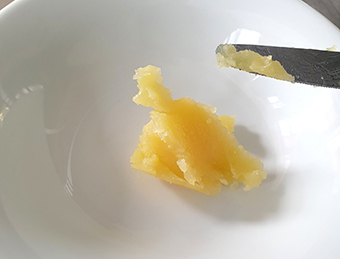
The approach recently culminated in a milestone for the Oxford-based startup. Sun Bear Biofuture completed its first production run at a custom-built pilot facility costing just £25,000 – a fraction of the £350,000 to £1 million often associated with conventional precision fermentation pilot infrastructure.
For Wilding, however, the achievement is not simply about reducing capital expenditure. It is about proving that fermentation-derived fats and oils can eventually compete with some of the world’s lowest-cost agricultural commodities.
The company was founded in 2022 after Wilding and co-founder Ben Williams met through Carbon13, the Cambridge-based climate venture builder. Looking for opportunities to reduce emissions through food and agriculture, the pair evaluated a range of sectors before focusing on tropical fats.
“After observing palm oil in the top 10 of worst foods for the planet in multiple reports, we locked in on it for a range of reasons,” Wilding says. “We assessed its opportunity as holistically as possible – from the perspectives of climate impact potential, customer demand, scientific feasibility to use microbes for production, financing potential, and more.”
Customer conversations quickly confirmed that the opportunity extended beyond environmental concerns. “After 100 customer engagement conversations in a wide range of industries, including food, cosmetics and fuel, we knew there was a real need and growing demand for alternative supplies,” he says.
Challenging accepted truths
Wilding believes one of the company’s biggest advantages has been approaching industrial biotechnology without preconceptions. “With neither founder having a background in this space it has allowed us to keep challenging the accepted truths of biotech and resolve to try things ourselves that perhaps others would say are impossible,” he says. “And sometimes those things have worked out remarkably well.”
Rather than assuming fermentation infrastructure had to follow established industry templates, the company looked elsewhere for inspiration. “There were no one or two specific decisions, more of a particular, open mindset throughout the process,” Wilding says. “Asking, ‘If this thing in another industry basically does the same thing, then why wouldn’t it work for us?’”
Wilding extends the same thinking to downstream processing, an area he believes is often overlooked despite accounting for a substantial proportion of manufacturing costs.
“When modeling our industrial scale facility we found DSP equipment made up about half of the costs of the facility and consumed a lot of energy too,” he says.
With neither founder having a background in this space it has allowed us to keep challenging the accepted truths of biotech
The company responded by redesigning its extraction process to eliminate as much equipment as possible while removing solvents from production. “This has allowed us to cut our scale-up costs by about half, reduce our energy usage and remove solvents from the process.”
The result is a manufacturing model the company believes can ultimately support commodity-scale economics while producing alternatives to ingredients such as palm oil and cocoa butter.
Laboratory performance has also translated well into product testing. Reformulation work carried out with the Cosmetics Science department at the University of the Arts London and a major high street cosmetics brand found no detectable difference between products formulated with cocoa butter and those using Sun Bear Biofuture’s alternative.
“It was really exciting and pleasing to learn that absolutely no difference could be detected between the two versions,” Wilding says. “When replicating a known ingredient, that is exactly what you want to achieve.”
Wilding’s ambition is not to create a niche category of sustainable fats but to make microbial oils almost invisible to consumers. “The less we make of these innovations, probably the better,” he believes. “No one consumer had to ‘accept’ a tomato or SPAM. Microbial fats and oils should simply become normal,” states the CEO frankly.
THE world-class test
Biotech companies spend years proving they can make something. Customers care about something else. They want consistency. They want reliability. They want products delivered to specification, every time, at a price that works commercially.
“Customers bring an incredible level of rigor and discipline,” says Checkerspot CEO John Krzywicki. “It’s great that something was your very best, but it’s not world-class. It’s nowhere near good enough to be competitive in global markets.” Krzywicki says it’s one of commercialization’s defining lessons.

When he joined Checkerspot in 2023, the company had already established a powerful platform based on microalgae fermentation. Today, it focuses on producing high-value fats and oils for nutrition, personal care, and related markets using Prototheca moriformis, a microalga that behaves more like yeast than the algae most people imagine.
“Prototheca moriformis is, to our knowledge, the most efficient and best producer of oils among any microbial source known to man at this point,” he says. Unlike photosynthetic algae, the organism consumes sugar rather than sunlight, making it well suited to existing large-scale fermentation infrastructure already used across the biotech industry.
For Krzywicki, however, scientific achievement is only the beginning. Researchers may celebrate producing a molecule for the first time or reaching a target yield. Commercial customers judge something very different. He compares the experience to training alone versus working with a world-class coach.
“If I’m just there doing my own workout, I define what good looks like,” he says. “If I get a good sweat in, I can cheat a little bit here and there and still say that was great.”
Beyond the laboratory
He notes that the demands also change as production moves beyond the laboratory.
“Every time you have to deal with real-world operating environments, you’re dealing with risk, complexity, and variability,” Krzywicki says.
Large-scale manufacturing introduces challenges that rarely appear at bench scale. Facilities operate across different geographies, cultures and operating systems. Partners bring their own processes and constraints. Small inconsistencies unnoticed in development can become problems once production reaches commercial volumes.
“To scale, part of it is building a low-variance process that has to be dialed in through painstaking work and engineering, rather than science and development,” he says.
Innovation may begin with discovery, but commercialization depends on repeating the same process thousands of times with consistent results.
For Checkerspot, that engineering discipline is increasingly being applied to ingredients capable of addressing both supply limitations and nutritional needs.
Every time you have to deal with real-world operating environments, you’re dealing with risk, complexity, and variability
Among them is omega-7 palmitoleic acid, which the company recently demonstrated could be produced at concentrations significantly higher than existing commercial sources. Another area of focus is infant nutrition where they are commercializing a first of it's kind sn-2 palmitate structured fat at levels that mimic the profile in breast milk. Sn-2 palmitate is one of the most nutritionally significant elements of human milk fat and it presents a major opportunity for formulators to close the nutritional gap between infant formula and human milk. “What really surprised me,” Krzywicki says, “is the potential of this platform to make real, lasting impacts on people’s health and daily lives.”
Like every startup, however, Checkerspot must constantly decide where to focus its resources. “In a company such as this, with many good opportunities to pursue, you’re constantly making hard choices,” he says.
Every investment comes with an opportunity cost, and unlike larger corporations, startups rarely have the resources to pursue every promising opportunity simultaneously.
Before joining Checkerspot, Krzywicki spent time as a venture capitalist, an experience that he says continues to shape how he evaluates new opportunities. “If you look at successful sectors over multiple decades, they have extremely high gross margins, efficient distribution, strong defensibility, and very large addressable markets,” he says.
The key, he believes, is making sure commercial opportunity justifies technological risk. “In our space, sometimes the risks are very high, but the potential rewards aren’t nearly large enough to justify them.”

The oat oil paradox
Most food innovation begins after harvest. Darren Lau is interested in a different point in the journey: what if the functionality of a food ingredient could be influenced before a crop is even harvested?
As a Research Associate at Australia’s Adelaide University, Lau has been investigating one of oats’ more unusual characteristics. Unlike most cereal grains, oats naturally contain relatively high levels of oil. Although that contributes to their nutritional profile, it also creates practical challenges for ingredient manufacturers.
“High oil content hinders milling of oat grains and classification into protein- and beta-glucan-enriched ingredients,” he explains.

It presents an unexpected paradox. In a feature about fats and oils, Lau’s research is exploring how to produce less oil, not more. The objective, however, is not simply to remove one component from the grain. It is to understand how plants regulate and partition nutrients during development, creating opportunities to tailor crops for specific food applications.
Working with collaborators from the South Australian Research and Development Institute, Adelaide University, Intergrain, Essantis, and Australian Export Grains Innovation Centre – and with funding from Grains Research and Development Corporation – Lau has helped identify several of the biological pathways involved in oil accumulation within developing oat grains. Using advanced lipidomics and proteomics, the team tracked how oils accumulate during grain development and identified enzymes that play important roles in the process.
The findings could eventually help breeders develop oat varieties better suited to different end uses. “Understanding oil synthesis in oats will not only help us to understand how we may breed for lower-oil varieties tailored for specific food applications, but also potentially enhance nutritional value by increasing unsaturated fatty acid content,” Lau says.
Achieving that balance is critical. “Importantly, it is also essential to ensure that key functional lipids required for grain development and overall plant health are not compromised in the process of reducing total oil content.”
The new normal
Advances in omics technologies are making that systems-level approach possible. Researchers can now examine how proteins, lipids, carbohydrates, and other molecules are regulated throughout plant development, generating insights that would have been difficult to obtain only a few years ago.
“Research into crop composition, including how plants partition nutrients between protein, oil, and carbohydrates, will be essential for developing the next generation of sustainable food ingredients,” Lau says.
Oats are already unusual among major cereal crops. “Oats have a distinct nutritional profile that offers multiple opportunities for both food and health applications,” Lau says.
The grain also contains compounds such as avenanthramides, phytochemicals associated with anti-inflammatory activity and other potential health benefits.
Taken together, those characteristics suggest oats could play a much larger role in future food systems. “I do see a lot of potential for oats as a versatile ingredient in future food systems if we could optimize their use,” Lau says.
Advances in omics technologies are making it possible to link molecular-level insights with functional outcomes, which opens the door to more targeted crop improvement
For Lau, that optimization depends on bringing together two disciplines that have often evolved separately: crop biology and ingredient science. “I think that the greatest impact comes from integrating both aspects, especially when breeding objectives are informed by functional ingredient requirements, and ingredient development is guided by crop biology.”
He adds, “Advances in omics technologies are making it possible to link molecular-level insights with functional outcomes, which opens the door to more targeted and predictive crop improvement,” he says.
Lau’s research offers a reminder that some of the most important breakthroughs may begin inside the seed itself.
The resilience premium
The global fats and oils industry has long operated as though supply could always keep pace with demand. Julie Cortal, CCO of NoPalm Ingredients, believes that model is beginning to reach its limits. “The biggest challenge is that the entire conventional fats and oils supply chain is built on a single assumption that is beginning to fail, that you can always grow more,” she says.
Recent years have revealed just how vulnerable that model can be. Russia’s invasion of Ukraine disrupted global sunflower oil supplies, while Indonesia temporarily restricted palm oil exports to protect domestic markets.
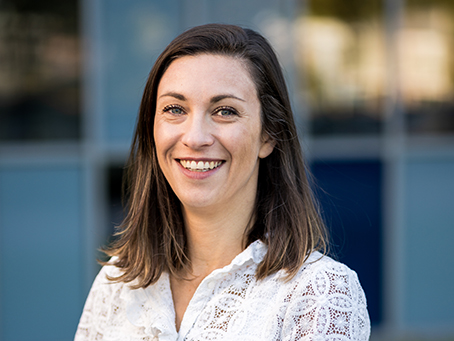
For Cortal, those disruptions were not isolated incidents. They pointed to a fundamental challenge as demand continues to grow while climate pressures, land constraints, and regulation make agricultural expansion more difficult.
NoPalm Ingredients was founded around a simple proposition: remove geography from the equation.
Rather than relying on agricultural production, the company produces oils through fermentation using food industry side streams as feedstocks. The process requires only a fraction of the land needed for conventional crop production and can be established wherever suitable by-products are available.
Cortal believes that flexibility addresses one of the industry’s least discussed vulnerabilities. “The fats and oils category has a geography problem,” she says. “Key crops are concentrated in a handful of regions, tropical zones, specific temperate belts, and the rest of the world depends entirely on what those regions produce and choose to export.”
Fermentation changes that equation by allowing production to move closer to both feedstock sources and end markets. Yet producing an alternative oil is only half the challenge. It also has to fit seamlessly into existing manufacturing systems.
Unlike many food ingredients, fats and oils underpin highly optimized production processes. Cooling profiles, tempering lines, pumps, processing equipment, and formulations are all designed around very specific physical properties.
“Conventional fats and oils are physical standards around which entire manufacturing infrastructures have been built,” Cortal says.
If an alternative fat requires manufacturers to redesign production lines or reformulate products from scratch, adoption quickly becomes expensive. NoPalm Ingredients has therefore focused on developing drop-in alternatives that replicate the critical characteristics of conventional fats.
Supply resilience is the primary driver of commercial interest in our technology, ahead of sustainability credentials
“The product doesn’t change,” Cortal says. “A manufacturer can switch on a procurement decision, not a product development program.”
Functionality is only part of the equation. Cortal argues the economics are equally compelling. “A sustainable fat that carries a green premium will not displace conventional alternatives at scale, because those alternatives compete on price,” she says.
The company therefore chose to build its platform around food industry side streams rather than virgin agricultural feedstocks. For Cortal, that decision is fundamental. “If we are serious about this, circular feedstocks are not optional,” she says. “The moment you replace conventional oil with a fermentation process that relies on a virgin crop as its carbon source, you have not solved the problem. You have relocated it.”
When resilience becomes the business case
Conversations about sustainability are becoming conversations about business continuity and long-term security of supply for manufacturers. “Supply resilience is the primary driver of commercial interest in our technology, ahead of sustainability credentials,” Cortal says. She points to the recent cocoa market as an example of how rapidly industry behavior can change when supply disruptions translate into price shocks. In her view, fats and oils face many of the same structural pressures: concentrated production, climate sensitivity, rising demand, and increasing regulatory scrutiny.
Alternative fats, she argues, are much more than sustainability innovations. They are part of a strategy for building more resilient supply chains. For companies developing those technologies, the opportunity extends well beyond replacing conventional ingredients. It is about giving manufacturers more options in a world where resilience is rapidly becoming as valuable as sustainability itself.
The case for fat
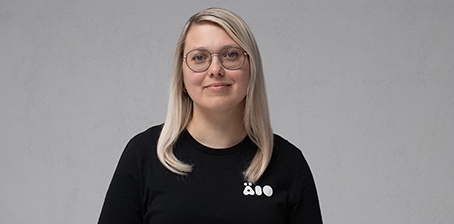
Protein has dominated the conversation around food innovation for years. Mary-Liis Kütt, Chief Innovation Officer at ÄIO, believes that is finally beginning to change. “Consumers have started to understand that only protein cannot make the miracle,” she says.
Taste, texture, mouthfeel, and satiety all depend heavily on fats. As manufacturers search for healthier and more sustainable ingredients, lipids are attracting renewed attention.
Kütt believes one reason fats have often been overlooked is their reputation rather than their biology. “I think fats have always received less attention because they have had a bad reputation,” she says. “There has been this idea that protein is good and fat is bad. But I need to clear the good name of fats because there are no good or bad fats.”
Although some fatty acids should be consumed in moderation, others – including omega fatty acids – play an essential role in human health. At the same time, fats remain indispensable functional ingredients across countless food categories.
Consumer expectations are changing as well. Ingredients such as coconut oil, palm oil fractions, and cocoa butter remain central to many plant-based products, yet they are facing growing scrutiny around nutrition, sustainability, and long-term supply.
“Knowing the environmental issues as well as the fatty acid composition of these fats, more knowledgeable customers want to have healthier and more sustainable alternatives for those,” Kütt says.
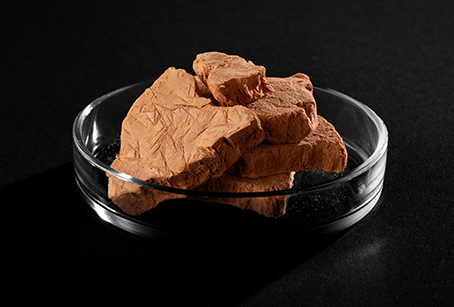
Companies such as ÄIO are responding to that demand by using microorganisms to convert industrial side streams into lipid-rich ingredients through fermentation.
“Microorganisms are amazing cell factories that convert various side streams to valuable ingredients for several industries, such as food, feed, and chemicals,” Kütt says.
For ÄIO, the attraction extends far beyond producing alternative fats. The company's approach also embraces circularity by transforming one industry’s by-products into another’s raw materials.
Kütt believes the technology is largely ready. Regulation, however, remains a significant obstacle. “There is a lot of willingness to use the side stream, and startups have developed a lot of great equipment and technologies to do that,” she says. “But the regulatory boundaries are really hindering the innovation and development in the circularity.”
More than an alternative
Beyond sustainability, Kütt believes microbial lipids could play an important role in strengthening food supply chains.
“We have already experienced some small hiccups like what happened with cocoa prices,” she says. “Suddenly the big chocolate bar I used to buy for special occasions jumped from €4 to €8. And I just stopped buying it.”
Consumers have started to understand that only protein cannot make the miracle
Unlike conventional agriculture, microbial lipid production is not dependent on weather patterns or growing seasons. “Microbial lipid production can work 24/7,” Kütt says. For manufacturers, the appeal extends beyond consistency. The technology also offers an opportunity to reduce dependence on land-intensive crops while improving supply resilience and ingredient quality.
Functionality, however, remains just as important as availability. “The main idea of providing those novel alternative ingredients is that they resemble or mimic as close as possible the traditional raw materials, allowing manufacturers to adopt them without changing existing formulations or processes,” Kütt says. Rather than producing oil alone, ÄIO has developed lipid-rich ingredients that also contain fiber, protein, vitamins, minerals, and carotenoids. “The Encapsulated Oil provides a wide range of nutrients,” Kütt says.
Those additional components create opportunities to improve not only nutritional value but also texture, mouthfeel, stability, and shelf life, particularly in applications such as plant-based meat.
Looking ahead, Kütt expects demand for fats to continue growing across food, cosmetics, materials, and chemicals, even as climate pressures and resource constraints make conventional production increasingly difficult. “These novel ingredients are vital to create new tasty and healthy products,” she says.
For years, protein has carried much of the attention in food innovation. ÄIO’s argument is that the next advances may depend just as much on putting fat back where it belongs – at the center of the conversation once again today.
New lipid logic
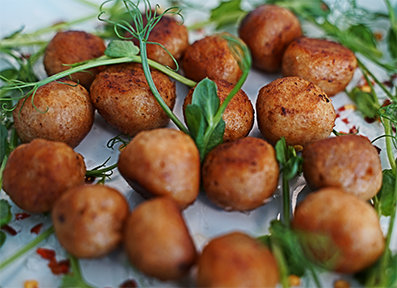
Fat has traditionally been something to source. Palm oil comes from palms. Cocoa butter comes from cocoa. Milk fat comes from cows. Manufacturers have largely worked within the limits of the fats nature provides. Melt&Marble believes those limits no longer need to exist.
The Gothenburg, Sweden-based company is part of a growing wave of innovators using precision fermentation to engineer lipids with specific functional properties rather than simply reproducing conventional fats. Earlier this year, it secured self-affirmed GRAS status in the USA for ‘MeltyMarble’, its precision fermentation-derived fat, clearing the way for commercial launch.

For Anastasia Krivoruchko, Co-Founder & CEO, the renewed interest in fats reflects a broader shift in how food developers think about product performance.
“I wouldn’t necessarily say that the industry has underestimated the importance of fats,” she comments. “In fact, over the past few years we’ve seen a surge in innovation specifically focused on fats, with a growing number of companies developing novel lipid solutions tailored for the next generation of foods. As the category has matured,
it’s become clear that fat plays a critical role, particularly in delivering juiciness, mouthfeel, flavor release, and overall satisfaction. Ultimately, you need the combination of well-designed protein and fat systems to make truly delicious products.”
Rather than treating fat as a passive ingredient, Melt&Marble sees it as something that can be intentionally designed. “When fats can be engineered around specific functional outcomes, it opens a much broader design space for food,” Krivoruchko says. “Beyond improving taste and texture, we can also tailor fats for targeted health benefits. In that sense, we can move fats from being just an ingredient to something more intentional: a tool to simultaneously enhance both sensory experience and nutrition in ways that aren’t possible when you’re limited to what nature provides.”
What if fat could do more?
Melt&Marble isn’t trying simply to recreate conventional fats. The company is asking a different question: what if fats could do more than the originals? “Precision fermentation-derived fats open up entirely new possibilities because they are not limited to the fatty acid profiles readily available in nature,” Krivoruchko says. “For example, they enable the production of uncommon fatty acids associated with specific health benefits, such as omega-7, which is typically found only at low levels in natural sources. They can also produce fatty acids linked to desired flavor profiles, like short-chain fatty acids that are common in dairy fats but uncommon in plant-based ones.”
She notes: “Precision fermentation also allows precise control over how fatty acids are assembled within the fat structure, which influences properties like melting behavior, crystallization, and flavor release. This level of control enables functionality that is difficult to achieve with conventional animal or plant fats.”
Those capabilities open opportunities well beyond meat alternatives. “There are strong opportunities across several categories,” Krivoruchko says. “Alternative dairy is particularly interesting, as it remains challenging to replicate the unique properties of milk fat with animal-free alternatives, especially in terms of flavor and functionality. Confectionery is another key area, driven largely by sustainability and supply chain challenges, for example in developing viable alternatives to cocoa butter. More broadly, there’s significant potential in snacks and nutrition products, where innovative fats can combine great taste with improved health profiles by incorporating beneficial fatty acids.”
When fats can be engineered around specific functional outcomes, it opens a much broader design space for food
As food manufacturers become more sophisticated in how they evaluate ingredients, Krivoruchko believes fats will be judged more on multiple criteria rather than nutrition alone. “I’d say that all the above are important,” she says. “Ultimately, the goal is to deliver on all fronts: the ideal fat would be delicious, provide the right mouthfeel and functionality, support health, be sustainable, and also be cost-effective.”
Scaling production and reducing costs remain the biggest commercial challenges. “I think the biggest transformation will be bringing designer fats that deliver on taste, functionality, health, and sustainability to market at sufficient scale and at costs competitive enough to enable mass adoption,” Krivoruchko says.
Solid thinking
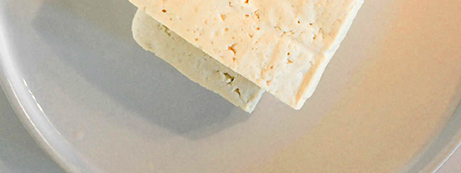
Health and functionality do not always pull in the same direction. Liquid vegetable oils offer clear nutritional advantages, yet many of the foods consumers enjoy rely on solid fats to deliver the structure, texture, and mouthfeel they expect. Bridging that gap is one of food science’s most intriguing challenges. “The problem always has been the fact that oils are liquid and fats are solid,” suggests Professor Stephen Euston of Heriot-Watt University’s Institute of Biological Chemistry, Biophysics & Bioengineering. “Simply replacing a saturated fat with an oil cannot reproduce the same solid-like texture.”
It’s why pastries remain flaky, cheese slices cleanly, and plant-based meats hold together. Saturated fats may have fallen out of nutritional favor, but from a food scientist’s perspective they still perform jobs that liquid oils simply cannot. Or at least, not on their own.
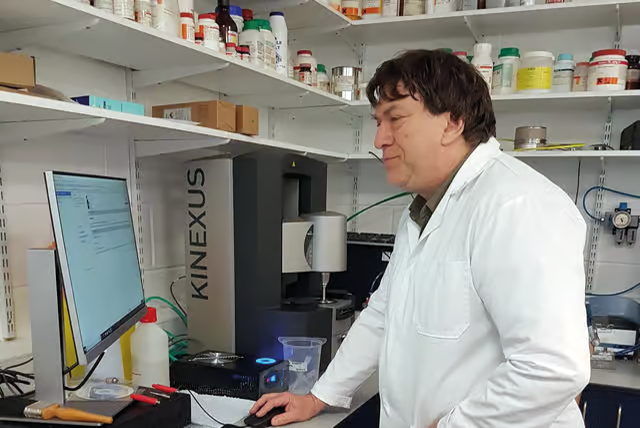
Euston’s research centers on ‘oleogelation’, a technique that structures liquid oils into solid-like gels without changing their healthier fatty acid profile. Earlier this year, his team demonstrated the concept in vegan cheese, reducing saturated fat levels to as little as 3% while improving meltability. Cheese, though, is simply one application.
Euston believes that growing interest in technologies such as oleogelation reflects a broader shift in how the industry thinks about fats. “I think that this stemmed from a misperception that all fats were bad for you, when in fact we need fats as part of a balanced diet,” he says. “The realization that it is not just the essential fatty acids but also other omega-3 and omega-6 fatty acids that have beneficial health effects has driven work on finding ways to incorporate these into foods in place of saturated fats.”
Designing fats to perform specific functions is not new. Bakeries have long relied on specialist shortenings tailored for different products. What is changing, Euston argues, is the objective. “Design of functionality has always been part of the fats and oils industry,” he says. “But designing for delivery is relatively new, and requires different technologies such as emulsification and encapsulation.”
Texture solved. Flavor next
Perhaps the biggest surprise is that Euston no longer sees texture as the industry’s greatest obstacle. “I would say that texture is pretty much solved,” he says. “Using different oleogelators, mixtures of two or more, or partial saturated fat replacement with oleogels, we can tune formulations to reproduce the texture and melting properties of animal fats, tropical oils and bakery shortenings.”
That’s a striking conclusion for a sector where texture has dominated the conversation. Instead, attention is shifting somewhere less obvious. “What we are less sure of but are working to understand is how oleogelators might interact with other components in a food to generate flavor compounds during production or cooking.” In other words, the next challenge is flavor. That helps explain why interest in oleogelation is spreading well beyond dairy alternatives.
The problem always has been, and remains, the fact that oils are liquid and fats are solid. Simply replacing a saturated fat with an oil cannot reproduce the same solid-like texture
Euston is equally cautious about oversimplifying sustainability. “Palm oil can be produced very efficiently, and the land required per metric ton of palm oil can be up to 10 times lower than required for alternative oils,” he says. “Thus, switching completely away from palm oil would require greater land use, and potentially more deforestation.”
Nor does he believe microbial oils represent a universal solution. “Some have put forward microbial production of oils from yeast or algae as alternatives, but it is far from certain that these could be produced at the scale required,” he says. “They themselves have questions over energy and water use as well as more complex (and expensive) extraction methods to recover the oil.”
Rather than searching for a single replacement fat, Euston expects manufacturers to draw on a wider portfolio of lipid technologies, selecting the right solution for each application.
Among the biggest opportunities, he believes, is the bakery sector. “Bakery products are a key target for the development of oleogelation technologies as they provide high levels of dietary saturated fat, with few direct alternatives to the animal or tropical fat products often used in their production,” he says. “The adaptability of oleogelation, where we can vary formulations to change properties, makes them ideal for replacing shortenings.”
For Euston, the direction of travel is becoming clear. “I think that oleogelation technology will become mainstream. We will see many more manufacturers adopting liquid oils as their main choice of fat source thus necessitating the use of oleogels to maintain product texture and mouthfeel.”
Finding the fat that matters
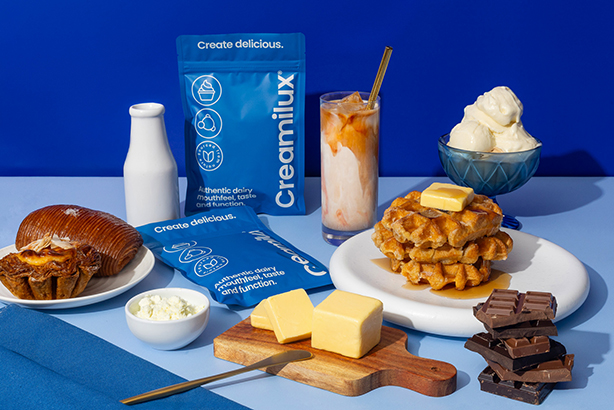
Fat is remarkably inefficient. At least, most of it is. That may sound like an odd conclusion for a company developing animal-free fats, but it is precisely the question that reshaped Nourish Ingredients. Rather than asking how to reproduce an entire animal fat through fermentation, James Petrie, CEO & Co-founder, began asking something far more fundamental. Which parts actually matter?
The answer transformed both the science and the economics of the business. “We actually started out a little naively,” Petrie admits. “We thought the best approach would be to produce a drop-in, commodity-scale fat: something like tallow or lard for meat applications, and anhydrous milk fat, or its equivalent, for dairy.”
It did not take long to discover the limitations of that approach. Animal fats remain inexpensive commodities, while fermentation-derived ingredients inevitably carry higher production costs. Trying to compete kilogram for kilogram simply did not add up.
Instead of abandoning the idea, Nourish Ingredients took a closer look at the fats themselves. “What is it about milk fat or meat fat that’s genuinely different from plant-based alternatives?” Petrie recalls asking.
The company analyzed the lipid composition of fats from beef, pork, lamb, duck, and other animal sources, looking not for similarities but for the molecules that distinguish them. “What we found was that we could eliminate 80-90% of those fat species as relatively uninteresting because they were already well represented in inexpensive vegetable fats,” Petrie explains. “That allowed us to focus on the remaining 10-20%: the molecules unique to animal fats that are responsible for the distinctive eating experience.”
Nourish Ingredients then changed course. Rather than manufacturing entire fat systems, it now produces highly potent fat molecules that can be blended with conventional plant-based fats to recreate the flavor, aroma, mouthfeel, and juiciness consumers associate with meat and dairy while avoiding the cost of replacing every component.
The approach also reflects a broader realization that has spread across the food industry in recent years. “The problem they’re trying to solve is taste,” Petrie says of Nourish Ingredients’ customers. “They know they need to solve the bigger challenge of creating products that consumers will keep coming back for, and they know that fats are a key part of that.”
Taste starts with fat
For much of the past decade, proteins have dominated conversations around alternative food innovation. Petrie has never seen the two as competing priorities. “I don’t want to downplay the importance of protein, because if you don’t have a good protein, you don’t have a good food,” he says. “But having a good protein isn’t enough.”
If you can produce something at much lower volumes, you eliminate a lot of the logistics, handling, and manufacturing challenges
Instead, he argues, many products have been missing precisely the molecules that make conventional meat and dairy so satisfying. “When you add back the molecules that are completely absent from a fully plant-based product – the animal fat molecules, albeit from an animal-free source – that’s what really changes the taste, mouthfeel, and juiciness.”
Focusing on those molecules also solves one of industrial biotechnology’s most persistent challenges. By producing ingredients used at extremely low inclusion rates, Nourish Ingredients dramatically reduces the scale required for commercial production.
“If you can produce something at much lower volumes, you eliminate a lot of the logistics, handling, and manufacturing challenges,” Petrie says.
Perhaps the biggest surprise, however, is where Petrie now believes those ingredients will find their greatest impact. Rather than serving only fully plant-based foods, he sees growing opportunities in hybrid products. “One assumption that has surprised me is the idea that the primary application for animal-free fats like ours would necessarily be in fully animal-free food products,” he says. “The hybrid space is actually growing very quickly.”
For Petrie, that reflects a broader shift in thinking across the food industry. The aim is becoming less about replacing every ingredient than understanding which ones genuinely matter. Sometimes, recreating the eating experience depends not on reproducing everything, but on identifying the few molecules consumers notice most.
Nature's blueprint
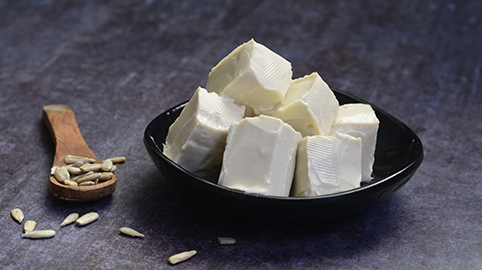
Every time the food industry extracts oil from a seed, it also strips away the biological architecture that once held it together. For Satnam Singh, Founder & CEO of Singapore-based Fattastic Technologies, that observation prompted the company to look beyond conventional oil structuring and ask a different question.
Fattastic Technologies was originally built around FATTFLEX, the company’s oil-structuring platform. As the team worked across different food applications, however, Singh became intrigued by oleosomes – the microscopic structures plants use to package and protect oil, maintaining stability without extensive downstream processing.
“As we continued working on fats, we came across oleosomes and were fascinated by how plants naturally store oil,” Singh explains. “The oil, proteins, and phospholipids already exist in a highly organized structure that plants have optimized over millions of years. Instead of extracting the oil and rebuilding that functionality through multiple processing steps, we asked ourselves, what if we could preserve it and work with it?”

That question led to the development of OLEOTUNE, a platform designed to preserve the integrity of those natural structures rather than reconstructing them through conventional formulation.
“We started with FATTFLEX, and as we worked across different food applications, we learned a lot about how fats behave in different systems,” he says. “Later, we developed OLEOTUNE, initially as a separate technology. Over time, we realized the two technologies weren’t competing with each other – they actually complemented each other extremely well.”
That realization marked an important shift in the company’s thinking. Different foods demand fundamentally different fat behaviour, making the search for a universal solution unrealistic.
“There definitely isn’t a universal fat solution,” Singh says. “Every application has its own functional requirements.”
Whipping cream must trap air. Coffee creamers need exceptional heat stability. Ice cream depends on carefully controlled fat destabilization, while cheese relies on complex interactions between fats and proteins. Rather than forcing one ingredient to satisfy every application, Fattastic starts with the finished product and works backwards.
“The objective is always to design the right fat system for the final product rather than trying to make one solution work everywhere.”
Redesigning R&D
That application-first philosophy extends throughout the company’s development process. New technologies rarely begin with a scientific breakthrough looking for a market. Instead, they begin with a practical challenge that manufacturers are trying to solve. “Innovation usually starts with a real problem rather than a technology,” Singh explains. “We spend a lot of time understanding what customers and consumers are looking for, whether that’s reducing saturated fat, improving texture, simplifying ingredient lists, or making products easier to process.”
Scientific performance alone, however, is never enough. “Success isn’t just about making something work in the lab,” he says. “It has to fit into existing manufacturing processes and deliver a consistent result every time.”
Working with food manufacturers has reinforced that lesson. Customers tend to evaluate technologies very differently from researchers, considering process compatibility, shelf life, scalability, cost, and consumer acceptance alongside the underlying science.
Instead of extracting the oil and rebuilding that functionality through multiple processing steps, we asked ourselves, what if we could preserve it and work with it?
“Our collaboration with Ajinomoto Thailand has been a great example of that,” Singh says. “It’s helped us look at our technology from a commercial manufacturing perspective, not just a research perspective.”
Looking ahead, Singh hopes the industry begins to think differently about fats altogether. Rather than searching for a single perfect ingredient, he expects manufacturers to combine different fat sources and technologies according to the needs of each application.
“I hope the industry moves beyond thinking about fats as simply ‘good’ or ‘bad’,” he says. “Every fat has its own strengths and limitations, and there isn’t a single fat source that is ideal for every application. The future is about designing fat systems that are healthier, more sustainable, and fit for purpose.”
The second generation
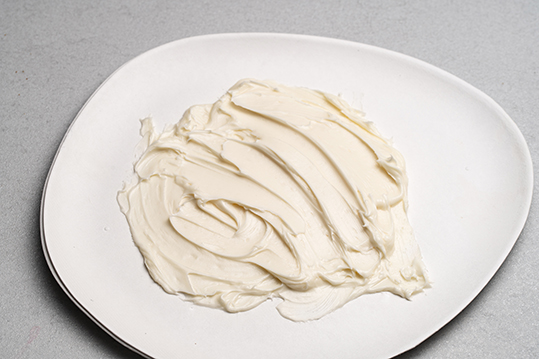
Oleogelation has occupied an unusual place in food science. Researchers have long understood that structuring liquid vegetable oils into solid fats could offer the best of both worlds: the healthier fatty acid profile of unsaturated oils with the functionality manufacturers expect from solid fats. Yet despite years of promising research, commercial success has remained elusive.
For Jyrki Lee-Korhonen, CEO & Co-founder of Finland’s Perfat Technologies, the problem was never the concept itself. “Oleogels have been around for some time, and R&D teams worked on them a couple of decades ago,” he says. “The problem with the first generation oleogels was that they were quite simple and did not survive the food manufacturing process or start leaking oil, limiting their applicability in food products.”

Perfat believes it has solved those shortcomings by combining food science with material physics. Rather than relying solely on conventional gelation approaches, the company uses dietary fibers as co-structurants to create oleogels capable of withstanding industrial food production while maintaining the functionality required across applications ranging from bakery and confectionery to dairy and meat alternatives.
For Lee-Korhonen, however, describing the technology as simply another fat replacement misses the point entirely. “To us, fat replacement is too narrow a term.”
Multiple choice
Instead, he sees Perfat’s ingredients as delivering multiple improvements simultaneously. While replacing butter, palm oil, and industrial margarines with significantly healthier alternatives, they also introduce substantial amounts of dietary fiber into finished products. Perfat Soft, the company’s first commercial ingredient, contains 34g of dietary fiber per 100g while delivering, on average, an 80% reduction in saturated fat compared with conventional solid fats.
Although sustainability and functionality both matter, Lee-Korhonen says customers consistently prioritize one benefit above the others. “Our most important selling point is definitely nutrition. This is where we really outperform conventional fats and most alternative fat solutions.”
Sustainability may initiate conversations with manufacturers seeking alternatives to tropical oils, he says, but it rarely closes the deal on its own. Functionality remains non-negotiable. “Functionality is a must-have. If an ingredient does not work in the production process and does not perform in the final product, then that’s a complete show-stopper.”
Customers are also discovering that improved nutrition does not have to come at the expense of manufacturing performance. In development projects, Perfat has found that structured fats not only replace conventional ingredients but also improve technofunctional properties of finished products.
Bringing new ingredients to market can often take years of regulatory review. Perfat deliberately chose a different path. “Our strategy from the very beginning has been to focus on solutions that can be brought to the market without any regulatory hurdles,” says Lee-Korhonen. “It is clear that being able to enter the market earlier than some other players is an advantage.”
Functionality is a must-have. If an ingredient does not work in the production process and does not perform in the final product then that’s a complete show-stopper
The same pragmatic thinking has shaped its manufacturing model. Rather than investing heavily in production facilities, Perfat chose an outsourced approach that reduces capital requirements while allowing the company to learn alongside established food manufacturers. “With hindsight, I’m actually very happy with the outsourcing strategy as we have learned a lot from working with experienced industry players,” Lee-Korhonen reports.
Looking further ahead, Lee-Korhonen believes oleogelation’s greatest impact will come not from creating entirely new foods, but from improving the products consumers already eat every day. “We believe that it is quite challenging to completely change people’s eating habits,” he says. “It is easier to make the foods we already eat healthier rather than dream up completely new categories or products.”
Bakery, confectionery, and dairy products remain the company’s biggest opportunities, particularly where healthier fats can be combined with additional dietary fiber.
For Perfat, though, Perfat Soft represents only the beginning. The company’s name was intentionally chosen to reflect a broader technology platform rather than a single ingredient.
“We have many different technology solutions under development, and we believe that we have only scratched the surface when it comes to oleogels and other lipid-based solutions.”
If you have any questions or would like to get in touch with us, please email info@futureofproteinproduction.com

More Features

Protein Pioneer: Justin Kolbeck

Deep Dive: Breakout bets

Feeding change

Protein Pioneer: Kesha Stickland


