

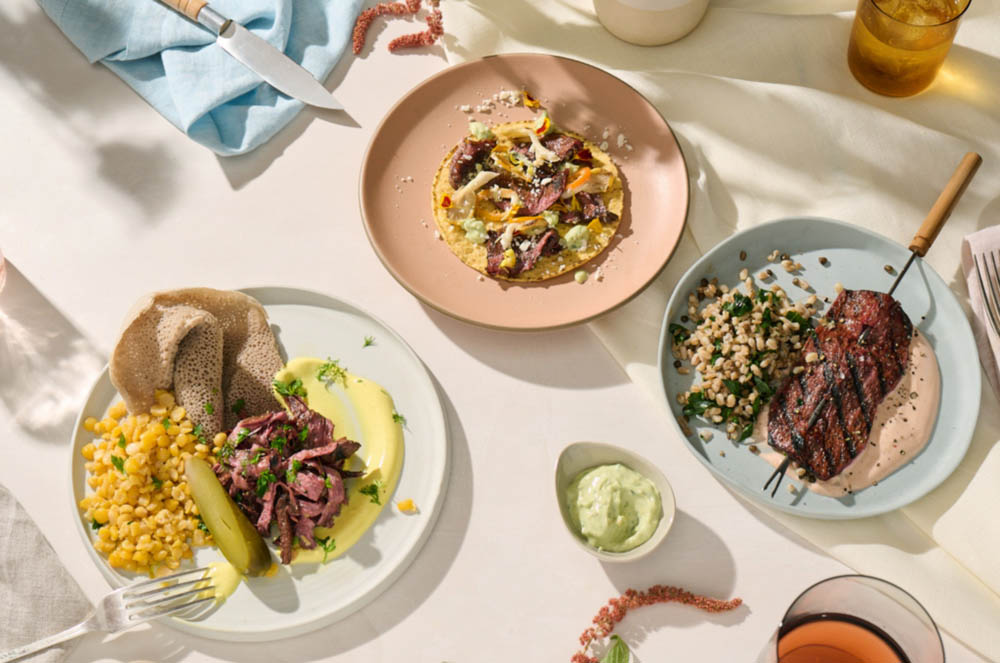
Aleph Farms wins Singapore approval for cultivated beef as second market opens

Aleph Farms has secured regulatory approval from the Singapore Food Agency (SFA) to sell its cultivated Thin-Cut Steak, marking the company's second regulatory clearance after Israel and making it the only company authorized to commercialize cultivated beef in multiple markets.
The approval represents another milestone for the Israeli cultivated meat company as it advances an asset-light commercialization strategy built around regional production hubs and local manufacturing partners, rather than investing in large-scale centralized production facilities. Singapore now joins Israel as one of the first markets where Aleph Farms can bring its cultivated beef to consumers, with the company expecting additional regulatory decisions over the coming year.
• Aleph Farms received Singapore Food Agency approval to sell its cultivated Thin-Cut Steak, becoming the only company with regulatory clearance for cultivated beef in both Singapore and Israel.
• The approval supports the company's regional hub strategy, with Singapore serving as its Asia-Pacific base alongside a planned European hub in Switzerland.
• Aleph Farms said additional regulatory submissions remain under review as it targets further market approvals over the coming year.
The latest clearance comes more than two years after Israel became the first country to approve cultivated beef, granting Aleph Farms the world's first regulatory authorization for a cultivated beef product in December 2023.
Singapore has played a central role in the development of the cultivated meat sector since becoming the first country to approve cultivated meat for sale in 2020. The city-state has since established one of the world's most closely watched regulatory frameworks for novel foods, making approval there an important validation for companies seeking broader international commercialization.
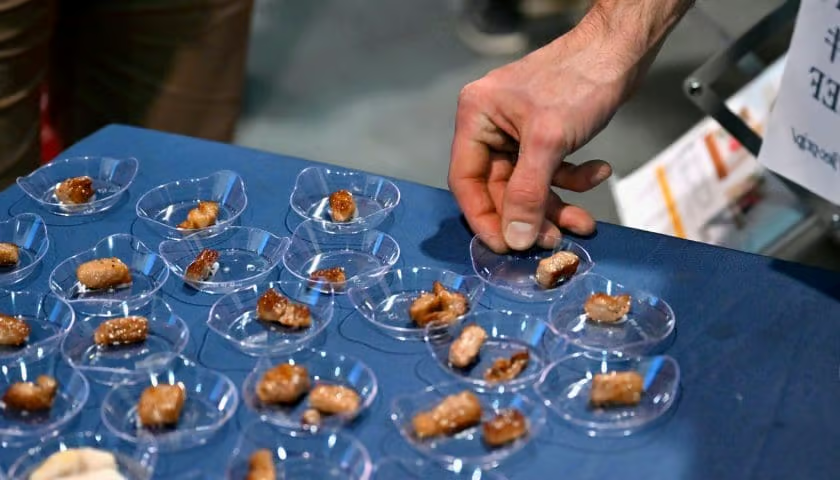
Announcing the approval, Aleph Farms Co-founder & CEO Didier Toubia described beef as the most compelling opportunity for cultivated meat.
"The Singapore Food Agency has approved the sale of our Cultivated Thin-Cut Steak," Toubia said.
"We are the only company cleared to sell cultivated beef, and one of a small number of companies holding two regulatory clearances, in Israel and Singapore. We have further submissions under review and expect additional clearances over the coming year."
Toubia said beef represented both the greatest commercial opportunity and the greatest technical challenge for the cultivated meat industry.
"Beef is, in my view, the most compelling application for cultivated meat. It is premium and mass market at the same time. That is what makes it worth solving, and it is also what makes it the hardest thing to get right."
He added that reaching this stage had required years of work focused not only on product development but also on improving manufacturing economics.
"Getting here took years spent reducing cost, validating our economics, and choosing partners over building everything ourselves."
Rather than constructing large production plants in every target market, Aleph Farms has built its commercialization strategy around partnerships with regional manufacturers and existing food supply chains.
"It also reflects a conviction about how this industry scales," Toubia said. "Not through one company owning every plant, but through regional partnerships and existing supply chains, with cultivated meat working alongside conventional production rather than against it."
That philosophy has become increasingly evident over the past year as the company has expanded its international footprint.
In February, Aleph Farms established Singapore as its Asia-Pacific hub through a strategic manufacturing partnership with Cell AgriTech. The agreement gave the company access to pilot-scale and commercial manufacturing capabilities without the need to build its own facilities, supporting what it describes as a capital-efficient approach to scale-up.

Under that strategy, Singapore serves as the company's regional innovation, regulatory and partnership center, while neighboring Malaysia provides additional manufacturing capacity through Cell AgriTech's infrastructure.
The model extends beyond Asia. Toubia said Switzerland would serve as Aleph Farms' European production base as the company prepares for commercialization across the continent.
"That is the model we are building on regional hubs: Singapore across Asia, a market that imports most of its food and built a serious regulatory framework early, and Switzerland across Europe, where we are preparing our first production base."
"In each, we pair trusted local partners with existing supply chains rather than build everything ourselves."
Singapore's heavy reliance on imported food has made food security a national priority, helping drive government investment in alternative protein technologies and creating an environment that has attracted cultivated meat companies from around the world.
Aleph Farms has consistently argued that cultivated beef should complement conventional livestock production rather than replace it.
"Our aim is to complement conventional beef, not replace it, and to scale it on a capital-efficient footing," Toubia said.
The latest approval follows continued technical progress by the company as it works toward broader commercialization. Earlier this year, Aleph Farms reported that its cultivated steak performed similarly to conventional beef in a blind taste test involving 60 regular meat consumers.
According to the company, 96% of participants accepted the cultivated steak compared with 98% for conventional beef, while half said they would consider ordering the cultivated product in a restaurant. Texture and taste scores were comparable, with the cultivated steak receiving slightly higher ratings for tenderness.
Aleph Farms has said sensory parity is essential if cultivated meat is to compete successfully in mainstream foodservice and retail markets.
The company's cultivated Petit Steak, marketed under the Aleph Cuts brand, combines non-modified Black Angus cells with a plant-based matrix made from soy and wheat proteins designed to replicate the structure and eating experience of conventional steak.
Aleph Farms also reported that the product contains 80% less cholesterol than conventional beef while maintaining similar protein content and fewer calories.
Commercial scale remains one of the industry's biggest challenges, however. Aleph Farms currently operates a 65,000ft² production facility capable of producing around 10 tons of cultivated steak annually while continuing to refine its manufacturing process and production economics.
The company has raised US$147 million to date and is pursuing regulatory approvals in several additional markets, including the UK, Switzerland, the European Union and the UAE.
Toubia concluded by acknowledging the teams involved in securing the latest regulatory milestone.
"My thanks to Yifat Gavriel and Neta Lavon, and to our R&D, regulatory, quality, production, and operations teams, who together met one of the most demanding novel food frameworks in the world. And to the regulators who engage seriously with new science."
If you liked this, check these out...
• PARIMA and Vow's 22,000L breakthrough signals cultivated meat's next commercial chapter
• RespectFarms opens world’s first farm-integrated cultivated meat facility in the Netherlands

Join Us At One Of Our Upcoming Events

If you have any questions or would like to get in touch with us, please email info@futureofproteinproduction.com

.jpg)
.jpg)
