
Celleste Bio unveils cell-cultured cocoa butter chocolate bars in Mondelēz collaboration, targets commercial scale within two years

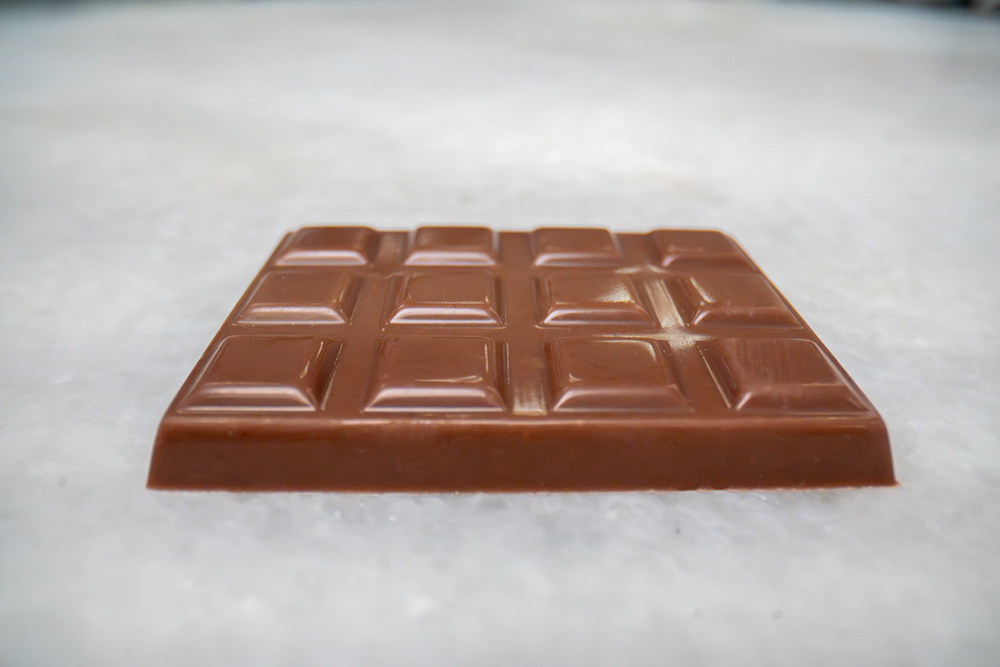
Celleste Bio has unveiled what it described as the world’s first milk chocolate bars made using cell-cultured cocoa butter, developed in collaboration with Mondelēz International as the company moves toward commercial-scale production.
• Celleste Bio has developed milk chocolate bars using cocoa butter produced through cell suspension culture technology in collaboration with Mondelēz International.
• The company confirmed its cocoa butter matched conventional cocoa in texture, melt profile, and sensory performance in finished chocolate products.
• Celleste Bio stated it aimed to reach commercial-scale production within two years, supported by pilot-scale operations and strategic partnerships.
The prototype bars, produced by Mondelēz using Celleste’s cocoa butter, met internal standards for product integrity and consumption, offering early validation that the ingredient can function as a direct replacement in chocolate manufacturing.
“Celleste launched in 2022 with the mission to secure a sustainable future for the global chocolate industry amidst increasing supply chain pressures of climate change, disease, traceability and geopolitical instability,” said Hanne Volpin, Chief Technical/Scientific Officer & Co-founder of Celleste Bio. “In three years we’ve made unprecedented progress to meet this formidable scientific challenge. We’ve validated our ingredients as drop-in replacements, created an operational R&D pilot facility to scale up our volumes and now proven our cocoa butter performs identically to conventional cocoa, clearing the next phase to commercial scale.”

The company’s development timeline has moved quickly, with Volpin noting that the team achieved its first major milestone within 10 months of founding.
“Celleste was founded by scientists driven by an undeniable truth – the cocoa supply chain was breaking at a pace the industry could not keep up with,” she said. “We built this company in record time – from curating a ‘bank’ of cocoa beans to developing scientific protocols that needed to be tested, refined and replicated at many stages.
“In fact, we achieved our first major milestone in just 10 months – which was clear proof that cocoa cells extracted from beans, with the proper technologies, controlled environments and rigorous evaluations, can produce real cocoa butter. This had never been done before.”
Early backing from Mondelēz, alongside investors and grant funding, helped accelerate that progress, allowing the company to move from laboratory validation to product application.
“For me, the most rewarding part has been seeing frontline science become something real in the world,” Volpin said. “I am deeply passionate about implementation – taking a scientific breakthrough and turning it into something practical and impactful. So the moment the numbers started to show that this could truly work, and that we could make a real impact on the broken cocoa supply chain, was very meaningful for me.”
That shift became tangible when the first chocolate bars were produced.
“To see our little cocoa beans transformed into milk chocolate bars was exhilarating,” she said. “I have been a scientist all my life and have been part of some truly amazing breakthroughs, but this one is special because it impacts one of the largest industries – chocolate – one that consumers all over the world depend on for love, joy, tradition and connection.”
She added that the finished products reflected the combined effort of multiple partners.
“What really hit me when we saw the finished product was the amount of work, collaboration, trust and resilience that went into this,” Volpin said. “Our team, the MDLZ team, our investors and partners all played an important role in getting here and we do not take that for granted.”
Celleste’s platform uses cell suspension culture to produce cocoa butter without conventional farming, with the company working toward scaling production in bioreactors. According to Celleste, it is on track to produce one ton of cocoa butter annually in a 1,000-liter system from a single cocoa bean, a process that would otherwise require around a hectare of cocoa trees.
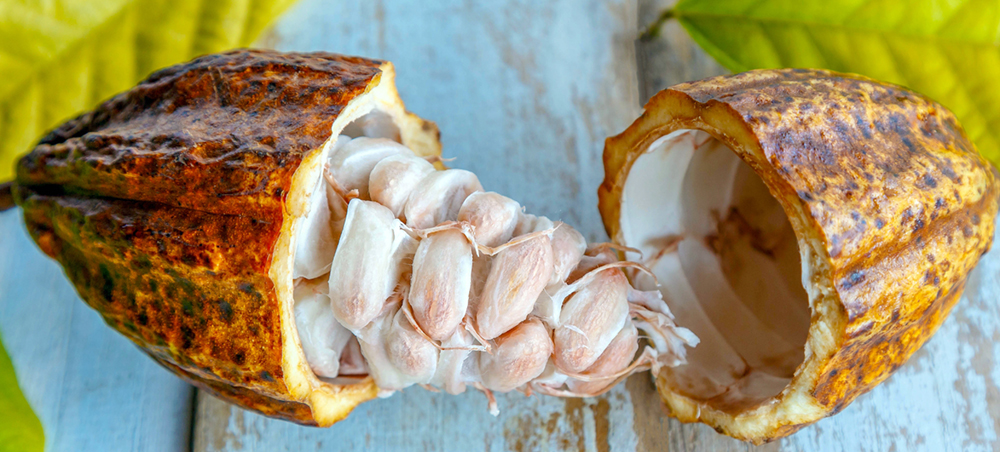
“Building a resilient supply chain means being able to produce at commercial volumes while offsetting disruptions caused by climate change, deforestation and resource scarcity,” Volpin said. “We are on track to produce one ton of cocoa butter annually in a 1,000 liter bioreactor from a single bean – which would otherwise require about a hectare of cocoa trees.”
“This milestone has moved the needle for us in a big way – from talking about the potential of our technology to the reality of achieving commercial scale in the next two years,” she said. “We are able to talk with investors, customers and partners with confidence and conviction about Celleste and demonstrate the financial, environmental and reputational impact of using cell cultured cocoa technology.”
Working closely with Mondelēz also reshaped the company’s understanding of the chocolate value chain.
“We started Celleste knowing that the cocoa supply chain depends on mother nature and mother nature is not dependable – especially in the most climate sensitive regions of the world,” Volpin said. “What we didn’t fully realize was the magnitude of cocoa butter’s importance to the production of chocolate.
“Working closely with Mondelēz’s experts across almost every facet of the business demonstrated the power of collaboration. They validated the relevance of us focusing on cocoa butter, are helping us work through the complexities of commercialization, all the while supporting our ambition to make a real impact.”
Volpin added that large food companies were taking a more strategic view of sourcing.
“What I see today is that large food companies are thinking much more strategically about supply and sourcing than they did a few years ago,” she said. “In the past, sourcing was often viewed mainly through the lens of cost and availability. Today, it is much more about resilience, traceability, and long-term security of supply.
“They are also more willing and faster to move on early stage innovation and investment, especially when they see a strategic fit and long term gain.”
At an operational level, Celleste’s work sits at the intersection of multiple disciplines.
“What is special in our day-to-day work is that food, biotech, AI, and engineering all come together around the same question, but each discipline looks at it in a different way,” Volpin said. “The food people think about ingredient quality, functionality, and what the customer needs. The biotech people think about the cells, the biology, and how to guide the system. The AI and data side helps us see patterns faster, learn from complexity, and make better decisions. And engineering is what helps turn all of that into a process that can actually work in the real world, reliably and at scale.
“The interesting part is that we do not naturally speak the same language,” she said. “Each discipline has its own logic, priorities, and even vocabulary. Imagine cooking a family dinner where everyone came from a different country and is speaking their own language, but somehow still trying to cook the same meal. The magic happens when people are curious enough to translate for each other. That is where real progress happens.
“In the end, innovation happens at the interface,” Volpin said. “It is not only about excellence in each discipline, but about creating a shared language between them. That is something we work on every day.”
Translating early-stage science into something usable for food manufacturers has also required careful communication.
“The biggest challenge for getting companies on board with early stage technology is translating the science into real-world terms, and empathizing with the fact they don’t have the luxury of time or patience when it comes to scale and commercialization,” Volpin said.
“This is why it’s important to choose your partners and investors wisely,” she said. “This doesn’t work if you don’t have collaboration, curiosity, mutual respect and open communications. Fortunately we have this or the milestone we celebrate today would not have happened.”
Looking ahead, the company pointed to new possibilities for product innovation enabled by its platform.
“The mandate is supply chain resilience and stabilization. The opportunity is opening up an entirely new and exciting world for chocolate,” Volpin said. “We can experiment with new varieties, melting points, flavor profiles and more using a curated cocoa cell bank, AI computational modeling, and generate higher faster, larger, more consistent yields.
“And this is important. We are doing this without the constraints of climate change, disease, and geopolitical instability, and without the environmental damage of conventional growing, including deforestation, CO2 emissions, and waste. This has never been possible until now.”
As Celleste moves toward commercialization, Volpin emphasized the importance of maintaining discipline in scaling.
“One of the major challenges in the plant cell industry is that scale-up can become extremely capital intensive,” she said. “It is easy to imagine a path that requires very large investments in infrastructure before the business is truly ready.
“So for us, success means building a model that does not depend on carrying all of that burden ourselves. It means finding the right upscaling and manufacturing partners, proving that our process can be transferred and run reliably, and creating a path to commercial production that is both technically strong and economically realistic.
“In other words, success is showing that Celleste can move toward commercial scale without losing discipline - keeping quality, consistency, and product performance, while building the right partner network and a cost structure that can support a real business.”

Join Us At One Of Our Upcoming Events

If you have any questions or would like to get in touch with us, please email info@futureofproteinproduction.com

.jpg)
.jpg)
