Default by design: how 50Cut moved from evaluation to adoption in South Carolina schools

In one of the most regulated and operationally unforgiving food environments in the USA, 50Cut’s blended burgers and meatballs moved from evaluation to adoption. What looks like a procurement milestone in South Carolina may signal something larger: a model for how protein reformulation scales inside systems that feed millions every day
Approval in K-12 food service is procedural. Product specifications are reviewed. USDA meal pattern requirements are verified. Competitive pricing is validated. Student acceptance must be demonstrated under normal service conditions. Many products do not advance beyond pilot evaluation.
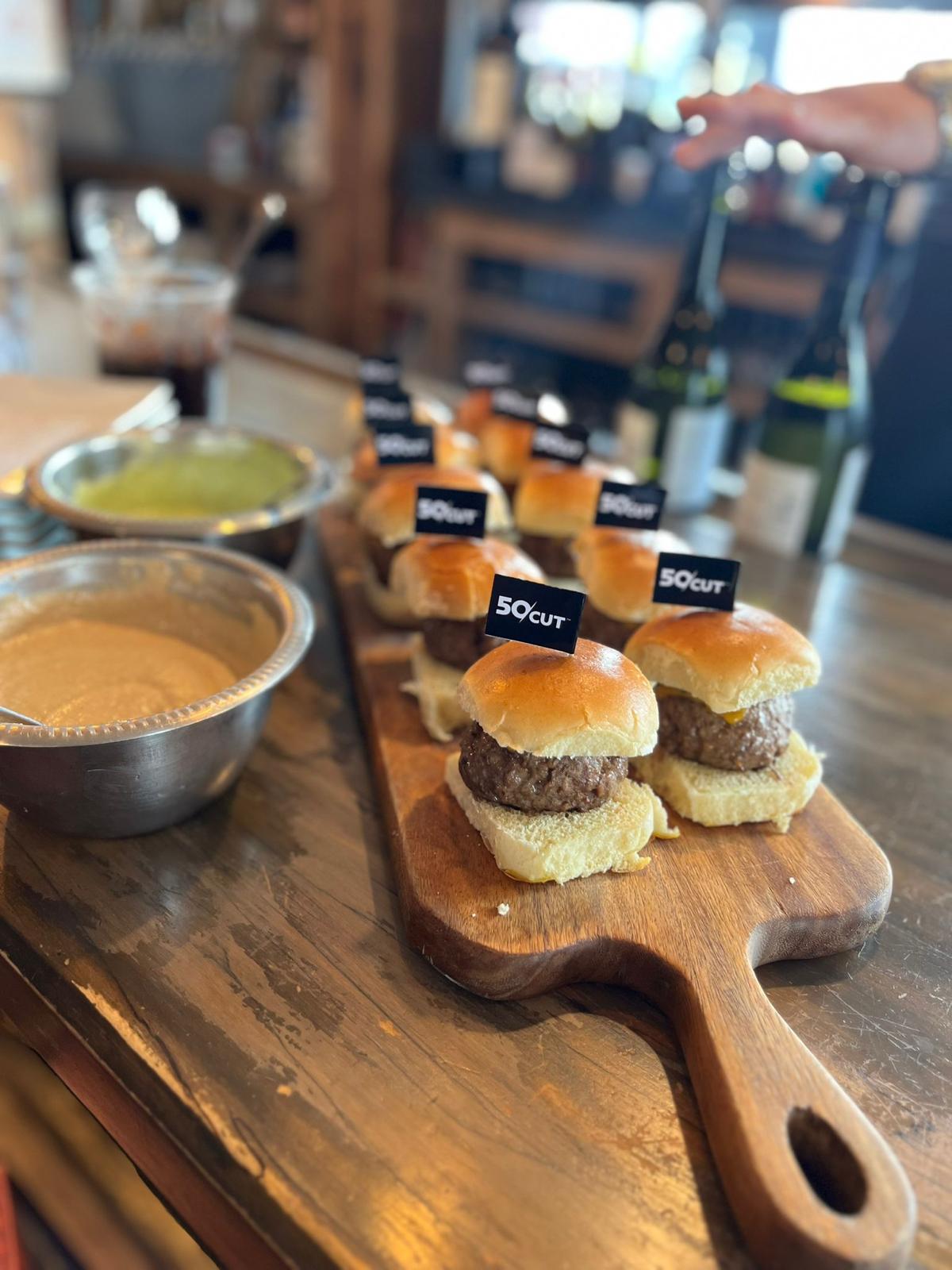
In Berkeley County, South Carolina, 50Cut meatballs received 96% student approval and its burgers 92% during standard lunch service. Following those results, 50Cut by Joyn Foods was approved on the South Carolina Purchasing Alliance bid, enabling school districts statewide to procure the product through a streamlined system.
In a market where the National School Lunch Program serves approximately 29.9 million lunches each school day, and where schools collectively represent one of the largest purchasers of ground beef in the USA, procurement approval signals more than interest. It indicates operational viability at scale.
“Schools don’t have room for compromise,” commented Shalom Daniel, Founder & CEO of Joyn Foods. “They need food students actively choose, that fits tight budgets, and works operationally. These results show blended protein can meet real-world performance standards – not just sustainability goals – at scale.”

Evaluation under ordinary conditions
The testing format was deliberate. “It wasn’t a tasting. It was just lunch,” Daniel said. “That was very intentional. No explanation. No sustainability messaging. No attempt to ‘educate’ anyone. Because in real life, nobody explains your burger to you.”
Students received burgers and meatballs as part of their standard cafeteria service. Afterward, they completed routine feedback through established school channels. There were no sustainability posters, no nutrition briefings, and no contextual prompts.
What mattered was whether students ate.
“But even with all that preparation, kids remain the ultimate truth-tellers,” Daniel said. “Investors may be polite. Chefs may be diplomatic. Kids are brutally honest. If they don’t like something, they won’t eat it, or they’ll spit it into a napkin.”
The absence of resistance was notable. “There was no resistance. No confusion. Just acceptance,” he said. “That’s when I knew we weren’t asking them to compromise. We had made something they genuinely enjoyed.”
For Daniel, however, approval percentages were secondary to purchasing behavior. The turning point came when schools moved from evaluation to adoption. “Institutional kitchens don’t operate on theory. They operate on reality. When they reorder, it means it works. That’s the only validation that matters.”

Starting with children
Daniel traces the concept behind 50Cut to his own household. “Years ago, I used to sneak vegetables into the meat I cooked for my daughters, trying to make it healthier without them noticing. That was the original thesis.”
Before entering K-12 foodservice, the company spent years refining its formulation with experienced chefs to meet institutional standards.
“Long before we ever entered K-12, we went through endless recipe development with top chefs and with Joe Urban from School Food Rocks, one of the most respected experts in school food in the USA. He helped us refine the balance of nutrition and taste to meet the reality of school cafeterias.”
In RSU 23 Old Orchard Beach Schools, even K-2 students rated 50Cut 84% positive.
“What struck me most was how uneventful it was,” Daniel said. “They didn’t analyze it. They didn’t question it. They just ate.”
He views that response as formative. “As a father, I know how hard it is to introduce anything new to young kids. They resist instinctively. So when they don’t resist, it means you’ve done something right. You haven’t forced change. You’ve made it natural.”
Building for institutional constraints
Gaining approval on the South Carolina Purchasing Alliance bid required alignment with the operational requirements of school districts. Products must satisfy nutritional criteria, pricing thresholds, and preparation workflows.
Asked whether any part of the state approval process had threatened the rollout, Daniel dismissed the idea. “Nothing nearly derailed us, because we designed for this reality from day one,” he said. “My entire philosophy has always been simple. If you want to change the system, you must respect the system. Schools don’t exist to experiment. They exist to feed millions of kids efficiently, safely, and affordably. We built 50CUT to fit their world, not to force them into ours.”
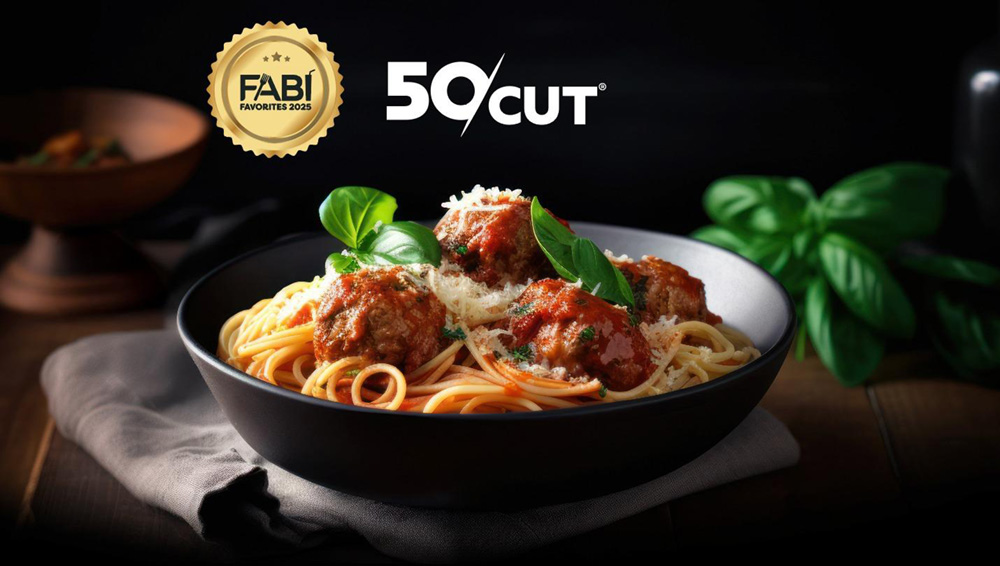
50Cut blends beef with high-protein roasted mushrooms. The formulation is designed to maintain protein levels while reducing fat and sodium. The product behaves like conventional ground meat during preparation and service, requiring no new equipment or retraining in school kitchens.
Operational familiarity is central to its adoption. In high-volume environments, deviation from standard cooking performance can introduce risk.
“Professional kitchen teams are naturally skeptical,” Daniel said. “They’ve seen many ‘innovations’ that promised a lot and created more problems than they solved.”
In this case, he argues, performance shifted perception. “50CUT actually makes their job easier. It cooks faster. It has a higher yield, because it retains more moisture and shrinks less. The natural structure of the mushroom acts as a clean binder, which in many recipes allows them to reduce or eliminate traditional binders like breadcrumbs or flour, removing allergens like gluten.”
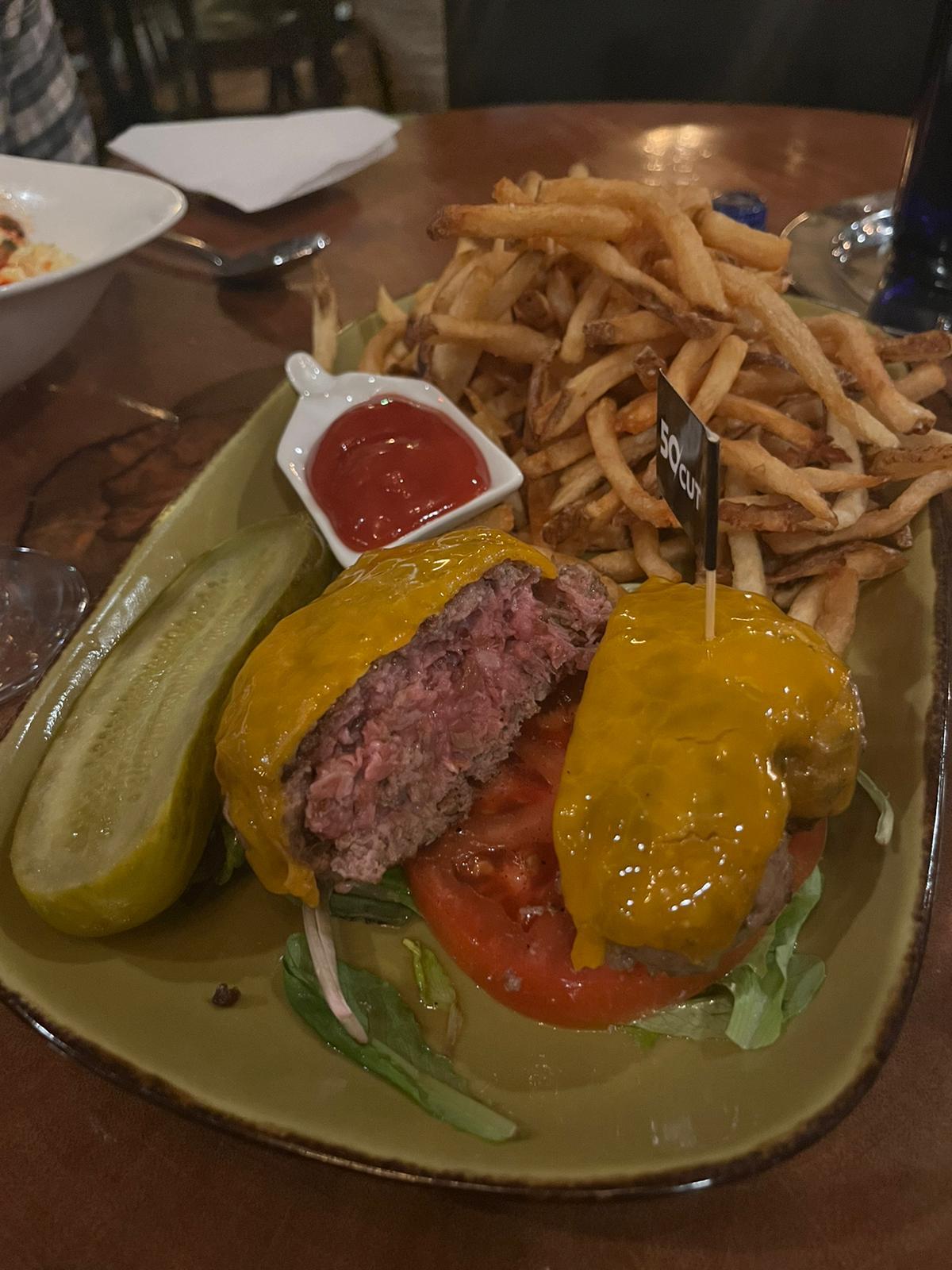
Under heat lamps and during staggered lunch waves, moisture retention and structural stability become practical advantages. “The burgers stay juicy. They don’t dry out under heat lamps. The buns don’t get soggy from grease. The texture remains consistent and forgiving, even in high-volume service.”
One chef’s assessment resonated with Daniel. “He said, ‘This behaves like meat on its best day, every day.’ That’s when I knew we had built something that wasn’t just acceptable. It was superior.”
Economics before ideology
Discussions around protein innovation often begin with environmental impact. Daniel’s approach begins elsewhere. “Honestly, very little of the conversation starts with sustainability.”
He cites two influences that shaped his thinking. “Paul Polman, the former CEO of Unilever, used to say that the most sustainable product in the world, if it doesn’t have strong unit economics, profitability, scale, and real adoption, will ultimately have zero impact. Later, when I studied Sustainable Business Strategy at Harvard Business School with Professor Rebecca Henderson, she reinforced the same principle from an academic perspective. Sustainability only changes the world when it becomes economically superior, when it wins in the marketplace, not when it depends on goodwill.”
From that premise follows a specific strategy. “Impact is not our flag. It’s the outcome. Schools choose 50CUT because it tastes great, fits their budget, and works operationally. The sustainability benefits happen naturally when the better product wins.”
For school districts operating within fixed reimbursement structures and tight margins, cost neutrality or improvement is essential. Environmental gains that increase costs rarely survive procurement review.
“I’ve learned that real impact doesn’t come from asking people to sacrifice,” Daniel said. “It comes from giving them something better.”
The middle path argument
In his 2025 book, Cut the Bull… At Least By Half, Daniel presents blended meat as a pragmatic alternative to what he views as polarized food debates.
“Because modern culture tends to frame everything as a battle. Meat versus plants. Old versus new. But reality is rarely binary. Food evolves the same way everything evolves. Gradually. Blended protein isn’t about choosing sides. It’s about moving forward.”
He positions the company not as a challenger to meat, but as an adjustment within it. “Our audience isn’t the extreme minority on either end. It’s the vast majority of people in the mass market, people who love meat, but don’t feel the need to make every meal an extreme sport. That’s the sweet spot.”
To critics who perceive blending as dilution, he offers a direct response. “Blended protein isn’t about taking something away from meat lovers. It’s about making meat better suited for how most people actually live today. Less excess. Same satisfaction. And once people experience that, they don’t feel like they’re giving anything up. They feel like they’ve upgraded.”
For plant-based advocates who argue that blending does not go far enough, his focus remains on scale. “They represent a very small fraction of the population. Their work has been important in raising awareness, but awareness alone doesn’t change systems. Adoption does. I’m focused on the 95% of people who love meat and will continue to eat meat.”
He points to life-cycle analysis to support that strategy. “Our LCA shows that 50CUT has a tiny carbon footprint compared to beef. When you blend it 50-50, you cut the environmental impact of that meal roughly in half, immediately, without asking anyone to change their habits. That’s real impact.”
Habit formation and continuity
For Daniel, schools represent more than a procurement milestone. They represent formative exposure. “Food identity is formed early. What you eat as a child becomes your baseline for what feels normal and comforting.”
The company is pursuing expansion into colleges, universities, corporate dining programs, and quick-service restaurants. The logic is cumulative exposure across environments.
“You need the continuity and as many touch points,” he said.
Approval in South Carolina adds to previous state-level wins, and beginning August 2026, 50Cut is scheduled to be served in more than seven states.
“Every school day, about 45 million meals are served in American schools,” Daniel said. “For comparison, McDonald’s and Burger King combined serve fewer people per day in the USA than schools do.”
In that context, incremental change within institutional menus can exceed the reach of highly publicized consumer launches.
Measuring systemic change
Asked what would constitute genuine system change rather than company growth, Daniel framed success in terms of normalization.
“I’ll know we succeeded when blended protein becomes the default - not the exception. When food companies use it not because it’s trendy, but because it simply makes more sense. Better economics. Better performance. Better outcomes.”
He does not describe that shift as revolutionary.
“When chefs, operators, and manufacturers choose it because it’s the smarter way to make meat. Not to make a statement. Just to make a better product.”
In institutional foodservice, progress tends to register in procurement sheets, reorder patterns, and margin calculations rather than headlines. South Carolina’s approval does not settle broader debates about the future of protein. It does, however, demonstrate that in one of the most structured food environments in the USA, a blended formulation met the criteria that matter.
For Daniel, that outcome carries a specific kind of validation.
“If you want to change the future of food, you have to start with the next generation. They’re not just the toughest critics. They’re the future.”

Join Us At One Of Our Upcoming Events

If you have any questions or would like to get in touch with us, please email info@futureofproteinproduction.com