
DTU fermentation method triples lysine levels in faba beans

A two-stage fermentation process developed by researchers at the DTU National Food Institute and Aarhus University has increased lysine levels in faba beans and rapeseed press cake by more than threefold, opening another route to improving the nutritional quality of plant proteins.
• Lysine levels increased 3.4-fold in faba beans and 3.6-fold in rapeseed press cake
• The process uses two microorganisms in sequence to alter the amino acid profile of plant biomass
• Researchers are now working to extend the method to two other essential amino acids
The Danish research team has been investigating whether microorganisms can address one of the nutritional limitations of plant proteins: insufficient quantities of particular essential amino acids.
"Plant proteins do not contain the right amino acids in sufficient quantities to be an ideal source of nutrition for humans. Our solution is to use microorganisms to enrich plant-based foods with essential amino acids and important vitamins," said Christian Solem, Associate Professor at the DTU National Food Institute.
The work has so far centered on lysine, one of nine essential amino acids that humans must obtain through their diet.
Researchers tested the process primarily on faba beans and rapeseed press cake, two protein-rich materials produced in large quantities in Denmark and elsewhere in Northern Europe. Faba beans are already used in both food and animal feed, while rapeseed press cake is the material left after oil has been extracted from rapeseed.
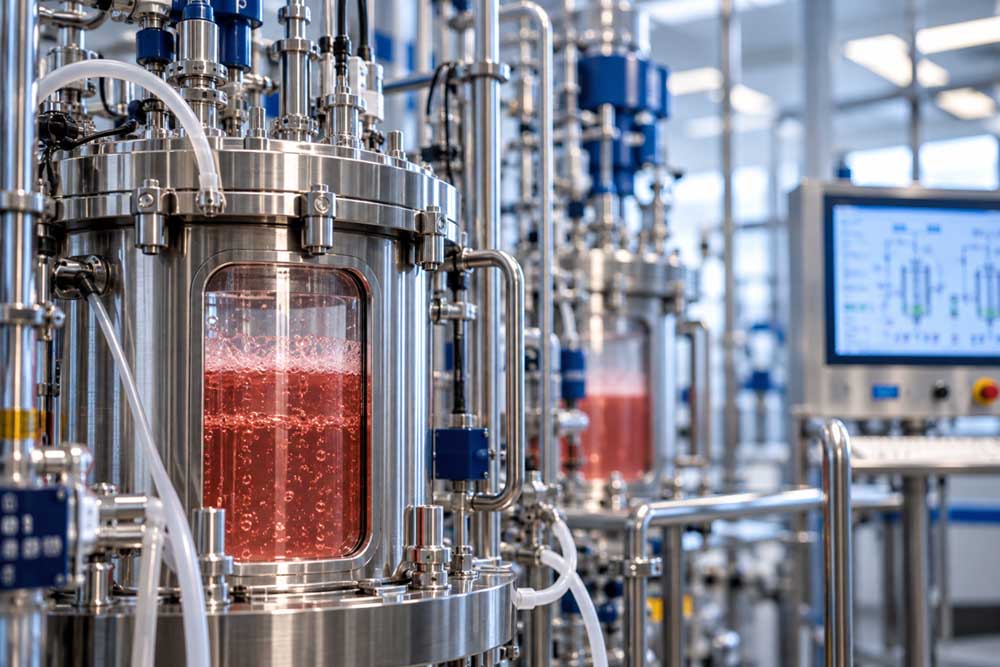
The fermentation takes place in two stages. First, faba beans and rapeseed press cake are treated with Bacillus subtilis subsp. natto, which breaks down plant proteins into smaller components and releases nitrogen sources.
Corynebacterium glutamicum is then added and uses those nitrogen sources to produce lysine.
After fermentation, the researchers measured 37.5g of lysine per kilogram of dry matter in faba beans and 29g/kg in rapeseed press cake. That represented increases of 3.4-fold and 3.6-fold, respectively.
The process could have an additional benefit by partially breaking down plant proteins during fermentation.
"The interesting thing is that we can use microorganisms to improve the amino acid profile of plant-based ingredients while also making plant proteins easier to digest by partially breaking them down. This is particularly beneficial because many crops contain antinutrients that make it harder for our bodies to absorb the nutrients found in plant-based foods," Solem said.
"We have demonstrated the principle using the essential amino acid lysine and will soon have solutions ready that will also allow us to enrich crops with two other essential amino acids."
Although the research forms part of the NextOrganic project, which focuses on animal feed, the team said the technology could also be applied to plant ingredients intended for human consumption. Tests have also indicated that the approach can work with crops other than faba beans and rapeseed.
For animal feed, improving the amino acid balance could help tackle a different problem. Where feed is deficient in essential amino acids, animals can be given more protein than they need to compensate. Individual amino acids can also be added in some production systems, but that option is restricted in organic production.
"In organic pig and poultry production, it is not permitted to add synthetic amino acids to the feed, so overfeeding with protein is the only option. If the animals are given more protein than they can utilise, they excrete more nitrogen via urine and faeces, which places a strain on the environment," said Jan Værum Nørgaard, Professor at the Department of Animal and Veterinary Sciences at Aarhus University.
Increasing the concentration of essential amino acids in the feed ingredient itself could reduce the amount of excess protein required and, in turn, lower nitrogen excretion.
The researchers also see potential for the process in human nutrition, particularly where diets rely heavily on plant foods with less favorable amino acid profiles.
The study, A Novel and Simple Fermentation Approach for Adjusting the Amino Acid Composition in Plant Biomasses to Enhance Nutritional Value for Humans and Animals, has been published in the Journal of Agricultural and Food Chemistry. The work was conducted by the DTU National Food Institute and Aarhus University as part of NextOrganic, which received funding from ICROFS under Denmark's Green Development and Demonstration Programme.
If you liked this, check these out...
• Wageningen-led VASCO project targets overlooked proteins in crop side streams
• VTT project targets the missing value in plant protein production
• WACKER enters EU pet food market with approval for fermentation-derived amino acids

Join Us At One Of Our Upcoming Events

If you have any questions or would like to get in touch with us, please email info@futureofproteinproduction.com