

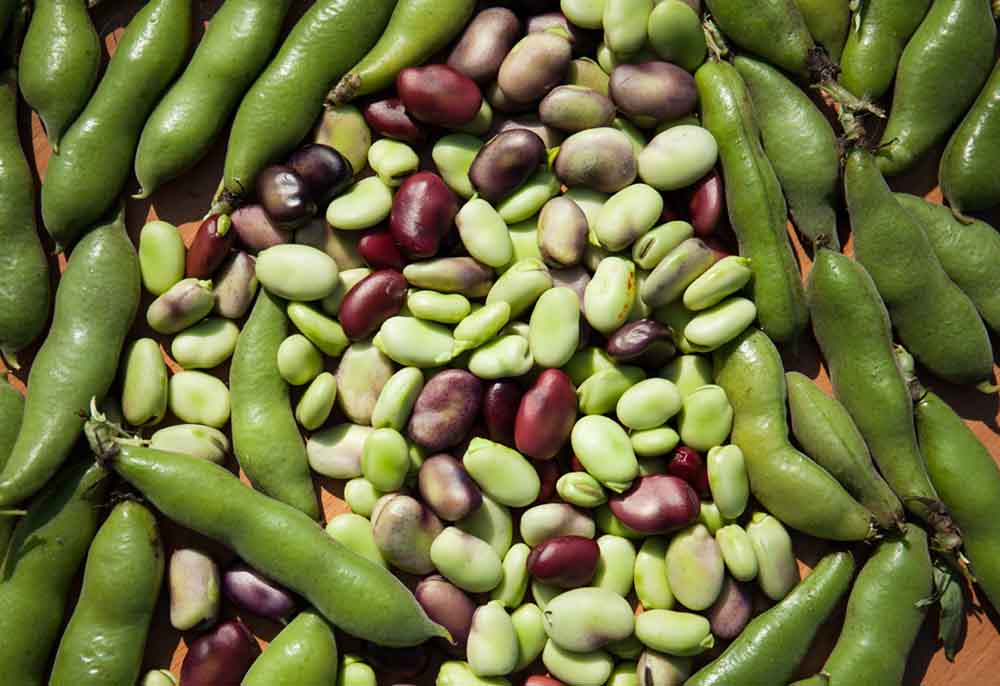
Europe cannot grow its way out of protein import dependence, study finds

Europe would struggle to replace imported high-protein feed with domestically grown legumes even under an extreme scenario in which soybean and soymeal imports stopped completely, according to new research that exposes the limits of protein self-sufficiency across the EU and UK.
• A complete halt to soybean and soymeal imports would send EU and UK soybean prices up 150%, while livestock production could fall by 2% to 3%.
• Domestic legume production would increase substantially but remain insufficient to replace imported high-protein feed, with poultry and pig production particularly exposed.
• An 11% shift from meat protein toward plant-based alternatives produced greater global emissions reductions than supply-side measures and more than doubled pulse imports.
Published in Communications Sustainability, the study examined three potential routes toward greater protein resilience across the European Union and UK: replacing imported soy with domestic production, increasing financial support for protein crops, and shifting consumer diets toward plant-based protein.
The research was authored by Shailesh Shrestha, Thomas Fellmann, Elizabeth Angenendt, Jordan Hristov, Mihaly Himics, Eckart Petig, Marcela Porto Costa, Sophie Saget, David Styles and Beate Zimmerman.
At the heart of the study is a longstanding weakness in Europe's protein supply.
Although the region has relatively high overall feed-protein self-sufficiency because of domestically produced grass, silage maize and other roughage, the researchers said this masks a major deficit in concentrated high-protein feeds.
The distinction is particularly important for pigs and poultry, which cannot rely on forage to the same extent as ruminants and require feeds with high concentrations of digestible protein and appropriate amino acid profiles.
Poultry and pigs account for approximately 67% of the high-protein feed consumed in the EU. Meanwhile, the EU imports around 95% of its soybeans and soybean meal, amounting to approximately 14 million and 16 million metric tons annually, respectively.
The UK imports a further approximately 3 million metric tons of soybean derivatives.
Those imports are also concentrated among a relatively small number of suppliers. Brazil provides around 50% of EU soybean imports and the US 35%, while soybean meal principally comes from Brazil and Argentina. The UK similarly sources much of its soy from Argentina and Brazil.
To examine how that dependence might be reduced, the researchers modeled three pathways against a business-as-usual scenario for 2030.
The most extreme was a trade pathway in which soybean and soymeal imports into the EU and UK stopped completely. The researchers stressed that this was designed as a stress test rather than a prediction, establishing an upper limit for how much imported protein might realistically be replaced through domestic production.
The consequences were substantial.
Agricultural land would move toward domestic legume production, including bringing around 700,000 hectares of fallow land back into agricultural use. Legume area under the trade pathway would reach around 2.4 million hectares, compared with 900,000 hectares in the baseline.
France, Italy and Romania showed particularly significant potential for expanding soybean production.
But even that response would not be enough to replace imported protein.
Soybean prices across the EU and UK would increase by approximately 150%, while soybean use in animal feed would fall by 50%. Livestock production would decline by around 2% to 3%.
Meat imports would consequently rise, ranging from an increase of around 4% for beef to 31% for poultry.
The findings highlight a particularly difficult challenge for monogastric livestock producers. Europe's land base can produce more legumes, but the study indicates that simply replacing tens of millions of metric tons of imported soy with European-grown protein crops is unlikely to be practical without major changes elsewhere in the food system.
The researchers' German farm-level modeling demonstrated how uneven the economic consequences could be.
Where soybean cultivation is agronomically viable, higher prices under the import-disruption scenario could increase gross margins on arable farms with significant soybean production by 40% to 100%.
For pig producers, however, the picture was markedly different.
Northern German pig farms, where livestock density is high and local soybean production is not viable, could see gross margins decline by around 40% as feed costs rise. Farms in southern and western Germany could offset some of those costs through higher returns from arable production.
The second pathway examined whether relatively modest agricultural subsidies could encourage more European protein crop production.
Under this scenario, EU member states and the UK allocated 2% of direct agricultural payments to support protein crops such as soybeans, peas, beans and lupins.
In the German farm analysis, an area payment of approximately €110 per hectare encouraged legume cultivation across most of the farms studied. Soybean areas expanded where growing conditions permitted, while pig farms introduced field beans or peas into rotations.
The researchers found that such incentives could make legumes economically viable without substantially changing overall farm margins.
However, the resulting increase in production remained insufficient to fundamentally change Europe's protein self-sufficiency.
The third pathway tackled the demand side instead.
Researchers modeled an 11% reduction in meat-protein consumption across the EU and UK, replaced with plant-based protein alternatives. The figure was based on European consumer preference research rather than representing a prescribed dietary target.
That relatively modest dietary shift produced a very different set of consequences.
Demand for pulses increased sufficiently for imports into the EU and UK to more than double, particularly from North America and Argentina. Producer prices for pulses increased by 13%, while soybean prices declined slightly because less was required for animal feed.
The study therefore suggests that greater consumption of plant proteins would not automatically translate into greater European protein self-sufficiency. Without sufficient domestic production, increased consumer demand could simply change the type of protein being imported.
However, the dietary pathway delivered the strongest result when emissions were considered globally.
The trade scenario reduced agricultural greenhouse gas emissions within the EU and UK by 2.9%, partly because livestock production contracted and expensive feed encouraged greater feed efficiency.
But around 72% of those domestic emissions savings were offset by increased emissions elsewhere as production shifted outside the region.
Once that leakage was considered, the researchers calculated net mitigation equivalent to a 0.8% reduction for the EU and UK, representing approximately 2.9 million metric tons of CO2 equivalent.
The consumer pathway produced a smaller direct reduction in EU and UK agricultural emissions of 1.4%, but its global impact was considerably larger.
Reduced meat demand resulted in lower production outside Europe as well as within it, generating a global net reduction of 18.8 million metric tons of CO2 equivalent, equivalent to a 5.2% net reduction for the EU and UK.
The researchers noted that the modeled 11% reduction in meat protein was substantially smaller than dietary changes proposed under frameworks such as the EAT-Lancet Commission, making the scenario a relatively conservative test of demand-side change.
The environmental comparison also produced striking results for soybean production itself.
A life cycle assessment comparing soybeans grown in Germany with Brazilian production found the environmental burden of Brazilian soy to be two to three times higher across several categories, including climate change, acidification, marine eutrophication and fossil fuel use.
Land-use change was a major contributor.
In Mato Grosso, which accounts for around 30% of Brazilian soybean production, land-use change represented 39% of the climate impact, with 73% of that component attributed to forest conversion.
The researchers calculated that producing one metric ton of Brazilian soybeans resulted in 1,088kg of CO2 equivalent from changes in soil and biomass carbon stocks alone.
Transporting and storing Brazilian soybeans in Europe was not included in that assessment, meaning those activities would add to the environmental burden of imports.
German soybean production did not perform better in every category, however. Its impact on water scarcity was higher, illustrating some of the environmental trade-offs involved in moving protein crop production geographically.
Taken together, the three scenarios point to a more complicated European protein strategy than simply growing more peas, beans and soybeans.
Domestic legume cultivation can increase, and targeted agricultural support can improve its economic attractiveness. But the modeling suggests Europe's dependence on concentrated imported protein is too substantial to be eliminated through domestic crop expansion alone.
The study, Legume-based pathways reveal opportunities and limits of protein self-sufficiency in the EU and UK, was published in Communications Sustainability on September 7, 2026.
If you liked this, check these out...
• Cowpea research at TUM explores legume’s potential as a sustainable protein source
• Finland’s Nutrition Guidelines drive surge in tofu and legume sales, industry responds to rapid demand shift
• Happy Plant Protein bets on local legumes to rewire Europe’s protein supply chain

Join Us At One Of Our Upcoming Events

If you have any questions or would like to get in touch with us, please email info@futureofproteinproduction.com


