

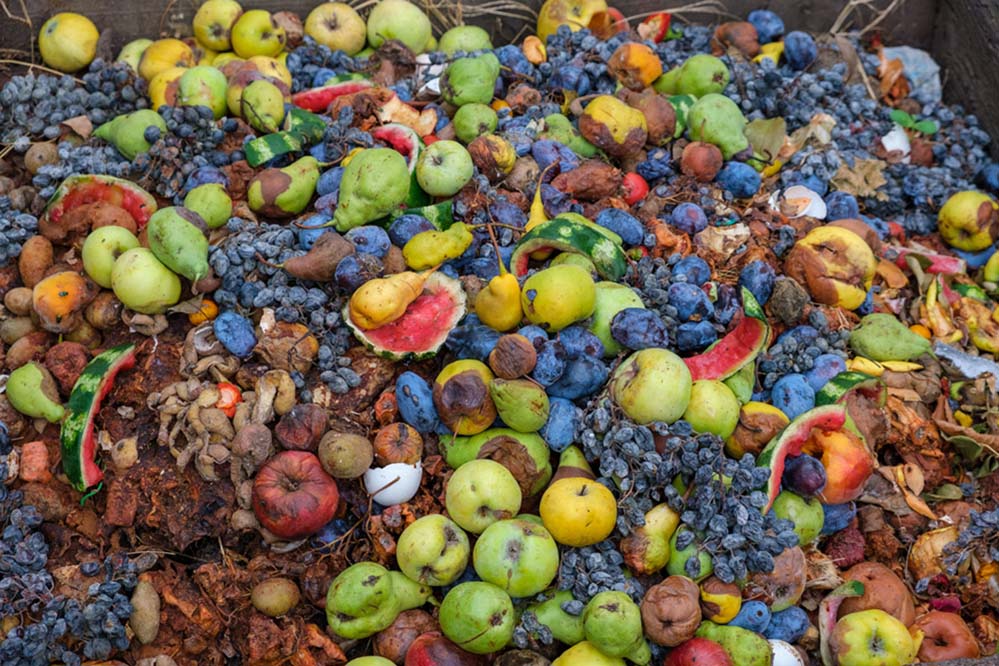
Fruit waste could become fermentation feedstock for higher-value foods, researchers find

Fruit waste ranging from apple and grape pomace to peels, pulp and cosmetically rejected produce could provide a valuable feedstock for microbial fermentation, according to a new review examining how food industry residues could be converted into higher-value ingredients and fermented products.
Published in Current Research in Food Science, the review was authored by Ines Calvete-Torre, Samuel Breselge, John Leech, Harsh Mathur and Paul D. Cotter. It examines the use of lactic acid bacteria, acetic acid bacteria, yeasts and mixed microbial cultures to ferment fruit-derived side streams.
• Researchers found that fruit residues contain sugars, fiber and bioactive compounds that make them promising substrates for microbial fermentation.
• Fermentation can transform fruit waste into functional ingredients while modifying phenolic compounds, generating organic acids and improving nutritional, technological and sensory properties.
• Moving from laboratory studies to commercial production will require better control of variable feedstocks, microbial communities, process economics, safety and scale-up.
The researchers argue that fruit waste should increasingly be considered a bioresource rather than simply a disposal problem. Processing generates substantial quantities of peels, seeds, pulp, pomace and bagasse, while additional edible fruit is rejected because of its size, shape, appearance or packaging damage.
These streams can contain dietary fiber, sugars, organic acids, vitamins, minerals, proteins and phytochemicals. Fermentation offers a way of using the whole or partially processed substrate rather than simply extracting individual compounds and leaving another depleted waste stream behind.
Lactic acid bacteria are among the microorganisms attracting particular interest. Previous studies reviewed by the authors have used strains to ferment materials including grape and apple pomace, cocoa bean shells, blueberries and other plant-derived residues.
Microbial enzymes can break down structural components including pectin, cellulose and hemicellulose, releasing sugars and phenolic compounds that were previously less accessible. Other enzymes can transform phenolic compounds, while microorganisms themselves produce metabolites including organic acids, exopolysaccharides and volatile compounds.
The resulting changes can affect more than nutritional composition. Acidification can improve preservation, while microbial metabolism can influence flavor, texture, viscosity and stability.
Yeasts offer another route, particularly because fruit residues can contain substantial concentrations of fermentable sugars. Although bioethanol has historically been one of the most heavily researched applications, the review points to growing interest in fermented beverages and other food products.
Mixed cultures could potentially extend this further. Combining yeasts, lactic acid bacteria and acetic acid bacteria can create metabolic interactions in which the products generated by one microorganism become substrates for another.
However, designing these communities is considerably more complicated than selecting an individual production strain. Traditional fermented foods contain microbial ecosystems that have developed over long periods, whereas newly assembled consortia may lack the stable interactions required for reproducible industrial processing.
That becomes particularly important when moving fermentation out of the laboratory.
Fruit side streams are inherently variable, with differences in sugar content, acidity, fiber structure, phenolic composition and native microorganisms. Seasonal availability and geographic distribution can create additional complications for commercial plants requiring predictable quantities and composition of feedstock.
Fermentation conditions can also change significantly with scale. Mixing, heat transfer, oxygen availability, shear stress and carbon dioxide removal may differ once a process moves into larger vessels. The authors highlight oxygen transfer as a particular consideration for acetic acid bacteria, while biofilm-producing organisms and mixed yeast-bacterial cultures could create further engineering challenges.
The review notes that pilot-scale work will therefore be needed to establish whether fermentation kinetics, microbial succession and metabolite profiles observed in laboratory experiments can be reproduced at commercially relevant volumes.
There are economic and environmental questions, too. Using a waste stream does not automatically make a fermentation process sustainable. Collection and transportation, pre-treatment, pasteurization or sterilization, aeration, agitation, temperature control, downstream processing, drying, packaging, refrigeration and wastewater treatment can all add cost and environmental impact.
The authors consequently call for life cycle assessment alongside techno-economic analysis as processes develop, including comparisons with alternative destinations for fruit residues such as animal feed, anaerobic digestion, composting or conventional waste treatment.
Safety and regulatory considerations will also influence which processes reach the market. Native fruit microbiota can vary considerably between batches, while uncontrolled fermentation may allow undesirable microorganisms to persist if acidification or microbial succession does not proceed as expected.
Selected starter cultures could offer greater control, but the researchers say safety and performance need to be assessed for the particular strain, substrate and process rather than assumed from the microorganism's species.
The review concludes that further work should move beyond proof-of-concept fermentation experiments toward integrated process development, combining strain and consortium screening with pilot-scale validation, shelf-life studies, sensory testing, safety assessment, techno-economic evaluation and life cycle assessment.
For fruit waste fermentation, the scientific case is increasingly established. The harder question is whether those transformations can be made predictable, economical and reproducible at industrial scale.
If you liked this, check these out...
• Engineered yeast turns plastic waste into protein-rich food
• RMIT study uses ultrasound to extract protein from cauliflower leaf waste
• Unicamp develops fungi-based process to turn food waste into meat-aroma plant ingredient

Join Us At One Of Our Upcoming Events

If you have any questions or would like to get in touch with us, please email info@futureofproteinproduction.com


