Failure is the baseline: what food tech must relearn about building real companies

Startup closures in alternative protein have triggered anxiety and defensiveness in equal measure. But failure was never the anomaly. It was always the filter. The question now, poses Dawn Sizemore, is not who collapses next, but whether the industry is finally ready to build what can endure
The alternative protein sector did not discover failure in 2025. It encountered it in full view after years of behaving as though it might be optional.
Across industries, roughly one in five startups fail in their first year. More than half close within five years. These figures are not evidence of dysfunction. They describe the normal mechanics of innovation. New categories do not emerge because most companies succeed. They emerge because enough experiments are run for viable models to separate from those that cannot hold under real-world conditions.
Food tech is not exempt from this reality, and neither is alternative protein. The surprise surrounding recent closures reflected not their existence, but the expectations that preceded them. For much of the past decade, urgency, ethics, and planetary necessity were allowed to substitute for evidence. From there, it followed that this sector would behave differently from every other capital-intensive industry that came before it. It has not.
Ambition, capital, and the cost of believing too early
Over the past decade, protein innovation was fueled by ambition and abundant capital. Founders pursued healthier and more sustainable food systems with intensity and conviction, often under extraordinary pressure to move quickly. Some delivered genuine breakthroughs. Many did not. Too many companies were funded on enthusiasm rather than evidence, supported by investors chasing momentum instead of consumer-driven performance.
Andrew D. Ive, Founder/Managing General Partner at Big Idea Ventures, described the resulting mindset bluntly. The belief that capital alone could will a new food system into existence, regardless of fundamentals, proved seductive but unsustainable. Over the past 12 to 18 months, generalist investors stepped back, valuations reset, and companies that once raised capital with ease struggled to secure follow-on funding.
Only those with ingredients that perform in real-world conditions and a credible path to scale have remained insulated from the tightening environment. Others encountered constraints that had been deferred rather than resolved.
“Hope is not a commercial strategy,” Ive wrote in a recent Protein Production Technology International column. “Innovation without a route to scale is just a press release.”
The correction has been painful, but it should not be mistaken for a failure of the category. It reflects a transition from experimentation to discipline, from novelty to viability. That transition rarely unfolds without casualties, particularly in sectors where timelines are long, capital requirements are high, and markets are conservative by design.

Closure is not collapse
When several companies close in quick succession, individual outcomes are often interpreted as verdicts on entire technologies. Cultivated meat is declared premature. Fermentation is framed as oversold. Plant-based products are dismissed as transient.
History offers little support for such conclusions.
Motorola did not kill the mobile phone. Nokia’s decline did not reverse the adoption of cellular communication. Apple's iPhone emerged not because early players executed flawlessly, but because the category continued to iterate until a superior model appeared.
New industries are not validated by survival rates. They are validated by what survives.
Recent closures did not signal the collapse of alternative protein. They signaled the narrowing of approaches capable of surviving under real constraints. The distinction is critical, particularly for a sector that has often spoken about inevitability without interrogating the conditions required to reach it.
.jpg)
The human cost behind the statistics
For founders and teams, closure is not an abstraction. It is personal, prolonged, and often quietly exhausting.
As we discovered on 8 January, AQUA Cultured Foods concluded operations after five years building fermentation-based whole-cut seafood, despite regulatory clearance, commercial partnerships, and products served in restaurants. Its CEO, Brittany Chibe, later reflected on the experience, writing that the constant intensity and isolation of being a chief executive was not something she wished to repeat.
The company did not collapse under scandal or mismanagement. It reached a point where continuation no longer made sense on human or commercial terms. That distinction matters, particularly in an industry where perseverance is often treated as a moral obligation rather than a strategic decision.
Founder statements following closures frequently revealed the same duality. Gratitude sat beside exhaustion. Pride coexisted with relief.
Daan Luining, the Founder & CIO of Meatable wrote on LinkedIn, “It has been the craziest ride of my life for the past decade and I am unbelievably grateful that it happened, not sad that it ended.”
That sentiment reflects a reality often lost in post-mortems. Not every ending is a regret. In some cases, it is simply a conclusion.

When the blueprint breaks
Meatable’s dissolution carried disproportionate weight because of what the company represented. It was visible, vocal, and frequently cited as a model for how cultivated meat might scale responsibly. Its closure unsettled assumptions more than timelines.
“They were supposed to have written the blueprint,” Olivier Tomat, Executive Director, Entrepreneurship & Acceleration, at Genopole wrote. “Meatable being the iconic company that they were is a genuine punch in the face, first and foremost for them of course, but also for all of us.”
The impact extended beyond one balance sheet. It exposed how much narrative weight had been placed on a small number of companies, and how little margin existed once expectations hardened into inevitability. Meatable did not fail because it lacked ambition or intelligence. It failed within a system that had collectively overestimated how much certainty existed.
Milestones are not markets
One of the most persistent distortions in food tech has been the elevation of milestones into guarantees.
Funding rounds were treated as validation. Regulatory approvals were spoken about as endpoints rather than gateways. Pilot facilities were framed as factories waiting to be switched on. Each milestone mattered. None ensured survival.
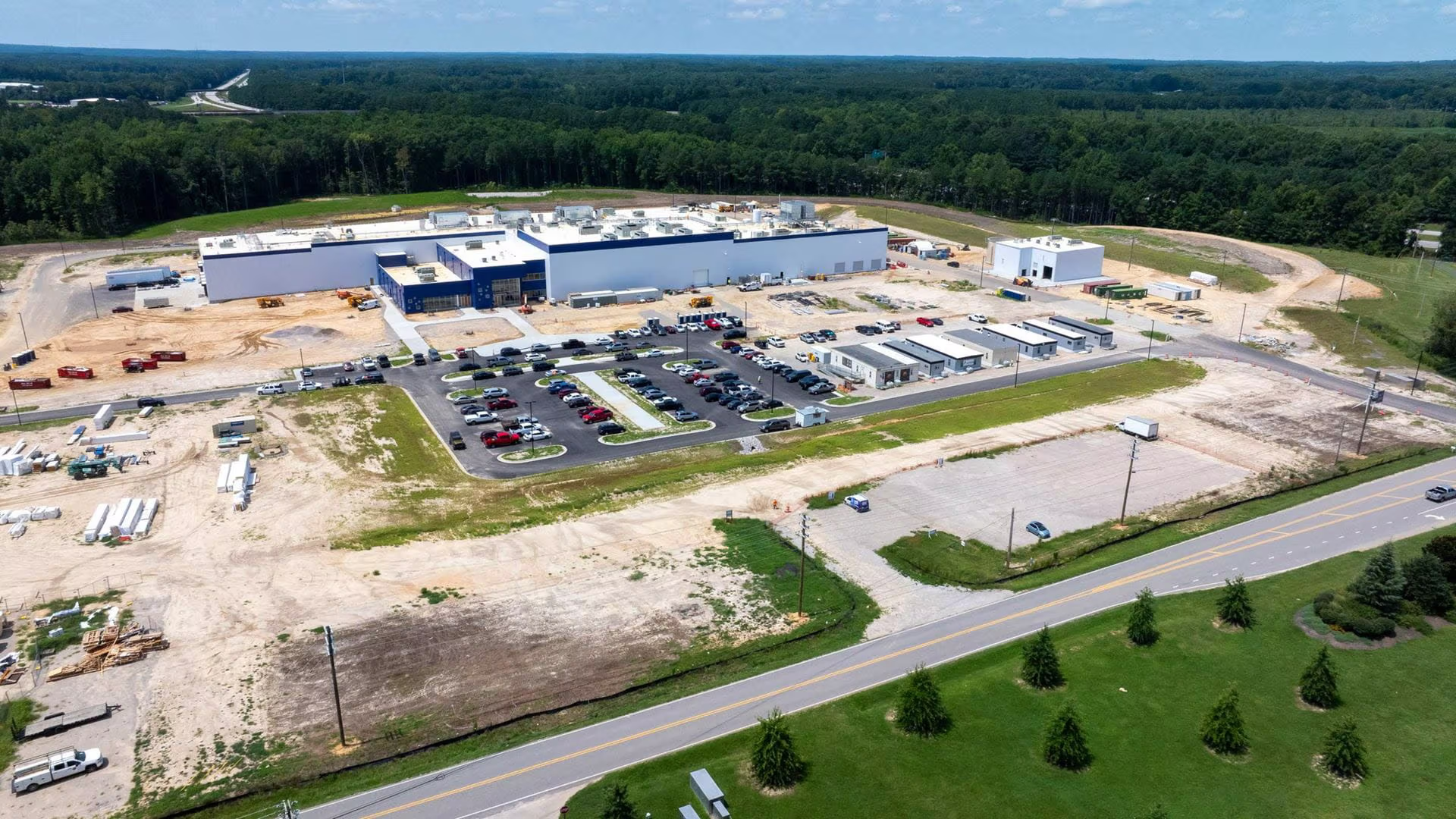
Believer Meats illustrated the gap with unusual clarity. The company raised more than US$390 million, secured FDA and USDA clearance, built a large-scale facility, and partnered with leading engineering firms. It still ran out of capital before entering commercial production.
The shock followed from expectation rather than outcome. Regulatory approval had been treated as proof of inevitability. Instead, it revealed the distance between clearance and cash flow, between technical readiness and commercial reality.
Tom Mastrobuoni, Chief Investment Officer at Big Idea Ventures, captured the concern succinctly. “Not sure how many more bankruptcies the alternative protein industry can sustain. We are going to hit the inflection point when we can’t say ‘this doesn’t mean the end of cultivated meat’ any longer. Companies need to tighten up and figure out a path to revenue as soon as possible.”
The statement did not deny long-term potential. It challenged the tolerance for delay.
Biology meets physics
Behind capital dynamics sits a more basic constraint: physical reality.
Karsten Schellhas, a fourth-generation German Master Butcher and global consultant working across traditional meat processing and alternative protein manufacturing, summarized the challenge plainly. “Producing cells is not the same as producing meat,” he said. “These cells currently contribute very little to taste and texture. In practical terms, what we have today is largely a watery slurry with some meat cells in it.”
Cells alone are not products. Contribution to sensory experience remains decisive. Downstream formulation continues to do most of the work, even in companies framed as biologically advanced.
Hybrid approaches are often presented as pragmatic bridges, but their existence does not eliminate risk. SciFi Foods, frequently cited as an example of hybrid realism, also ceased operations in 2025. Yet its closure did not mark the end of its technical contribution. Following the company’s wind-down, the Good Food Institute acquired SciFi’s suspension-adapted bovine cell lines and serum-free media and, in partnership with Tufts University, made them publicly available for research use. The move preserved years of development work and tens of millions of dollars in investment, transforming a single company’s failure into shared infrastructure for the wider cultivated meat ecosystem.
That outcome highlights a deeper tension. Even when technical progress is retained and compounded, the timelines required for biological maturation remain long. Schellhas argued that cultivated meat may require another generation to fully mature, a reality that collides with venture capital expectations, policy impatience, and a media ecosystem accustomed to faster breakthroughs.
Perspective without denial
Not all observers interpret recent events as warning signs.
Suzannah Gerber, Executive Director at the Association for Meat Poultry and Seafood Innovation (AMPS), argued that early-stage sectors routinely experience higher attrition before stabilizing. Biotech, renewables, and the early internet followed similar trajectories. Consolidation in nascent markets reflects sorting, not collapse.
“The real inflection point isn’t when a few pre-launch startups fold,” she said. “It’s when the fundamentals stop improving, when regulatory paths reverse, or when capital exits the space.”
Those conditions have not materialized. Infrastructure continues to be built. Regulatory clarity has improved in several regions. Technical depth has increased, not diminished.
Gerber also cautioned that narratives carry risk. Interpreting early consolidation as terminal decline can influence investor behavior, policy engagement, and talent flow.
She also noted that companies operate at vastly different stages. Many are producing meat. Many restaurants are serving it. Continued engagement, rather than withdrawal, will shape the sector’s trajectory.
The missing customer commitment
Between optimism and skepticism lies a quieter obstacle: adoption. Ralph de Vries, Founder at RDV Partners in Amsterdam, described the difficulty of launching innovative products into traditional markets where customers remain hesitant to commit at scale. Pilots and expressions of interest are common. Full commercial partnerships are not.
“There is a long period of investment and appreciation for these companies relative to the market potential,” he said, “but then you still need multiple customers to say, ‘Come on, we’ll work 100% with you.’”
This gap explains why capital often arrives before revenue. Investment decisions track innovation and theoretical demand, while revenue depends on conservative buyers embedded in risk-averse supply chains. The mismatch has exhausted many startups that mistook interest for commitment.
These pressures are not confined to early-stage ventures.
Beyond Meat, the first plant-based meat company to go public, has reportedly faced declining sales, liquidity pressure, and supplier strain, something it has challenged openly. Its challenges underscore a broader reality. Scale does not protect companies from weak demand, price sensitivity, or margin compression.
Consumer behavior remains decisive. Ingredient lists matter. Cost matters. Performance matters.
As Ive observed, customers respond to enjoyment and experience, not technical complexity.
The work of the lean years
Periods of contraction test more than balance sheets. They test discipline. The companies that persist will not do so by preserving boom-era assumptions. They will integrate affordability from the outset, design for scale early, and embed themselves into existing supply chains rather than promising wholesale disruption.
They will rely less on inevitability and more on execution.
After the dot-com collapse, many believed the internet experiment had failed. What followed was the construction of infrastructure, logistics, and business models that defined the next era of growth.
Alternative protein now occupies a similar phase. Capital has thinned. Attention has shifted. What remains is operational work.

The question that remains
Failure has always been the baseline. What matters is whether it teaches. Did companies close because they were unlucky, or because their models depended on conditions that never existed? Did investors reward momentum over resilience? Did regulatory milestones obscure commercial readiness? Did narratives delay necessary course correction?
The future of protein will not be written by optimism alone. It will be shaped by those who combine ambition with discipline, innovation with evidence, and conviction with a credible path to scale.
The uncomfortable truth is that many companies operating today will not survive. Some will. That outcome will not validate or invalidate the category. It will define it.
History suggests that survival is rarely distributed according to visibility or early leadership. Being first, best known, or best funded has never guaranteed permanence. In previous technology cycles, many of the companies that shaped public perception in the early years ultimately gave way to successors better adapted to scale, cost discipline, or shifting market realities.
There is no reason to believe alternative protein will be different.
Even the most recognizable names in the sector today operate under the same constraints as those that have already exited. Consumer demand remains volatile. Cost structures are still under pressure. Regulatory environments can shift. Capital, once abundant, is now selective. Companies such as Beyond Meat, Upside Foods, and GOOD Meat may endure, evolve, or ultimately be overtaken. It is impossible to know in advance. Their current prominence does not confer immunity, only opportunity.
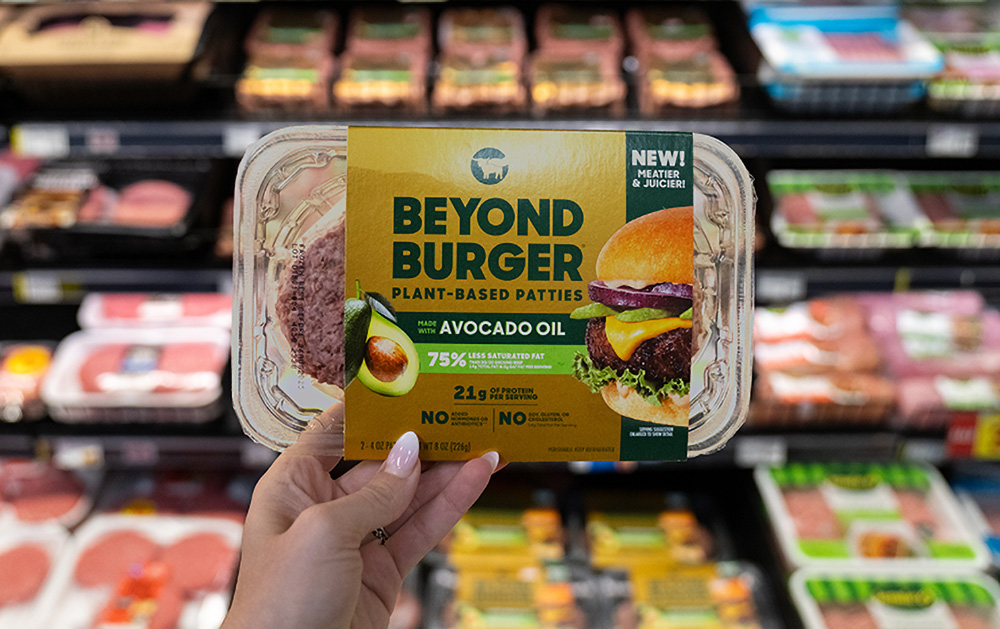
What matters is not which logos persist, but whether the knowledge, infrastructure, and hard lessons accumulated by today’s leaders are carried forward. In most industries, progress is cumulative rather than continuous. When companies fall, their technologies, talent, and insights rarely disappear. They are absorbed, repurposed, and refined by those that follow.
The cell phone did not fail when Motorola lost relevance, nor did mobile technology stall when Nokia ceded ground. The automobile did not collapse because early manufacturers disappeared. It matured through consolidation, capital discipline, and the slow construction of infrastructure that no single startup could build alone. Early aviation followed a similar path. The field was crowded with experimental firms, many of which failed, some catastrophically. What survived was not any one company, but a body of engineering knowledge that ultimately made commercial flight reliable. Biotech has long operated under the same logic. Most drug developers never bring a product to market, and entire companies dissolve after Phase II or Phase III failures, yet the sector advances because data, methods, and insight carry forward. In each case, progress did not depend on preserving early leaders. It depended on successive generations building on what came before, correcting what did not work, and aligning more closely with technical realities and market behavior.
Alternative protein is likely to follow a similar path. Some pioneers will remain central. Others will become footnotes. Their role will not be diminished by that outcome. It will be defined by it.
If the next generation of protein platforms emerges stronger, it will not be because failure was avoided. It will be because it was confronted, absorbed, and converted into something more durable than optimism alone.

Join Us At One Of Our Upcoming Events

If you have any questions or would like to get in touch with us, please email info@futureofproteinproduction.com