FPP Chicago 2026 Speaker Interview: The value proposition – Lou Cooperhouse on scaling cultivated seafood without illusions

As Lou Cooperhouse prepares to take the stage at The Future of Protein Production Chicago, the BlueNalu founder lays out a hard-nosed blueprint for alternative protein success – one grounded not in hype, but in taste, trust, price parity and true commercial scale
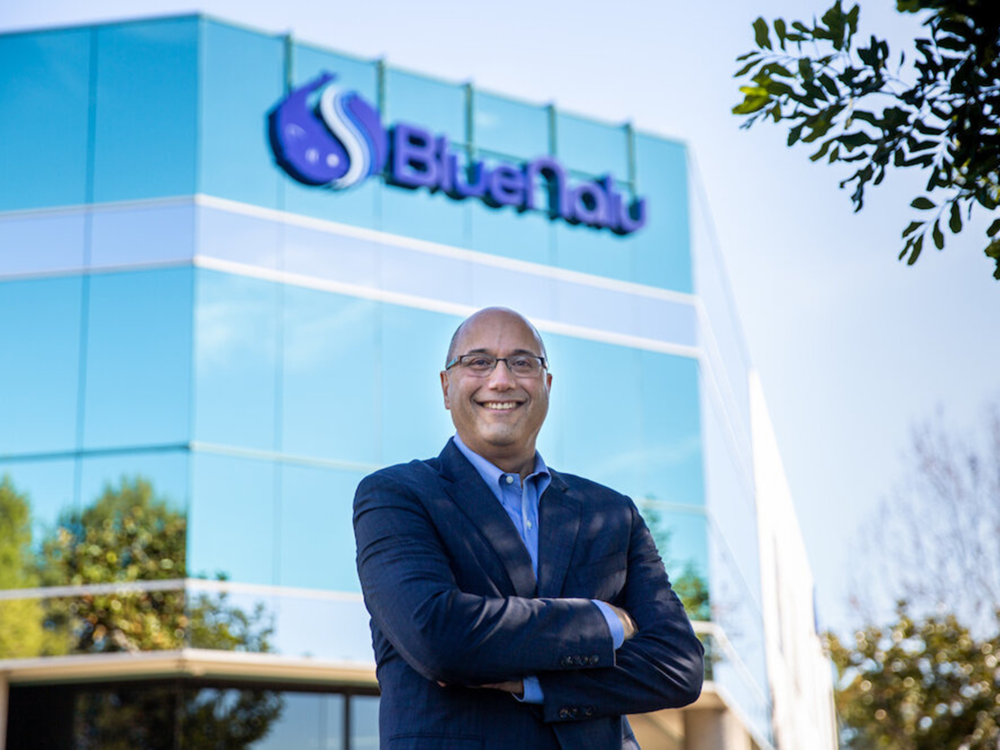
When Lou Cooperhouse steps onto the stage at McCormick Place on February 24-25 for The Future of Protein Production Chicago co-located with the Cultured Meat Symposium, he will be wearing two hats – and neither of them is ceremonial.

In one session, he will deliver a presentation titled The Value Proposition, dissecting why some protein innovations gain traction while others stall. In another, he will join the keynote panel Addressing Hurdles & Barriers to Change, moderated by Bruce Friedrich and featuring Caitlin Balagula of US Senator Adam Schiff’s office, Glenn Hurowitz of Mighty Earth and Lasse Bruun of the United Nations Foundation.
For Cooperhouse, Founder & CEO of BlueNalu, the timing feels less like a milestone and more like a proving ground. After nearly eight years building one of the most closely watched cultivated seafood companies in the world, he is not interested in theatrics. He is interested in fundamentals.
“The product has to deliver,” he says plainly, when interviewed by Alex Crisp for The Future of Foods Podcast recently. “We can talk about sustainability, consistency and health, but first and foremost, it has to taste great.”
That discipline – bordering on impatience with buzzwords – runs through everything he plans to say in Chicago.
%20.jpg)
An ‘aha’ moment – and a deliberate detour
Cooperhouse founded BlueNalu in early 2018 following what he describes as an 'aha moment'. With more than four decades in food – including senior roles at Campbell’s, Nestlé and ConAgra, and later as founder of the Rutgers University Food Innovation Center – he had seen food trends crest and collapse.
Cell cultivation struck him differently. “I saw cell cultivation to make a real animal product as the holy grail of the food industry,” he explains. “Something extremely transformative and disruptive.” But unlike many early entrants, he did not chase beef. “I was not particularly motivated by beef or poultry,” he notes. “I was really motivated by seafood because of all the challenges and opportunities that seafood represents.”
Seafood, he argues, is uniquely vulnerable. It is the “last-hunted protein,” exposed to warming oceans, acidification, geopolitical instability and extreme variability in quality. “Demand for seafood is at an all-time high,” he states. “It’s the fastest-growing protein supply chain on the planet. But it’s extraordinarily fragile.”
That fragility is precisely the opportunity, he maintains. BlueNalu’s first product – cell-cultivated bluefin tuna – is designed not merely to replicate conventional fish, but to improve upon it.
“You can create a superior product because it’s consistent every time, with 100% yield,” he says. “Free of mercury, microplastics, toxins, environmental pollutants, parasites and pathogens.”
For chefs, the appeal is even simpler. “No head, no tail, no bone, no skin,” he adds. “That’s 100% yield.”
In Chicago, he will frame that not as disruption, but as value.

The five non-negotiables
Cooperhouse speaks about the 'value proposition' as if it were a structural equation: taste, trust, price, scalability – and a compelling reason to exist. The cultivated protein sector, he suggests, is moving beyond its experimental phase. “We were very transparent about the challenges from day one,” he recalls. “Nobody had ever propagated a seafood cell line at a commercial level. There was no food-grade supply chain. There was no regulatory strategy.”
Rather than treating regulation as an obstacle, BlueNalu made it a core competency. At the time, governments around the world had no established regulatory pathway or methodology for evaluating cell-cultivated seafood. The company began engaging with the US Food and Drug Administration as early as 2018. “They had never done this before,” he says. “The framework had to be built in real time. We had to engage constructively and move through that process alongside regulators.”
The timeline stretched longer than anticipated – something he acknowledges without hesitation. “I think all of us were more confident that the regulatory pathway would be quicker,” he reflects. “But I admire the FDA for being diligent.”
Now, in 2026, he characterizes the company as being “at the one-yard line.” Approval, he believes, is close. But approval alone is not victory. “Regulatory approval without scalability gets you nowhere,” he emphasizes. “And scalability without a product that delivers gets you nowhere.”
Starting where the economics work
One of Cooperhouse’s most assertive claims is that BlueNalu can reach operating profitability at price parity. “At scale, we will be profitable at price parity at the operating level,” he says. “Bluefin tuna toro commands a premium price point. We know what it sells for today, and we can be at or below that.”
That premium positioning is strategic. Rather than racing toward commodity protein, BlueNalu began with a product that already commands high value. “This is a classic economies-of-scale story,” he explains. “We start with bluefin tuna. Then we can expand into other cuts and other species. High value comes first; then high volumes.”
The logic is straightforward: build credibility in a premium niche, then scale outward. It is a markedly different narrative from early alternative protein promises of immediate mass affordability. Cooperhouse is clear-eyed about the sequencing. “You have to start where the economics make sense,” he maintains.

Culinary first, always
Despite the biotech complexity, Cooperhouse insists BlueNalu is, at heart, a culinary company. “Through ongoing private tastings with chefs, one theme has stood out,” he notes. “They’re looking for consistency – quality they can trust every time. That same consistency also enables year-round access, helping solve a significant challenge for food-service operator.”
Traditional bluefin tuna, he observes, varies dramatically in color, fat content and flavor. “We’ve literally worked from the cell up,” he says. “What color? What texture? What mouthfeel? What level of marbling?”
That process has been iterative – sometimes chaotic. “Three chefs may have six opinions,” he jokes. “We had to figure out what sits in the right place on the bell curve.”
The company will launch first in select restaurants in Southern California, deliberately limiting early exposure. “We want to learn,” he explains. “How is it communicated? What format works best? How do you train waitstaff?”
Retail can wait. “Initially, we won’t be on supermarket shelves,” he says firmly. “For now, we’re launching exclusively in restaurants – starting with premium sushi and fine dining establishments. As we expand globally, we’ll evaluate the distribution channels that are most meaningful for our business.”
A bipartisan protein
On the keynote panel in Chicago, Cooperhouse will be joined by policymakers and advocates wrestling with the political dimensions of protein transition. He is acutely aware that food systems are not politically neutral. “In America, 90% of seafood is imported,” he points out. “There’s a huge trade deficit.”
That reality has shaped BlueNalu’s positioning. “We’ve had bipartisan support,” he says. “We can help address the seafood trade deficit and potentially export from the USA.”
Seafood, he argues, is less culturally charged than beef. “Seafood is far more bipartisan,” he remarks.
BlueNalu is also a member of the National Fisheries Institute and works alongside established seafood companies. “We’re here to complement the industry,” he insists. “We have to feed the planet, and there just isn’t enough seafood to do so.” At a conference that often draws environmental NGOs, investors and government officials into the same room, that conciliatory stance may carry weight.
Health over halo
Perhaps the most revealing insight from BlueNalu’s consumer research is what didn’t dominate. “We surveyed 10,000 consumers across eight nations,” Cooperhouse says. “Nine out of 10 were motivated to try the product.”
Nearly two-thirds indicated willingness to pay a premium. The primary driver, however, was not sustainability. “It was absence of mercury, plastics and pollutants,” he reports. “Human health.”
That finding reframes the conversation. While sustainability remains important, health benefits provide a more immediate hook. “If you don’t check the box of what matters to consumers and your customers, you don’t have a business,” he says.

Beyond the hype cycle
The cultivated protein sector has endured inflated expectations and tightened capital markets. Cooperhouse does not pretend otherwise.
He also feels the regulatory lag slowed momentum across the industry. But he believes the pause also filtered out weaker value propositions. “We didn’t want approval unless we had a scalable process,” he reiterates. “Approval and then launching in one restaurant gets you nowhere.”
In 2026, BlueNalu plans two levels of scale, with a third anticipated in 2027. “We’ll learn new things as we scale up,” he says. “That’s expected.”
In Chicago, his message will likely be less about revolution and more about resilience. Innovation must earn its place. It must satisfy taste, establish trust, meet price expectations, scale realistically – and, above all, deliver a value proposition strong enough to withstand scrutiny.
For an industry once fueled by exuberance, Cooperhouse’s tone may feel restrained. But at McCormick Place this February, that restraint – grounded in experience and sharpened by eight years of execution – may be exactly what the future of protein needs.
Lou Cooperhouse is one of more than 100 speakers taking to the stage at The Future of Protein Production/Cultured Meat Symposium on 24/25 February 2026. To join him and more than 500 other attendees, book your conference ticket today and use the code, 'PPTI10', for an extra 10% discount on the current rate. Click here

Join Us At One Of Our Upcoming Events

If you have any questions or would like to get in touch with us, please email info@futureofproteinproduction.com