
FPP/CMS Chicago 2026 Exhibitor Spotlight: When protein scale is no longer theoretical

As interest in microbial proteins grows, manufacturers are paying closer attention to who can deliver consistent volume at food-grade scale. Angel Yeast’s recent investments highlight how fermentation is being translated into dependable global supply
As interest in microbial proteins grows, manufacturers are paying closer attention to who can deliver consistent volume at food-grade scale. For companies attending The Future of Protein Production Chicago on 24 and 25 February, that question is no longer theoretical.

Much of the conversation around alternative proteins still focuses on what might be possible in the future. On the manufacturing side, however, the more immediate concern is whether new protein ingredients can be produced at volume, consistently, and without introducing new supply risks. Buyers are increasingly looking beyond prototypes and pilot plants toward ingredients that are already being made at industrial scale, under controlled conditions, and with predictable quality.
Angel Yeast’s recent expansion into large-scale yeast protein production speaks directly to that shift. In late 2025, the company began operations at a new next-generation yeast protein production line in the Baiyang Biotechnology Park in Yichang, China. The facility has an annual capacity of 11,000 tons of high-purity yeast protein, with protein content exceeding 80%, placing it among the largest dedicated yeast protein production assets currently in operation.
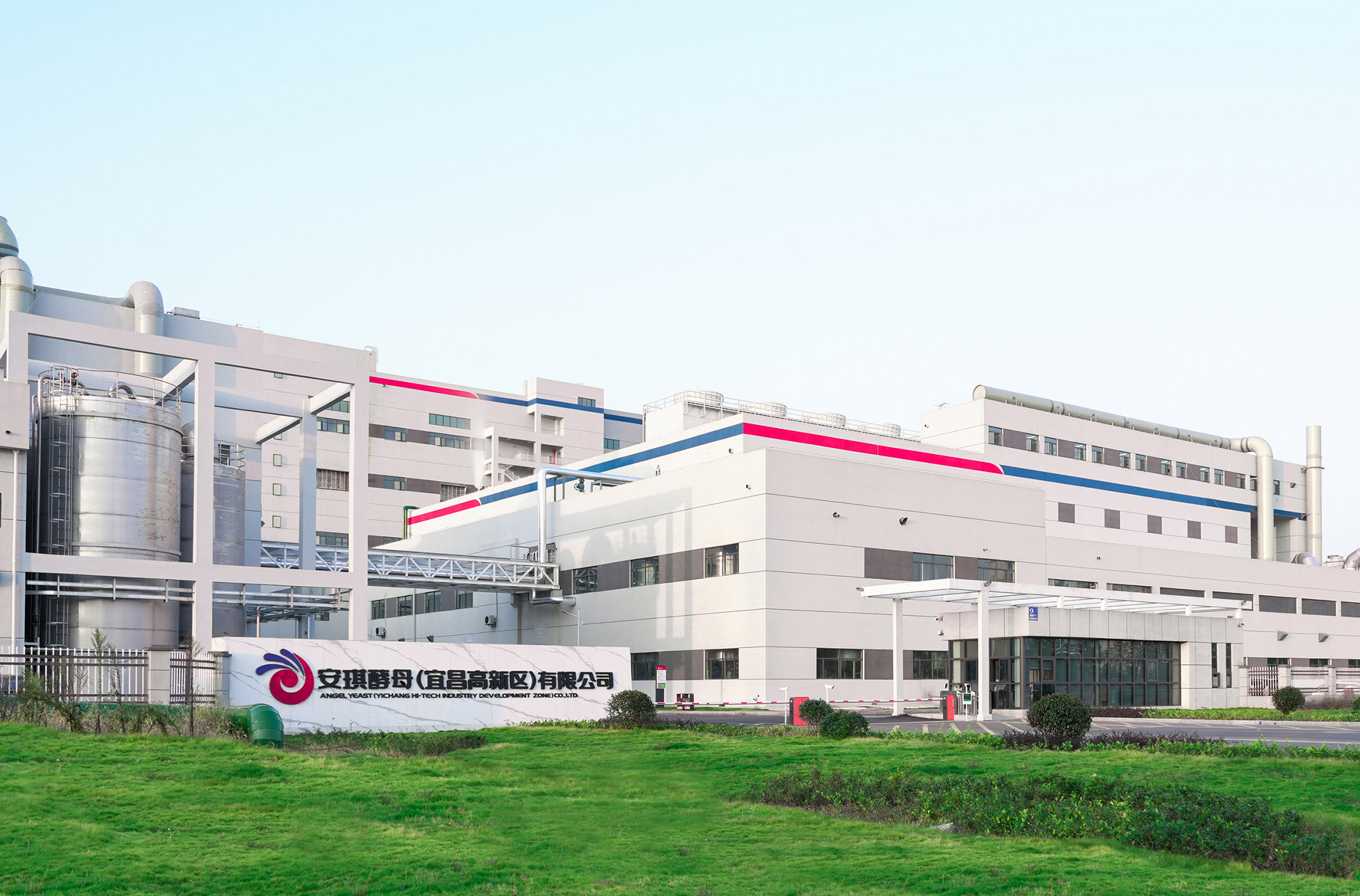
For a sector often constrained by limited capacity and long lead times, that level of output matters. Rather than treating yeast protein as a niche or transitional ingredient, Angel Yeast has invested in infrastructure designed to supply global markets at meaningful volumes.
The flagship product from that investment is AngeoPro, a yeast-derived protein ingredient developed for food, beverage, and nutrition applications. Produced via fermentation, AngeoPro delivers a complete amino acid profile alongside dietary fiber, with a neutral taste that allows it to be used on its own or blended with other proteins such as whey or soy.
In 2025, AngeoPro received international recognition, including Best Ingredient Innovation at the World Food Innovation Awards and the iSEE Annual Innovative Technology award. While awards are common in the ingredient sector, the attention reflected broader interest in proteins that combine nutrition, functionality, and manufacturability without relying on agricultural expansion.

Yeast protein is increasingly discussed as a third pillar alongside animal and plant proteins, particularly as pressure mounts on land, water, and supply chains. Unlike crop-based proteins, yeast protein production is decoupled from climate and seasonality. Fermentation takes place in closed tanks, allowing year-round output and straightforward capacity expansion.
At the Baiyang site, Angel Yeast integrated advanced automation and process control across the entire workflow, from fermentation and autolysis through to separation, drying, packaging, and warehousing. Raw materials, production, and logistics are linked through a fully automated system designed to maintain consistency while reducing operational variability.
That emphasis on industrial control extends beyond a single facility. Earlier in 2025, Angel Yeast unveiled its Hubei Synthetic Biology Industrial Park in Xiaoting District, Yichang, a manufacturing hub built around intelligent systems and industrial symbiosis. The site operates with more than 2,000 intelligent devices, connecting production lines through warehouse management, process control, and automated transport systems.
The park links multiple enterprises through shared utilities and material flows, reducing logistics costs and environmental impact. Fermentation intermediates, residues, and utilities are exchanged across the site, creating a closed-loop model that supports both efficiency and scale.
Beyond protein, Angel Yeast has continued to apply fermentation to clean-label and functional challenges in other categories. In 2025, the company introduced Feravor, a range of flavor-enhancing yeasts developed to help bakers improve aroma, freshness, and shelf life without artificial additives. The strains were launched at major international bakery exhibitions and designed to integrate into existing production methods.
Feravor-Rose and Feravor-Buttery were developed through targeted strain screening and fermentation optimization, drawing on traditional food sources and specialized environments. The focus was on delivering natural flavor enhancement through biological processes rather than reformulation or additives.

This body of work is particularly relevant for companies coming to The Future of Protein Production Chicago, where questions around availability, consistency, and integration into existing formulations are increasingly prominent. As microbial proteins move closer to mainstream adoption, buyers want clarity on both performance and supply.
Angel Yeast will be exhibiting on Stand 23, offering attendees the chance to discuss yeast protein applications, fermentation-derived ingredients, and industrial production considerations with a supplier already operating at scale. For companies evaluating microbial proteins as part of their sourcing or formulation strategies, those conversations are likely to center on operational realities rather than future promises.
As alternative proteins move from experimentation toward integration, scale continues to separate concept from capability. Angel Yeast’s recent investments suggest that, for yeast protein at least, that distinction is already clear.
More than 100 speakers will be taking to the stage at The Future of Protein Production/Cultured Meat Symposium on 24/25 February 2026. To join them and more than 400 other attendees, book your conference ticket today and use the code, 'PPTI10', for an extra 10% discount on the current rate. Click here. If you just want to walk the exhibition floor, meet the experts and network with the delegates, book your free pass here

Join Us At One Of Our Upcoming Events

If you have any questions or would like to get in touch with us, please email info@futureofproteinproduction.com