

From correction to consequence: what 2025 revealed about where plant-based food goes next

After a year of correction, scrutiny, and uneven growth, plant-based food enters 2026 facing a more grounded test. Drawing on the most revealing stories of 2025, this long read looks beyond the headlines to identify the trends that will shape the category’s next phase
By the end of 2025, it had become clear that the plant-based sector was no longer moving in a straight line. The early narrative of inevitable, exponential growth had given way to something more complex, slower, and arguably more consequential. This was no longer a story about novelty, disruption, or moral persuasion. It was a story about correction.
Across the year, signals accumulated that the category was entering a second, more demanding phase. Sales data from Europe and the USA showed resilience rather than momentum. Private label expanded even as branded products retrenched. Ingredient innovation continued, but increasingly behind the scenes. Governments, regulators, and public health bodies stepped into debates that the industry had once hoped to avoid – around labeling, ultra-processing, nutrition, and consumer trust. At the same time, retailers quietly reset expectations, reframing plant-based not as a replacement category but as one element of a broader protein mix.
What made 2025 distinctive was not any single inflection point, but the convergence of pressures. Scientific studies complicated simplistic narratives about processing and health. Economic analyses reframed plant-based food as an employment and resilience issue rather than a niche ethical choice. Political debates – from Brussels to Washington – made clear that protein was becoming a policy concern. Meanwhile, companies themselves began speaking differently: less about saving the world, more about solving specific problems in taste, cost, and functionality.
Perhaps most importantly, the industry stopped talking primarily to itself. Consumer behavior studies, supermarket trials, and sensory benchmarking all suggested that persuasion had limits. Shoppers were not confused, but they were selective. They were not hostile, but they were tired of trade-offs. They did not reject plant-based food outright; they simply refused to accept it on worse terms than animal-based equivalents.
By December, the shape of what comes next was visible. Plant-based food was not retreating, but it was being absorbed into a more plural, more pragmatic food system. The questions for 2026 were therefore not about survival, but about position. Which products earn habitual use rather than symbolic purchase? Which companies adapt to regulatory and nutritional scrutiny rather than resisting it? Which narratives endure once environmental urgency is no longer enough?
The predictions that follow are not forecasts of growth rates or investment cycles. They are forecasts of direction. Each reflects a pattern already visible in 2025 – in studies published, factories opened, policies debated, and products quietly reformulated. Taken together, they suggest that 2026 will not be louder than the years that came before it. But it may be more decisive.
1. Plant-based food will be judged less by what it replaces and more by what it stabilizes
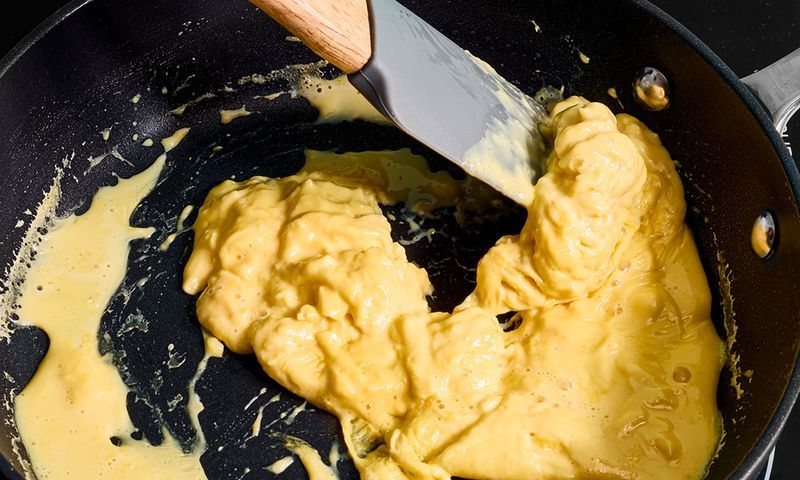
In 2026, the defining value of plant-based food will shift from substitution to system resilience. Throughout 2025, reports from FAIRR, Faunalytics, and reframed alternative proteins not as ideological challenges to meat, but as hedges against volatility. Disease outbreaks in animal agriculture, climate-driven feed disruptions, and price shocks exposed the fragility of protein supply chains. Against that backdrop, plant-based products increasingly appeared not as moral alternatives, but as insurance mechanisms.
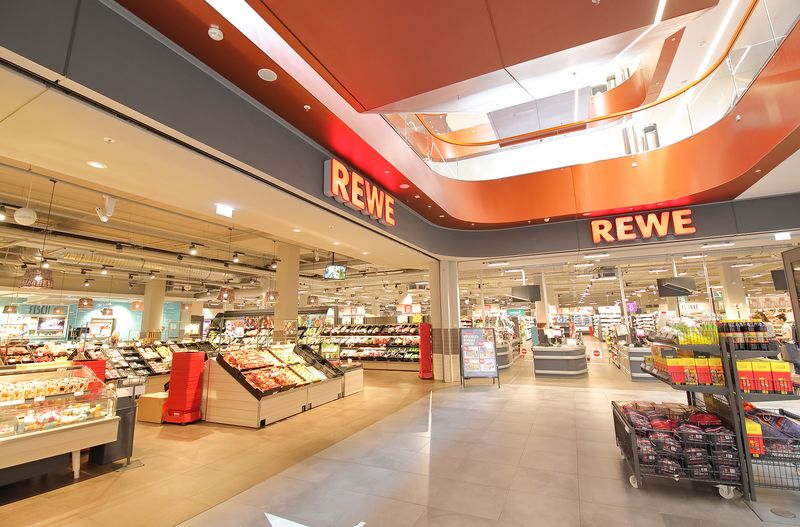
This framing will harden in 2026. Food companies and retailers will talk less about convincing consumers to 'switch' and more about ensuring continuity. When Lidl or Rewe highlights plant-based sales growth, the subtext is no longer cultural change, but operational flexibility. The same logic underpins investment in pea protein infrastructure in Sweden or fermentation-enabled capacity expansion in Germany. Plant-based food becomes valuable not because everyone eats it, but because it can be scaled when something else fails.
That shift will quietly reshape messaging, procurement, and policy alignment, making plant-based protein less controversial and more infrastructural.
2. Ultra-processing debates will move from classification to consequence
By mid-2025, the ultra-processed food debate had reached saturation. Whitepapers from Planteneers, joint guidance from GFI Europe and PAN, and peer-reviewed reviews comparing plant-based and animal foods all pointed to the same conclusion: processing alone is an insufficient proxy for health. What changes in 2026 is that the argument moves on.
Rather than fighting the label, companies will increasingly accept it – and then redirect the conversation toward outcomes. Nutrient density, fiber inclusion, cholesterol reduction, and disease risk will become the dominant metrics. This aligns with evidence published in 2025 showing improved cardiometabolic markers when animal products are replaced with plant-based alternatives, even when those alternatives are technically ultra-processed.
Regulators will follow suit, albeit unevenly. The FDA’s draft labeling guidance already signaled a preference for clarity over prohibition. In 2026, more policy discussions will hinge on formulation thresholds rather than process categories, opening space for reformulated products to qualify for institutional and public health programs.
3. Taste benchmarking will become a gating mechanism, not a marketing asset
NECTAR’s Taste of the Industry 2025 dataset marked a turning point. For the first time, taste performance was quantified publicly, comparatively, and at scale. In 2026, this kind of benchmarking will no longer be optional.
Retailers, food-service operators, and even investors will increasingly use sensory performance as a gatekeeper. Products that fail to meet parity benchmarks will simply not be ranged, regardless of sustainability credentials. This will accelerate quiet delistings but also reward companies that have invested in texture science, fat structuring, and flavor masking – as seen in developments from Burcon, dsm-firmenich, and academic labs throughout 2025.
The result will be fewer launches, but higher baseline quality. The era of 'good enough for plant-based' will end.
4. Hybrid products will normalize protein reduction faster than vegan products ever did
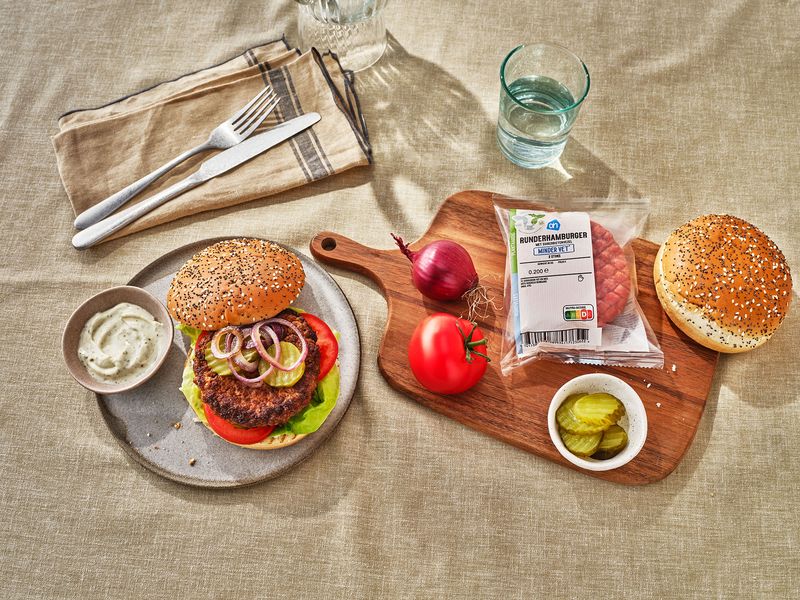
The success of plant-enriched meats from Colruyt, Albert Heijn, and others in 2025 revealed a consumer truth that will dominate 2026: reduction beats replacement. Hybrid products lower friction, preserve familiarity, and avoid identity politics altogether.
In 2026, these products will proliferate, particularly in private label. They will also become more technically sophisticated, with better integration of plant fibers, proteins, and fats to deliver genuine nutritional improvement rather than symbolic inclusion. Retailers will frame them as default options, not transitional ones.
This will provoke resistance from purist advocates, but from a volume and emissions perspective, hybrids may deliver more impact faster than fully plant-based alternatives.
5. Retailers will quietly become the most influential actors in the protein transition
By setting protein ratio targets, expanding private label ranges, and controlling shelf architecture, retailers already shaped 2025 more than manufacturers did. In 2026, that influence will deepen.
Retailers will decide which categories grow, which stagnate, and which disappear – often without public commentary. The private-label boom identified by GFI Europe is not just about price; it is about control. When retailers own formulation, branding, and pricing, they can align plant-based products directly with broader nutrition and sustainability goals.
This shifts power away from branded insurgents and toward integrated retail strategies, making supermarket groups the real architects of the protein transition.

6. Ingredient innovation will matter more than brand innovation
The most consequential advances of 2025 were not consumer-facing. They occurred in extrusion methods, protein blends, flavor masking systems, and fat retention technologies. In 2026, this trend accelerates.
Manufacturers will compete less on brand stories and more on technical performance enabled by suppliers. Ingredients that solve multiple problems at once – taste, nutrition, cost, and label simplicity – will be disproportionately valuable. This will favor companies with deep R&D partnerships and penalize those reliant on surface-level reformulation.
Consumers may never hear the names of these technologies, but they will taste the difference.
7. Plant-based eggs will move from novelty to infrastructure
The arrival of Just Egg in the UK and the funding of UMAMI UNITED signaled a category poised for expansion. In 2026, plant-based eggs will increasingly be treated as functional ingredients rather than retail curiosities.
Food-service, baking, and manufacturing applications will drive growth, particularly as price volatility and disease pressure continue to affect conventional egg supply. Functional equivalence – coagulation, emulsification, binding – will matter more than consumer branding.
This positions plant-based eggs as one of the few alternative protein categories with clear, non-emotional value propositions.
8. Nutrition claims will become more conservative – and more credible
After years of optimistic positioning, 2026 will bring restraint. Companies will make fewer sweeping health claims and more precise ones. This mirrors the tone of 2025 research, which emphasized relative improvement rather than absolute superiority.
Products will increasingly be positioned as 'better than' specific animal equivalents on defined metrics, rather than inherently healthy. This shift reduces backlash risk and aligns with regulatory scrutiny.
Credibility, not ambition, will drive trust.
9. Europe will fragment on labeling – and companies will design for the strictest case
The European labeling debate reached a critical stage in late 2025, with naming restrictions still unresolved. In 2026, divergence between member states is likely.
Rather than fighting every jurisdiction, companies will increasingly design labels and product names that comply with the most restrictive plausible outcome. This conservative design strategy minimizes rework and cost, even if it limits marketing flair.
Over time, this may normalize clearer, more descriptive naming – not because regulators demanded it, but because complexity became expensive.
10. Consumer education will shift from persuasion to orientation
Studies in 2025 showed that consumers are not confused – they are selective. In 2026, education efforts will reflect this.
Instead of trying to convince people to care, brands and retailers will focus on helping them navigate: how to use products, where they fit, and when they make sense. This includes clearer usage cues, cooking guidance, and contextual placement.
The tone will be practical, not aspirational.
11. Price parity will be pursued quietly, not promised loudly
Public commitments to price parity often backfired in earlier years. In 2026, companies will stop announcing timelines and start engineering margins.
Private label, simplified formulations, and localized sourcing – such as pea protein infrastructure investments – will gradually narrow gaps. Consumers will notice through promotions and everyday pricing, not press releases.
Affordability will be achieved, not proclaimed.
12. Public health alignment will become a prerequisite for policy support
Governments showed in 2025 that they are willing to engage – but only on health terms. In 2026, alignment with dietary guidelines will increasingly determine eligibility for institutional procurement, subsidies, and endorsements.
This incentivizes reformulation around fiber, saturated fat, and micronutrients rather than purely environmental metrics.
Plant-based food will be judged as food first, climate tool second.
13. Fermentation will move from promise to procurement
Precision and biomass fermentation featured heavily in 2025 narratives. In 2026, success will be measured by contracts, not conferences.
Products that integrate fermentation-derived ingredients into existing food categories – rather than positioning them as futuristic novelties – will scale fastest. Buyers will care less about technology and more about reliability, safety, and cost.
The hype cycle will close; the supply cycle will begin.
14. Sustainability metrics will narrow, not expand
Rather than adding new claims, companies will focus on a smaller number of defensible metrics. CO₂ intensity, water use, and land efficiency will dominate, reflecting what can be verified and compared.
This mirrors retailer behavior in 2025, where broad sustainability narratives gave way to specific, auditable targets.
Precision will replace abundance in sustainability communication.
15. The category will stop expecting gratitude from consumers
One of the quiet lessons of 2025 was that consumers do not reward effort. They reward outcomes. In 2026, successful companies will internalize this.
Products will be designed to compete on merit alone, without expectation of moral credit. This is not cynicism; it is maturity.
Plant-based food will stop asking to be chosen – and start earning it.
16. Research partnerships will become competitive advantages
Academic-industry collaboration in 2025 produced some of the most actionable insights. In 2026, companies will formalize these relationships.
Access to sensory science, nutritional epidemiology, and processing research will differentiate leaders from followers. Proprietary learning, not just proprietary IP, will matter.
Knowledge velocity will become a strategic asset.
17. Category boundaries will blur further
The distinction between plant-based, hybrid, and conventional will continue to erode. Shoppers will encounter proteins organized by use, not ideology.
This reflects retailer strategy and consumer behavior alike. Products that fit meals will outperform those that fit movements.
Protein becomes plural by default.
18. Fewer startups will launch – and more will survive
Capital discipline, clearer expectations, and tougher benchmarks will reduce the number of new entrants. But those that do launch will be better prepared.
This consolidation phase favors depth over breadth, competence over charisma.
The ecosystem stabilizes.
19. Measurement will replace storytelling inside companies
Internally, KPIs will shift from brand awareness to repeat purchase, usage frequency, and margin contribution. Plant-based food will be evaluated like any other category.
This operational normalization is not a loss of purpose – it is a sign of integration.
The category grows up.
20. 2026 will not be remembered as a breakthrough year – but as a turning point
There may be no headline moment in 2026. No sudden surge. No single product that 'changes everything'.
Instead, it will be remembered as the year plant-based food stopped trying to prove itself – and started behaving like a permanent part of the food system.
Quietly, deliberately, and with consequences.
The end of goodwill, the start of judgment
What will ultimately define 2026 is not whether plant-based food grows, stabilizes, or contracts – those outcomes will be measurable soon enough. The harder question is whether the sector becomes legible. For more than a decade, plant-based products asked consumers, regulators, and retailers to meet them halfway: to accept compromises, to read footnotes, to share a sense of urgency. The year ahead offers a different challenge. As plant-based food settles into the infrastructure of everyday eating, it will no longer be interpreted generously. It will be understood literally – as food that either earns its place on the plate or quietly loses it. That may sound unforgiving. But it is also the condition under which lasting categories are formed.

Join Us At One Of Our Upcoming Events

If you have any questions or would like to get in touch with us, please email info@futureofproteinproduction.com


