Ikea takes majority stake in The Green Dairy with US$8.6 million investment

Ikea deepened its long-standing commitment to sustainable food systems in December by taking a majority stake in Swedish plant-based dairy specialist The Green Dairy, investing approximately US$8.6 million through its investment arm, Ingka Investments.
The transaction, first reported by Impact Loop, saw Ingka Investments inject 80 million Swedish kronor (US$8.6 million) into the company, making Ikea the controlling shareholder. The move marked a significant step for The Green Dairy as it sought greater financial stability and long-term growth following several years of expansion in the plant-based and hybrid dairy markets.
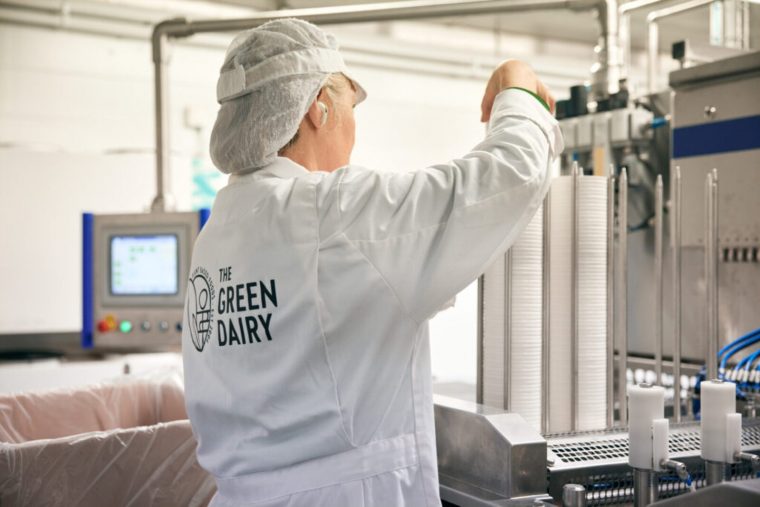
The Green Dairy operated as a B2B supplier, developing oat- and fava bean-based alternatives to conventional dairy, alongside hybrid solutions for other food manufacturers. The company also focused on circular production models, repurposing oat-processing sidestreams into protein ingredients for meat analog applications.
“This majority stake brings greater stability to The Green Dairy, which is essential for sustainable long-term growth,” an Ingka Investments spokesperson said. “At the same time, we continue to support the company’s mission to develop affordable plant-based alternatives to dairy products.”
The Green Dairy’s roots stretched back more than three decades. The company’s founder, Bo Funeteg, launched dairy-free ice cream under the Lovice brand in 1989, well before plant-based dairy entered the mainstream. In 2006, the business began commercial operations as Gröna Mejeriet, establishing a production facility in Karlshamn, Sweden, before later adopting its current name.
By 2025, The Green Dairy supplied a broad portfolio of plant-based products to the food industry, including oat drinks in both standard and barista formats, ice cream, soft serve, culinary creams, and whipping creams. Several formulations also incorporated fava beans, an ingredient gaining traction in European product development due to its functional and nutritional properties.
Earlier in the year, the company partnered with Estonian research organization TFTAK to develop a plant-based yogurt alternative composed of 80% fava bean and 20% oat. The formulation was also positioned for use in hybrid dairy products, a category that continued to attract interest from manufacturers seeking incremental reductions in animal-derived ingredients.
Beyond manufacturing, The Green Dairy operated a research, development, and innovation hub at its Karlshamn site. The facility allowed customers to access end-to-end development support, from kitchen formulation and pilot trials through to industrial validation. Services included sensory analysis, regulatory support, shelf-life testing, and food safety assessments.
The company also offered flexible private-label and white-label production, with packaging formats ranging from ice cream tubs to aseptic cartons. In 2024, it added a new bag-in-box production line aimed at foodservice customers requiring larger-volume formats.
Sustainability formed a central pillar of The Green Dairy’s strategy, extending beyond plant-based dairy alternatives themselves. The company developed reOat, a protein-rich ingredient produced from oat pulp left over from oat drink production.
This residual material, typically treated as waste, underwent a mild upcycling process without the use of solvents or chemical treatments. The resulting ingredient contained approximately 36% protein, 30% fiber, and around 12% naturally occurring oat lipids.
With a neutral flavor profile, reOat was non-GMO and soy-free, allowing it to be incorporated into a wide range of applications including baked goods, cereals, sports nutrition products, snack bars, and plant-based meat analogs such as burgers, meatballs, and shredded formats.
In 2023, The Green Dairy demonstrated the ingredient’s commercial potential by serving more than 10,000 burgers made with reOat at the Way Out West music festival in Gothenburg. At the time, the company emphasized its ambition to help build a more circular food system in which no part of the raw material was wasted, while signaling openness to collaboration with other industry players.
Sweden’s deep experience in oat-based innovation provided important context for The Green Dairy’s development. The country was also home to Oatly, one of the pioneers of the oat drink category. In 2024, The Green Dairy appointed Johan Girdo, former president of Oatly’s European operations, as its CEO, strengthening its leadership team as it entered a new phase of growth.
Ikea had been an investor in The Green Dairy since 2012, making the December 2025 transaction an expansion of an existing relationship rather than a new entry. In 2024, the company reported net sales of 137.9 million Swedish kronor (approximately US$14.8 million), alongside a negative EBITDA of 72.3 million kronor (US$7.8 million), reflecting continued investment in capacity, R&D, and market development.
With Ikea now assuming majority ownership, expectations were that the additional capital and strategic backing would support operational consolidation, scale-up, and broader market penetration. While financial performance remained a work in progress, the investment signaled confidence in The Green Dairy’s technology base, circular production model, and long-term role within the evolving plant-based dairy landscape.
For Ikea, the move reinforced a pattern of targeted investments in food innovation focused on affordability, sustainability, and scalable impact, rather than short-term returns. For The Green Dairy, it marked a stabilizing moment as the company sought to translate decades of oat-based expertise into a more resilient and commercially grounded future.

Join Us At One Of Our Upcoming Events

If you have any questions or would like to get in touch with us, please email info@futureofproteinproduction.com