Imperial opens pilot manufacturing hub to help deep-tech ventures scale production

Imperial College London has launched London’s first dedicated facility for pilot and demonstration manufacturing, responding to growing demand from deep-tech startups seeking to transition from research and development into scalable production.
• Imperial College London has launched Grapht Works, London’s first facility dedicated to pilot and demonstration manufacturing for deep-tech startups.
• The site offers 28 flexible industrial units designed to help science ventures move from research into scalable production.
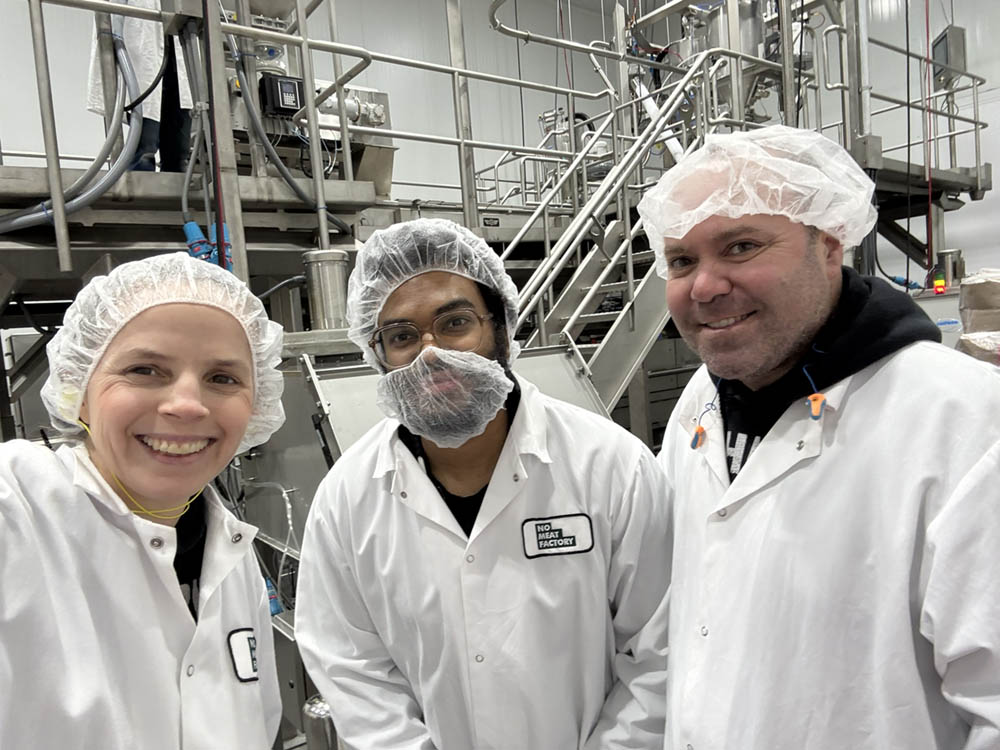
• Companies already located at the site include cultivated meat startup Meatly alongside firms working in synthetic biology, advanced materials and clean energy.
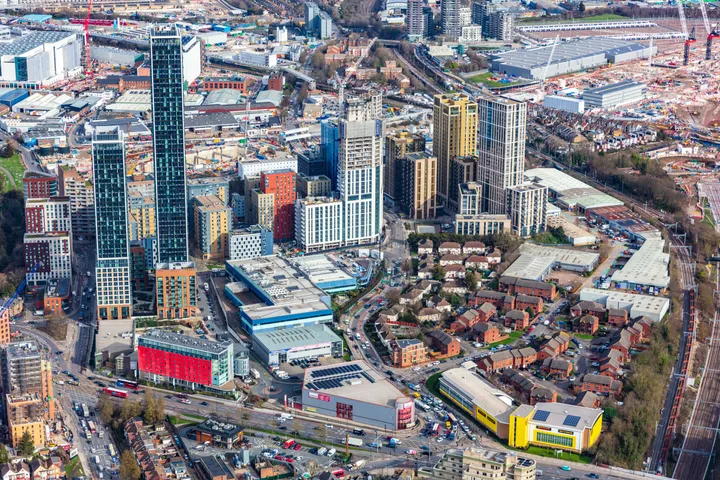
The new Grapht Works site, located in the Old Oak Innovation Cluster in North Acton, provides flexible industrial-scale space designed specifically for companies moving from laboratory research toward commercial manufacturing – a stage that often presents significant challenges for science-led ventures.
The facility forms part of WestTech London, the frontier innovation ecosystem created and anchored by Imperial and supported by partners, which aims to strengthen West London’s role as a center for advanced science and technology while supporting the UK’s ambitions to become a global leader in advanced manufacturing.
Grapht Works offers 28 industrial units ranging from 100 m² to 1,700 m², designed to support pilot, demonstration and early-stage manufacturing activities. The spaces can be reconfigured as technologies evolve and manufacturing requirements change – a flexibility that is often essential for emerging technologies.
For companies developing new food technologies, bioprocesses, fermentation systems and other science-driven production platforms, access to this type of facility can be a critical step between laboratory research and industrial-scale deployment.
Imperial said the facility was created in response to a growing challenge faced by deep-tech startups: the lack of suitable space to demonstrate that technologies can be manufactured at scale.
“Providing essential infrastructure, like Grapht Works, is critical if we are to ensure that deep tech businesses can start, scale and stay in the UK,” said Hugh Brady, President of Imperial College London.
He said the facility forms part of WestTech London’s wider mission to unlock the innovation potential of West London while strengthening national industrial supply chains.
“It is part of WestTech London’s mission to unlock the power of innovation in West London and ignite growth not just for London, but nationwide,” Brady said. “Scaling deep tech businesses will not only drive economic growth but they also play a key role in strengthening the UK’s industrial sectors and supply chains. This facility supports the Government’s ambition to make the UK the best place in the world to start, grow and invest in advanced manufacturing.”
According to Dealroom’s State of UK Deep Tech 2025 report, startups account for 77% of the UK’s deep-tech sector, which was valued at £260 billion in 2025. Enabling those companies to move beyond laboratory research and into production is increasingly seen as essential for turning scientific breakthroughs into commercial industries.
In addition to providing industrial space, the facility aims to bring together several elements that deep-tech companies often require in order to scale successfully, including proximity to research universities, access to scientific and engineering talent, and strong transport links for staff and supply chains.
Historically, this combination has been difficult to find in London, particularly for companies requiring pilot-scale manufacturing environments rather than conventional laboratory space.
“While London has a wealth of lab space, and we can see R&D thriving across the city, it lacks the space to support deep tech innovation as it scales,” said Alice Sewell, Investment Director at Imperial.
“We are seeing strong demand from high-growth science and technology businesses that want to prototype and undertake pilot and demo manufacturing in London but haven’t had access to the right kind of space. Grapht Works is about meeting that demand and ensuring companies can scale in London rather than move elsewhere.”
A first cohort of deep-tech companies has already established operations at Grapht Works, representing a range of emerging technology sectors including engineering biology, advanced materials, and clean energy.
Among them is Meatly, a cultivated meat company which has developed what it describes as Europe’s first commercially approved lab-grown meat product for pet food.
Other companies located at the site include Solena Materials, an advanced textile innovation company engineering new classes of fibres using AI-based molecular design and biomanufacturing; Epoch Biodesign, which is developing AI-engineered enzymes designed to enable the recycling of plastics and textiles; Aed Energy, a clean-energy company developing long-duration thermal batteries; and 2D Nano, an advanced materials company focused on technologies for energy storage, construction and wireless charging.
For companies such as Solena Materials, the availability of pilot-scale manufacturing infrastructure is a critical step in demonstrating that emerging technologies can move beyond the laboratory.
“Moving from the lab into pilot production is the moment a company proves it can manufacture at scale – and that’s what unlocks serious investment and growth,” said Dr James MacDonald, Chief Executive and Co-founder of Solena Materials.
He said the facility allows the company to continue scaling within London while remaining connected to Imperial’s research ecosystem.
“Grapht Works gives us the infrastructure to do that without leaving London, and staying within the Imperial ecosystem ensures we maintain momentum.”
The facility is owned and operated by Imperial College London, the STEMB-focused university, and forms part of the institution’s broader effort to support science-led entrepreneurship as companies move from research to commercialization.
Investors have also highlighted the importance of pilot-scale facilities in accelerating the development of emerging technologies.
“Too often deep tech startups are slowed down in their development because of a lack of immediate access to pilot and demo plants,” said Amelia Armour, Partner at Amadeus Capital Partners’ Early-Stage Fund. “Grapht Works will allow a much faster pace of development and enable UK companies to be competitive in global markets.”
Located in North Acton, the facility forms part of Imperial’s Old Oak Innovation Cluster and is intended to support companies as they move toward industrial-scale production while remaining connected to the university’s research networks and technical expertise.

Join Us At One Of Our Upcoming Events

If you have any questions or would like to get in touch with us, please email info@futureofproteinproduction.com