.jpg)
Maia Farms secures US$3.75 million seed round as mycelium ingredient strategy moves into scale-up

Vancouver-based Maia Farms closed an oversubscribed US$3.75 million seed equity round, strengthening its balance sheet as it prepared to scale commercial production of mushroom and mycelium-based ingredients for food manufacturers worldwide.
• Maia Farms closed an oversubscribed US$3.75 million seed round, taking total funding secured in 2025 to more than US$6.5 million including non-dilutive support.
• The company planned to scale fermentation and extrusion capacity, expand its ingredient portfolio, and grow commercial teams in 2026.
• The raise built on a US$1.7 million pre-seed round in 2024 that helped establish Maia Farms’ core mycelium technology platform.
The seed round was led by Active Impact Investments, with participation from Nya Planet, Ag-West Bio, PIC Investment Group, and Deep Checks. Maia Farms had also previously secured strategic and non-dilutive funding from Genome BC, Natural Products Canada, Protein Industries Canada, and the National Research Council of Canada.
Founded in 2021 by Gavin Schneider, Ashton Ostrander, and Dr Sean Lacoursiere, Maia Farms focused on developing high-performance mushroom and mycelium-based ingredients using liquid-state fermentation and extrusion technologies. The company said the new capital would support its transition from early commercialization into larger-scale production and long-term supply agreements with food manufacturers and ingredient distributors.
.jpg)
The funding followed earlier momentum. In 2024, Maia Farms raised CA$2.3 million (US$1.7 million) in pre-seed financing, a round that helped establish its fermentation platform, expand research and development, and validate its approach to mycelium-derived protein and functional ingredients. That round also coincided with the company’s growing visibility in the alternative protein space, including recognition linked to its work on mycelium-based ingredients and production systems.
Chief Executive Officer, Gavin Schneider, said the company’s growth reflected a deliberate focus on fundamentals rather than rapid expansion for its own sake. “What excites me about mycelium is that it gives us a way to grow food that works with nature instead of against it,” Schneider said. “Mushroom mycelium grows quickly, requires very little land or water, and can thrive on upcycled agricultural by-products. It’s efficient, low-impact, and adaptable. In other words, it offers us a path to scale nutrition without scaling destruction.”
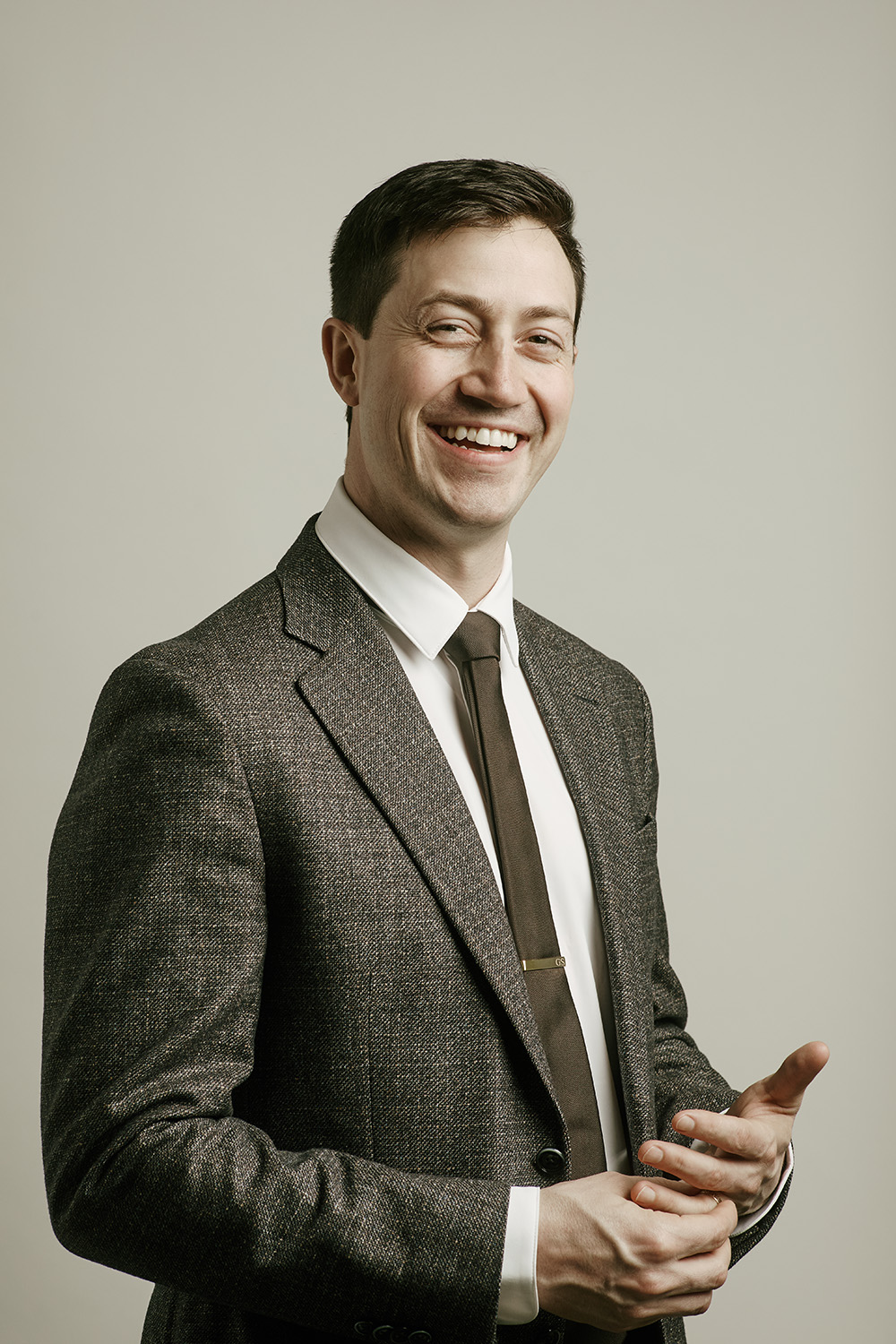
Schneider, who grew up on a farm, said that perspective continued to shape Maia Farms’ approach to sustainability and product development. “For me, mycelium represents the best of both worlds: the humility of the farm and the intelligence of nature. It’s not just a protein alternative: it’s a systems solution that can help nourish both people and the planet,” he said in a recent interview with Protein Production Technology International.
Rather than positioning mycelium solely as a meat alternative, Maia Farms developed its technology as a broader ingredient platform. Schneider described the company’s products as tools for food formulation across multiple categories. “We regard mycelium as a platform ingredient. Yes, it can complement meat in traditional formats, but the real power is in its functional versatility,” he said. “We're developing products that act as natural binders, thickeners, and emulsifiers, all while adding clean-label protein and fibre.”
He added that mycelium-based ingredients could help food manufacturers reduce reliance on long, synthetic-sounding ingredient lists. “They can replace gums, stabilizers, even eggs in some cases, all while enhancing mouthfeel and boosting nutritional content,” Schneider said. “The applications extend far beyond meat: bakery, dairy alternatives, snacks, sauces, even beverages. This is a toolkit for rethinking food formulation from the ground up.”
At the process level, Maia Farms differentiated itself through its use of liquid-state fermentation with oyster mushroom mycelium rather than Fusarium. Schneider said the choice delivered advantages in fiber structure, digestibility, and flavor neutrality. “Our process is grounded in liquid-state fermentation, but what makes it truly unique is how we’ve optimized it for real-world scalability and integration into food systems,” he said.
The company built proprietary lab-scale bioreactors and monitoring systems, feeding data into what it called its Fungal Intelligence Database. “All our data feeds into the Fungal Intelligence Database, a system we've built to analyze and improve yield and nutrient profiles in real-time,” Schneider said. “The result is a modular, scalable process that minimizes waste and maximizes adaptability across product categories.”
Ingredient optimization, he explained, relied on a continuous feedback loop between biology and engineering. “We start with strain selection, understanding genotype and phenotype relationships through high-throughput screening,” Schneider said. “Then we design custom media compositions using agricultural sidestream, which not only drives circularity but allows us to fine-tune nutrient uptake and biomass conversion.”
Despite the company’s emphasis on data, automation, and analytics, Schneider said people remained central to execution. “Our team’s cross-functional knowledge in microbiology, food science, and process design lets us iterate quickly and apply insights across our product lines,” he said.
The seed financing also brought governance changes. Maia Farms expanded its board of directors with the addition of Mike Winterfield of Active Impact Investments and Yuan Shi of Nya Planet, adding experience in commercial strategy and climate-smart food systems.
Looking ahead, Maia Farms said 2026 would focus on scaling fermentation and extrusion capacity, strengthening its technology platform, and expanding commercial operations to support international growth. With its seed round closed and earlier pre-seed foundations in place, the company entered its next phase focused on embedding mycelium-based ingredients more deeply into mainstream food manufacturing rather than niche applications alone.

Join Us At One Of Our Upcoming Events

If you have any questions or would like to get in touch with us, please email info@futureofproteinproduction.com