MicroHarvest plants its industrial flag in Leuna with 15,000-ton fermentation facility and €5.46 million federal backing

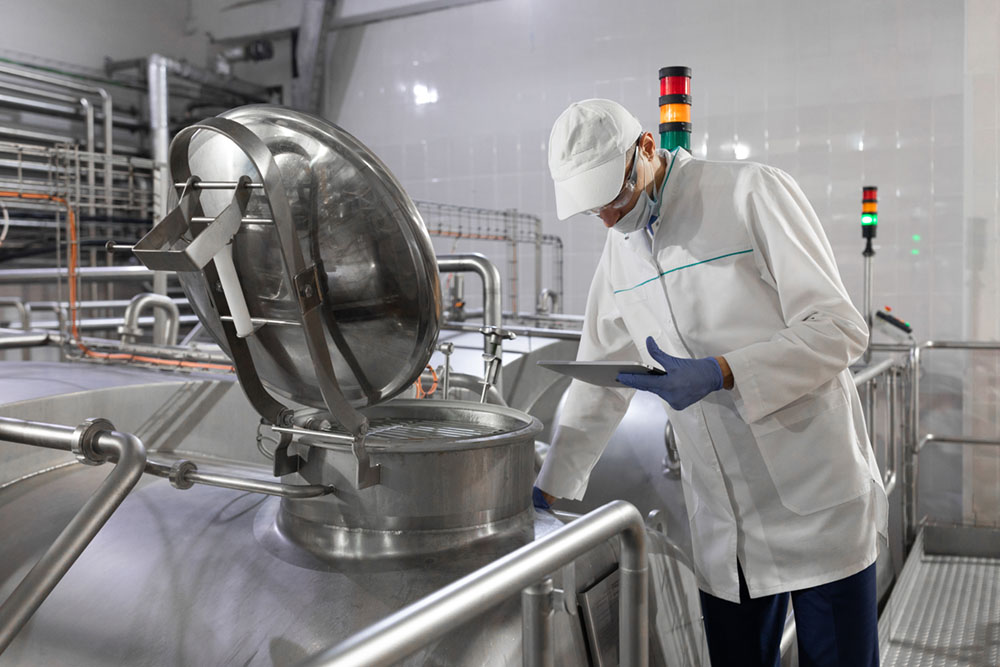
MicroHarvest has selected Industriepark Leuna in Saxony-Anhalt as the location for its first large-scale production plant, marking a decisive transition from pilot operations to industrial manufacturing of microbial protein in Europe.
• MicroHarvest selected Industriepark Leuna for a fermentation facility targeting 15,000 tons annual capacity.
• The project involves a planned mid-range double-digit million euro investment and around 25 direct jobs.
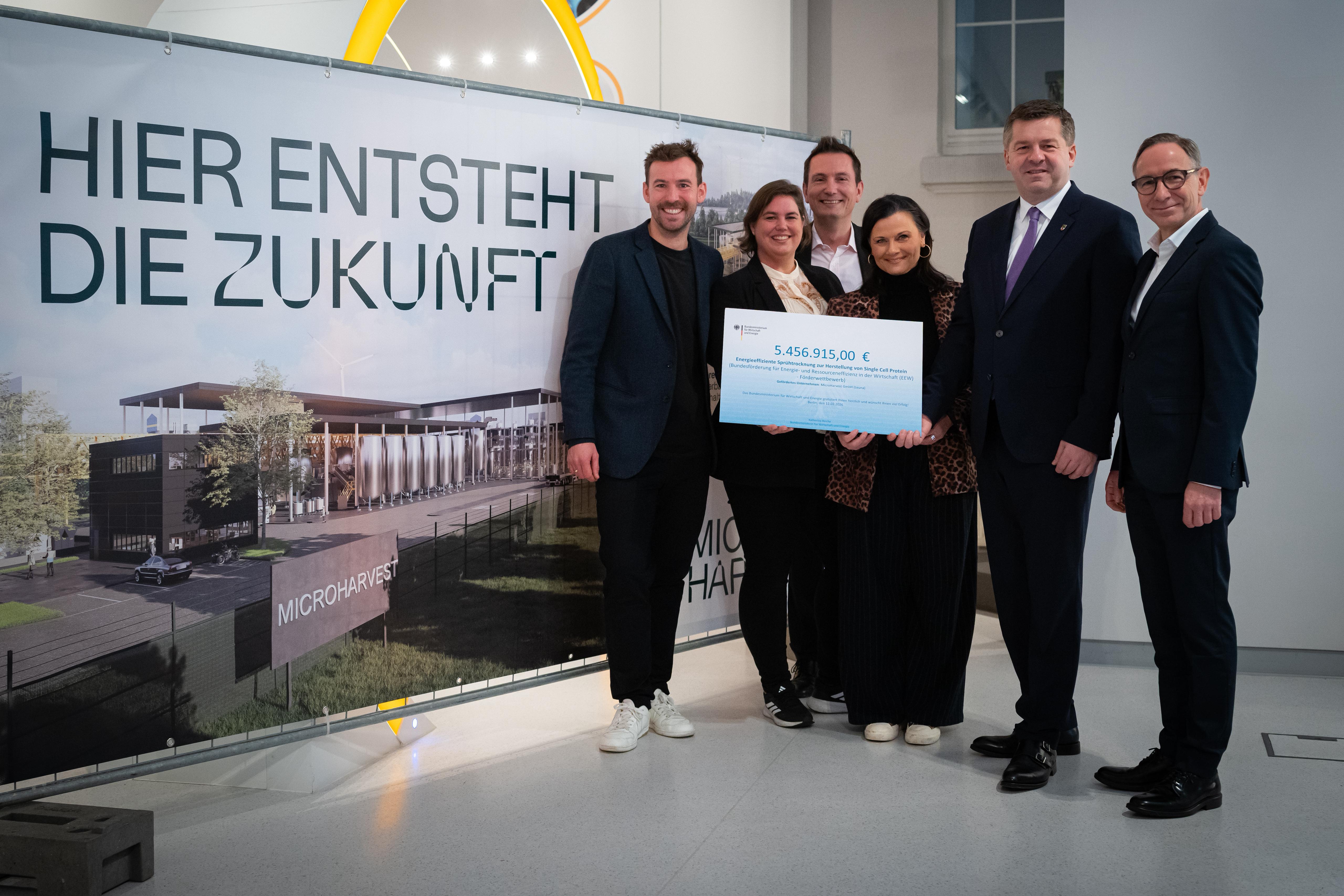
• The company secured up to €5.46 million in German federal funding to support energy- and resource-efficient industrial biomanufacturing.
The Hamburg-based biotechnology company plans to invest a mid-range double-digit million euro sum in the region, creating approximately 25 direct jobs as it builds a facility designed to reach 15,000 tons of annual production capacity.
MicroHarvest has secured an EEW grant of up to €5.46 million under Germany’s Federal Funding Programme for Energy and Resource Efficiency in Industry. The funding is intended to accelerate the scale-up of energy- and resource-efficient industrial biomanufacturing processes.
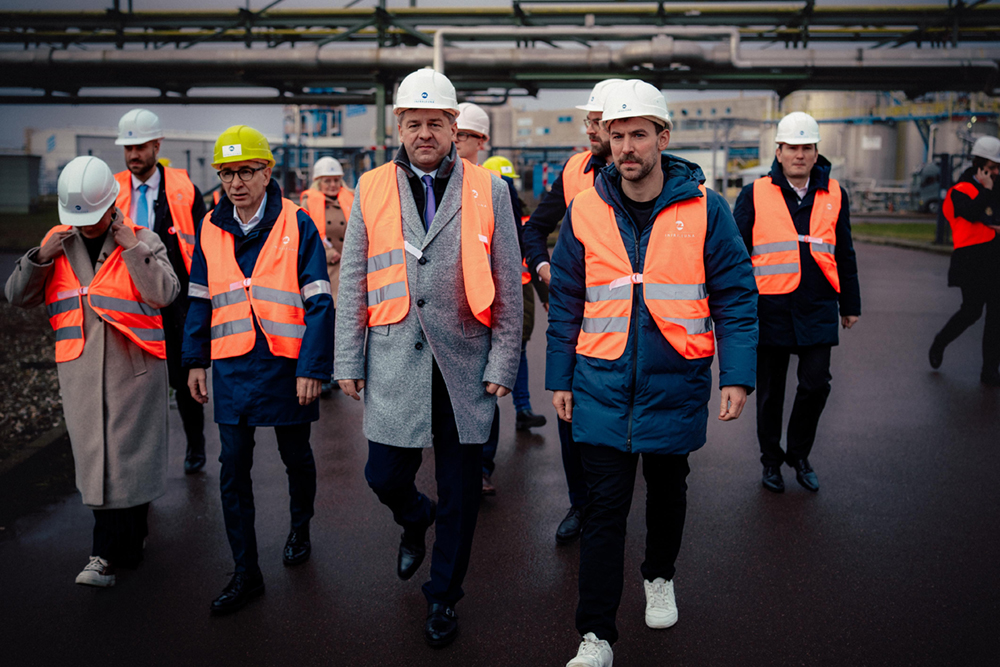
The announcement was marked on 12 February at the Leuna site alongside regional partners and political representatives, including Gitta Connemann, Parliamentary State Secretary at the Federal Ministry for Economic Affairs and Energy, and Sven Schulze, Minister-President of Saxony-Anhalt.
For MicroHarvest, the Leuna decision represents more than a real-estate choice. It signals a shift from proving fermentation technology at pilot scale to embedding it within established industrial infrastructure.
From 24-hour fermentation to industrial scale
MicroHarvest’s platform is built on biomass fermentation using fast-growing bacterial strains fed on agricultural side streams, primarily molasses. The company produces microbial protein ingredients in 24 hours, operating year-round and independent of soil, seasons, or climate variability.
In a December 2025 interview with Protein Production Technology International, Co-Founder & CEO Katelijne Bekers described the company’s approach: “At MicroHarvest, we deliver Better Protein: Sustainable. Nutritious. Scalable. By harnessing microorganisms and natural fermentation, our innovative technology produces high-quality protein in just 24 hours, year-round, and independent of soil, seasons, or climate.”
Bekers emphasized the industrial logic behind the model. “MicroHarvest produces protein in 24 hours, far faster than traditional sources like soy. Its bacteria double every 24 minutes, enabling continuous, low-cost production in standard bioreactors, ensuring easy industrial scaling,” she told PPTI.
The Leuna plant is intended to translate that laboratory and pilot-scale capability into a fully industrial production system.
Building on Lisbon’s rapid pilot deployment
The decision to invest in Leuna builds on MicroHarvest’s earlier milestone in Lisbon, where the company opened its commercial pilot plant in November 2023.
“One thing people are often surprised to learn is that we built our commercial pilot plant in Lisbon in just six months, something almost unheard of in industrial biotech,” Bekers said in the December interview. “That pilot became the springboard for our rapid scale-up to commercial production within four years, a pace most thought impossible in fermentation.”
The Lisbon facility enabled the company to move from laboratory-scale experimentation to prototype runs and production-relevant volumes, effectively de-risking key elements of its scale-up pathway. Leuna now represents the next phase: scaling from pilot to a 15,000-ton industrial footprint.
The company indicated an indicative timeline of approximately two years to begin production at the new facility.
.jpg)
Why Leuna
MicroHarvest reviewed around 40 potential sites across Europe before selecting Industriepark Leuna. The site offers established industrial infrastructure, access to utilities, proximity to agri-processing networks, and a growing biotechnology cluster.
“Our goal was to find a site where we can focus on our core biotechnology operations rather than rebuilding industrial basics from scratch,” said Jonathan Roberz, Co-Founder & COO of MicroHarvest. “Leuna stood out clearly. The infrastructure quality, the utilities, and the surrounding agri-processing network create the conditions for rapid execution - exactly what you need when you’re scaling a fermentation-based production system.”
The company plans to source agri-food side streams locally, reinforcing a short supply chain and supporting regional supply resilience.
Bekers has consistently linked MicroHarvest’s production model to broader questions of food security and supply chain stability. “Because it can be produced locally, independent of soil, climate, or seasons, it also strengthens food security and builds resilient supply chains,” she told PPTI.
In that sense, Leuna is positioned not only as an industrial site but as part of a decentralized, regionally anchored protein strategy.
Environmental and resource metrics
MicroHarvest has positioned its technology as a response to mounting environmental pressures associated with conventional protein production. According to the company, its fermentation process emits 98% less CO2 and requires 85% less land and 94% less water than animal protein production.
The Leuna investment, supported by federal efficiency funding, underscores that energy and resource intensity remain central to the industrial case for fermentation.
The EEW grant is designed to support projects that improve energy and resource efficiency in industrial operations. For MicroHarvest, the funding provides additional validation of its production model as it moves toward large-scale deployment.
Commercial positioning and market entry
MicroHarvest has focused initially on aquaculture and pet food markets, adopting what Bekers described in December as a pragmatic market entry strategy.
Rather than competing immediately with commodity protein markets, the company has targeted higher-value applications where functionality and sustainability can command a premium and where regulatory pathways are clearer.
In 2025, MicroHarvest launched microbial protein-based pet treats with THE PACK in the UK and VEGDOG in Germany, demonstrating early commercial traction. The company has also progressed regulatory registrations across multiple markets and secured EU Feed Material List registration and GMP+ certification.
In the December interview, Bekers acknowledged the dual challenge of scaling biotechnology while maintaining commercial viability. “Our hardest challenge has been navigating the dual complexities of scaling a biotech process quickly while maintaining commercial viability in a capital- and regulation-intensive sector,” she said.
The Leuna plant is intended to address both sides of that equation: scaling production capacity while aligning with visible customer demand.
MicroHarvest stated that it has strong demand visibility aligned with the planned 15-kiloton annual capacity and is advancing discussions with multinational customers and mid-sized manufacturers.

Industrializing microbial protein
With the Leuna decision, MicroHarvest joins a growing cohort of European fermentation companies moving from pilot to industrial scale. The focus is no longer solely on strain development or laboratory yields but on integration into established industrial parks with access to utilities, feedstock networks, and regulatory support.
Leuna, historically associated with chemicals and heavy industry, has increasingly attracted biotechnology and sustainable manufacturing projects. MicroHarvest’s arrival reflects that transition toward bio-based production pathways.
If successful, the 15,000-ton facility would provide a blueprint for future decentralized production sites, leveraging regional side streams to supply regional markets.
For MicroHarvest, the move represents a shift from technological validation to industrial execution — a stage where capital intensity, operational discipline, and supply chain integration become as critical as microbial growth rates.
By anchoring its next phase in Leuna, supported by federal funding and existing industrial infrastructure, the company is betting that microbial protein can move beyond pilot novelty into repeatable, industrial-scale production within Europe’s evolving protein landscape.

Join Us At One Of Our Upcoming Events

If you have any questions or would like to get in touch with us, please email info@futureofproteinproduction.com