


Millow bets on fermentation as it moves from lab to kitchen

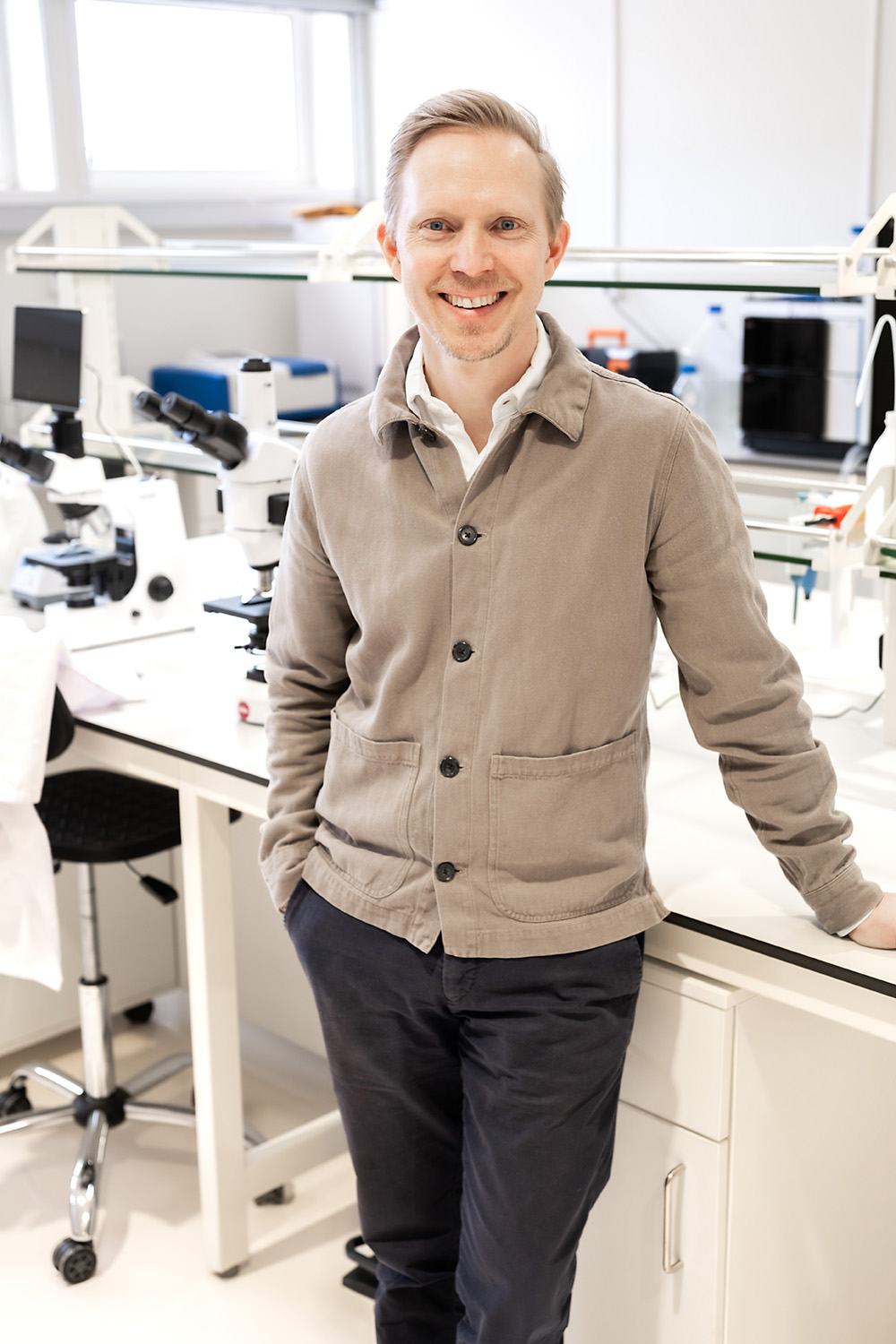
Swedish food-tech company Millow is preparing to step out of the laboratory and into commercial kitchens. The Gothenburg-based company, which produces fermented protein from Nordic oats and mycelium, has appointed Fredrik Öhrn as CEO while its scientific founder, Professor Mohammad J. Taherzadeh, is leaving academia to focus entirely on the business. The twin leadership moves come as the company prepares for its first commercial launch into Sweden’s food-service sector in summer 2026.
• Millow appointed Fredrik Öhrn as Chief Executive Officer as the Swedish fermentation startup prepared to enter the food-service market with its oat and mycelium-based protein ingredient.
• Scientific founder Prof. Mohammad J. Taherzadeh left the University of Borås to join the company full-time and accelerate commercialization of Millow’s patented dry-state fermentation platform.
• The company confirmed plans to launch in Sweden’s food-service sector from summer 2026, producing clean-label fermented protein from oats and mycelium in under 24 hours.
For Öhrn, who spent more than two decades leading international operations at companies including Sodexo and American Express, the decision to join a scale-up was driven by a rare combination of technology maturity and global relevance.
“What convinced me about Millow is that this isn’t another early-stage concept,” he tells Protein Production Technology International in an exclusive interview. “It’s a technology platform that has been developed over more than 20 years and is now ready for industrial scaling. The world needs better ways to produce nutritious food with a lower environmental footprint. If you combine that mission with a technology that actually works and a product chefs enjoy cooking with, it becomes a rare opportunity. For me, helping transform that into a global business is simply too exciting to pass up.”
The company’s technology centers on a patented dry-state fermentation process in which mycelium grows through oat-based raw materials to create a fibrous, protein-rich ingredient in less than 24 hours. Unlike many alternative protein products, Millow emphasizes minimal processing and short ingredient lists.
That approach, the company argues, allows the fermentation process itself to generate the structure, taste, and nutritional profile that food developers typically attempt to recreate through additional processing.

From science to commercial leadership
Millow’s leadership reshuffle reflects a deliberate shift from research-led development toward market execution.
Öhrn arrives with a track record of scaling businesses across international markets. At Sodexo, he served as regional CEO of Nordic operations and helped lead a transformation program spanning 30 countries. Earlier, at American Express, he received the company’s Global Presidents Award for performance across the Nordics, Benelux, and Germany.
But despite the commercial pedigree, the new CEO says his decision to join Millow hinged less on corporate growth metrics and more on whether the technology could genuinely work in a real food environment.
“In food, technical proof is not enough,” he explains. “The real test is whether the product works in a kitchen and whether it makes sense economically. What convinced me was seeing and hearing chefs cook with it. They immediately understand the versatility, the texture, and the neutral taste. It behaves like an ingredient rather than a heavily processed substitute.”
He adds that production efficiency was another decisive factor.
“The production process is fast and resource-efficient, which means it has the potential to reach competitive price points at scale. That combination – chef acceptance and scalable economics – is what made me confident this is commercially viable.”
The scientist steps in
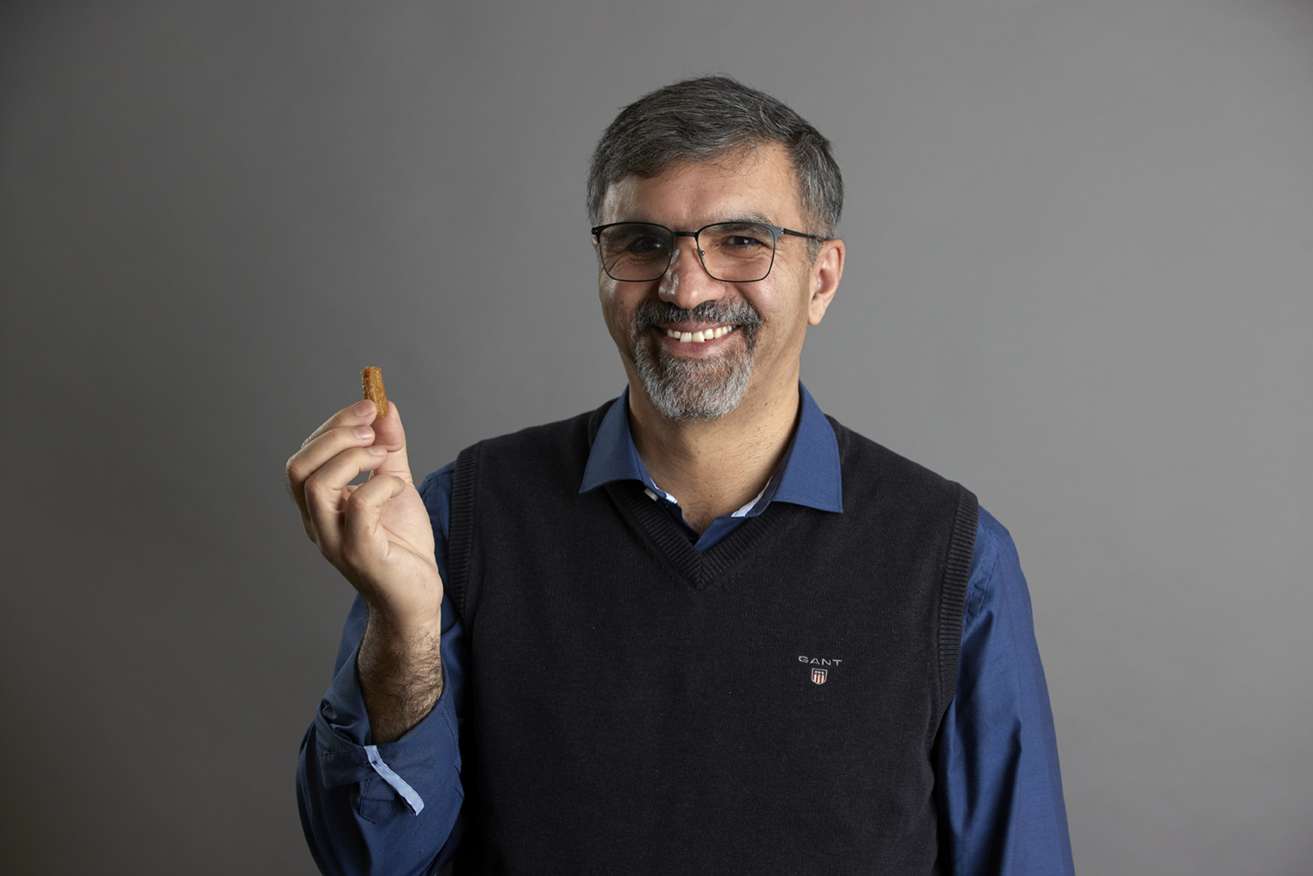
Alongside the CEO appointment, Millow confirmed that Professor Mohammad J. Taherzadeh will leave his academic role at the University of Borås to join the company full-time as Chief Scientific Officer.
Taherzadeh has worked on fermentation and mycelium science since 1999 and ranks among the top 2% of researchers globally in his field, according to Stanford University rankings. He is the principal inventor behind the company’s dry-state fermentation platform.
His decision to move from academia into a commercial environment reflects a desire to see research translated into real-world applications at speed.
“At university, we just produce publications or some products that take years to reach market,” he says. “However, our research at Millow reaches customers in just a few days, which makes the work very exciting and gives a lot of energy to proceed fast.”
That closeness between laboratory and production is central to the company’s operating model. Millow has built its fermentation laboratory directly alongside its production facility, allowing scientists and engineers to test, refine, and implement changes quickly.
“Yes, we have everything in one place and integrated,” Taherzadeh explains. “It is very critical for such processes that are new.”
A different fermentation approach
The scientific foundation of Millow’s process lies in its dry-state fermentation system, which differs significantly from traditional fermentation setups.
“In traditional fermentation, we have a rule of thumb of 1:100 product:water,” Taherzadeh explains. “That means a lot of water is consumed and a lot of wastewater is produced for each kilogram of product.”
Millow’s method, he notes, dramatically reduces that requirement.
“In our dry fermentation, we just give water to fungi to avoid being thirsty and there is no wastewater. It heavily saves water, energy, and emissions out of the process, which is reflected in CAPEX and costs.”
The process also produces a structured protein ingredient rapidly. While Taherzadeh declined to reveal any specifics behind achieving that structure in less than a day, he notes the development process took years.
A defining characteristic of the product is that it avoids the binders and additives commonly used in plant-based meat alternatives to create texture.
“It is the magic of fungi,” Taherzadeh says. “Our fungi function is practically ‘all in one’ in this process.”

Clean label beyond marketing
Millow describes its product as a clean-label fermented protein ingredient made primarily from oats and mycelium. While the phrase “clean label” is widely used across the food industry, Öhrn believes its meaning has often become diluted.
“‘Clean label’ has become more of a marketing term in many cases,” he says. “For us it simply means very few ingredients and minimal processing.”
He emphasizes that the fermentation process itself creates both the texture and nutritional profile of the product.
“There is no long list of additives, binders, or flavor enhancers,” he explains. “In that sense, it’s closer to traditional fermented foods than to highly engineered meat substitutes.”
The resulting ingredient is designed to behave as a flexible cooking component rather than a finished meat analog.
Chefs, Öhrn continues, are responding to that difference.
“They want three basic things: great taste, clean ingredients, and reliable supply at a realistic price. Many existing alternatives struggle with one or more of those. Some are highly processed, others are expensive, and some simply don’t behave well in professional kitchens.”
Millow’s fermented oat-mycelium ingredient, he says, addresses those concerns by combining natural structure, neutral flavor, and scalable production.

Why food-service comes first
The company’s first commercial step will be into food-service rather than retail.
Öhrn argues that professional kitchens offer a faster route to market adoption.
“Food-service is where food innovation really happens,” he says. “Chefs are incredibly creative and open to new ingredients if they deliver on taste, texture, and sustainability.”
Working directly with chefs also allows the company to refine applications and demonstrate versatility in real dishes.
“Instead of convincing millions of consumers one by one in retail, you can work with professional kitchens that serve thousands of meals every day,” he explains. “Once chefs embrace an ingredient, it often naturally finds its way into retail later.”
Millow plans to begin with mince-style and formable formats aimed at large-scale kitchens.
Preparing for launch
Between now and its targeted launch window in summer 2026, the company’s focus will be on operational execution.
“The focus is execution,” Öhrn says. “We are scaling production capacity, building strong food-service partnerships, and finalizing our go-to-market together with distributors and restaurant groups.”
At the same time, the company is working closely with chefs to ensure the ingredient integrates smoothly into existing kitchen workflows.
“The ultimate goal is that when we launch, we supply a product that kitchens already know how to use and want to buy, rather than introducing a new concept.”
Production will take place at Millow’s facility in Stenkullen outside Gothenburg, located in a repurposed former LEGO manufacturing hall. The site will house both commercial production lines and the company’s fermentation laboratory, supported by funding from the European Innovation Council’s EIC Accelerator program.
Scaling economics
Economic scalability remains one of the central challenges facing the alternative protein sector, particularly for fermentation-based technologies that require specialized infrastructure.
Öhrn believes Millow’s process offers advantages in that regard.
“Two things give me confidence: process efficiency and ingredient simplicity,” he says. “Our fermentation process is fast and resource-efficient, which means production cycles are short compared to many other alternative proteins.”
He also notes that the product emerges directly from fermentation rather than undergoing extensive downstream processing.
“That combination reduces complexity and improves the potential for competitive pricing when scaling production.”
From the scientific side, Taherzadeh acknowledges that scaling fermentation systems is rarely straightforward.
“Oh, many things keep me awake at night,” he says. “I get a lot of ideas at midnight that are checked and implemented in the following days.”
A broader protein shift
Millow enters a rapidly growing field of companies developing mycelium-based proteins, including players scaling both fermentation-derived ingredients and whole-cut alternatives.
Both the scientific and commercial leadership at the company see the sector not as a zero-sum competition but as an emerging category that requires multiple players to gain traction.
“Millow has a very strong backbone in all the aspects of entering the market, from basic science to commercial production and branding,” Taherzadeh says. “We believe there is a big market, so we need many companies with various products to attract customers and end users.”
Öhrn agrees that the opportunity lies not simply in replacing meat but in establishing new kinds of fermented food ingredients.
“Our fermentation combines mycelium with plant-based raw materials, creating a naturally structured food ingredient with strong nutrition and very few ingredients,” he says.
If the company succeeds at scale, he believes the conversation around protein alternatives could evolve significantly.
“The shift will be from ‘meat alternatives’ to entirely new fermented food ingredients that naturally deliver protein, fibre, and a broader nutrition platform.”
For Taherzadeh, the ambition is even broader.
“Millow will be an attractive choice of food for every day and every body,” he says, “regardless if they love meat or are fully vegetarian or vegan.”
Three years from now, Öhrn says the true test will be whether the company has moved beyond startup status and into the everyday routines of professional kitchens.
“Success for us means that Millow is no longer seen as a niche alternative protein company,” he says. “Instead, it will be recognised as a new category of nutritious fermented food ingredients used by chefs, food-service operators, and food manufacturers across multiple markets.”
And if the company achieves that goal, he adds, the transformation from laboratory breakthrough to international food business will have been completed.
“If in three years Millow is regularly appearing on menus and in food products across Europe – and scaling production to meet that demand – then we will have successfully made the transition from science-led startup to a real international food company.”

Join Us At One Of Our Upcoming Events

If you have any questions or would like to get in touch with us, please email info@futureofproteinproduction.com


