
New BPI Score ranks tofu as ‘best’ protein source as plant proteins dominate top tier

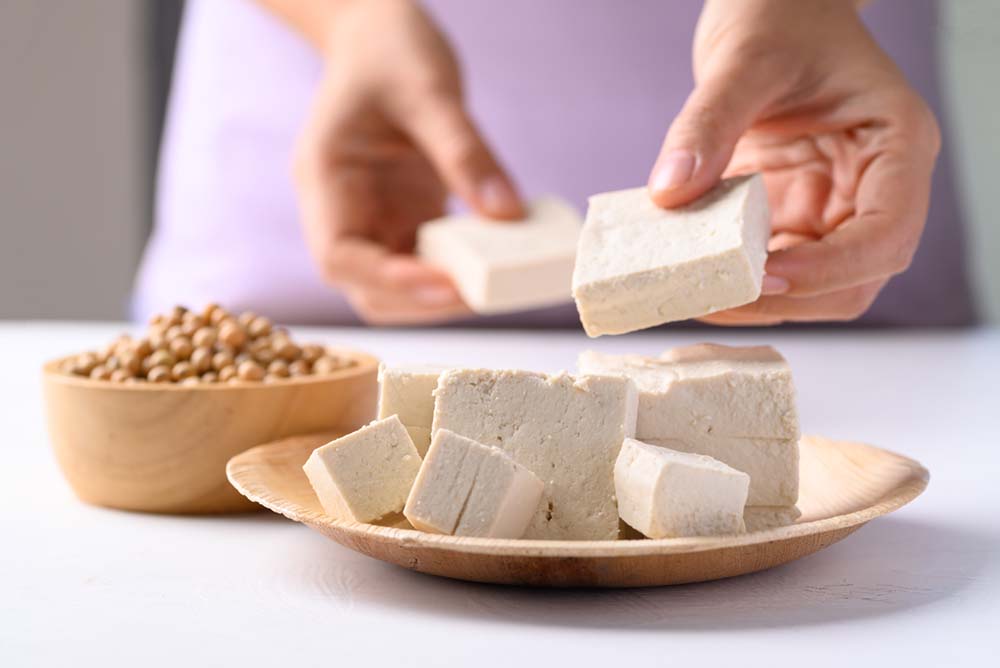
A new multidimensional scoring system designed to assess the health, environmental and accessibility credentials of protein sources has ranked tofu highest among 20 foods, with plant-based proteins occupying every position in the top quintile.
• The first BPI Score assessed 20 high-protein foods using environmental measures including emissions, land and water use alongside health, affordability and availability criteria.
• Tofu achieved the highest overall score with 36 points, while cheddar ranked last with 13, and plant proteins filled the entire top quintile.
• Creator Chris Macdonald acknowledged limitations in the first methodology and said a second version would incorporate additional considerations and a wider grading system.
The BPI Score was introduced by Chris Macdonald of the University of Cambridge in a perspective paper published in Frontiers in Sustainable Food Systems on 29 July.
Macdonald, who founded the Better Protein Institute (BPI), developed the framework in response to what he described as the limitations of existing food rating systems that typically concentrate on individual dimensions such as nutritional composition or carbon footprint.
Rather than proposing another front-of-pack label, the project aims to develop a broader method for comparing protein sources and informing discussions among consumers, policymakers and organizations.
The first version divided its assessment into two categories – Planet and People – and compared the results on the basis of 100g of protein rather than 100g of food.
For the Planet Score, Macdonald used data from Clark et al. covering greenhouse gas emissions, water pollution, land use and consumptive blue water use.
Large differences emerged between some of the foods.
Tofu was associated with 0.61kg CO2-equivalent of greenhouse gas emissions per 100g of protein, compared with 64.19kg for beef. Its land requirement was 2.16m² per 100g of protein, against 211.38m² for beef.
Water use produced a less straightforward picture. Nuts recorded the highest figure at 2,239.1 liters per 100g of protein, while several plant proteins were among the lowest users, including tofu at 14.23 liters, sunflower seeds at 6.68 liters and beans at 0.07 liters.
Each of the four environmental measures was ranked using a five-point scale from zero to four, with products in the best-performing 20% receiving four points and those in the bottom 20% receiving zero.
Tofu collected the maximum Planet Score of 16. Beef finished at the bottom with one point.
Tofu, chia seeds, beans and quinoa made up the highest-scoring quintile for environmental performance. The lowest quintile comprised mozzarella, pork, cheddar and beef.
The People Score combined nutritional and accessibility measures.
Rather than attempting to measure every nutrient contained in each food, Macdonald focused on potentially harmful components associated with the protein package: sodium, saturated fat and cholesterol. The assessment also considered whether each food was a complete protein containing all nine essential amino acids.
Here too, results varied considerably.
Beans contained 11.11mg sodium per 100g of protein, compared with 2,549.55mg for mozzarella. Saturated fat showed less of a plant-versus-animal divide: cod recorded 0.47g per 100g protein and beans 1.11g, while Brazil nuts reached 78.32g and cheddar 84.74g.
The complete-protein measure favored animal proteins, all of which qualified under the methodology. Most of the plant proteins did not, although tofu was among those classified as complete.
Accessibility was assessed through affordability and supermarket availability.
Prices were taken from Aldi in the UK and converted to cost per 100g of protein. Lentils emerged as the cheapest of the 20 products, while quinoa was the most expensive, demonstrating that the price results did not follow the clearer plant-animal division seen in several environmental measures.
All 20 products were available in UK supermarkets and therefore received the maximum availability score.
Combining the health and accessibility measures gave tofu the highest People Score at 20 points, while lamb ranked last with 10. Tofu, beans, lentils and chia seeds occupied the top quintile; mozzarella, cheddar, eggs and lamb comprised the bottom quintile.
When the People and Planet scores were combined, tofu finished first overall with 36 points and cheddar last with 13.
The four highest-ranked products – tofu, chia seeds, beans and quinoa – were all plant-based. The four lowest – mozzarella, lamb, beef and cheddar – were all animal-based.
Macdonald stressed that the first version has substantial limitations and described it as a starting point that can be developed through external critique.
Among them is the scoring system itself. Dividing products into quintiles on a zero-to-four scale can obscure the size of differences between foods, particularly where extreme outliers exist.
Accessibility is another constraint. Prices were collected from a single UK supermarket and availability was assessed solely in the UK, making the measures unsuitable for direct application across different markets.
Macdonald said future versions would need regional datasets or purchasing-power measures to account for differences in subsidies, tariffs, income and food access.
Several factors were also excluded altogether from V1, including animal welfare, antimicrobial resistance, zoonotic disease risk and the opportunity cost associated with agricultural land.
The paper argued that these could alter the relative scores of animal and plant proteins if incorporated into subsequent versions, although Macdonald acknowledged that some would be considerably harder to quantify.
Work has already started on V2, which is expected to introduce a wider grading system and incorporate additional considerations.
The BPI Score therefore remains an evolving methodology rather than a definitive ranking of protein quality. Its first results nevertheless illustrate how dramatically the answer to the question of the “best” protein can change when environmental impact, health and accessibility are assessed together rather than separately.
If you liked this, check these out...
• Finland’s Nutrition Guidelines drive surge in tofu and legume sales, industry responds to rapid demand shift
• University of Leicester launches £1.95 million trial to study health effects of vegetarian and vegan diets
• Harvard study challenges focus on food processing as key measure of healthy eating

Join Us At One Of Our Upcoming Events

If you have any questions or would like to get in touch with us, please email info@futureofproteinproduction.com


%20-%20Photo%20Credit%20Matt%20Qu%C3%A9r%C3%A9e.jpg)

