Rebellyous Foods' Christie Lagally Bradburn: Nine years in pursuit of alt-meat price parity

Nine years after founding Rebellyous Foods, Christie Lagally Bradburn reflects on the hard lessons of chasing price parity, and why better production technology is only part of the answer
I will never forget the day I raised enough money to start Seattle Food Tech, Inc, now known as Rebellyous Foods. As a solo founder, VC funding was critical for the birth of my start-up. It was Saturday afternoon and, after months of investor meetings, a final commitment brought the round to a tipping point, and Rebellyous Foods was officially funded.
It was another half-year before our first employee was hired, around the time we were accepted into Y Combinator, and several more months before we started selling products and performing R&D on plant-based meat production. It was a slow start by some investors' metrics, but I was intentionally preserving cash and "firing bullets instead of cannonballs", as I had learned from Jim Collins and his co-authors of Built to Last.
While it defies the conventional wisdom of Silicon Valley, burning a lot of cash up front is not the right strategy to solve the entrenched problem of persistently high-priced plant-based meat in order to address the stubborn problem of animal factory farming. So in those early days, we plodded on slowly but surely, putting one foot in front of the other.
Prices won't come down unless we address the production problems first, and then scale
It's now been nine long years since Rebellyous’ founding. Well over 100 employees have come and gone, ranging from the highly effective to the criminally fraudulent. We survived the COVID-19 pandemic, the era of great resignation and quiet quitting, labor shortages, record inflation, stagflation, tariff wars, diesel price spikes and now our own federal government starving our main customers: public schools. We've been the victims of cybercrimes perpetrated through our own vendors, a stalker threatening to murder us, and harassment meant to intimidate our women-led executive team.
Our very survival was never predicted.
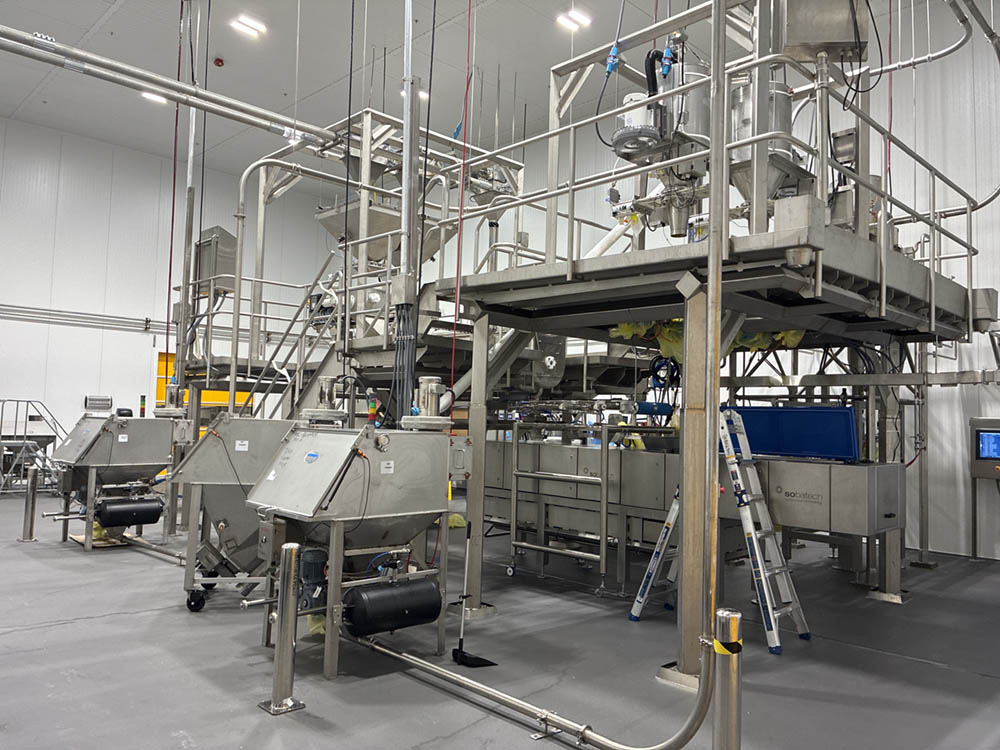
Further, as a food company operating in the real world, infrastructure was a paramount challenge. We've produced (or tried to produce) products out of seven different facilities. In that time, two co-manufacturers went bankrupt, one facility was flooded, and another was taken over by private equity, never to be heard from again. But we persisted in growing, building and, most importantly, innovating in order to identify and remedy why it's so hard to replace meat at price parity and what we, as innovators and company builders, can do about it.
Scale alone won’t solve it
How far did we get? For the entirety of Rebellyous' history, the enduring wisdom was that once alt-meat scales, the price will come down. At Rebellyous, we knew this wasn’t accurate, because the way plant-based meat is made, manually, with a lot of expensive equipment and human labor, makes it challenging to produce cost-effectively. Prices won't come down unless we address the production problems first, and then scale.
Our thesis has proved correct. Lower prices for alt-meat aren't possible without advances in production technology. Scale matters, but not if you are scaling the wrong production processes.
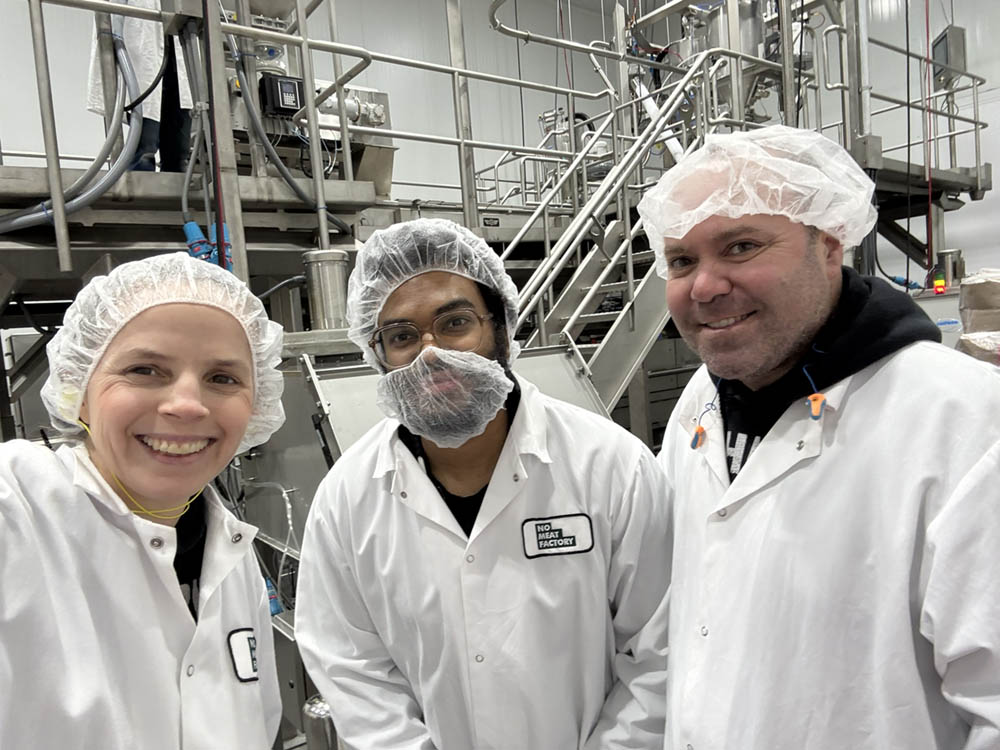
We've seen several high-profile examples of this paradox from large-scale facility shutdowns, including JBS in Aurora, Colorado, which made Ozo, and the Meati production plant in Thornton, Colorado. More recently, the hyper-centralized Washington-based No Meat Factory shut down after winning the co-manufacturing business of some of the biggest brands in the industry.
Investing capital into a large facility is premature without optimized production technology to back it up. Hence, Rebellyous spent these nine years building new production equipment, the Mock 3, and putting it into commercial use to reach cost parity.
But there are a few other pieces to this complex puzzle.
Price-parity alone is insufficient and it's overdue that we admit this
Parity isn’t enough
First, research shows that plant-based meat needs to be less expensive than meat to convince the largest portion of consumers to make the switch. Price parity alone is insufficient, and it's overdue that we admit this. Price advantage is fundamental for consumers to overcome the nostalgia of meat and the challenges they still face accessing alt-meat. Call this a "choice cost", but alt-meat companies require a margin to pay for this customer transition, while also remaining below the price of animal meat.
So where does that margin come from? Production innovation is all we've got left.
The missing ingredient is trust
Trust should also be considered as a necessary ingredient in plant-based meat. It's often said that consumers want "price, taste and convenience", but this misses one key component: trust. Despite animal and human rights abuses rife in animal agriculture, not to mention that processed meat is listed as a Group 1 carcinogen by the WHO, people trust meat as a reliable and regular source of protein. This isn't just based on product quality, but on accessibility, including price and availability, attributes that have been unintentionally missing from the plant-based meat industry for decades.
Finally, the quest for alt-meat price parity needs more help than the market can give, but not the type of help we are offered right now. Just as the solar industry got help from advocacy groups, government and industry trade associations, so should the alt-meat industry. Solar, which now makes up 12% of US energy supply and recently surpassed coal as the third-largest energy source in the USA, had nearly 100 years of advocate support in passing laws, providing low-cost infrastructure loans, and funding basic R&D.
While alt-meat has some advocacy groups, they are not focusing on the right issues to change the economic outlook for our industry's commercial success. For example, it is not helpful to companies for advocacy groups to do product development without any mechanism to test products in the market. Likewise, surveys and taste tests are of no use to companies at the front lines of this fight for the consumer palate, because the only thing that matters is what the consumer will actually buy, not just say they will buy.
Similarly, I have been unimpressed by the plethora of white papers from advocacy groups, which have provided little concrete strategic direction (and sometimes misdirection) to alt-protein companies trying to feed actual people with actual products. Winning in a real-world market is not achieved by writing white papers based on isolated introspection. Winning in the market is achieved by being in the market and listening to your customers to guide you.
Instead, we need advocacy groups to direct funding to alt-meat R&D health studies to assure the public of the health benefits of replacing meat. Any and all efforts directed toward more friendly government programs via lobbying, legislation and/or candidate support for alt-meat are worth our time and donor money. Advocacy programs working to teach culinary or product solutions, including meat replacement, are also highly effective. These efforts augment the work of alt-protein companies.
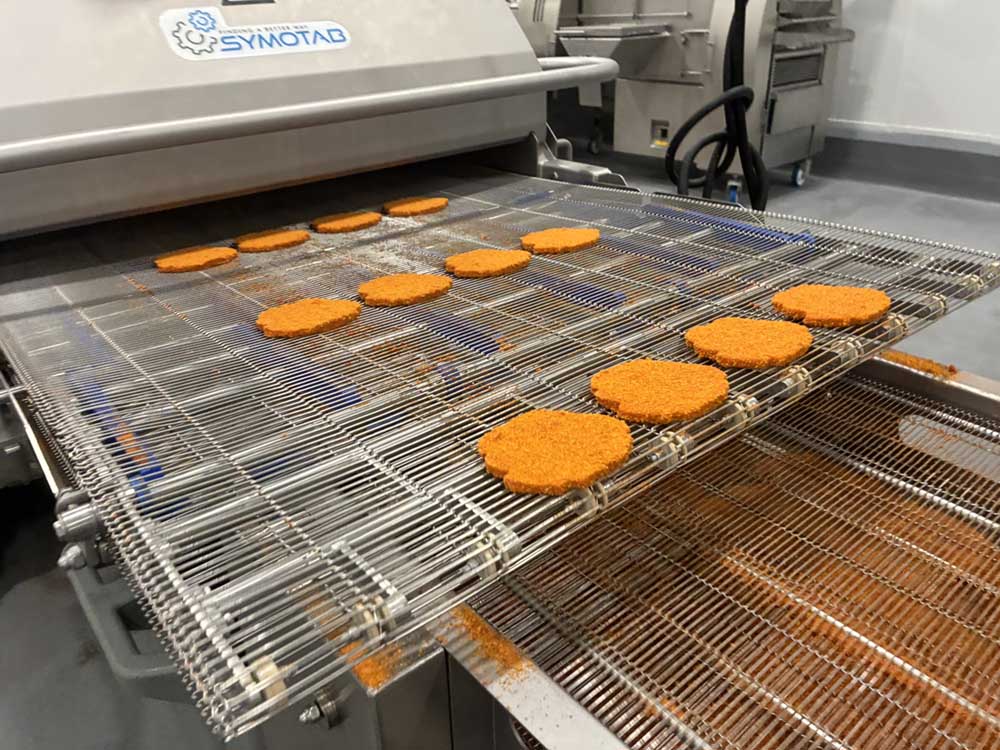
So how close are we to price parity in actuality? That depends on what product we’re discussing, where it's sold, and which consumer is its target. Our successes and failures serving customers are all over the map. Plus, the diversity of meat products to replace is enormous. While we can get to price parity for chicken nuggets for some of the people some of the time, this is just the tip of the iceberg.
Winning in the market is achieved by being in the market and listening to your customers to guide you
Too few people, too big a problem
Which brings me to the biggest barrier to price parity in alt-meat: there aren't enough people working on this problem.
Companies are too small and over-taxed, advocacy groups aren't ideally focused, and there isn't enough research funding for alt-meat. Aligned AI is not the answer because it is going to take flesh-and-blood humans to replace flesh-and-blood meat. To put it even more bluntly: it's getting lonely out here. And if those who care about this issue, whether because of climate change, factory farming, food security or human health, remain seated on the sidelines hoping for the best over a beer and veggie burger, I can't be the one to tell you everything will be okay.
We need you in this effort to bring more price-parity, climate-friendly meat alternatives to the market, and we need you right now. Hope to see you soon on the front lines of replacing meat for a stronger, humane, and climate-resilient food system.
Christie Lagally Bradburn is Founder & CEO of Rebellyous Foods, a Seattle-based food technology company developing plant-based meat and the production technology needed to manufacture it at scale. An engineer by training, she founded the company in 2017 with a focus on reducing the cost of plant-based meat through advances in manufacturing and process technology

Join Us At One Of Our Upcoming Events

If you have any questions or would like to get in touch with us, please email info@futureofproteinproduction.com

.jpg)
.jpg)