

Novel food testing must start on day one, PPTI webinar panel warns

Alternative protein companies that leave testing, characterization, and regulatory planning until the end of product development risk costly delays, failed submissions, and missed commercialization opportunities, according to experts speaking during Becoming the Go-To Lab for Novel Foods: A Guide for Contract Testing Labs & Manufacturers, a webinar hosted by Protein Production Technology International in partnership with Merck Life Science on May 28, 2026.
• Industry experts said regulatory strategy and analytical testing needed to be integrated into product development from the earliest stages rather than added later.
• Panelists highlighted method validation, product characterization, and understanding novel matrices as some of the biggest challenges facing alternative protein developers.
• Speakers agreed that collaboration between manufacturers, laboratories, regulators, and advisors would be critical as novel food technologies continued to advance.
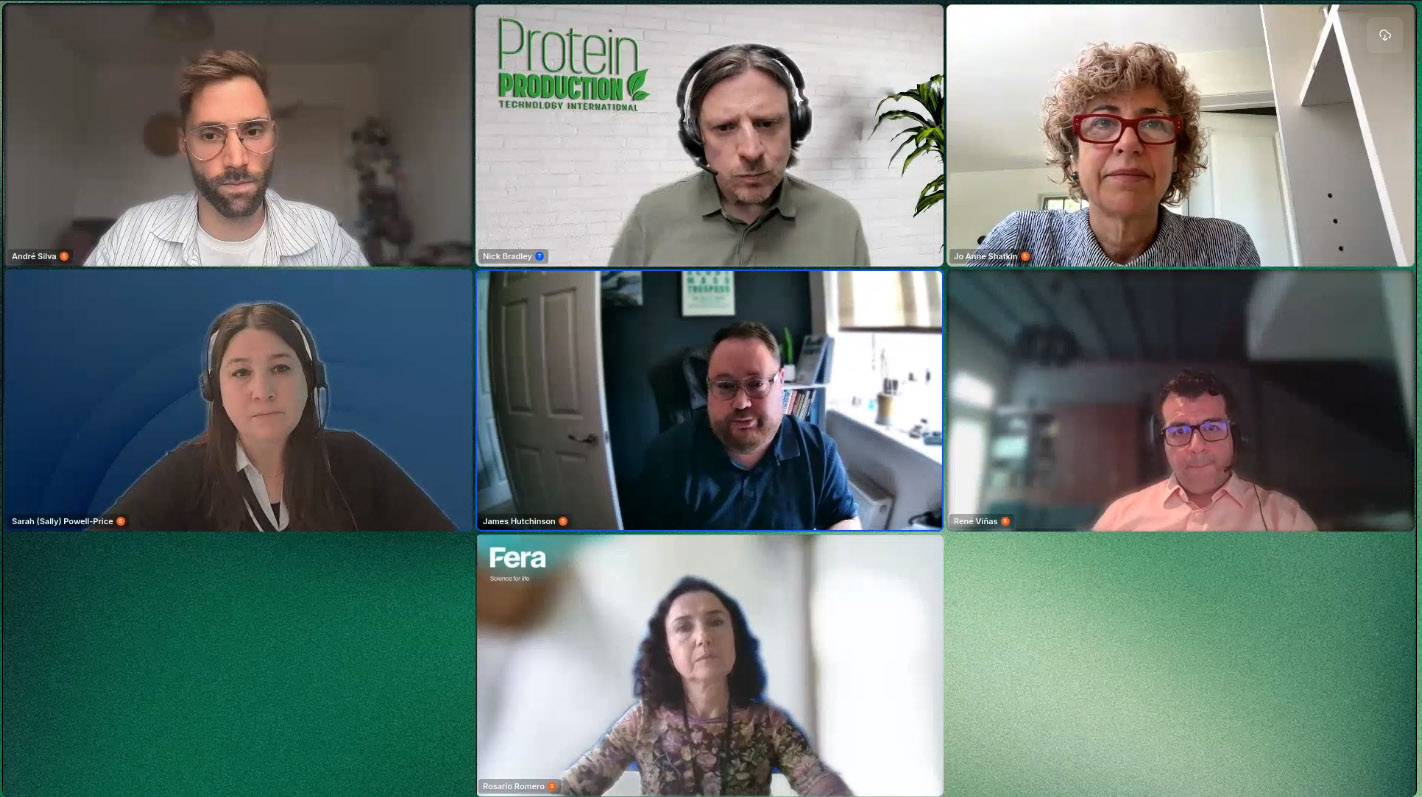
The webinar brought together representatives from Merck Life Science, MilliporeSigma, Vireo Advisors, UPSIDE Foods, Fera Science, and Labcorp to examine the growing importance of analytical testing, toxicology, validation, and regulatory readiness as alternative proteins move closer to large-scale commercialization. The discussion focused on the challenges facing both contract testing laboratories and novel food manufacturers as products become increasingly complex and regulatory scrutiny intensifies.
A central theme throughout the session was that testing and regulatory planning are increasingly becoming strategic functions rather than compliance exercises conducted shortly before market entry.
Sally Powell-Price, regulatory expert in public health and food safety at MilliporeSigma, said companies that treat regulatory planning as a late-stage activity are increasingly finding themselves at a disadvantage.
"The rules are evolving," she said. "We're seeing regulators raise the bar on what they expect from manufacturers of novel foods and novel products."
According to Powell-Price, most regulatory delays stem from poor planning rather than scientific shortcomings. She identified four common causes of delay: starting regulatory strategy too late, underestimating the amount of data required, misaligning testing programs with regulatory expectations, and treating process development separately from product development.
"The companies that are really pulling ahead are the ones that view regulatory strategy as a competitive advantage," she said. "It's not just about having great science. It's about taking a holistic approach and recognizing that science and regulatory readiness need to move forward together."
Several speakers highlighted the challenges posed by novel food matrices, which often cannot be analyzed using methods originally designed for conventional food products.
Jo Anne Shatkin, President & Founder of Vireo Advisors, described a case involving a cultivated meat company attempting to detect a bioactive compound using an existing ELISA test. The effort failed because the novel matrix interfered with detection, ultimately requiring the development and validation of entirely new analytical methods.
She argued that laboratories supporting novel foods must provide more than routine testing services.
"It's not enough to provide a certificate of analysis," she said, noting that laboratories must be able to demonstrate method validation, generate reliable data, and produce results capable of withstanding regulatory scrutiny.
Shatkin also highlighted industry efforts to reduce duplication of work across the cultivated meat sector. She discussed the Safety-Assessed Media Ingredient (SAMI) List initiative, which aims to catalog commonly used cell culture media ingredients and establish standardized safety-assessed use levels that could be used across the industry.
Method validation emerged as one of the most significant challenges facing the sector.
Rosario Romero, Science Lead for Food at Fera Science, said many existing analytical methods were never designed for the novel matrices now being developed by alternative protein companies.
"When methods are validated and standardized, they're validated for specific classes of food because food composition can affect how a method performs," she said. "That's one major bottleneck: not many methods have been validated for the novel matrices we're now interested in."
Romero also pointed to the challenge of identifying unknown compounds within novel foods.
For conventional products, laboratories generally know which contaminants or substances they need to measure. Novel foods often lack established baselines, making comprehensive characterization significantly more difficult.
"What about the things we don't expect to find in these novel products?" Romero asked. "For novel foods, many of those baselines simply don't exist yet."
She said this was particularly relevant for cultivated meat and other biologically complex products, where understanding protein profiles, metabolites, and other chemical constituents remains an ongoing challenge.
Food safety considerations also featured prominently during the discussion.
André Silva of Merck Life Science noted that food recalls and border rejections remain a daily occurrence across global food systems and argued that novel food companies face particularly high stakes when it comes to contamination and product safety.
"For a traditional food company, a recall is a nightmare," he said. "But for a novel food startup or alternative protein manufacturer, a single high-profile contamination event can be fatal."
Silva said analytical requirements are becoming increasingly sophisticated as regulators and manufacturers seek to address both established and emerging risks.
"It's no longer just about detecting Salmonella or Listeria," he said. "We're moving into a much more sophisticated and rapidly evolving landscape."
He highlighted allergens, heavy metals, PFAS, food-contact materials, and production-related inputs as areas requiring growing attention from both manufacturers and laboratories. He also noted that different ingredients create different testing priorities. Seaweed-based ingredients, for example, may require particular focus on heavy metal accumulation, while cultivated meat developers may need to assess residual growth factors and other production inputs.
While testing requirements have become more extensive, René Viñas, Corporate Toxicologist at UPSIDE Foods, argued that regulators have also become more targeted in their expectations.
"When we first started a few years ago, at least from the FDA's perspective, the expectation was that we would measure every single thing that went into our product," he said. "And if you think about it, that's just insane."
Viñas said FDA thinking has evolved toward a more risk-based approach that allows companies to focus resources on ingredients and substances that present higher levels of concern.
However, he cautioned companies against rushing into product characterization before their commercial process has stabilized.
"A lot of startups want to move quickly and submit as soon as possible, but often the product they're characterizing isn't actually the product they're ultimately going to commercialize," he said.
The complexity of regulatory submissions was another recurring topic.
James Hutchinson of Labcorp said laboratories increasingly need to assess not only finished products but also production-related materials such as cell lines, lysates, and supernatants.
"In practical terms, you're often looking at multiple streams of specialized testing, which means multiple sets of analyses and, inevitably, additional costs," he said.
Such work often requires specialist equipment and expertise, making laboratory selection increasingly important for companies developing cultivated meat, precision fermentation ingredients, and other novel food products.
One of the strongest messages to emerge from the webinar was the need for companies to engage testing and regulatory experts far earlier than many currently do.
Viñas argued that relationships with analytical testing and toxicology partners should be established from the earliest stages of company development.
"As soon as you found the company, building relationships with analytical testing and toxicology partners should probably be on your to-do list," he said.
Powell-Price echoed that view, saying analytical methods should be developed and validated as early as possible once companies understand their intended commercial pathway and target markets.
The discussion also touched on the growing use of non-animal testing approaches, often referred to as new approach methodologies (NAMs). While speakers agreed the scientific tools are increasingly available, Hutchinson said broader adoption will depend largely on regulatory acceptance rather than technical capability alone.
Looking ahead, panelists expressed optimism about the future of alternative proteins but acknowledged that regulatory frameworks and testing infrastructure must continue evolving alongside technological innovation.
Several speakers pointed to regulatory sandboxes, collaborative industry initiatives, and greater engagement between companies, laboratories, regulators, and advisors as positive signs that the supporting ecosystem is maturing.
While speakers differed on specific priorities, they broadly agreed that innovation itself is unlikely to be the limiting factor. Instead, the challenge over the coming years will be ensuring that regulatory systems, analytical methods, and testing capacity can keep pace with the technologies entering the market.
For companies developing novel foods today, the message was clear: regulatory readiness, analytical characterization, and testing partnerships are no longer activities that begin shortly before submission. They are becoming core elements of product development from the outset.
For those unable to attend live, a recording of Becoming the Go-To Lab for Novel Foods: A Guide for Contract Testing Labs & Manufacturers is available to watch on demand. Click here

Join Us At One Of Our Upcoming Events

If you have any questions or would like to get in touch with us, please email info@futureofproteinproduction.com


