Plant-based alternatives now cheaper in 53% of Dutch supermarket comparisons

Plant-based alternatives were cheaper per kilogram than the lowest-priced animal equivalent in 53% of comparisons across nine major Dutch supermarkets, according to a new price study from ProVeg Netherlands.
• ProVeg compared 294 products across nine Dutch supermarket chains, finding 53% of plant-based alternatives were cheaper per kilogram than the lowest-priced animal equivalent.
• A six-product plant-based basket was 18% cheaper on average, with consumers saving most at Plus, Dirk and Lidl, where savings reached 30%, 28% and 24%.
• Nine of 14 categories were cheaper on average when choosing plant-based, although yogurt, quark and mayonnaise continued to carry substantial premiums over animal-based products.
The findings suggest that the price gap that has long worked against plant-based meat and dairy alternatives has reversed across a substantial part of the Dutch retail market, particularly in categories dominated by supermarket private labels.
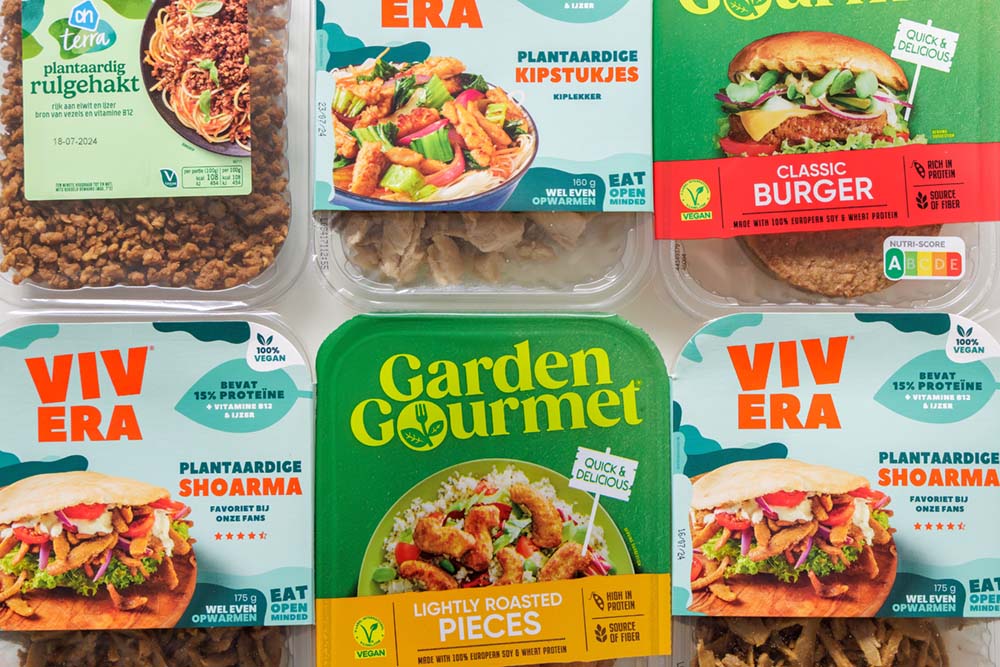
ProVeg Netherlands, working with ProVeg International, compared 294 products – 145 plant-based and 149 animal-based – at Albert Heijn, Aldi, Dirk, Ekoplaza, Hoogvliet, Jumbo, Lidl, Picnic and Plus.
Rather than matching products in similar pack sizes, researchers compared the cheapest plant-based product per kilogram with the cheapest animal-based version available in a pack of up to 1kg. Promotional and discounted prices were excluded.
That methodology meant smaller packs of plant-based products were often competing on price against much larger packs of meat and dairy. At Plus, for example, a 200g pack of Go Vega! plant-based ground product was compared with a 1kg pack of mixed ground meat because each represented the lowest per-kilogram price in its respective category.
Despite that pack-size disadvantage, more than half of the plant-based products examined were cheaper.
ProVeg also created a basic shopping basket containing six categories available at every retailer: ground meat, burgers, butter, milk, yogurt and cheese. The plant-based version was cheaper per kilogram at all nine supermarket chains, producing an average saving of 18%.
“The idea that plant-based products are expensive prevents many people from eating healthier and more sustainably,” said Martine van Haperen, food-industry expert at ProVeg Netherlands. “By pricing plant-based alternatives slightly below the animal-based version, the sustainable choice also becomes the most affordable choice. We see more and more supermarkets consciously pursuing this.”
The biggest saving on the basic basket was recorded at Plus, where the plant-based selection was 30% cheaper than its animal-based equivalent. Dirk followed at 28% and Lidl at 24%, while Ekoplaza recorded the smallest difference at 5%.
The category-level results showed where the economics have changed most sharply. Nine of the 14 plant-based categories analyzed were cheaper on average than their animal-based counterparts.
Plant-based chicken pieces delivered the largest absolute saving at €4.55/kg, followed by burgers at €4.38/kg, butter or margarine at €3.67/kg and ground meat alternatives at €2.29/kg.
Measured as a percentage, butter and margarine led with a 48% saving over the animal-based comparison, followed by burgers at 31%, chicken pieces at 29% and ground meat alternatives at 21%. Plant-based versions of those products were cheaper at almost every supermarket examined.
Private label emerged as a common denominator. Every plant-based product in the study with a lower per-kilogram price than its animal-based counterpart was a supermarket own-brand product.
Across the full sample, 86% of plant-based products and 93% of animal-based products were private label. ProVeg said supermarket pricing strategies had contributed to improved affordability, alongside inflation that had resulted in larger price increases for animal products than plant-based alternatives.
The findings also come against contrasting recent sales performances for branded and private-label plant-based products. Market data cited separately by ProVeg showed sales of lower-priced plant-based private-label products grew 12% in the Netherlands in 2025, while sales of more expensive branded products declined by 12%.
Several Dutch retailers have introduced policies intended to remove the price premium attached to plant-based alternatives. According to ProVeg, Lidl prices plant-based meat alternatives, yogurt, quark, cheese and crème fraîche at or below comparable animal-based products in similar pack formats. Jumbo and Albert Heijn operate comparable policies for private-label meat alternatives.
Those policies do not always translate into the lowest per-kilogram prices, however, particularly where retailers sell animal products in larger value packs.
The picture also changed when ProVeg expanded its basket from six to 14 categories, adding chicken pieces, shawarma, sausage, schnitzel, meatballs, quark, cooking cream and mayonnaise.
Aldi recorded an 18% plant-based price advantage on this expanded measure, followed by Ekoplaza and Lidl, both at 13%. ProVeg cautioned that Aldi had the most limited plant-based assortment among the retailers studied, meaning its basket omitted several categories where plant-based alternatives remain relatively expensive.
Lidl was the only supermarket to rank among the three strongest performers on both the basic and expanded baskets.
At four retailers, meanwhile, the expanded plant-based basket was more expensive than the animal-based selection. The premium reached 25% at Dirk, followed by Hoogvliet at 9%, Jumbo at 8% and Picnic at 4%. Albert Heijn recorded no difference.
Dirk illustrated how sharply the result can change as more categories are included. Its basic plant-based basket was 28% cheaper, the second-largest saving in the study, yet its expanded basket was 25% more expensive. The retailer stocked all 14 categories but did not offer an affordable private-label plant-based version of every product.
Albert Heijn was the only supermarket in the study to offer a private-label plant-based alternative across all 14 categories.
There also remain product categories where plant-based alternatives are far from price parity. Plant-based mayonnaise was 299% more expensive on average, while yogurt carried a 144% premium, quark 121% and sausage 43%.
The cheapest plant-based yogurt was therefore more than twice as expensive on average as the cheapest dairy yogurt, while plant-based mayonnaise cost roughly four times as much as conventional mayonnaise containing egg.
ProVeg linked some of these differences to lower sales volumes and gaps in private-label availability. Albert Heijn, for example, was the only retailer examined that offered private-label plant-based mayonnaise.
By contrast, margarine has a much broader consumer base than many products marketed specifically as plant-based alternatives, allowing greater volumes and potentially lower unit costs.
“If plant-based alternatives are bought infrequently, sales volumes remain low and it becomes more difficult for supermarkets to offer a competitive price,” said Van Haperen. “In addition, plant-based yogurts are still hardly available in one-liter cartons. That makes it more difficult to offer the same low price per kilogram as dairy.”
ProVeg argued that retailers could close the remaining gaps by expanding affordable private-label ranges, offering larger plant-based pack formats and ensuring animal products, including value packs, are not priced below their plant-based counterparts.
“Supermarkets have an important key in their hands to accelerate the protein transition,” Van Haperen said.
She pointed to the Dutch supermarket sector's ambition to reach a sales ratio of 60% plant-based and 40% animal protein by 2030.
“The more accessible and affordable plant-based products are, the easier it is for consumers to actually make that choice,” she added.
ProVeg's dataset included some vegetarian meat alternatives containing egg white as a binder. Hybrid meat and dairy products were generally excluded, except where a retailer offered only hybrid products within a particular category.
If you liked this, check these out...
• Price remains the biggest hurdle for alternative proteins, major Lancet review finds
• GFI Europe: Plant-based food sales grow as price gap narrows across key markets
• Simon Fraser University study finds price alone isn’t driving plant-based protein purchases in Canada and Finland

Join Us At One Of Our Upcoming Events

If you have any questions or would like to get in touch with us, please email info@futureofproteinproduction.com