Plant-based demand has not vanished, it has matured, ProVeg analysis found

Consumer demand for plant-based food had not disappeared, but the market had entered a more disciplined and selective phase following years of rapid expansion, according to a new analysis published by ProVeg International.
• ProVeg analysis showed the plant-based food market was recalibrating after years of hype-driven growth, rather than experiencing a collapse in consumer demand.
• Retail and foodservice data across Europe pointed to consolidation, with stronger performance from familiar, good-value products and mixed menus.
• Flexitarian consumers continued to drive demand, prioritizing taste, price and everyday relevance over novelty or premium positioning.
The plant-based sector had faced a wave of negative headlines over the past two years, from falling sales figures and retailer delistings to the closure of several vegan-only restaurant chains. Taken in isolation, those signals could suggest waning consumer interest. ProVeg argued, however, that a closer reading of the data told a different story.
After a period of fast, hype-driven growth, plant-based food was moving into a more mature stage, shaped less by novelty and trial and more by repeat purchasing, affordability and habitual consumption. This transition mirrored the development of other once-emerging food categories that expanded quickly before settling into mainstream patterns.
Economic conditions formed an important backdrop. Across Europe, household budgets remained under pressure, eating-out occasions were down and shoppers were making more deliberate purchasing decisions. In the UK, the cost-of-living crisis continued to influence behavior, retail food volumes were broadly flat year on year and four in 10 consumers reported eating out less often due to rising prices. Similar dynamics were evident in other European markets.
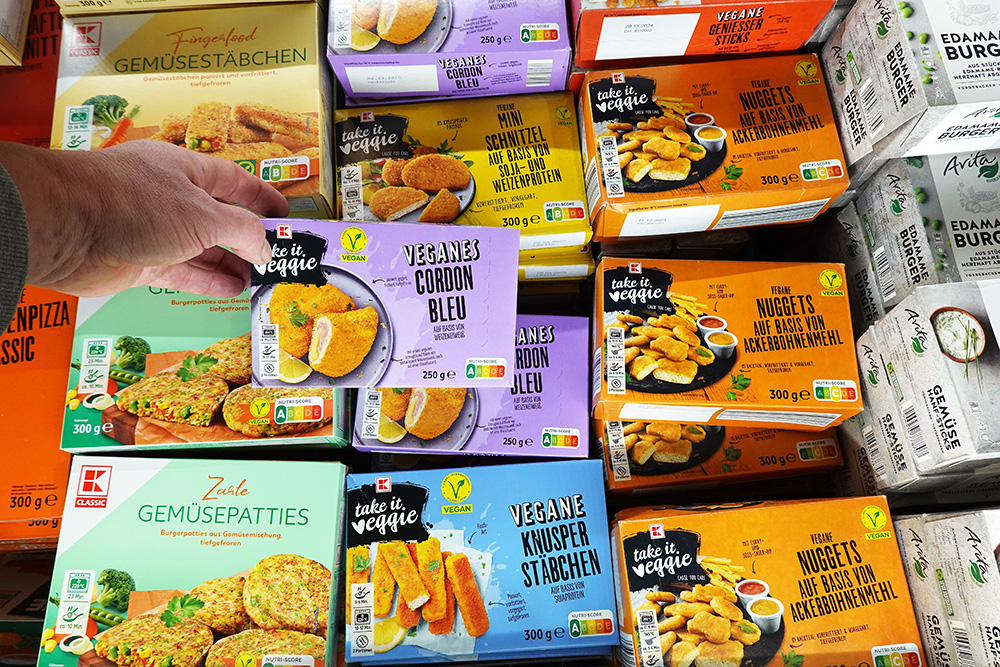
Within this environment, plant-based purchasing continued, but the profile of the typical consumer had shifted. Flexitarians now dominated sales, and their expectations differed from those of early adopters. Instead of seeking novelty or niche positioning, these consumers prioritized familiar formats, reliable taste and clear value for money.
European retail data reflected this recalibration. In Germany, plant-based retail sales across six major categories reached €1.68 billion (US$1.82 billion) in 2024, with both value and volume rising year on year. France’s market continued to grow, reaching €537 million (US$586 million), while Italy recorded €639 million (US$698 million), supported by private-label expansion and a move toward versatile, everyday products. Spain showed a more mixed picture, with earlier softness in plant-based meat followed by signs of modest recovery during 2024.
The UK remained one of Europe’s largest plant-based markets, though short-term performance was uneven. Plant-based cheese volumes rose strongly over a three-year period to January 2025, before dipping slightly in 2024. Overall plant-based retail value declined by just over 4% between 2023 and 2024, with a smaller drop in unit volumes.
Brand-level performance also diverged. Beyond Meat continued to report declining sales, with revenue down 13.3% year on year in its third fiscal quarter ended September 27, 2025, and a net loss of US$110.7 million. At the same time, other brands recorded growth. UK-based One Planet Pizza expanded its retail presence at Asda, Morrisons and Aldi and reported 41% growth at Asda during 2025.
ProVeg argued that these shifts reflected changing consumer behavior rather than collapsing demand. Shoppers were becoming more discerning, placing greater emphasis on taste, quality, health and price, alongside a renewed interest in scratch cooking. Retailers responded by rationalizing ranges, retaining products with strong repeat purchase and removing weaker performers. Tesco, for example, acknowledged it had missed its target to triple plant-based meat sales by the end of 2025.
Albrecht Wolfmeyer, former director of the ProVeg Incubator, said the sector was undergoing a normal and healthy adjustment. “The industry is simmering down, not burning out,” he said. “Like any emerging sector, this is a healthy recalibration, separating true potential from hype. This consolidation will help the sector bounce back stronger on the other side.”
Foodservice followed a similar pattern. Several vegan-only operators in the UK closed or adjusted their strategies, while some high-profile international venues broadened menus to reintroduce animal products. At the same time, mainstream chains increasingly integrated plant-based dishes into mixed menus. In the UK, quick-service restaurants saw plant-based orders rise 56% in 2024, even as overall eating-out frequency declined.
Taken together, ProVeg concluded that the plant-based sector was moving from first-wave experimentation toward long-term habitual consumption. The result was a more resilient market built on loyalty, value and everyday relevance rather than novelty alone. Wolfmeyer said, “We are beyond the first wave of product innovation and consumer adoption. The next wave will lead the way, and further accelerate the transformation and growth of the industry.”

Join Us At One Of Our Upcoming Events

If you have any questions or would like to get in touch with us, please email info@futureofproteinproduction.com

More News