Pow.Bio and Bühler join forces to make continuous fermentation a commercial reality

Pow.Bio and Bühler have announced a strategic partnership to commercialize an integrated continuous precision fermentation platform, offering what the companies described as a faster, more predictable, and more cost-effective alternative to traditional batch and fed-batch biomanufacturing.
The joint platform combined Pow.Bio’s AI-enabled continuous fermentation technology with Bühler’s 165 years of engineering, delivery, installation, and commissioning expertise. The result is a fully supported system designed to run for extended periods without the downtime that typically limits productivity in batch facilities. By enabling continuous operation, model-driven control, and more reproducible performance across scales, the partners said they were now ready to onboard customers seeking to reach commercial production with lower unit costs and less risk.
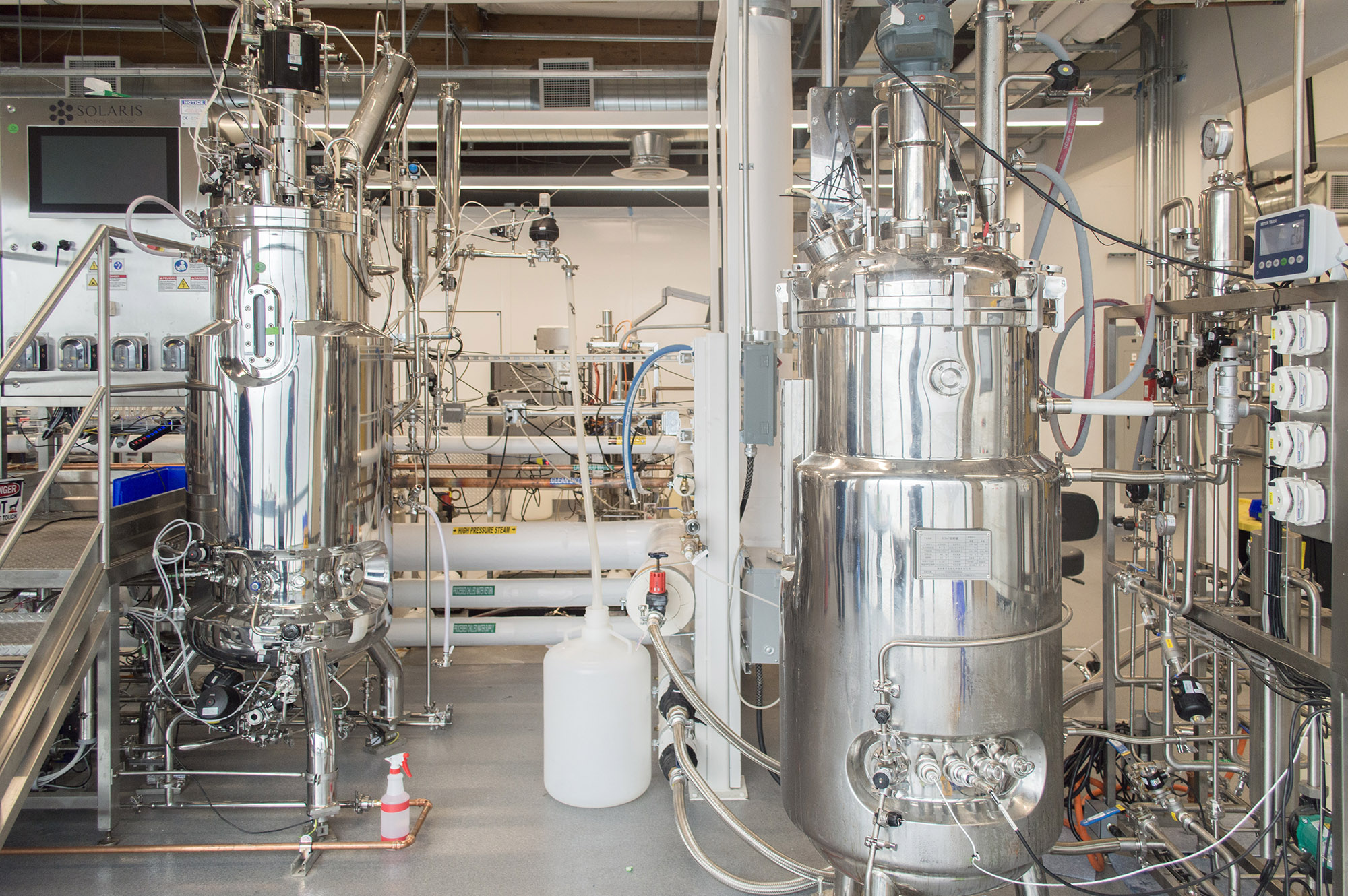
The announcement followed Pow.Bio’s successful 3,000-liter scale-up with ATV Technologies, completed with Bühler’s support, which validated the approach and paved the way for broader market deployment. The platform is aimed at companies producing enzymes, organic acids, functional proteins, specialty lipids, bioactive compounds, and other precision-fermented ingredients now constrained by cost or scalability.
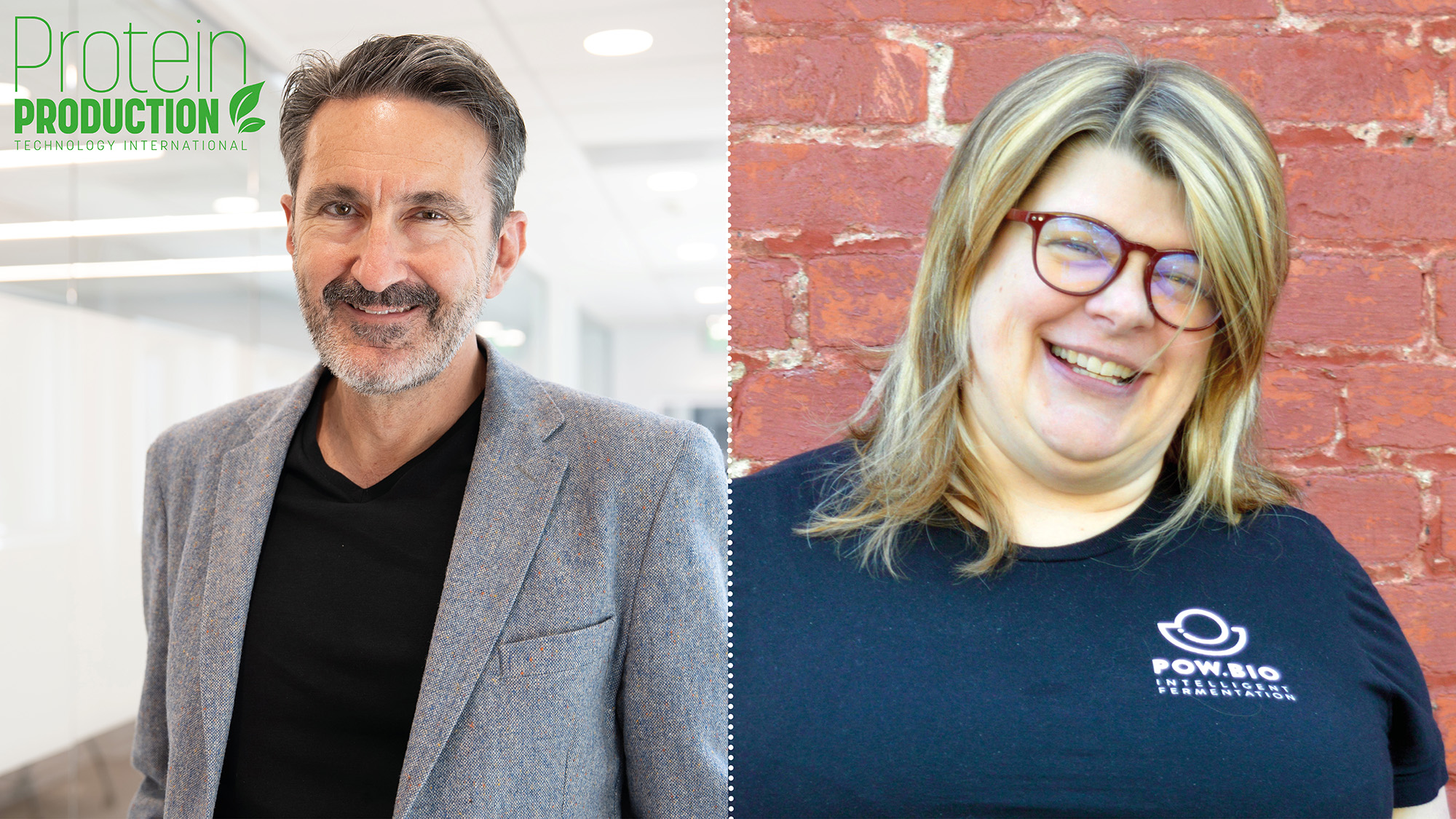
To understand the motivations behind the partnership and what it signals for the future of biomanufacturing, Protein Production Technology International spoke with Shannon Hall, CEO and co-founder of Pow.Bio, and Thierry Duvanel, Bühler’s North American Director of Innovation. What follows is an exclusive, extended look at the ideas, economics, and technical realities underpinning the new alliance.
A meeting of minds on the future of fermentation
For Hall, the collaboration answered a question Pow.Bio had been wrestling with since its inception: why did so many promising biotechnology programs fail to reach industrial scale?
“Well, I think from the very beginning at Pow.BIO, we asked ourselves how we could build a platform that would create greater success in general biomanufacturing,” she said. “We felt like so many incredible programs had gone a long way, yet somehow still come up short in terms of the overall industrial biomanufacturing space. We believed we had a twist that would enable us to truly turn on continuous manufacturing. And in doing that, we unlocked some insights into how to use AI- and ML-guided processes to make that more efficient and more practical. We got very excited about getting that going.”
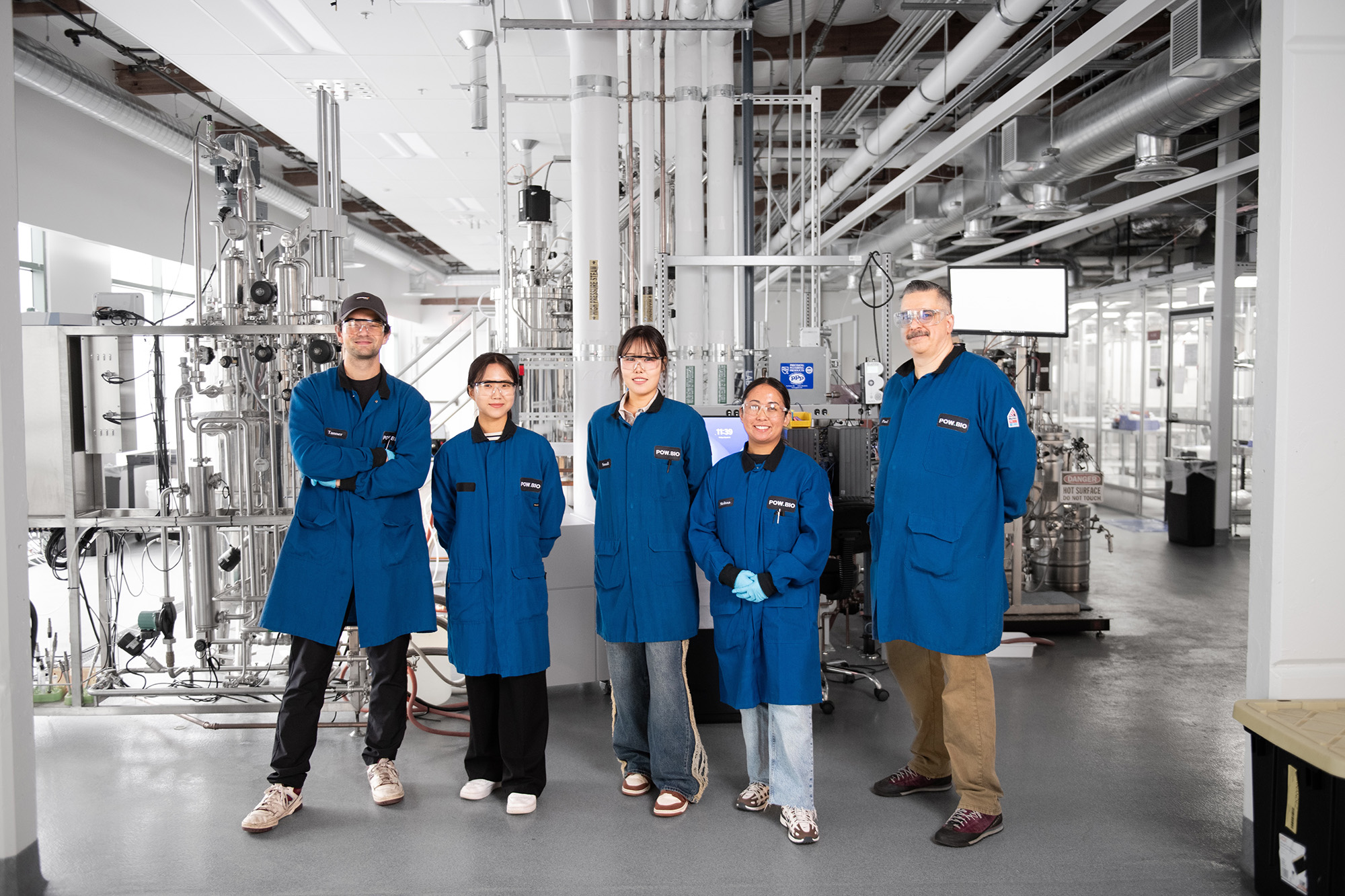
Pow.Bio had built much of its technology through Department of Energy grant funding and small-scale systems. But proving it could work at industrially relevant volumes required an engineering partner. Bühler’s enthusiasm during early meetings surprised Hall.
“We had an early meeting with him [Thierry Duvanel] where he seemed genuinely excited about what we were doing in the biomanufacturing space. And to be honest, for a long time not that many people were excited about biomanufacturing technology. So, it was pretty interesting to see that level of intrigue from the team at Bühler, and we started talking about how we could build together.”
For Bühler, the interest was tied to both sustainability and scalability. Duvanel said the food system would not meet climate and land-use constraints without new manufacturing approaches – and the tools borrowed from chemical processing or pharma were no longer enough.
“Bühler has always been very active on the forefront of building technologies and solutions for evolving our food systems,” he said. “We believe that we need to address the challenges of greenhouse gas emissions together with land use if we want to be able to nourish the population in the future. And we believe biomanufacturing plays a critical role in that.
“Now, it's well known that most of the technologies in this space have been inherited from years, if not decades, of experience in other fields, and translating them directly into the manufacturing of ingredients or food components doesn’t scale very well. We see a gap that needs to be addressed, in the sense that scalability and the cost of manufacturing are the big challenges.
“And we believe the solution offered by Pow.BIO is indeed a game changer in that space. That’s why we started collaborating.”
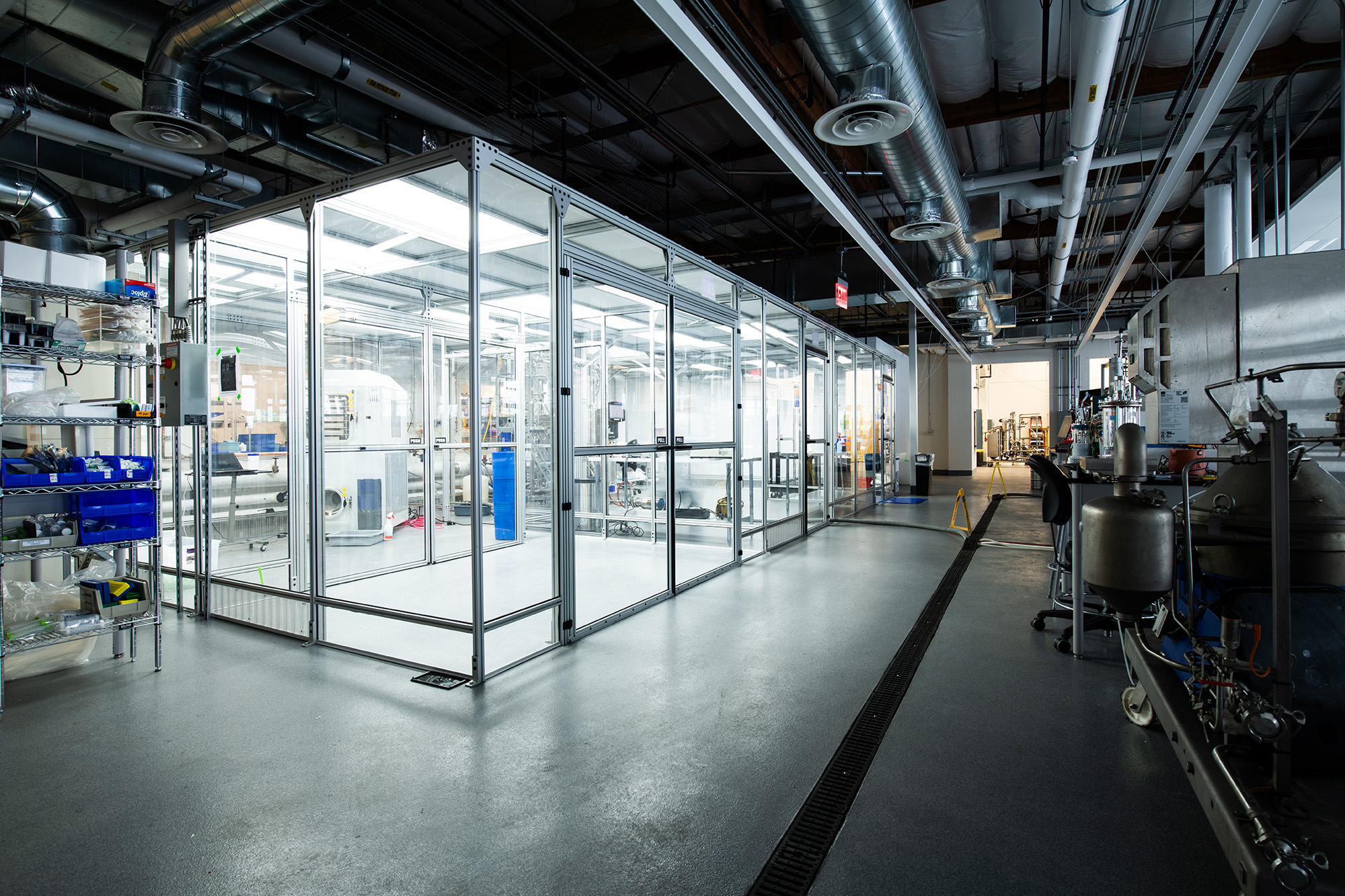
The 3,000-liter test that changed the trajectory
“I think it reaffirmed a lot of our assumptions about the need to fine-tune different deployments in different ways at different sites,” Hall said. “It certainly confirmed our ability to get to that scale successfully. And we actually ended up finding some good things – you might expect only challenges or disappointments as you scale up, but we found ways to improve the process during scale-up, which was pretty great.”
The system also provided customers with confidence. “It gave our customers the confidence to say, ‘Hey, how about working with us to chart a path to our commercial future?’ Those two things were really compelling,” she added.
From an economic perspective, Bühler argued the biggest shift came not from replacing existing infrastructure but from dramatically improving its utilization.
“So the capex will, give or take, remain the same,” Duvanel said. “If we talk about a retrofit, there will be added costs to the infrastructure, but they’re not significant – the real change is in utilization. In a traditional approach, even in a very efficient operation, we reckon that the capex that’s deployed – the steel in the form of tanks, pipes, tubes – is productive for about a third of its time.
“If we transform that into an operation where it’s suddenly productive 24/7, with batches that can last several days, if not weeks in the future, you get much better utilization.”
Breaking down the misconceptions around continuous fermentation
Misconceptions about continuous fermentation remained common, Hall said, particularly around complexity, contamination risk, and strain drift.
“Working backwards from those concerns, we’re finding that the strains we work with today – whether they’re from a rising star or an incumbent that has worked with the strain for a long time – are very robust,” she said. “They have a ton of lifetime in them, and we haven’t run into a case where we’re not getting long-term performance.”
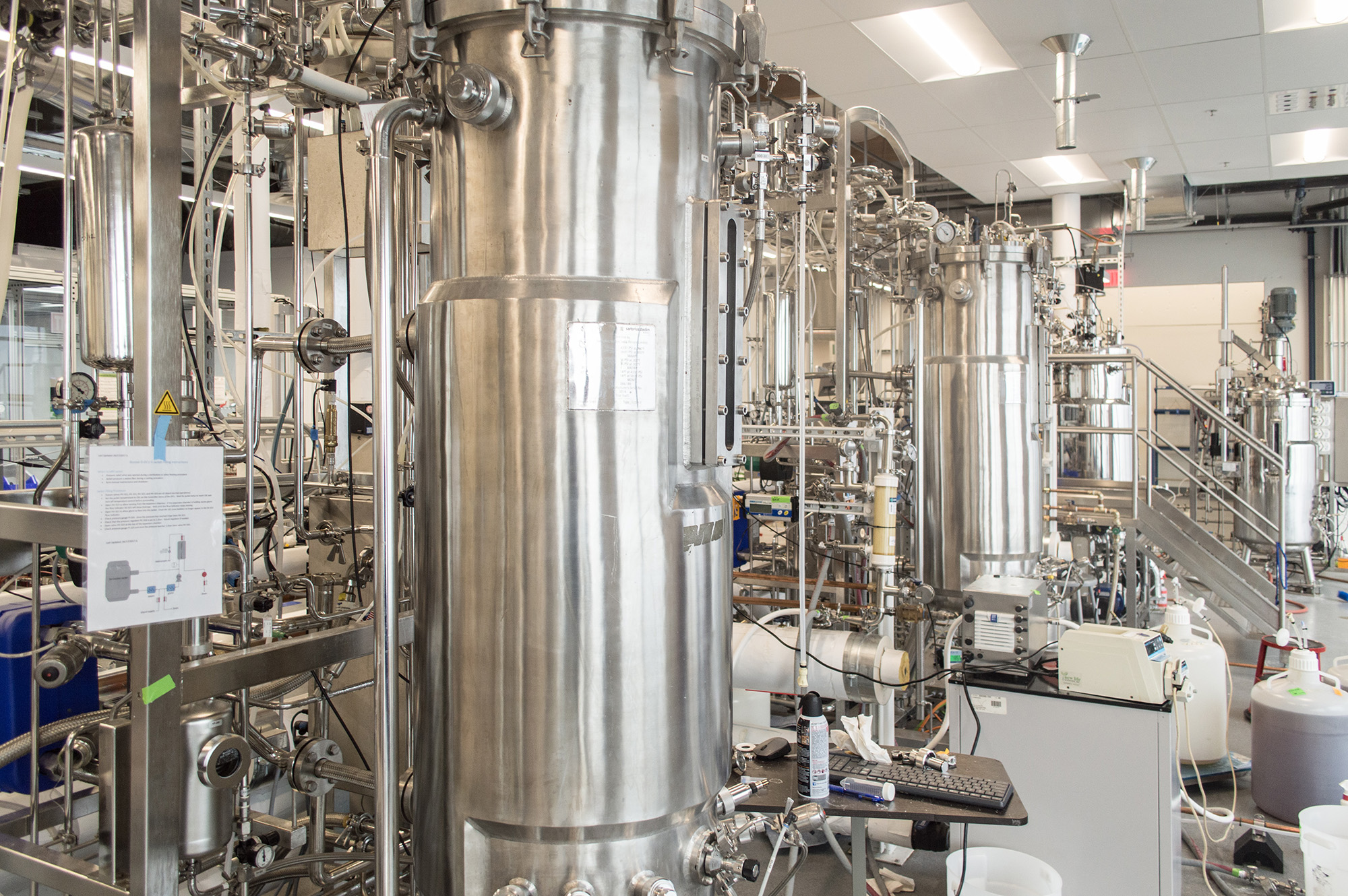
Much of the reassurance came from the model-driven control layer. Pow.Bio built a digital twin to capture the subtle differences between sites and automatically adjust operations during a run.
“We’ve found that having a digital twin that lets us model those differences as we’re setting up, and then model them while we’re running, gives us the ability to steer the fermentation to a successful outcome every time,” Hall said. She cited a recent case involving major differences in oxygen transfer and evaporation. “The AI layer recommended different feed strategies and other operational adjustments, which the system then applied in real time during the run. The result was first-run success.”
The platform was also designed to slot into existing facilities rather than require new construction.
“We can plug into most of what already exists,” Hall said. “Our system requires a smaller bioreactor connected to a larger bioreactor… As an indication – which is not a promise for every site, but a general guideline – we expect to reuse at least 70%, and maybe more than 70%, of the existing facility.”
A new development pathway and a long-term vision for 2030
“You don’t have to be the general contractor for your manufacturing approach the way you used to be,” she said. “What we propose is something more end-to-end… you would have a pre-formed journey.”
Concerns about vendor lock-in were addressed directly.
“Really, nearly all of that remains in the customer’s hands,” Hall said. “The strain is fully theirs… Downstream design, as much as they want it to be, is entirely in their hands.”
The partnership also opened the door to performance-based commercial models.
“And that’s a discussion we have with everyone,” she said. “If we can bring you this level of cost savings or this kind of outcome… are we in agreement that we share a little of that going forward?”
Looking toward 2030, both Hall and Duvanel defined success not as a single milestone but as a fundamental change in how biomanufacturing capacity is built and accessed.
Hall said she hoped to see “an integrated network of CDMO sites that goes from bench scale to 100,000 liters, 200,000 liters – a network that provides a clear gateway and pathway to get your product to market at globally competitive costs.”
For Duvanel, the biggest shift could be cultural rather than technological.
“The interesting thing is that this approach doesn’t require any significantly different infrastructure or equipment,” he said. “It’s really a very clever architecture coupled with an AI approach that forms a kind of digital twin of the organism… that is likely to be the way forward for understanding the behavior of organisms – even well-known strains already used in production – in order to extract more from them.”
“We believe that’s going to be the path for this industry in the years to come.”

Join Us At One Of Our Upcoming Events

If you have any questions or would like to get in touch with us, please email info@futureofproteinproduction.com